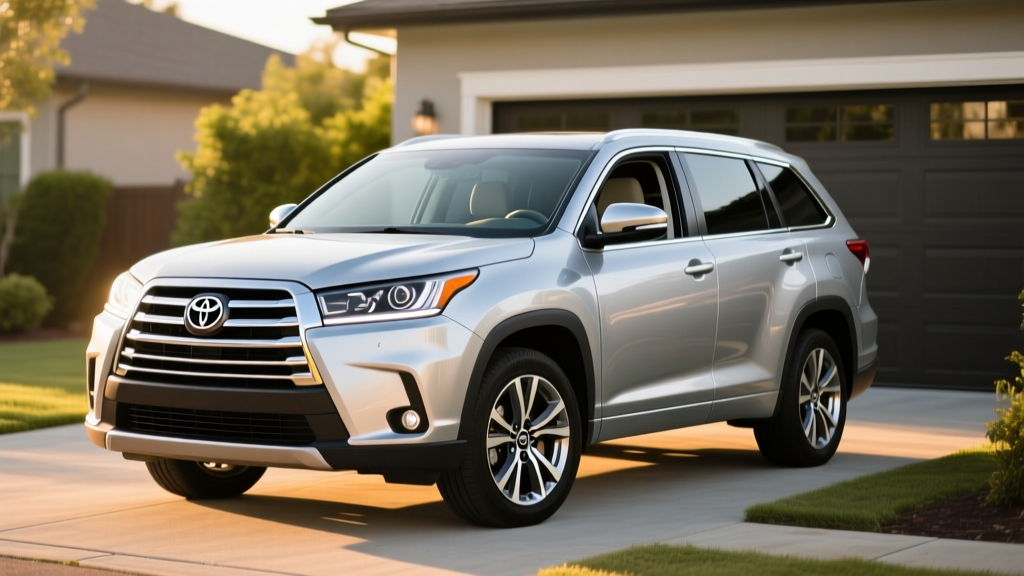
Quick Verdict: The 2018 Highlander Hybrid in 2026
If you're searching for a hybrid highlander 2018 on the used market, you're looking at one of the most proven three-row hybrid SUVs ever built. The 2018 Toyota Highlander Hybrid pairs a 3.5-liter V6 with Toyota's hybrid synergy drive to deliver 306 combined horsepower and an EPA-rated 29 MPG combined — figures that still hold up against newer competitors. In 2026, well-maintained examples trade between $22,000 and $30,000 depending on mileage and trim, making it a value-dense family hauler with minimal range anxiety and no plug required.
But before you sign the paperwork, you need to understand what this hybrid actually delivers in real-world driving, how the battery holds up after eight years, and whether it's the right electrified choice versus a newer PHEV or full EV. This guide covers every number that matters.
HEV vs PHEV: What the 2018 Highlander Hybrid Actually Is
The 2018 Toyota Highlander Hybrid is a conventional hybrid (HEV), not a plug-in hybrid (PHEV). This distinction is critical for used buyers:
Conventional Hybrid (HEV) — This Vehicle
- No plug required. The battery recharges through regenerative braking and the gasoline engine.
- Small battery: ~2 kWh nickel-metal hydride (NiMH) pack.
- No electric-only driving range beyond brief low-speed assist (under ~1 mile).
- No federal tax credit — the §30D credit applies only to new plug-in vehicles (PHEVs and BEVs).
- Fuel savings come from efficiency: the electric motor assists the engine, reducing fuel consumption at all speeds.
Plug-In Hybrid (PHEV) — Not This Vehicle
- Must be plugged in to access electric-only range (typically 20–45 miles).
- Larger battery: 10–20+ kWh lithium-ion pack with Level 2 AC charging capability.
- Can drive on electricity alone for daily commutes before the engine engages.
- May qualify for federal/state incentives when purchased new.
- Toyota does not currently offer a Highlander PHEV in the US market.
If you need electric-only commuting, you'll need to look elsewhere — the Toyota RAV4 Prime (PHEV, 42 miles electric) or a three-row EV like the Kia EV9. But if you want a no-plug, no-compromise family SUV with strong fuel economy, the 2018 Highlander Hybrid fills that role precisely.
Fuel Economy: EPA Ratings vs Real-World MPG
The 2018 Highlander Hybrid's fuel economy is its headline feature. Here's the official EPA data alongside what owners and testers actually report:
| Metric | EPA Estimate | Real-World Expectation |
|---|---|---|
| City MPG | 29 MPG | 28–31 MPG (hybrids often exceed EPA in city driving due to regen braking) |
| Highway MPG | 27 MPG | 25–27 MPG (aerodynamic drag and sustained speeds reduce hybrid advantage) |
| Combined MPG | 29 MPG | 27–29 MPG (mixed driving) |
| Fuel Tank Capacity | 19.2 gallons | — |
| Total Driving Range | ~557 miles | ~500–540 miles real-world |
Why city MPG matches highway MPG: Unlike gas-only vehicles, hybrids recapture kinetic energy during stop-and-go driving through regenerative braking. The electric motor handles low-speed launches where gasoline engines are least efficient. This means your commute through town may actually deliver better fuel economy than a long highway trip — the opposite of a conventional SUV.
Cold-weather impact: Expect a 5–10% fuel economy reduction in freezing temperatures. The engine runs more frequently to maintain cabin heat and battery temperature, reducing the hybrid system's ability to shut it off at stops. In our experience with Toyota hybrid systems in northern climates, winter combined MPG typically settles around 25–26 MPG — still well ahead of the gas-only Highlander's 23 MPG combined.
For comparison, the 2018 gas-only Toyota Highlander V6 AWD is EPA-rated at 20 city / 26 highway / 22 combined. The hybrid delivers a 32% improvement in combined fuel economy, which at 15,000 miles per year and $3.40/gallon fuel translates to roughly $550–$650 in annual fuel savings.
Powertrain and Performance Specifications
| Specification | 2018 Toyota Highlander Hybrid |
|---|---|
| Engine | 3.5L V6 Atkinson-cycle |
| Engine Output | 262 HP / 248 lb-ft torque |
| Electric Motors | Front: 167 HP / 247 lb-ft; Rear: 67 HP / 103 lb-ft |
| Combined System Output | 306 HP |
| Transmission | eCVT (planetary gearset, not a belt-driven CVT) |
| Drivetrain | AWD (electronic on-demand rear motor, no mechanical driveshaft) |
| 0–60 MPH | ~7.8 seconds |
| Towing Capacity | 3,500 lbs |
| Hybrid Battery | ~2 kWh NiMH (288V, 34 modules) |
| Curb Weight | ~4,600 lbs |
| Seating | 7 or 8 passengers (trim-dependent) |
| Cargo Volume | 13.8 cu ft (behind 3rd row) / 83.7 cu ft (max) |
The Highlander Hybrid uses Toyota's eCVT, which is fundamentally different from the rubber-belt CVTs found in some competitors. It uses a planetary gearset to seamlessly blend power from the V6 and front electric motor — there are no belts, no pulleys, and no "rubber-band" feeling. The result is smooth, linear acceleration with none of the droning associated with traditional CVTs.
The rear electric motor provides electronic AWD by powering the rear wheels independently when slip is detected or during hard acceleration. There is no mechanical connection between the front and rear axles — this reduces weight and mechanical losses, though it means the AWD system is designed for traction and stability rather than off-road capability.
Hybrid Battery: Longevity, Warranty, and Replacement Cost
2018 Highlander Hybrid Battery Coverage
- Original hybrid battery warranty: 8 years / 100,000 miles (10 years / 150,000 miles in California and CARB-adopting states)
- Current status in 2026: Most examples are now at or past the 8-year mark — warranty coverage depends on your specific vehicle's in-service date and mileage
- Battery chemistry: Nickel-metal hydride (NiMH) — proven, thermally stable, less energy-dense than lithium-ion but extremely durable in Toyota's hybrid applications
How long do these batteries actually last? Toyota's NiMH hybrid batteries have an exceptional track record. Data from fleet operators, taxi services, and high-mileage owners consistently shows the 2 kWh pack in the Highlander Hybrid lasting 150,000–200,000+ miles before significant degradation. Unlike lithium-ion packs in full EVs, the NiMH battery is small and operates within a narrow state-of-charge window (roughly 40–80%), which dramatically reduces stress on the cells.
Replacement cost if it fails: A new OEM hybrid battery from Toyota runs approximately $3,500–$4,500 installed at a dealership. Independent hybrid specialists offer reconditioned or refurbished packs for $1,500–$2,500 installed. Individual module replacement (only the degraded cells) can cost as little as $500–$900 if caught early. This is a fraction of the $10,000–$20,000+ replacement costs associated with large lithium-ion EV batteries.
Warning signs of hybrid battery degradation: Watch for reduced fuel economy (2–4 MPG drop), a dashboard warning light ("Check Hybrid System"), the engine running more frequently than normal, or the battery charge indicator fluctuating rapidly. A hybrid battery health check at any Toyota dealer can assess individual module voltages and identify problems before a complete failure.
Trim Levels, Pricing, and Tax Credit Eligibility
The 2018 Highlander Hybrid was offered in three trims. Here's the original MSRP alongside estimated 2026 used-market values:
| Trim | 2018 MSRP | 2026 Used Market (Est.) | Key Features |
|---|---|---|---|
| LE | $47,030 | $22,000–$25,000 | 8-passenger seating, Toyota Safety Sense-P, 6.1" touchscreen |
| XLE | $49,460 | $24,000–$27,000 | SofTex seats, sunroof, blind-spot monitor, 7-passenger captain's chairs available |
| Limited Platinum | $53,470 | $26,000–$30,000 | JBL audio, navigation, panoramic sunroof, 360° camera, ventilated front seats |
Federal tax credit status: The 2018 Highlander Hybrid does not qualify for the IRS §30D Clean Vehicle Credit. This credit applies exclusively to new plug-in electric vehicles (BEVs and PHEVs) with qualifying battery capacity. Conventional hybrids like this one — which cannot be plugged in — are ineligible for the federal credit, whether purchased new or used.
Used EV credit (§25E): Similarly, the up-to-$4,000 used clean vehicle credit requires the vehicle to be a plug-in electric vehicle or fuel cell vehicle. The Highlander Hybrid does not qualify.
State incentives: A handful of states offer modest incentives for used hybrid purchases, but these vary widely and change frequently. Check your state's environmental or DMV website for current programs. Some states also offer HOV lane access for hybrid vehicles, though many have sunset these programs.
Reliability and Ownership Costs
The 2018 Highlander Hybrid benefits from Toyota's long-standing reputation for hybrid system durability. The hybrid synergy drive in this generation has been in production since the 2016 refresh, meaning most early-production bugs were resolved. Key reliability considerations:
- Hybrid system: Excellent. The eCVT has no belts or clutches to wear, and the electric motors have no brushes. Toyota's hybrid systems routinely exceed 200,000 miles with basic maintenance.
- V6 engine: The 2GR-FKS 3.5L V6 is one of Toyota's most reliable engines. Timing chain (not belt) means no scheduled replacement. Watch for water pump seepage above 100,000 miles.
- Brakes: Hybrid regenerative braking significantly extends pad life. Owners frequently report 80,000–100,000+ miles on original brake pads.
- Common complaints: Some owners report infotainment system lag (the 2018 system is dated by 2026 standards), and the LE trim's 6.1-inch screen feels particularly small. The panoramic sunroof on Limited Platinum trims has had occasional drain-tube clogging reports.
Insurance costs: Expect to pay $1,400–$1,900 annually for full coverage, depending on your location, driving record, and coverage levels. Hybrid vehicles sometimes carry a small insurance premium due to higher repair costs for the hybrid system, but the Highlander's mainstream parts availability keeps this modest.
5-Year Ownership Cost Estimate (Used Purchase):
| Category | Estimated 5-Year Cost |
|---|---|
| Purchase Price (XLE, avg.) | $25,500 |
| Fuel (15,000 mi/yr, $3.40/gal, 28 MPG avg.) | $9,100 |
| Insurance | $8,250 |
| Maintenance & Repairs | $3,500 |
| Depreciation (est.) | $7,000 |
| Total 5-Year Cost | ~$53,350 |
Who Should Buy the 2018 Highlander Hybrid vs a PHEV or EV?
Pros
- No plug needed — works with any gas station, no home charger required
- Proven 29 MPG combined with 306 HP and AWD
- 3,500-lb towing capacity (rare for hybrids in this class)
- Low battery replacement cost ($1,500–$4,500) vs EV batteries
- Toyota Safety Sense-P standard (pre-collision, lane departure, auto high beams, adaptive cruise)
- Strong resale value and parts availability
Cons
- No electric-only driving range — always uses gasoline
- Dated infotainment (no Apple CarPlay/Android Auto on 2018 model year)
- Third row is tight for adults on long trips
- No federal or state tax credit eligibility
- Highway fuel economy advantage over gas model narrows at sustained speeds
- NiMH battery is heavier and less efficient than modern lithium-ion systems
Choose the 2018 Highlander Hybrid If:
- You need three rows and AWD but can't install a home charger
- You want hybrid fuel savings without changing your fueling habits
- You tow a small trailer, boat, or camper (up to 3,500 lbs)
- You prioritize long-term reliability and low maintenance costs
- Your budget is $22,000–$30,000 for a used family SUV
Consider a PHEV or Full EV Instead If:
- You have home charging and want electric-only daily commuting (look at RAV4 Prime, Chrysler Pacifica PHEV)
- You want federal tax credits — buy a new or qualifying used PHEV/BEV
- You want the latest tech — 2024+ models offer far superior infotainment and ADAS
- You drive mostly in the city and want to eliminate gasoline entirely (consider a three-row EV like the Kia EV9 or Rivian R1S)
What to Check Before Buying a Used 2018 Highlander Hybrid
If you're evaluating a specific vehicle, prioritize these inspections:
- Hybrid battery health report: Ask the seller or dealer for a hybrid system diagnostic showing individual module voltages. All 34 modules should read within 0.2V of each other. Wider variance indicates a degrading pack.
- Service records: Confirm regular oil changes (every 10,000 miles with synthetic) and inverter coolant service (Toyota recommends every 100,000 miles for the inverter coolant).
- Brake actuator recalls: Check NHTSA's recall database for open recalls. Some 2018 Highlanders had brake booster assembly recalls that must be addressed.
- AWD system test: On a wet surface or during hard acceleration, confirm the rear motor engages. A dashboard AWD indicator should illuminate when rear power is being delivered.
- Tire wear pattern: Uneven rear tire wear may indicate the rear electric motor is not distributing torque correctly — a rare but documented issue.
Frequently Asked Questions
How many MPG does the 2018 Highlander Hybrid get?
The EPA rates it at 29 city / 27 highway / 29 combined. In real-world driving, owners typically see 27–31 MPG combined depending on driving conditions. City driving often yields higher numbers thanks to regenerative braking, while sustained highway speeds above 70 MPH reduce the hybrid advantage.
Does the 2018 Highlander Hybrid need to be plugged in?
No. This is a conventional hybrid (HEV), not a plug-in hybrid (PHEV). The battery charges automatically through regenerative braking and the gasoline engine. You fuel it exclusively at gas stations, exactly like a non-hybrid vehicle.
Is the 2018 Highlander Hybrid reliable?
Yes. Toyota's hybrid synergy drive system has been in continuous production since 1997 (Prius) and is among the most reliable electrified powertrains ever built. The 3.5L V6 and eCVT have no common failure points. The NiMH hybrid battery typically lasts 150,000–200,000+ miles.
What does a replacement hybrid battery cost?
A new OEM battery from Toyota costs approximately $3,500–$4,500 installed. Reconditioned or refurbished packs from independent hybrid specialists run $1,500–$2,500 installed. Individual module replacement can cost as little as $500–$900.
Does the 2018 Highlander Hybrid qualify for any tax credit?
No. The federal §30D Clean Vehicle Credit and the §25E Used Clean Vehicle Credit both require plug-in electric vehicles (PHEVs or BEVs). Conventional hybrids that cannot be plugged in are not eligible for any federal tax credit. Some states may offer minor incentives — check your state's current programs.
How does the Highlander Hybrid compare to the gas-only Highlander?
The hybrid delivers 29 MPG combined versus 22 MPG combined for the gas V6 AWD — a 32% improvement. You also gain 33 additional horsepower (306 vs 273 HP, depending on trim) from the electric motor assist, plus standard electronic AWD. The trade-off is a slightly higher purchase price and the loss of a small amount of cargo space due to the hybrid battery placement.
Does it have Apple CarPlay or Android Auto?
No. The 2018 model year predates Toyota's adoption of Apple CarPlay (added for the 2019 model year on the Highlander). If smartphone integration is essential, you'll need an aftermarket head unit or look at a 2019+ model.
Hybrid vs PHEV vs EV — which should I choose?
Choose a conventional hybrid (like this Highlander) if you want fuel savings without changing your fueling routine or installing a home charger. Choose a PHEV if you have home charging and want 20–45 miles of electric-only commuting with gas backup for long trips. Choose a full EV if you have reliable charging access, want zero tailpipe emissions, and are ready to plan around charging stops on road trips. Each option serves different lifestyles — there is no universally "best" choice.
Sources: EPA fuel economy data via fueleconomy.gov, Toyota Motor Corporation specifications, IRS §30D Clean Vehicle Credit guidelines, NHTSA recall database.