Quick Verdict: The 2018 RAV4 Hybrid in 2026
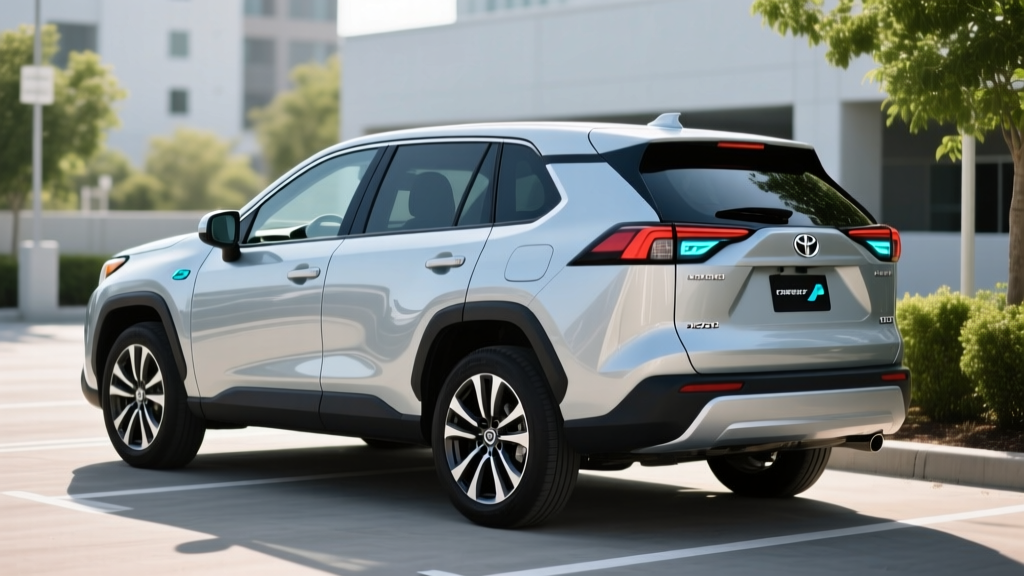
The 2018 Toyota RAV4 Hybrid occupies a specific niche in today's used market: a proven, no-plug-required compact SUV hybrid that delivers consistent fuel economy without the complexity of a plug-in hybrid or the charging logistics of a full EV. With an EPA-rated 32 MPG combined and Toyota's reputation for hybrid powertrain longevity, it remains a rational choice for buyers who want electrified efficiency without changing their fueling habits.
But this is the final model year of the fourth-generation RAV4 — the redesigned 2019 model brought a more powerful hybrid system, standard AWD, and notably better fuel economy. Understanding exactly what the 2018 offers, and where it falls short of newer alternatives, is essential before signing on a used example.
| Spec | 2018 RAV4 Hybrid |
|---|---|
| Powertrain | 2.5L 4-cyl + electric motor (HEV) |
| Combined Horsepower | 194 hp |
| EPA MPG (City / Hwy / Combined) | 34 / 30 / 32 |
| Drivetrain | AWD (electronic rear motor) |
| 0-60 mph | ~7.8 seconds |
| Hybrid Battery | ~1.6 kWh NiMH (sealed, self-charging) |
| Cargo Volume | 38.4 cu ft (rear seats up) |
| Battery Warranty (original) | 8 years / 100,000 miles |
| Original MSRP (XLE base) | $30,735 |
| Typical Used Price (2026) | $16,000 – $22,000 |
Fuel Economy: EPA Numbers vs. Real-World MPG
The EPA rates the 2018 RAV4 Hybrid at 34 MPG city, 30 MPG highway, and 32 MPG combined. That city-highway split is typical of conventional hybrids: the electric motor handles low-speed driving where gas engines are least efficient, so city mileage actually exceeds highway numbers.
| Driving Scenario | Expected MPG |
|---|---|
| EPA City | 34 MPG |
| EPA Highway | 30 MPG |
| EPA Combined | 32 MPG |
| Real-world mixed (owner reports) | 30 – 34 MPG |
| Highway-heavy (70+ mph) | 27 – 30 MPG |
| Cold weather (below 30°F) | 28 – 31 MPG |
In practice, owners commonly report 30-34 MPG in mixed driving, validating the EPA sticker. Highway-only road trips at speeds above 70 mph will drop that to roughly 27-30 MPG — aerodynamic drag dominates at higher speeds, and the hybrid system provides less benefit. Cold weather reduces efficiency by 5-10% as the engine runs more frequently to provide cabin heat and maintain battery temperature.
Compared to the gas-only 2018 RAV4 AWD (rated 22 city / 28 highway / 25 combined), the hybrid delivers a meaningful 7 MPG combined improvement — roughly 28% better fuel economy. Over 15,000 annual miles at $3.50/gallon, that translates to approximately $475 in annual fuel savings.
Powertrain: How the 2018 RAV4 Hybrid System Works
The 2018 RAV4 Hybrid pairs a 2.5-liter Atkinson-cycle four-cylinder engine with Toyota's Hybrid Synergy Drive system. The gasoline engine produces 150 hp and 145 lb-ft of torque, while an electric motor-generator adds supplemental power for a net system output of 194 hp.
Unlike the 2019+ RAV4 Hybrid, which switched to Toyota's TNGA platform with a more powerful 219-hp hybrid system and standard electronic AWD on all trims, the 2018 model uses a rear-mounted electric motor to provide AWD only on Hybrid trims. This rear motor activates on demand for traction — there's no mechanical driveshaft connecting the front and rear axles.
HEV vs. PHEV: What the 2018 RAV4 Hybrid Is (and Isn't)
The 2018 RAV4 Hybrid is a conventional hybrid (HEV), not a plug-in hybrid. This distinction matters:
- HEV (this vehicle): Charges its small ~1.6 kWh nickel-metal hydride battery through regenerative braking and the gas engine. You never plug it in. It cannot drive on electric power alone for meaningful distances. Fuel only.
- PHEV (e.g., RAV4 Prime): Has a larger battery (~18.1 kWh) that charges via a plug, provides 42 miles of electric-only range, and qualifies for federal tax credits. Toyota didn't offer a RAV4 PHEV until the 2021 RAV4 Prime.
- BEV (full electric): No gas engine at all. Requires charging infrastructure. Examples: Tesla Model Y, Hyundai Ioniq 5.
The 2018 RAV4 Hybrid's NiMH battery pack is small by modern standards — roughly 1.6 kWh. It exists to buffer energy from regenerative braking and enable brief electric-only assist at low speeds (typically under 25 mph for short distances). It does not provide a meaningful electric-only range figure and cannot be plugged in to charge. There is no DC fast charging capability because there is no charge port.
Battery Lifespan, Warranty, and Replacement Cost
Hybrid battery longevity is the single most common concern for used hybrid buyers, and it's where Toyota's track record provides genuine reassurance. The NiMH battery in the 2018 RAV4 Hybrid is a proven design shared in concept with decades of Toyota hybrids, including the Prius lineage.
Battery Warranty & Expected Lifespan
- Original warranty: 8 years / 100,000 miles (10 years / 150,000 miles in CARB states including CA, NY, MA, and others)
- Real-world lifespan: Most Toyota NiMH hybrid batteries last 150,000 – 200,000+ miles with gradual capacity loss
- Current warranty status (2026): An 8-year-old 2018 model is at or beyond the standard 8-year warranty window; CARB-state examples with under 100k miles may still have coverage through 2028
- Replacement cost: $2,000 – $4,000 for a refurbished pack; $3,500 – $5,500 for a new OEM pack from Toyota (installed)
The key insight: Toyota's hybrid batteries degrade gradually rather than failing catastrophically. A 2018 RAV4 Hybrid with 100,000 miles will likely see slightly reduced electric-assist contribution and perhaps a 1-2 MPG drop from new, but the vehicle remains fully drivable. Complete battery failure is rare before 150,000 miles.
If replacement is needed, refurbished NiMH packs from reputable suppliers typically cost $2,000-$4,000 including core exchange and installation. A new OEM battery from a Toyota dealer runs $3,500-$5,500. Independent hybrid specialists can often perform the swap for less than dealer pricing. Given that these batteries commonly last 150,000-200,000+ miles, the per-mile cost of eventual replacement is modest — roughly 1-2 cents per mile over the battery's life.
Reliability and Ownership Costs
The 2018 RAV4 Hybrid benefits from Toyota's conservative engineering approach. The 2.5L 2AR-FXE engine is a proven Atkinson-cycle variant that prioritizes efficiency and longevity over peak output. There's no turbocharger, no complex multi-speed transmission (the hybrid uses an e-CVT planetary gearset with no traditional belts or clutches), and fewer wear components than a conventional powertrain.
The e-CVT is not a belt-driven CVT like those found in some competitors — it's a power-split device with no friction bands or stepped gears. This design has proven exceptionally durable across Toyota's hybrid lineup. There is no starter motor (the hybrid motor-generators start the engine), no alternator (same reason), and regenerative braking significantly extends brake pad life, with many owners reporting original brake pads beyond 80,000 miles.
The IIHS rated the 2018 RAV4 as a Top Safety Pick when equipped with optional front crash prevention. Toyota Safety Sense-P (TSS-P) was standard on all 2018 RAV4 Hybrid trims, including pre-collision system with pedestrian detection, lane departure alert with steering assist, automatic high beams, and full-speed-range dynamic radar cruise control. This is a Level 0-1 driver-assistance suite — it provides warnings and interventions but does not offer lane-centering or hands-free driving.
Pricing, Tax Credits, and Value in 2026
Used 2018 RAV4 Hybrid pricing in early 2026 typically ranges from $16,000 to $22,000 depending on mileage, condition, trim level, and region. The XLE was the volume trim; the Limited adds leather, navigation, and additional features but commands a premium.
Tax Credit Eligibility
The 2018 RAV4 Hybrid does not qualify for the federal §30D new clean vehicle credit — it's a conventional hybrid, not a plug-in vehicle, and the credit applies only to new BEVs and PHEVs meeting battery-sourcing and MSRP requirements. It also does not qualify for the used clean vehicle credit (up to $4,000), which requires a plug-in EV or fuel cell vehicle with a minimum 7 kWh battery capacity.
Some states offer separate incentives for hybrid purchases, but these are typically limited and vary by jurisdiction. Check your state's energy or environmental agency for current programs.
Despite the lack of tax incentives, the 2018 RAV4 Hybrid's value proposition rests on operating costs. At 32 MPG combined versus 25 MPG for the gas AWD model, a buyer driving 15,000 miles annually saves roughly $475/year in fuel. Over a 5-year ownership period, that's approximately $2,375 in fuel savings — a meaningful offset against the used-market premium these hybrids command over their gas counterparts.
Who Should Buy the 2018 RAV4 Hybrid (and Who Shouldn't)
Pros
- Proven Toyota hybrid reliability with 200k+ mile battery lifespan
- 32 MPG combined — 28% improvement over gas RAV4 AWD
- Standard AWD via rear electric motor
- Toyota Safety Sense-P standard (automatic emergency braking, adaptive cruise)
- No plug-in required — fuel like a normal car
- Strong resale value retention
Cons
- 194 hp feels modest; 2019+ RAV4 Hybrid offers 219 hp
- No electric-only range; not a plug-in hybrid
- No federal or state EV tax credits
- Dated infotainment vs. 2019+ redesign
- 8-year battery warranty may be expiring on 2018 models
- Cargo area slightly compromised by hybrid battery placement
Decision Framework
Choose the 2018 RAV4 Hybrid if: You want a compact SUV with strong fuel economy, no charging logistics, proven reliability, and you're comfortable buying a used vehicle at or near the end of its battery warranty period. Ideal for apartment dwellers without charging access and drivers covering 12,000-20,000 miles/year.
Choose a newer RAV4 Hybrid (2019+) if: You want more power (219 hp), significantly better fuel economy (39-41 MPG combined), modern infotainment with Apple CarPlay/Android Auto, and remaining factory warranty coverage. The generational jump is substantial.
Choose a RAV4 Prime (PHEV, 2021+) if: You have home charging access and want 42 miles of electric-only range for daily commuting plus gas-engine flexibility for road trips. Qualifies for up to $7,500 federal credit when new (point-of-sale); used examples may qualify for the $4,000 used EV credit.
Choose a full EV (Tesla Model Y, Hyundai Ioniq 5) if: You have reliable home Level 2 charging, want zero tailpipe emissions, prefer lower per-mile fuel costs (electricity vs. gas), and are ready to plan around public DC fast charging for road trips.
Frequently Asked Questions
How many MPG does the 2018 RAV4 Hybrid get?
The EPA rates it at 34 city / 30 highway / 32 combined MPG. Real-world mixed driving typically yields 30-34 MPG. Highway-heavy trips at 70+ mph drop to roughly 27-30 MPG, and cold weather reduces efficiency by 5-10%.
Can I plug in the 2018 RAV4 Hybrid to charge?
No. The 2018 RAV4 Hybrid is a conventional hybrid (HEV), not a plug-in hybrid. It charges its small battery through regenerative braking and the gas engine. There is no charge port. If you want plug-in capability, look at the 2021+ RAV4 Prime, which offers 42 miles of electric-only range.
Is the hybrid battery reliable, and what does replacement cost?
Toyota's NiMH hybrid batteries are among the most proven in the industry, commonly lasting 150,000-200,000+ miles. A refurbished replacement pack costs $2,000-$4,000; a new OEM pack runs $3,500-$5,500 installed. Gradual capacity loss is normal; catastrophic failure is rare.
Does the 2018 RAV4 Hybrid qualify for any tax credit?
No. The federal §30D credit applies only to new plug-in vehicles (BEVs and PHEVs). The used clean vehicle credit (up to $4,000) also requires a plug-in vehicle with at least 7 kWh of battery capacity. The 2018 RAV4 Hybrid's ~1.6 kWh NiMH battery and lack of a charge port make it ineligible for both. Check your state's energy office for any hybrid-specific incentives.
How does the 2018 RAV4 Hybrid compare to the 2019+ model?
The 2019 redesign brought the TNGA platform, a 219-hp hybrid system (up from 194 hp), standard electronic AWD on all hybrid trims, and significantly better EPA ratings of 39-41 MPG combined depending on trim. The infotainment system was also updated. If your budget allows, the 2019+ generation is a meaningful upgrade in power, efficiency, and technology.
Is the 2018 RAV4 Hybrid good in snow and rain?
Yes. The electronic AWD system uses a rear electric motor that engages automatically when front-wheel slip is detected. It's not a heavy-duty off-road system, but it provides confident traction for winter commuting and light adverse conditions. Combined with Toyota Safety Sense-P (standard automatic emergency braking, stability control), it's a capable all-weather vehicle.
What maintenance does a used 2018 RAV4 Hybrid need?
Standard maintenance: oil changes every 10,000 miles (0W-20 synthetic), tire rotations every 5,000 miles, cabin and engine air filter replacement, and brake fluid inspection. The hybrid system requires no separate maintenance. Regenerative braking extends pad and rotor life significantly — many owners report original brakes past 80,000 miles. The e-CVT has no transmission fluid to change on the standard interval.