Quick Verdict: The 2018 RAV4 Hybrid's Fuel Economy Story
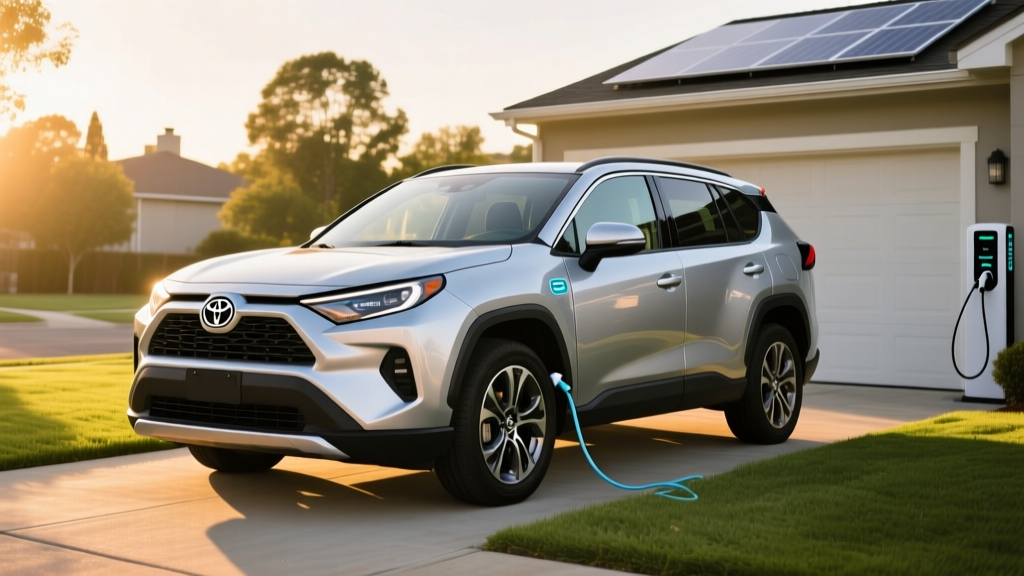
The 2018 Toyota RAV4 Hybrid remains one of the most sought-after used hybrid SUVs on the market, and for good reason. With an EPA-rated 32 MPG city / 28 MPG highway / 30 MPG combined, it delivers meaningful fuel savings over its gas-only sibling without requiring any change in driving habits — no plugging in, no range anxiety, no charging apps. For buyers researching 2018 RAV4 Hybrid MPG figures before pulling the trigger on a used model, the real-world story is largely a positive one: many owners report matching or slightly exceeding EPA city estimates thanks to Toyota's regenerative braking system, though highway-heavy drivers should expect numbers closer to 26–28 MPG at sustained speeds above 70 mph.
This guide covers everything a prospective used buyer needs to know — from exact fuel economy data and powertrain specs to hybrid battery health, warranty coverage, and how the 2018 RAV4 Hybrid stacks up against plug-in hybrids and full EVs in 2026.
EPA MPG Ratings and Real-World Fuel Economy
The EPA's official fuel economy data for the 2018 RAV4 Hybrid (AWD, all trims) breaks down as follows:
| Metric | Rating |
|---|---|
| City MPG | 32 MPG |
| Highway MPG | 28 MPG |
| Combined MPG | 30 MPG |
| Fuel Type | Regular unleaded (87 octane) |
| Fuel Tank Capacity | 14.8 gallons |
| Total Range (est.) | ~444 miles per tank |
HEV vs. PHEV: Understanding What You're Buying
A common point of confusion for shoppers is whether the 2018 RAV4 Hybrid needs to be plugged in. It does not. The 2018 RAV4 Hybrid is a conventional hybrid electric vehicle (HEV), meaning it generates all its electricity internally through the gasoline engine and regenerative braking. There is no plug, no charging port, and no electric-only driving range to manage.
| Feature | HEV (e.g., 2018 RAV4 Hybrid) | PHEV (e.g., RAV4 Prime) | BEV (e.g., bZ4X) |
|---|---|---|---|
| Plug-in Required? | No | Yes (optional) | Yes (mandatory) |
| Electric-Only Range | ~0.5 mi at low speed | 42 mi (RAV4 Prime) | 222–252 mi (bZ4X) |
| Fueling | Gas only | Gas + electricity | Electricity only |
| Home Charging Needed? | No | Recommended (Level 2) | Essential |
| Federal Tax Credit (new) | None | Up to $7,500 (§30D) | Up to $7,500 (§30D) |
| Best For | No home charger; simple ownership | Home charger + short commutes | Home charger; zero tailpipe emissions |
Toyota did not offer a plug-in hybrid RAV4 (the RAV4 Prime) until the 2021 model year. If you need electric-only commuting capability, you'll need to look at newer PHEV models or consider a full battery-electric vehicle.
Powertrain Specs: Engine, Motors, and Horsepower
The 2018 RAV4 Hybrid pairs a 2.5-liter Atkinson-cycle four-cylinder engine with Toyota's Hybrid Synergy Drive system. Here are the exact specifications:
| Component | Specification |
|---|---|
| Engine | 2.5L 4-cylinder Atkinson cycle |
| Engine Output | 150 hp / 152 lb-ft torque |
| Front Electric Motor | 105 kW (141 hp) |
| Rear Electric Motor (AWD) | 50 kW (67 hp) |
| Net Combined Horsepower | 194 hp |
| Transmission | Electronically controlled CVT (eCVT) |
| Drivetrain | Electronic On-Demand AWD |
| Hybrid Battery | Nickel-Metal Hydride (NiMH), ~1.6 kWh |
| 0–60 MPH | ~7.8 seconds |
| Curb Weight | ~3,950 lbs |
The rear electric motor provides all-wheel drive without a mechanical driveshaft — it engages only when the system detects slip or during hard acceleration. This "e-AWD" approach is lighter and more efficient than traditional AWD systems, though it's not designed for serious off-road use. The NiMH battery pack is small by modern standards (~1.6 kWh), but that's by design: a conventional hybrid doesn't need large energy storage since it continuously recharges during driving.
Hybrid Battery Longevity, Warranty, and Replacement Cost
How Long Do RAV4 Hybrid Batteries Actually Last?
Toyota's hybrid battery track record is among the best in the industry. Data from fleet operators, taxi services, and high-mileage owners consistently shows NiMH hybrid batteries lasting 150,000–200,000+ miles before significant degradation. The 2018 RAV4 Hybrid's NiMH pack is less energy-dense than modern lithium-ion batteries but is also less prone to thermal runaway and tends to degrade more gradually.
Realistic expectations for a used 2018 RAV4 Hybrid battery:
- Under 100,000 miles: Battery should be near full capacity. Minimal degradation expected.
- 100,000–150,000 miles: Slight capacity loss (5–10%), rarely noticeable in daily driving since the hybrid system doesn't rely on full EV range.
- 150,000+ miles: Some cells may weaken. MPG may drop 1–2 points. Replacement becomes a consideration within the next 50,000 miles.
Battery Replacement Cost
If the hybrid battery does need replacement, here's what to budget:
- OEM new battery (Toyota dealer): $3,000–$4,500 installed
- Refurbished/reconditioned battery: $1,500–$2,500 installed (independent hybrid shops)
- Individual cell module replacement: $500–$1,200 if only specific modules have failed
Before purchasing any used 2018 RAV4 Hybrid, request a hybrid battery health check from a Toyota dealer or qualified hybrid specialist. A scan tool can read individual cell voltages and internal resistance — a healthy pack shows balanced cells within 0.2V of each other.
Trims, Pricing, and Tax Credit Eligibility
The 2018 RAV4 Hybrid was offered in two trims: XLE and Limited. Original MSRP and typical 2026 used-market pricing:
| Trim | Original MSRP | 2026 Used Range (est.) |
|---|---|---|
| XLE | $30,710 | $17,000–$22,000 |
| Limited | $35,710 | $20,000–$26,000 |
Does the 2018 RAV4 Hybrid Qualify for Any Tax Credit?
No federal tax credit applies to the 2018 RAV4 Hybrid when purchased used. The IRS §30D Clean Vehicle Credit has never applied to conventional hybrids (HEVs) — it requires a minimum battery capacity of 4 kWh and plug-in capability, which the RAV4 Hybrid lacks. Even if it had qualified when new, the credit was structured around battery capacity and phase-out rules that did not favor this model.
For used EV purchases, the IRS Used Clean Vehicle Credit (§25E) offers up to $4,000 (30% of sale price, capped) for qualified plug-in EVs and PHEVs purchased from a dealer for under $25,000. The conventional RAV4 Hybrid does not meet the plug-in requirement, so this credit is also unavailable.
Some states and local utilities offer rebates for used hybrid purchases — check your state energy office or utility provider for current programs, as these vary widely by jurisdiction.
2018 RAV4 Hybrid vs. Alternatives: What Should You Choose?
Buyers cross-shopping the 2018 RAV4 Hybrid typically consider three paths. Here's a practical decision framework:
Decision Framework
Choose the 2018 RAV4 Hybrid (HEV) if:
- You don't have access to home or workplace charging
- You want lower fuel costs with zero lifestyle change
- You're buying on a used-car budget ($17K–$26K)
- You prioritize Toyota's reliability track record
- You drive a mix of city and highway miles
Choose a PHEV (e.g., 2021+ RAV4 Prime) if:
- You can install a Level 2 home charger
- Your daily commute is under 42 miles round-trip
- You want electric-only driving for errands with gas backup for road trips
- You qualify for federal/state PHEV incentives
Choose a full EV (e.g., Tesla Model Y, Hyundai Ioniq 5) if:
- You have reliable home Level 2 charging
- You want zero tailpipe emissions and minimal maintenance
- Your daily driving is under 250 miles and you're comfortable planning DC fast-charge stops on road trips
- You want the latest driver-assist tech and OTA updates
How Does the 2018 RAV4 Hybrid Compare to the Gas-Only RAV4?
The 2018 gas-only RAV4 (2.5L, FWD) is EPA-rated at 23 city / 30 highway / 26 combined. The Hybrid's 30 MPG combined represents a 15% improvement in fuel economy, with the biggest gains in city driving (32 vs. 23 MPG — a 39% improvement). At 12,000 miles per year and $3.40/gallon regular unleaded, the hybrid saves approximately $350–$450 annually in fuel costs compared to the gas model.
Safety, Reliability, and Ownership Costs
The 2018 RAV4 Hybrid earned strong safety marks:
- IIHS: Top Safety Pick (with specific headlight and front crash prevention configurations)
- NHTSA: 5-star overall safety rating
Toyota's Safety Sense P (TSS-P) suite was standard on all 2018 RAV4 Hybrid trims, including:
- Pre-Collision System with Pedestrian Detection
- Lane Departure Alert with Steering Assist
- Automatic High Beams
- Full-Speed Range Dynamic Radar Cruise Control
Note: TSS-P is an SAE Level 1 driver-assistance system — it provides warnings and minor steering/braking interventions but requires full driver engagement at all times. It is not a semi-autonomous driving system.
Annual Ownership Costs (Estimated)
Based on 12,000 miles/year and national averages:
- Fuel: ~$1,360/year (at 30 MPG combined, $3.40/gal)
- Insurance: ~$1,400–$1,800/year (varies by state, driving record, coverage level)
- Maintenance: ~$400–$600/year (oil changes, brake pads last longer due to regen, no transmission fluid flushes needed on the eCVT)
- Total annual running cost: ~$3,160–$3,760
What to Inspect Before Buying a Used 2018 RAV4 Hybrid
If you're evaluating a specific 2018 RAV4 Hybrid on the used market, prioritize these checks:
- Hybrid battery health scan: Have a Toyota dealer or hybrid specialist read the battery ECU for cell balance data and any stored degradation codes.
- Brake actuator recall: Certain 2018 RAV4 Hybrid models were subject to a brake booster assembly recall. Verify recall completion at nhtsa.gov/recalls using the VIN.
- eCVT operation: The hybrid transaxle should operate silently. Any whining, grinding, or shuddering during the gas-to-electric transition warrants further inspection.
- AWD rear motor function: On a wet or gravel surface, confirm the rear axle engages during acceleration from a stop.
- Maintenance records: Toyota's hybrid system is low-maintenance, but regular oil changes (every 10,000 miles with synthetic 0W-20) and cabin air filter replacements should be documented.
Frequently Asked Questions
How many MPG does the 2018 RAV4 Hybrid get in real-world driving?
The EPA rates it at 32 city / 28 highway / 30 combined. In real-world use, city-heavy drivers often see 33–35 MPG thanks to regenerative braking, while highway-dominant driving at 75+ MPH typically yields 26–28 MPG. Cold weather can reduce combined economy by 3–5 MPG due to increased engine runtime for cabin heating.
Does the 2018 RAV4 Hybrid need to be plugged in?
No. The 2018 RAV4 Hybrid is a conventional hybrid (HEV). It charges its own battery through regenerative braking and the gasoline engine. There is no charging port and no plug-in capability. If you want plug-in functionality, look at the 2021+ RAV4 Prime (PHEV).
How long will the hybrid battery last, and what does replacement cost?
Toyota's NiMH hybrid batteries routinely last 150,000–200,000+ miles. Replacement costs range from $1,500 (refurbished) to $4,500 (new OEM). The original warranty was 8 years/100,000 miles (10 years/150,000 miles in CARB states). As of 2026, many 2018 models are near or past the standard warranty window.
Does the 2018 RAV4 Hybrid qualify for a federal tax credit?
No. The 2018 RAV4 Hybrid is a conventional HEV, not a plug-in vehicle. Federal tax credits under IRS §30D and §25E require plug-in capability and minimum battery capacity thresholds that conventional hybrids do not meet. No federal incentive is available for purchasing this vehicle new or used.
Is the 2018 RAV4 Hybrid reliable compared to the gas-only version?
Yes. Toyota's hybrid powertrains have demonstrated exceptional reliability over two decades of Prius and RAV4 Hybrid production. The eCVT transmission has no traditional clutch packs or bands to wear out, regenerative braking extends brake pad life significantly, and the Atkinson-cycle engine operates under less thermal stress than a conventional engine. The hybrid system adds complexity, but Toyota's execution has proven durable.
What's the difference between the 2018 RAV4 Hybrid and the newer RAV4 Prime?
The RAV4 Prime (introduced for 2021) is a plug-in hybrid with a larger 18.1 kWh lithium-ion battery, 42 miles of electric-only range, 302 combined horsepower, and available DC fast charging (on 2023+ models with the upgraded trim). It qualifies for federal tax credits when purchased new. The 2018 RAV4 Hybrid is simpler, cheaper on the used market, and requires no charging infrastructure — but offers no electric-only driving range.