If you're researching the 2018 RAV4 Hybrid gas mileage in 2026, you're likely looking at one of the most popular used hybrid SUVs on the market. The fourth-generation RAV4 Hybrid proved that you don't need a plug to slash fuel consumption — and nearly a decade later, its powertrain remains a benchmark for reliability. This guide covers the EPA numbers, what owners actually see at the pump, battery longevity, and whether this HEV still makes sense against modern plug-in hybrids and full EVs.
2018 RAV4 Hybrid EPA Gas Mileage: The Official Numbers
The 2018 Toyota RAV4 Hybrid uses a conventional hybrid (HEV) powertrain — meaning it charges its own battery through regenerative braking and the gasoline engine. You never plug it in. Here is what the EPA rated it at when new:
| Metric | EPA Rating |
|---|---|
| City MPG | 34 MPG |
| Highway MPG | 30 MPG |
| Combined MPG | 32 MPG |
| Fuel Tank Capacity | 14.8 gallons |
| Total Range (est.) | ~473 miles |
Source: fueleconomy.gov — U.S. Department of Energy.
One important note: the 2018 RAV4 Hybrid was offered exclusively with all-wheel drive (AWD), which uses a separate rear electric motor rather than a mechanical driveshaft. This is why the city number (34 MPG) actually exceeds the highway number (30 MPG) — the hybrid system recaptures significant energy during stop-and-go driving, while highway cruising relies more heavily on the gasoline engine.
Real-World MPG: What Owners Actually Report
EPA stickers are a baseline, not a guarantee. For the 2018 RAV4 Hybrid, real-world data from owner communities and fuel-tracking platforms like Fuelly paints a consistent picture:
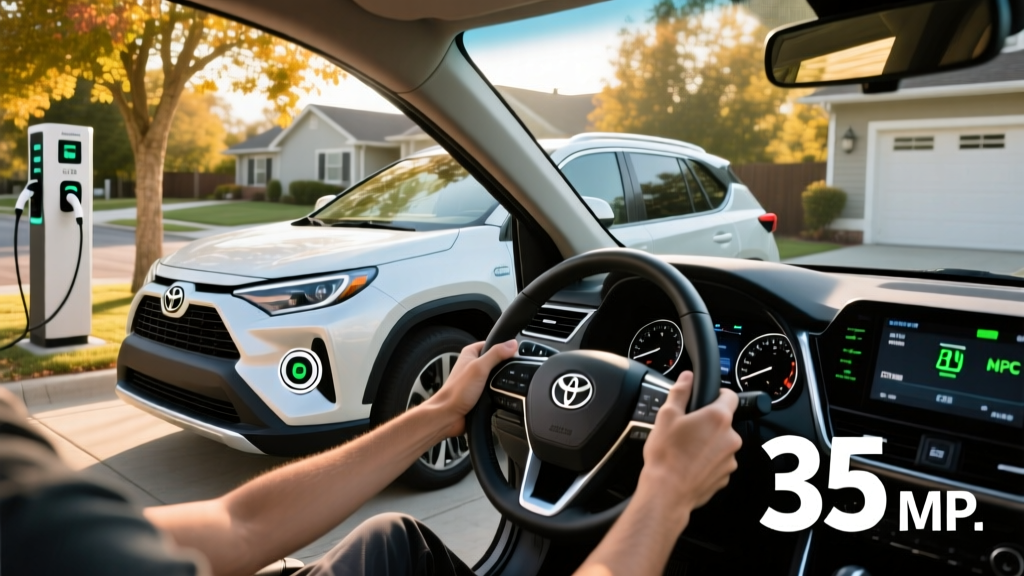
- City-heavy commuting (stop-and-go, under 45 mph): 33–38 MPG. Many owners exceed the EPA city rating because the hybrid system thrives in low-speed, high-regen conditions.
- Mixed driving (suburban, moderate highway): 30–34 MPG, closely matching the EPA combined estimate.
- Highway-dominant (70+ mph sustained): 27–30 MPG. Aerodynamic drag and the 2.5L Atkinson-cycle engine working harder at speed reduce efficiency.
- Cold-weather penalty (below 30°F): Expect a 10–15% drop, bringing combined figures to roughly 27–29 MPG. The engine runs more frequently to provide cabin heat and warm the catalytic converter.
Powertrain Specs: What's Under the Hood
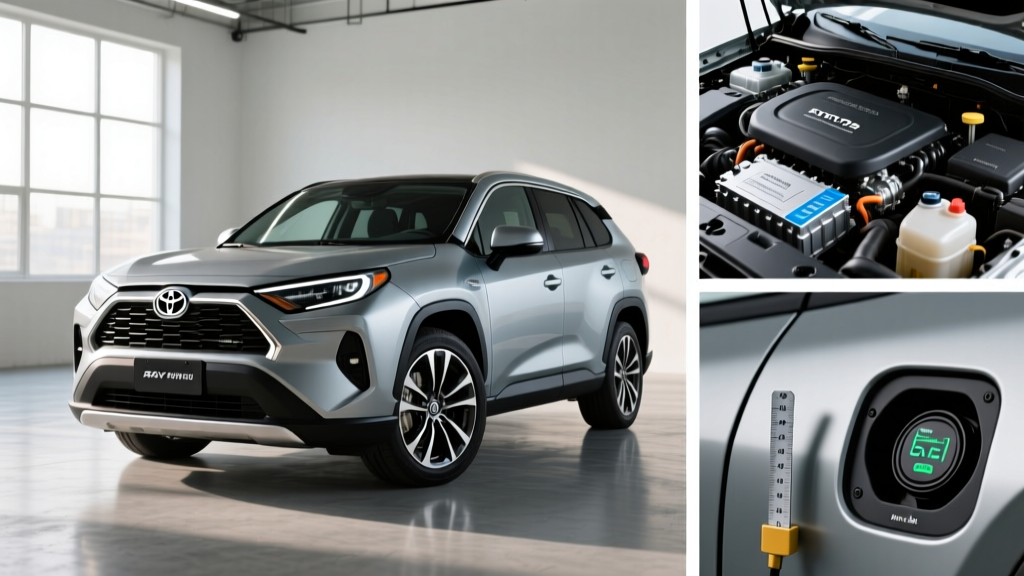
The 2018 RAV4 Hybrid pairs Toyota's proven Hybrid Synergy Drive with a 2.5-liter four-cylinder engine. Here are the key specifications:
| Specification | 2018 RAV4 Hybrid |
|---|---|
| Engine | 2.5L 4-cyl Atkinson-cycle |
| Engine Horsepower | 150 HP |
| Front Electric Motor | 105 kW (141 HP) |
| Rear Electric Motor (AWD) | 50 kW (67 HP) |
| Net Combined System HP | 194 HP |
| Transmission | eCVT (planetary gearset) |
| Drivetrain | AWD (electronic rear motor) |
| Hybrid Battery | ~1.6 kWh (NiMH, sealed) |
| 0–60 mph | ~7.8 seconds |
| Towing Capacity | 1,750 lbs |
The 1.6 kWh nickel-metal hydride (NiMH) battery is small by modern standards — it's not designed for electric-only driving beyond very low-speed maneuvering (typically under 1 mile at speeds below 25 mph). Its job is to buffer energy for the electric motors, enabling seamless engine shut-off at stops and torque-fill during acceleration.
HEV vs PHEV vs EV: Which Powertrain Fits You?
The 2018 RAV4 Hybrid is a conventional hybrid (HEV). It is not a plug-in hybrid (PHEV) and not a battery-electric vehicle (BEV). Understanding the difference is critical before you buy:
| Feature | HEV (2018 RAV4 Hybrid) | PHEV (e.g., RAV4 Prime) | BEV (e.g., Tesla Model Y) |
|---|---|---|---|
| Plugs in? | No — self-charging | Yes — 120V or 240V | Yes — 240V or DC fast charge |
| Electric-only range | ~0.5 mi at low speed | ~42 mi (RAV4 Prime) | 300+ mi (full battery) |
| Gasoline required? | Yes — always | Yes — after battery depletes | No — electric only |
| Combined MPG / MPGe | 32 MPG | 94 MPGe (elec) / 38 MPG (gas) | 117–127 MPGe |
| Federal tax credit (new) | None | Up to $7,500 (§30D) | Up to $7,500 (§30D) |
| Home charging needed? | No | Recommended for EV range | Essential |
| Upfront cost (used market, 2026) | ~$18,000–$25,000 | ~$32,000–$40,000 | ~$28,000–$45,000 |
- You don't have access to home or workplace charging
- You want lower fuel costs with zero behavior change — just fill up with gas
- You want a proven, low-risk used vehicle with strong reliability data
- Your budget is under $25,000
- You can charge at home (Level 2, 240V) and want 30–42 miles of electric-only commuting
- You want gas-free daily driving but road-trip flexibility on weekends
- You have reliable home charging and want the lowest per-mile fuel cost
- You want to eliminate oil changes and engine maintenance entirely
Hybrid Battery Reliability, Lifespan, and Replacement Cost
The single biggest concern for used-hybrid buyers is the traction battery. Here's what you need to know about the 2018 RAV4 Hybrid's NiMH pack:
8 years / 100,000 miles (10 years / 150,000 miles in California Air Resources Board states including CA, NY, MA, NJ, CT, RI, VT, ME, NH, OR, WA, MD, CO, MN, NV, NM).
2026 Status: A 2018 model is now 8 model years old. If the vehicle has under 100,000 miles and was originally sold outside CARB states, the federal warranty may still apply through the 8-year mark depending on the original in-service date. In CARB states, coverage extends to 2028 or 150,000 miles. Always verify with a Toyota dealer using the VIN.
Expected Battery Lifespan
Toyota's NiMH hybrid batteries have an exceptional longevity track record. Data from taxi fleets, high-mileage owner reports, and industry analyses show:
- Typical lifespan: 150,000–200,000+ miles before significant degradation
- Failure mode: Gradual capacity loss (reduced EV-mode assist, slightly lower MPG) rather than sudden failure
- Common trigger for replacement: Individual cell imbalance, which a hybrid specialist can often recondition for $500–$1,200
Battery Replacement Cost
- New OEM battery (Toyota dealer): $3,000–$4,500 including labor
- Remanufactured battery: $1,500–$2,500 including labor
- Cell-level reconditioning (hybrid specialist): $500–$1,200
For context, a conventional gasoline vehicle's transmission replacement often costs $3,000–$5,000 — and the hybrid eCVT in the RAV4 has far fewer wear components than a traditional automatic. Many hybrid owners never need a battery replacement within typical ownership periods.
2018 RAV4 Hybrid Reliability and Ownership Costs
The fourth-generation RAV4 Hybrid (2016–2018) is one of the highest-rated vehicles for long-term reliability in its class:
- NHTSA Overall Safety Rating: 5 stars — see NHTSA results
- IIHS Rating: Top Safety Pick (Good ratings in all crashworthiness tests)
- Consumer Reports: Consistently above-average reliability scores for the 2018 model year
- Common issues: Minor infotainment glitches, some reports of rear differential whine at high mileage, and standard wear items (brakes, suspension). No widespread powertrain or hybrid-system failures.
Because the hybrid system uses regenerative braking extensively, brake pad wear is significantly reduced — many owners report original brake pads lasting 80,000–100,000 miles. The eCVT has no traditional clutch packs or torque converter, eliminating a major failure point found in conventional automatic transmissions.
Estimated Annual Ownership Costs (2026)
- Fuel: ~$1,400–$1,700/year (12,000 miles at $3.20–$3.50/gallon, 32 MPG combined)
- Insurance: ~$1,200–$1,800/year (varies by state, driver profile)
- Maintenance: ~$400–$600/year (oil changes, tire rotation, cabin air filter — lower than gas-only SUVs due to regen braking and eCVT)
- Comparison: A comparable 2018 gas-only RAV4 AWD (25 MPG combined) would cost ~$1,800–$2,100/year in fuel — a $400+ annual savings with the hybrid.
Tax Credit Eligibility for the 2018 RAV4 Hybrid
This is a critical distinction that catches many used-car shoppers off guard:
- Federal §30D Clean Vehicle Credit: The 2018 RAV4 Hybrid does not qualify. This credit applies only to new plug-in electric vehicles (PHEVs and BEVs) meeting battery-sourcing, MSRP, and buyer income requirements under current IRS rules.
- Used Clean Vehicle Credit (§25E): Up to $4,000 for qualifying used EVs and PHEVs purchased from a dealer for under $25,000. The 2018 RAV4 Hybrid (HEV) does not qualify — it has no plug and no qualifying battery capacity.
- State incentives: A small number of states have offered hybrid-specific rebates historically, but most have shifted focus to plug-in vehicles. Check your state's energy office or DMV for current programs.
Pros and Cons: The 2018 RAV4 Hybrid in 2026
Pros
- 32 MPG combined — 28% better than gas-only RAV4 AWD
- No plug required — zero infrastructure or behavior change
- Proven hybrid reliability with 150K+ mile battery lifespan
- Standard AWD with electronic rear motor (no mechanical complexity)
- Lower brake wear thanks to regenerative braking
- eCVT eliminates traditional transmission failure risk
- Strong used-market demand and resale value
Cons
- No electric-only driving range (unlike a PHEV or EV)
- No federal or state tax credit eligibility
- Highway MPG (30) trails city MPG (34) — less ideal for road warriors
- Dated infotainment (no wireless CarPlay, small screen by 2026 standards)
- 1.6 kWh NiMH battery is aging technology vs. modern lithium-ion
- Cargo space slightly reduced vs. gas RAV4 (battery under rear seat)
- 1750-lb towing capacity limits utility for trailers/boats
Frequently Asked Questions
How many MPG does the 2018 RAV4 Hybrid get?
The EPA rates the 2018 RAV4 Hybrid at 34 MPG city, 30 MPG highway, and 32 MPG combined. In real-world driving, most owners report 30–34 MPG combined, with city-dominant drivers often seeing 35+ MPG and highway-dominant drivers seeing 27–30 MPG.
Does the 2018 RAV4 Hybrid need to be plugged in?
No. The 2018 RAV4 Hybrid is a conventional hybrid (HEV). It charges its own small battery through regenerative braking and the gasoline engine. You fuel it exactly like a regular gas car — the only difference is better MPG.
Is the 2018 RAV4 Hybrid reliable, and what does battery replacement cost?
Yes — the 2018 RAV4 Hybrid is one of the most reliable vehicles in its class. The NiMH hybrid battery typically lasts 150,000–200,000+ miles. If replacement is needed, expect $3,000–$4,500 for a new OEM battery, $1,500–$2,500 for remanufactured, or $500–$1,200 for cell-level reconditioning at a hybrid specialist.
Does the 2018 RAV4 Hybrid qualify for any tax credit?
No. Federal tax credits under §30D (new vehicles) and §25E (used vehicles) apply only to plug-in electric vehicles — PHEVs and BEVs. The RAV4 Hybrid is a conventional HEV with no plug, so it is ineligible for any federal EV tax credit.
How does the 2018 RAV4 Hybrid compare to the newer RAV4 Hybrid (2019+)?
The 2019 redesign (fifth generation, TNGA platform) improved the combined rating to 40 MPG (41 city/38 highway), added more cargo space, updated safety tech (Toyota Safety Sense 2.0), and modernized the interior. If your budget allows ($25,000–$35,000 on the used market), the 2019+ generation is a meaningful upgrade. However, the 2018 remains an excellent value at $18,000–$25,000 with a proven powertrain.
Is the hybrid battery covered by warranty in 2026?
Original coverage was 8 years/100,000 miles federally, or 10 years/150,000 miles in CARB states (CA, NY, and 11 others). A 2018 model may still be within the CARB-state warranty window if under 150,000 miles. Contact a Toyota dealer with your VIN to verify remaining coverage.
Should I buy the 2018 RAV4 Hybrid or a used EV like a Tesla Model 3?
If you have home charging and want the lowest operating cost, a used EV will save more on fuel ($500–$800/year vs. $1,400–$1,700 for the hybrid). But if you lack charging access, drive long distances frequently, live in extreme cold, or want zero charging logistics, the RAV4 Hybrid delivers excellent efficiency with none of the infrastructure requirements.