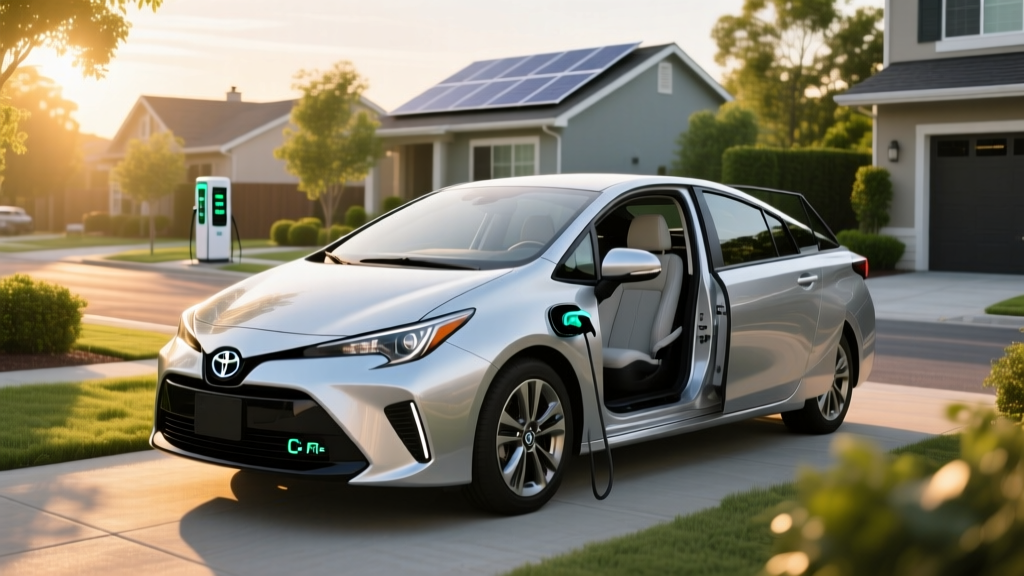
The fourth-generation Toyota Prius (XW50) debuted with a controversial design and a laser focus on aerodynamics. By 2018, it had settled into its role as America's most recognizable hybrid. For used-car shoppers in 2026, the question isn't whether the 2018 Prius is efficient — it obviously is — but whether its real-world MPG, battery durability, and ownership costs still make it a smart buy nearly a decade after it rolled off the line.
This guide covers every number that matters: EPA MPG, real-world fuel economy data, hybrid battery health expectations, powertrain specs, and how the 2018 Prius stacks up against modern PHEVs and full EVs. If you're evaluating a used 2018 Prius, this is the data you need before signing.
2018 Prius Hybrid MPG: EPA Ratings and Real-World Numbers
The 2018 Toyota Prius came in several trims, and the EPA fuel economy varies depending on wheel size and drivetrain configuration. Here is the full breakdown from fueleconomy.gov:
| Trim / Configuration | City MPG | Highway MPG | Combined MPG |
|---|---|---|---|
| Prius Two / Three / Four (15" wheels) | 54 | 50 | 52 |
| Prius One / Four Touring (17" wheels) | 49 | 47 | 48 |
| Prius AWD-e (added for 2019, not 2018) | N/A for 2018 model year | ||
HEV vs. PHEV: What the 2018 Prius Actually Is
The 2018 Prius sold in the U.S. is a conventional hybrid electric vehicle (HEV). It does not plug in. It charges its own 1.31 kWh nickel-metal hydride (NiMH) battery through regenerative braking and the gasoline engine. You fuel it exclusively at a gas station.
Toyota also sold the Prius Prime — a plug-in hybrid (PHEV) — alongside the standard Prius in 2018. The Prime is a fundamentally different vehicle in how you use it daily:
| Attribute | 2018 Prius (HEV) | 2018 Prius Prime (PHEV) |
|---|---|---|
| Plug-in charging? | No — self-charging | Yes — Level 1 (120V) or Level 2 (240V) |
| Battery capacity | 1.31 kWh (NiMH) | 8.8 kWh (lithium-ion) |
| Electric-only range | N/A (EV mode limited to ~1 mi at low speed) | 25 miles (EPA) |
| Total range (gas + electric) | ~590 miles | ~640 miles |
| Combined MPGe (electric mode) | N/A | 133 MPGe |
| Combined MPG (gas-only mode) | 52 MPG | 54 MPG |
| Level 2 charge time (0–100%) | N/A | ~2 hours |
| DC fast charging | N/A | No |
| 0–60 mph | ~10.5 sec | ~11.0 sec |
If you're searching for a used 2018 Prius and see "Prime" in the listing, you're looking at the PHEV variant. The Prime makes sense if you have home charging and a commute under 25 miles — you may go weeks without visiting a gas station. The standard HEV Prius makes sense if you lack charging access and want maximum simplicity.
Powertrain Specs: What Moves the 2018 Prius
The 2018 Prius uses Toyota's fourth-generation Hybrid Synergy Drive. Here are the specifics:
| Specification | Detail |
|---|---|
| Engine | 1.8L 4-cylinder Atkinson-cycle (95 hp, 105 lb-ft) |
| Electric motor | Permanent-magnet synchronous (71 hp, 120 lb-ft) |
| Combined net horsepower | 121 hp |
| Transmission | eCVT (planetary gearset, not a belt CVT) |
| Drivetrain | Front-wheel drive |
| Curb weight | ~3,045 lbs |
| Fuel tank | 11.4 gallons |
| 0–60 mph | ~10.5 seconds |
The eCVT in the Prius is not a traditional continuously variable transmission with a steel belt and pulleys. It uses a planetary gearset that seamlessly blends power from the engine and motor. This design has fewer wear components than a conventional automatic or belt-type CVT, which contributes to the Prius's reputation for powertrain longevity.
Hybrid Battery Longevity and Replacement Cost
This is the top concern for anyone buying a used 2018 Prius in 2026: the car is now 8 years old, and the hybrid battery is the single most expensive component.
Real-world battery lifespan: Toyota's NiMH hybrid batteries have a strong track record. Data from taxi fleets and high-mileage owners show that first- and second-generation Prius batteries commonly lasted 150,000–200,000 miles before significant degradation. The fourth-gen NiMH pack in the 2018 model benefits from improved thermal management. Most owners report no battery issues before 120,000 miles, and many reach 180,000+ miles.
Replacement cost if it fails:
- New OEM Toyota battery: $2,000–$2,500 installed at a dealer
- Refurbished/remanufactured battery: $1,000–$1,500 installed at an independent hybrid specialist
- Individual module replacement: Some shops can replace only the degraded cells for $500–$800, though this is a temporary fix if other modules are aging
Before buying a used 2018 Prius, request a hybrid battery health check using Toyota's Techstream diagnostic tool or an OBD-II scanner with hybrid-specific software (such as the Dr. Prius app). This reveals the battery's State of Health (SoH), individual module voltages, and whether any cells are imbalanced.
Used Pricing in 2026 and Tax Credit Eligibility
The 2018 Prius originally started at an MSRP of $23,475 (Two trim) and topped out around $30,000 for a fully loaded Four Touring. In the 2026 used market, expect these approximate price ranges depending on mileage and condition:
- 80,000–100,000 miles: $13,000–$16,000
- 100,000–130,000 miles: $10,500–$14,000
- 130,000+ miles: $8,000–$11,000
Tax credit status: The 2018 Prius HEV does not qualify for the federal §30D Clean Vehicle Credit. That credit applies only to plug-in vehicles (PHEVs and BEVs) meeting battery sourcing, MSRP, and buyer income requirements under current IRS rules. Conventional hybrids like the standard Prius have never been eligible for §30D.
However, if you're considering a used 2018 Prius Prime (the PHEV), the §25E Used Clean Vehicle Credit could apply: up to $4,000 (30% of sale price, capped at $4,000) for qualified used plug-in vehicles priced at $25,000 or less, subject to buyer income limits ($75,000 single / $150,000 joint). Verify eligibility on the specific VIN at the IRS's used-vehicle portal before purchasing.
2018 Prius vs. Modern Alternatives: HEV, PHEV, or Full EV?
How does a used 2018 Prius compare to what you could buy new or used in 2026? Here's a practical decision framework:
| Factor | Used 2018 Prius (HEV) | New 2026 Prius (HEV) | New 2026 Prius Prime (PHEV) | Used 2022 Tesla Model 3 (BEV) |
|---|---|---|---|---|
| Purchase price | $10K–$16K | $28,550–$36,500 | $33,445–$40,000 | $18K–$25K |
| Combined MPG / MPGe | 52 MPG | 57 MPG | 52 MPG / 127 MPGe | 132 MPGe |
| Electric-only range | None | None | 44 miles | 272–310 miles |
| Plug-in required? | No | No | Recommended | Yes |
| Annual fuel cost* | ~$900 | ~$820 | ~$500–$700 | ~$500–$650 |
| Federal tax credit | None | None (HEV) | Up to $7,500 (§30D) | Up to $4,000 (§25E used) |
*Annual fuel cost estimates based on 12,000 miles/year, $3.30/gallon gas, and $0.16/kWh electricity. Source: fueleconomy.gov annual fuel cost calculator.
Choose the Used 2018 Prius (HEV) If:
- Your budget is under $16,000 and you want maximum MPG per dollar
- You don't have access to home or workplace charging
- You want the lowest-maintenance, simplest electrified vehicle
- Your annual mileage is high and you want proven hybrid reliability
Consider a Newer PHEV or BEV If:
- You have Level 2 home charging and want to reduce gas spending further
- You want to capture a federal tax credit ($4,000–$7,500)
- You want modern safety tech (the 2018 Prius has Toyota Safety Sense P, but newer models include TSS 2.5/3.0 with improved pedestrian detection and intersection assist)
- You're keeping the car 8+ years and want a full warranty clock
Pros, Cons, and the Bottom Line
Pros
- 52 MPG combined — still competitive with 2026 hybrids
- Proven powertrain with 200K+ mile potential
- No plug-in needed — works anywhere gas is sold
- Low annual fuel cost (~$900/year)
- Spacious hatchback cargo area (50.7 cu ft seats folded)
- Toyota Safety Sense P standard (AEB, lane departure, adaptive cruise)
Cons
- 121 hp — slow acceleration (10.5 sec to 60 mph)
- Original 8-yr battery warranty likely expired by 2026
- Infotainment feels dated (no Apple CarPlay/Android Auto on most trims)
- Road noise and ride quality trail newer competitors
- No federal tax credit eligibility (HEV)
- Rear visibility compromised by split rear window design
The 2018 Prius remains one of the most cost-effective vehicles on the road in 2026 for drivers who prioritize fuel savings above all else. At $10,000–$16,000 used, with 52 MPG combined and a powertrain known to last well past 150,000 miles, the total cost of ownership is hard to beat. The main risk is hybrid battery health — get it checked before purchase, budget $1,500–$2,500 as a contingency, and this car can reliably serve as a daily commuter for years to come.
Frequently Asked Questions
How many MPG does the 2018 Prius get in real-world driving?
Most owners report 48–55 MPG combined, with city driving often exceeding the EPA's 54 MPG rating thanks to regenerative braking. Highway-only driving at 75+ mph typically yields 42–46 MPG. Cold weather can reduce economy by 5–10%.
Does the 2018 Prius need to be plugged in?
No. The standard 2018 Prius is a conventional hybrid (HEV). It charges its battery internally through regenerative braking and the gasoline engine. Only the Prius Prime (PHEV variant) requires plug-in charging to use its electric-only range.
How long will the 2018 Prius hybrid battery last?
Toyota's NiMH hybrid batteries commonly last 150,000–200,000 miles. At 8 years old in 2026, many 2018 Prius batteries are still healthy, but a pre-purchase diagnostic check is essential. Replacement costs $1,000–$2,500 depending on whether you choose refurbished or new OEM.
Does the 2018 Prius qualify for any tax credit?
The standard 2018 Prius HEV does not qualify for any federal tax credit. The 2018 Prius Prime (PHEV) may qualify for the §25E Used Clean Vehicle Credit of up to $4,000 if purchased used for $25,000 or less and the buyer meets income limits. Check IRS guidelines for current eligibility.
Is the 2018 Prius better than buying a new hybrid in 2026?
It depends on budget and priorities. A new 2026 Prius gets 57 MPG and comes with a full warranty, but starts at $28,550. A used 2018 Prius at $12,000–$15,000 delivers nearly the same efficiency at half the price, accepting the risk of an aging battery and older tech. For pure cost-per-mile, the used 2018 model is extremely compelling.