Quick Verdict: A Discontinued Hybrid Worth Considering on the Used Market
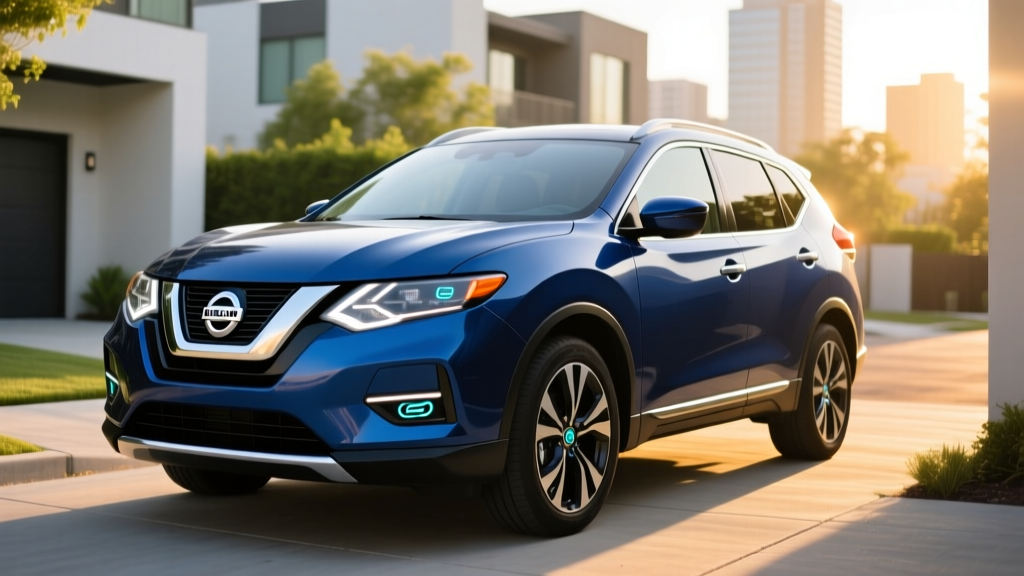
The 2018 Nissan Rogue Hybrid pairs a 2.0-liter four-cylinder engine with a small electric motor to deliver 33 MPG combined — a meaningful bump over the gas-only Rogue's 28 MPG combined. Nissan discontinued the Rogue Hybrid after the 2019 model year, but it remains a practical option for used-car shoppers who want hybrid efficiency without plug-in complexity. With roughly 80,000–120,000 miles on most examples today, buyers need to understand what the battery warranty covers, what real-world fuel economy looks like, and how this HEV stacks up against modern alternatives.
This is a conventional hybrid (HEV), not a plug-in hybrid (PHEV). You never plug it in. The system recovers energy through regenerative braking and the engine to keep a small lithium-ion battery charged. If you're looking for electric-only driving, you'll need a PHEV or a full battery-electric vehicle (BEV).
- HEV (this vehicle): No plug. Battery charges via regen and engine. Small battery (~0.6 kWh). Electric motor assists the engine but cannot drive the car alone for meaningful distances. Fuel economy advantage: 15–25% better than gas equivalent.
- PHEV: Plugs in. Larger battery (typically 12–25 kWh). Can drive 25–45 miles on electricity alone before the engine starts. Requires home or public charging access to realize full value.
- BEV (full EV): Plugs in. No engine. 200–400+ mile range. Requires reliable charging access.
2018 Nissan Rogue Hybrid Fuel Economy: EPA vs Real-World MPG
The EPA rates the 2018 Rogue Hybrid at 33 MPG combined — split as 33 city / 35 highway for the front-wheel-drive (FWD) model and 31 city / 34 highway for the all-wheel-drive (AWD) variant, landing at 32 MPG combined for AWD. These figures come from fueleconomy.gov.
| Drivetrain | City MPG | Highway MPG | Combined MPG |
|---|---|---|---|
| FWD | 33 | 35 | 33 |
| AWD | 31 | 34 | 32 |
Real-World MPG Expectations
Hybrid systems excel in stop-and-go city driving, where regenerative braking recovers energy that would otherwise be lost as heat in the brake pads. In mixed suburban commuting, owners commonly report 30–34 MPG — close to EPA estimates. Highway-heavy driving at sustained 70–80 mph speeds typically yields 28–31 MPG, since the electric motor provides less benefit at constant velocity and the Rogue's boxy crossover shape creates aerodynamic drag.
For comparison, the gas-only 2018 Rogue with its 2.5-liter four-cylinder and CVT achieves 26 city / 33 highway / 28 combined (FWD). The hybrid's advantage is most pronounced in city driving, where it gains 7 MPG — a 27% improvement.
Powertrain Specs: Engine, Motor, and Combined Output
| Specification | Detail |
|---|---|
| Engine | 2.0L inline-4 (QR20DE) |
| Engine Power | 141 hp @ 6,000 rpm |
| Engine Torque | 144 lb-ft @ 4,400 rpm |
| Electric Motor | 30 kW (40 hp) AC synchronous |
| Combined System Output | 176 hp |
| Transmission | Xtronic CVT (continuously variable) |
| Hybrid Battery | ~0.6 kWh lithium-ion (located under cargo floor) |
| Drivetrain | FWD or AWD (Intelligent AWD) |
| 0–60 mph (estimated) | ~8.5 seconds |
| Curb Weight | ~3,600–3,750 lbs |
The 176 combined horsepower gives the Rogue Hybrid adequate acceleration for merging and passing, though it's not quick by modern standards. The CVT prioritizes smoothness and efficiency over sportiness. The electric motor's torque fill at low RPM helps the Rogue Hybrid feel more responsive from a stop than the gas-only model, even though the hybrid is roughly 200 lbs heavier.
Battery Warranty, Lifespan, and Replacement Cost
- Coverage: 8 years / 100,000 miles (whichever comes first) — covers defects and capacity loss below a functional threshold
- Emissions warranty extension: In CARB states (California, New York, and others adopting CARB standards), hybrid battery coverage extends to 10 years / 150,000 miles
- Current status for 2018 models: As of 2026, most 2018 Rogue Hybrids have exceeded 8 years. Check mileage — if under 100,000 miles and outside CARB states, original federal warranty may still apply. In CARB states, coverage runs through 2028 or 150,000 miles.
How Long Does the Rogue Hybrid Battery Last?
Nissan's hybrid system uses a relatively small lithium-ion pack (~0.6 kWh usable) that operates within a narrow state-of-charge window — typically between 40% and 80%. This shallow cycling strategy dramatically reduces degradation compared to full EV batteries that routinely cycle from 10% to 90%. Most Nissan hybrid owners report no meaningful battery capacity loss within the first 100,000–150,000 miles.
That said, lithium-ion chemistry degrades with time and heat exposure. A 2018 model is now 8 years old. While catastrophic failure is uncommon, gradual capacity reduction can slightly lower fuel economy over time — perhaps 1–2 MPG off original figures after 120,000+ miles. This is normal and doesn't indicate imminent failure.
Hybrid Battery Replacement Cost
If the hybrid battery does fail outside warranty, expect replacement costs in the range of $2,000–$4,000 for a refurbished or aftermarket unit, or $4,000–$6,000 for a new OEM Nissan battery pack including labor. Independent hybrid specialists often offer refurbished packs with 1–3 year warranties at the lower end of this range. Because the Rogue Hybrid's battery is small (0.6 kWh vs. 60–100 kWh in a full EV), replacement costs are far lower than EV battery swaps.
Trim Levels, Pricing, and Tax Credit Eligibility
The 2018 Rogue Hybrid was offered in two trims: SV and SL. Original MSRPs were approximately:
- SV Hybrid FWD: ~$29,640
- SV Hybrid AWD: ~$31,040
- SL Hybrid FWD: ~$33,270
- SL Hybrid AWD: ~$34,670
On the used market in 2026, expect to pay roughly $12,000–$19,000 depending on mileage, condition, and trim. Higher-mileage SV models sit near the lower end; low-mileage SL AWD examples command the upper range.
Does the 2018 Rogue Hybrid Qualify for a Tax Credit?
No federal tax credit applies to the 2018 Nissan Rogue Hybrid today. Under current IRS §30D rules, the federal clean vehicle credit applies only to new plug-in electric vehicles (PHEVs and BEVs) with qualifying battery capacity and domestic sourcing requirements. Conventional hybrids (HEVs) like the Rogue Hybrid do not qualify for §30D. Additionally, the vehicle is used and would fall under the separate §25E used-EV credit, which requires a plug-in vehicle — again excluding conventional hybrids.
Some states historically offered hybrid purchase rebates, but most have shifted incentives toward plug-in vehicles. Check your state's current energy office or DMV website for any residual hybrid incentives, though these are increasingly rare.
Pros and Cons of Buying a Used 2018 Rogue Hybrid
- 33 MPG combined saves ~$300–$500/year vs gas-only Rogue (at 12,000 miles/year, $3.50/gallon)
- No plug-in charging required — works like a normal gas car
- Strong city MPG advantage (33 city vs 26 city for gas model)
- Spacious cargo area (though slightly reduced vs gas model due to battery placement)
- Standard Nissan Safety Shield features (automatic emergency braking, lane departure warning)
- AWD available for snow-belt buyers
- Discontinued after 2019 — limited used inventory and parts may become harder to source
- Cargo floor sits slightly higher due to battery (loses ~3 cu ft of under-floor storage)
- CVT can drone under hard acceleration
- Original battery warranty expiring or expired on most examples
- Not a PHEV — no electric-only driving capability
- Infotainment feels dated by 2026 standards (no wireless Apple CarPlay/Android Auto)
Who Should Buy the 2018 Rogue Hybrid vs a Full EV or Gas Car?
Choose the 2018 Rogue Hybrid if:
- You want better fuel economy without changing your refueling habits — no plug, no charging apps, no route planning
- Your commute is city-heavy (stop-and-go traffic maximizes hybrid benefit)
- You need a compact crossover for family duty but find modern EVs too expensive on the used market
- You live in an apartment or lack home charging access (making a PHEV or BEV impractical)
Choose a used PHEV (like a Toyota RAV4 Prime or Mitsubishi Outlander PHEV) if:
- You have home charging access and a short commute (under 30 miles) — you could drive mostly on electricity
- You want the option of electric-only driving for daily errands with gas-engine backup for road trips
Choose a used full EV (like a Tesla Model Y or Hyundai Kona Electric) if:
- You have reliable home Level 2 charging
- Your daily driving is under 200 miles and you're comfortable with public DC fast charging for road trips
- You want zero tailpipe emissions and minimal maintenance (no oil changes, no transmission fluid)
Choose the gas-only 2018 Rogue if:
- You drive mostly highway miles where the hybrid's advantage narrows
- You want maximum cargo space and a lower purchase price
- You plan to keep the vehicle only 2–3 more years and want to minimize upfront cost
Reliability and Common Issues
The 2018 Rogue Hybrid's conventional powertrain is generally reliable. The 2.0L QR20DE engine is a proven Nissan design, and the hybrid system adds complexity but not dramatically so — there's no high-voltage contactor array or massive battery thermal management system as in a full EV. NHTSA records show no major recalls specific to the hybrid battery system.
Common complaints from owners include:
- CVT behavior: Some drivers note a rubber-band feel or slight hesitation during initial acceleration. This is characteristic of Nissan's Xtronic CVT and not necessarily a defect, though CVT fluid changes at 60,000-mile intervals help longevity.
- Reduced cargo flexibility: The hybrid battery occupies space under the cargo floor, eliminating the spare tire (a tire inflator kit is included instead) and raising the load floor by about an inch.
- Brake feel: The transition between regenerative braking and friction braking can feel slightly uneven at low speeds — typical of hybrid systems from this era.
For a pre-purchase inspection, have a mechanic check the hybrid battery state of health (SoH) via the OBD-II port, verify CVT fluid condition, and confirm that all recall campaigns (including any non-hybrid-related Nissan recalls) have been completed.
Frequently Asked Questions
How many MPG does the 2018 Nissan Rogue Hybrid get?
The EPA rates it at 33 city / 35 highway / 33 combined for FWD models, and 31 city / 34 highway / 32 combined for AWD. Real-world results typically fall within 28–34 MPG depending on driving mix, with city-heavy commutes yielding the best results.
Do I need to plug in the 2018 Rogue Hybrid?
No. This is a conventional hybrid (HEV), not a plug-in hybrid. The battery charges automatically through regenerative braking and the gasoline engine. You simply fill it with gas like any other car.
Is the 2018 Rogue Hybrid battery still under warranty?
The original hybrid battery warranty was 8 years / 100,000 miles. As of 2026, a 2018 model is 8 years old, so time-based coverage is expiring or has expired. In CARB states, coverage extends to 10 years / 150,000 miles (through 2028). Verify remaining coverage with a Nissan dealer using the VIN.
How much does it cost to replace the hybrid battery?
Expect $2,000–$4,000 for a refurbished pack or $4,000–$6,000 for a new OEM battery, including labor. The Rogue Hybrid's small 0.6 kWh battery is far less expensive to replace than a full EV battery.
Does the 2018 Rogue Hybrid qualify for any tax credit?
No. Federal §30D and §25E tax credits apply only to plug-in vehicles (PHEVs and BEVs). Conventional hybrids do not qualify. Some states may offer minor hybrid incentives, but most have shifted focus to plug-in vehicles.
How does the Rogue Hybrid compare to the Toyota RAV4 Hybrid?
The 2018 Toyota RAV4 Hybrid achieves 32 MPG combined (AWD standard) and offers a more refined hybrid system with stronger electric-only assist at low speeds. The RAV4 Hybrid also benefits from Toyota's reputation for hybrid longevity. However, used RAV4 Hybrids typically command $3,000–$5,000 more than comparable Rogue Hybrids. If budget is the priority, the Rogue Hybrid offers similar fuel economy at a lower entry price.
What's the difference between the SV and SL trims?
The SL adds leather seating, a 360-degree camera system, navigation, Bose premium audio, and a power liftgate. Both trims include the same hybrid powertrain and fuel economy ratings. The SL's additional features add roughly $3,600 to the original MSRP.
Can I tow with the 2018 Rogue Hybrid?
Nissan rates the Rogue Hybrid for up to 1,100 lbs of towing capacity — suitable for a small utility trailer or a couple of dirt bikes, but not for a boat or camper. This is lower than the gas-only Rogue's 1,100–1,350 lb rating due to the hybrid system's additional weight and thermal constraints.
Sources: EPA Fuel Economy, NHTSA Vehicle Data, IRS Clean Vehicle Credits.