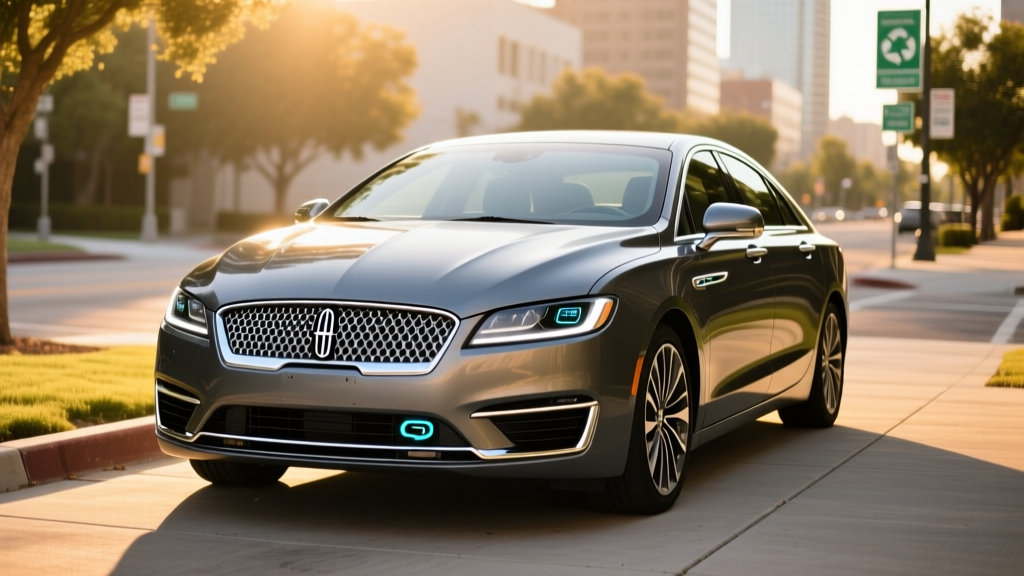
Quick Verdict: The 2018 Lincoln MKZ Hybrid in 2026
The 2018 Lincoln MKZ Hybrid remains one of the most fuel-efficient luxury sedans you can buy on the used market. With an EPA-rated 40 MPG combined and no plug required, it delivers genuine hybrid efficiency wrapped in a quiet, well-appointed cabin. Lincoln priced the hybrid powertrain at the same MSRP as the gas model when new — a rare move that eliminated the typical "hybrid premium." In 2026, used examples represent strong value for buyers who want luxury and efficiency without the commitment of a full EV or plug-in hybrid.
This guide covers everything a used-car shopper needs: real-world MPG versus the EPA sticker, the hybrid battery's expected lifespan and replacement cost, how the MKZ Hybrid stacks up against PHEVs and full BEVs, and whether any tax incentives still apply.
HEV vs. PHEV: Where the MKZ Hybrid Fits
The 2018 Lincoln MKZ Hybrid is a conventional hybrid electric vehicle (HEV), not a plug-in hybrid (PHEV). This distinction matters:
Conventional Hybrid (HEV) — MKZ Hybrid
- No plug-in charging required — the battery charges via regenerative braking and the gasoline engine
- Small battery: ~1.4 kWh (not usable for electric-only driving at highway speeds)
- Electric motor assists the engine at low speeds and during acceleration
- Fuel economy benefit: consistent across all driving conditions
Plug-In Hybrid (PHEV)
- Requires plug-in charging (Level 1 or Level 2) to realize electric-only range
- Larger battery: typically 10–20 kWh, enabling 20–40 miles electric-only
- Operates as an EV for short commutes, then switches to hybrid mode
- Eligible for federal §30D tax credit (when new, subject to MSRP and income caps)
The MKZ Hybrid never had a PHEV variant. If you need electric-only commuting capability, you'd need to look at competitors like the BMW 330e or the discontinued Audi A3 e-tron. The MKZ Hybrid's strength is simplicity: you fuel it like any gas car and let the hybrid system handle efficiency.
Fuel Economy: EPA Ratings and Real-World MPG
| Driving Condition | EPA Rating | Real-World Expectation |
|---|---|---|
| City | 42 MPG | 40–45 MPG (hybrids often exceed EPA in stop-and-go) |
| Highway | 38 MPG | 34–38 MPG (aerodynamic drag limits regen benefit) |
| Combined | 40 MPG | 37–42 MPG |
Source: EPA Fuel Economy Guide — 2018 Lincoln MKZ Hybrid
Why City MPG Exceeds Highway
Like all conventional hybrids, the MKZ Hybrid benefits most from urban driving. Regenerative braking recaptures energy at every stoplight, and the electric motor handles low-speed propulsion where gasoline engines are least efficient. On sustained highway runs above 65 mph, the 2.0-liter Atkinson-cycle engine does most of the work, and the hybrid advantage narrows.
Real-World Variables That Shift MPG
- Cold weather: Expect a 5–10% MPG drop below freezing. The engine runs more often to provide cabin heat and maintain battery temperature.
- Hilly terrain: Net MPG may drop on sustained climbs, though regenerative braking on descents partially offsets this.
- Driving style: Aggressive acceleration bypasses the electric motor assist, pushing fuel economy toward the low 30s.
- A/C usage: The electric A/C compressor draws from the hybrid battery, reducing MPG by roughly 1–2 MPG in hot weather.
For a 15,000-mile/year driver averaging 40 MPG, annual fuel consumption is approximately 375 gallons. At $3.50/gallon, that's roughly $1,313/year — compared to about $1,875/year for a comparable gas-only luxury sedan averaging 28 MPG.
Powertrain Specs: Engine, Motor, and Combined Output
| Specification | Detail |
|---|---|
| Engine | 2.0L Atkinson-cycle 4-cylinder |
| Engine Power | 141 hp @ 6,000 rpm |
| Engine Torque | 129 lb-ft @ 4,000 rpm |
| Electric Motor | Permanent-magnet AC synchronous |
| Motor Power | 120 hp (88 kW) |
| Combined Net Output | 188 hp |
| Transmission | eCVT (planetary gearset, no fixed gears) |
| Drivetrain | Front-wheel drive |
| 0–60 mph | ~8.3 seconds |
| Hybrid Battery | ~1.4 kWh lithium-ion (not plug-in capable) |
| Fuel Tank | 16.0 gallons |
| Total Range | ~640 miles (at 40 MPG combined) |
The MKZ Hybrid uses Ford's fourth-generation hybrid powertrain, shared with the Ford Fusion Hybrid. The eCVT is not a belt-and-pulley CVT — it's a planetary gearset that seamlessly blends engine and motor output with no rubber-band effect. Acceleration is adequate for highway merging but not sporty; this is a comfort-oriented luxury sedan, and the powertrain tuning prioritizes smoothness over urgency.
Battery Reliability, Warranty, and Replacement Cost
Hybrid Battery Warranty (Original)
- Federal emissions warranty: 8 years / 80,000 miles (mandatory minimum for hybrid components)
- California-emissions states (CARB states): 10 years / 150,000 miles on the hybrid battery
- Capacity threshold: Warranty covers the battery if it falls below approximately 60–70% of original capacity
How Long Do MKZ Hybrid Batteries Actually Last?
The Ford/Lincoln hybrid system has accumulated billions of real-world miles across the Fusion Hybrid, MKZ Hybrid, and Escape Hybrid lineups. Data from owner forums and fleet operators suggests the lithium-ion hybrid battery typically lasts 150,000–200,000 miles before significant degradation. Because the battery is small (~1.4 kWh) and the system maintains a generous state-of-charge buffer (never fully charging or fully depleting), stress on the cells is minimal.
For a 2018 model in 2026, most examples will be 7–8 years old. If the vehicle has under 80,000 miles and was originally sold in a CARB state, some hybrid battery warranty coverage may still apply. Verify with a Lincoln dealer using the VIN.
Battery Replacement Cost
If the hybrid battery fails out of warranty:
- OEM replacement (dealer): $2,500–$4,000 including labor
- Refurbished/remanufactured battery: $1,200–$2,200 from third-party suppliers
- Individual cell/module replacement: $500–$1,000 if only specific modules have degraded (requires a specialist)
Compared to full EV battery replacements ($5,000–$20,000+), the MKZ Hybrid's small battery is relatively inexpensive to replace. Most owners will never need to.
Used Pricing and Tax Credit Eligibility
Original MSRP (2018)
When new, Lincoln priced the MKZ Hybrid identically to the gasoline 2.0L EcoBoost model — no hybrid premium:
- MKZ Hybrid Premiere: ~$35,605
- MKZ Hybrid Select: ~$38,410
- MKZ Hybrid Reserve: ~$43,405
2026 Used Market Pricing
Based on typical used-market listings in early 2026, a 2018 MKZ Hybrid with 60,000–90,000 miles trades in the $14,000–$20,000 range, depending on trim, condition, and mileage. Reserve models with the Revel audio system and adaptive suspension command a premium.
Tax Credit Status
The 2018 MKZ Hybrid, as a conventional HEV (not a PHEV or BEV), does not qualify for the federal §30D plug-in vehicle tax credit. That credit applies only to battery electric vehicles and plug-in hybrids meeting battery-capacity, MSRP, income, and critical-mineral sourcing requirements per IRS guidelines.
Some states offer modest incentives for used hybrid purchases or for registering a fuel-efficient vehicle, but these vary by jurisdiction. Check your state's department of revenue or energy office for current programs.
MKZ Hybrid vs. PHEV vs. Full EV: Which Fits You?
Choose the 2018 MKZ Hybrid (HEV) if:
- You lack access to home or workplace charging
- You want luxury-car comfort with minimal fuel cost
- Your commute is mixed city/highway with no short electric-only segment
- You want zero behavior change — fuel it like a gas car
- Your budget is under $20,000
Choose a PHEV (e.g., BMW 330e, Chrysler Pacifica Hybrid) if:
- You have home Level 2 charging and a commute under 30 miles
- You want some electric-only driving but also need road-trip range
- You're buying new and can leverage the §30D tax credit
Choose a Full EV (e.g., Tesla Model 3, Hyundai Ioniq 6) if:
- You have reliable home charging
- You want zero tailpipe emissions and the lowest per-mile fuel cost
- You're ready to plan around DC fast charging on road trips
- You want the latest ADAS tech and over-the-air updates
The MKZ Hybrid's advantage in 2026 is its low used price and proven reliability. Its disadvantage is age — the infotainment system (SYNC 3) and driver-assist features (adaptive cruise, lane-keeping) are a generation behind current offerings.
Pros and Cons
Pros
- 40 MPG combined with no plug-in requirement
- No hybrid premium when new; strong used value
- Quiet, comfortable ride with Lincoln's signature refinement
- Proven Ford hybrid powertrain with extensive real-world track record
- Hybrid battery replacement cost is relatively low ($2,500–$4,000 OEM)
- 16-gallon tank yields ~640 miles of total range
Cons
- No PHEV variant — zero electric-only range
- Modest 188 hp; acceleration is leisurely for a luxury sedan
- Front-wheel drive only; no AWD option
- SYNC 3 infotainment feels dated in 2026
- Discontinued after 2020 model year — no new examples available
- No eligibility for federal EV/PHEV tax credits
Frequently Asked Questions
How many MPG does the 2018 Lincoln MKZ Hybrid get?
The EPA rates the 2018 MKZ Hybrid at 42 MPG city, 38 MPG highway, and 40 MPG combined. In real-world driving, owners typically report 37–42 MPG combined, with city driving often exceeding the EPA estimate thanks to regenerative braking. Highway-only trips at 75+ mph may drop to the mid-30s.
Does the MKZ Hybrid need to be plugged in?
No. The 2018 MKZ Hybrid is a conventional hybrid (HEV), not a plug-in hybrid (PHEV). The battery charges entirely through regenerative braking and the gasoline engine. You never plug it in.
Is the 2018 MKZ Hybrid reliable?
The Ford/Lincoln hybrid powertrain is one of the most proven in the industry, with millions of miles accumulated across multiple models. The eCVT has no belts, clutches, or traditional transmission fluid to change. Common non-powertrain issues include standard suspension wear and occasional SYNC 3 software glitches. The hybrid battery typically lasts 150,000–200,000 miles.
What does a hybrid battery replacement cost for the MKZ?
An OEM replacement hybrid battery from a Lincoln dealer costs approximately $2,500–$4,000 including labor. Refurbished batteries are available for $1,200–$2,200. Given the battery's small size (~1.4 kWh) and the system's conservative charge management, most owners never face this expense.
Does the 2018 MKZ Hybrid qualify for any tax credit?
No. As a conventional hybrid (not a plug-in), the MKZ Hybrid does not qualify for the federal §30D clean vehicle tax credit. That credit is reserved for BEVs and PHEVs meeting specific battery, sourcing, MSRP, and income requirements. Check your state's energy office for any local efficiency incentives.
How does the MKZ Hybrid compare to the Toyota Camry Hybrid?
The Camry Hybrid (2018) achieves EPA 52 MPG combined in LE trim — 12 MPG better than the MKZ. However, the Camry is a mainstream sedan with a less refined interior, more road noise, and fewer luxury features. The MKZ trades peak efficiency for a quieter cabin, premium materials, and Lincoln's softer ride tuning. If maximum MPG is the priority, the Camry wins. If luxury is the priority, the MKZ Hybrid is the stronger choice at this price point.
Can I still get the MKZ Hybrid serviced in 2026?
Yes. Lincoln dealers can service the hybrid powertrain, and the Ford Fusion Hybrid shares most mechanical components, ensuring broad parts availability. Independent shops familiar with Ford hybrids are also a viable option for routine maintenance.