Quick Verdict: A Proven Hybrid Family Hauler
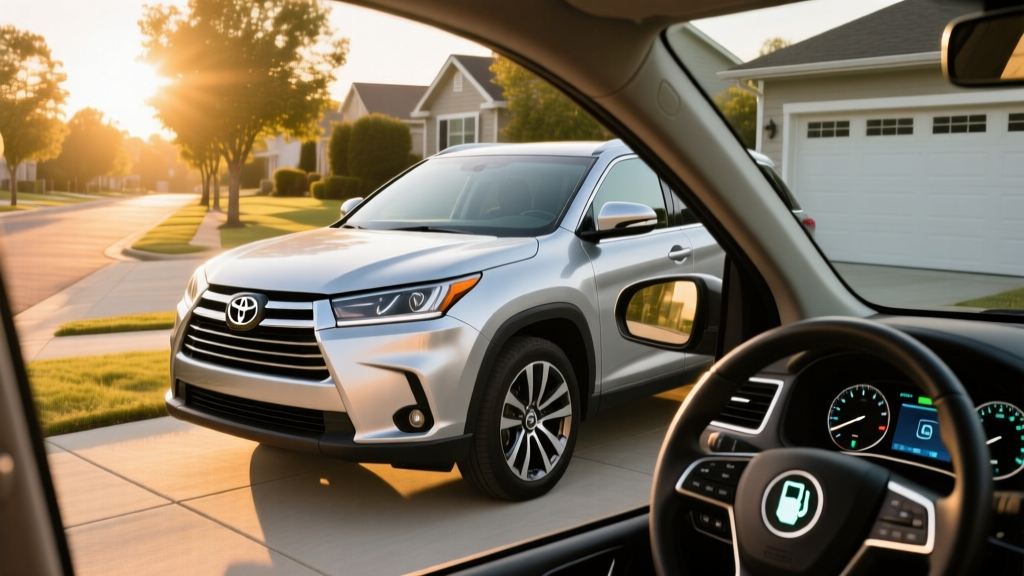
The 2018 Hybrid Toyota Highlander pairs a 3.5-liter V6 with a dual-motor hybrid system to deliver 29 MPG combined in a three-row SUV — a figure that still impresses nearly a decade after its debut. For used-car shoppers in 2026, this generation represents a sweet spot: Toyota's mature Hybrid Synergy Drive technology, robust reliability data, and lower used prices make it a pragmatic alternative to newer, more expensive electrified SUVs. But before you sign the paperwork, you need to understand exactly what this hybrid system delivers — and where it falls short compared to modern PHEVs and full EVs.
Fuel Economy: EPA Ratings vs Real-World MPG
The EPA rates the 2018 Highlander Hybrid at 29 MPG combined (29 city / 27 highway) across all trims with the standard all-wheel-drive hybrid powertrain. These figures come from fueleconomy.gov, and they held steady for the 2017-2019 model years of this generation.
| Metric | EPA Rating | Real-World Expectation |
|---|---|---|
| City | 29 MPG | 28–32 MPG (hybrids often exceed EPA in stop-and-go) |
| Highway | 27 MPG | 25–28 MPG (sustained 75+ mph reduces regen benefit) |
| Combined | 29 MPG | 27–30 MPG depending on driving mix |
Real-world context: Hybrid SUVs shine in city driving, where regenerative braking recovers energy at every stoplight. Owners who do 70%+ city driving frequently report 30–32 MPG. Highway-heavy commutes at 75–80 mph will pull that figure down to the mid-20s. Cold weather (below 30°F) typically costs 2–4 MPG as the engine runs more frequently to maintain cabin heat and battery temperature. Compared to the gas-only 2018 Highlander V6 AWD (rated at 20 MPG combined), the hybrid saves roughly 3.5 gallons per 100 miles — about $12–$15 per tank at current fuel prices.
Powertrain Specs: V6 Meets Hybrid Synergy Drive
The 2018 Highlander Hybrid uses Toyota's well-proven hybrid architecture, combining a naturally aspirated V6 with front and rear electric motors for standard electronic all-wheel drive (AWD-i).
| Component | Specification |
|---|---|
| Engine | 3.5L V6 (2GR-FKS), Atkinson cycle |
| Engine Output | 295 hp @ 6,000 rpm / 263 lb-ft torque |
| Front Electric Motor | 123 kW (165 hp) |
| Rear Electric Motor | 50 kW (67 hp) |
| Net System Horsepower | 306 hp combined |
| Transmission | eCVT (planetary gearset, not a belt CVT) |
| Hybrid Battery | ~1.9 kWh NiMH (sealed, not plug-in) |
| Drivetrain | AWD-i (electronic, no mechanical driveshaft to rear) |
| 0–60 mph | ~7.6 seconds |
| Towing Capacity | 3,500 lbs |
The key engineering detail here is Toyota's eCVT — it uses a planetary gearset to blend engine and motor power, not a steel-belt continuously variable transmission. This means there's no rubber-band effect and far less mechanical wear. The 306 net horsepower gives the Highlander Hybrid a meaningful acceleration advantage over the gas V6 model (295 hp), particularly in the 0–30 mph range where electric torque fills in before the engine reaches peak output.
The rear axle has no mechanical connection to the engine. The 50 kW rear motor engages for traction when the system detects front-wheel slip, making this an on-demand AWD system rather than full-time. In practice, it handles rain and light snow confidently, but it's not designed for serious off-road use.
Hybrid Battery Lifespan, Warranty & Replacement Cost
This is the single biggest concern for used hybrid buyers — and the area where Toyota has the strongest track record in the industry.
Real-world longevity data: Toyota's NiMH hybrid batteries from this generation routinely last 150,000–200,000+ miles with minimal degradation. Unlike full EV batteries, the hybrid system never deeply cycles the small NiMH pack — it operates in a narrow state-of-charge window (roughly 40%–80%), which dramatically extends cycle life. Taxi fleets using this generation of Toyota hybrid hardware have documented 300,000+ miles on original batteries.
Replacement cost if it fails: A new OEM hybrid battery from Toyota runs approximately $3,000–$4,500 installed at a dealership. Independent hybrid specialists offer reconditioned or refurbished NiMH packs for $1,500–$2,500 installed. Individual module replacement (only the failed cells) can cost $500–$1,200 at a specialist shop. Given the proven durability of this system, most used buyers will never face this expense.
Signs of hybrid battery trouble to watch for: Dashboard warning messages ("Check Hybrid System"), noticeable fuel economy drops (below 22 MPG sustained), the engine running constantly even at low speeds, or the battery state-of-charge gauge fluctuating wildly. A pre-purchase hybrid battery health check at a Toyota dealer or hybrid specialist ($100–$150) is strongly recommended for any used 2018 Highlander Hybrid.
Pricing in 2026: Used Market & Tax Credit Reality
The 2018 Highlander Hybrid was offered in three trims: Limited, Limited Platinum, and (in some markets) XLE. Original MSRPs ranged from approximately $47,000 to $52,000.
| Trim | Original MSRP | 2026 Used Range (70k–100k mi) |
|---|---|---|
| XLE Hybrid | ~$47,030 | $22,000–$27,000 |
| Limited Hybrid | ~$49,420 | $24,000–$29,000 |
| Limited Platinum | ~$51,750 | $26,000–$32,000 |
Federal tax credit status: The 2018 Highlander Hybrid does not qualify for the federal §30D new clean vehicle credit — that credit applies only to new plug-in vehicles (BEVs and PHEVs) meeting current battery-sourcing and MSRP requirements. However, if you purchase this vehicle from a dealer for under $25,000, it may qualify for the Used Clean Vehicle Credit (up to $4,000 or 30% of sale price, whichever is less). Critical caveat: the 2018 Highlander Hybrid is a conventional HEV with no plug-in capability, and IRS rules require the vehicle to be a qualified plug-in electric or fuel-cell vehicle. This means the conventional hybrid Highlander does not qualify for the used EV credit either. No federal tax incentive applies to this purchase.
Some states offer registration incentives or HOV-lane access for hybrids, but these vary widely and many have sunset for conventional HEVs. Check your state's DMV or energy office for current programs.
Who Should Buy This Hybrid vs a PHEV or Full EV?
The 2018 Highlander Hybrid occupies a specific niche in the 2026 market. Here's a decision framework based on real ownership patterns:
Choose the 2018 Highlander Hybrid if:
- You need three rows and AWD but can't charge at home (apartment, street parking, no garage outlet)
- Your budget is $22,000–$32,000 and you want proven reliability with minimal risk
- You drive a mix of city and highway and want 29 MPG without changing any habits
- You tow occasionally (3,500-lb rating beats most EVs in this price range)
- You want to avoid the complexity and cost of plug-in infrastructure
Look at a PHEV instead if:
- You can install a Level 2 home charger and want 30–40 miles of electric-only daily commuting
- You want to qualify for the §30D federal tax credit (up to $7,500 on eligible new PHEVs)
- Your daily driving is under 40 miles round-trip and you want near-zero gas use on weekdays
Look at a full EV instead if:
- You have reliable home charging and want the lowest per-mile energy cost (~$0.04–$0.06/mile vs $0.14–$0.18/mile for this hybrid)
- You want the strongest acceleration, lowest maintenance cost, and zero tailpipe emissions
- You don't regularly need three rows or 3,500-lb towing
Pros, Cons & Ownership Realities
Pros
- 29 MPG combined in a 3-row AWD SUV — still competitive in 2026
- 306 hp provides confident merging and highway passing
- Toyota hybrid reliability: 200k+ mile battery lifespan is the norm
- No plug-in required — zero infrastructure investment
- eCVT planetary gearset has virtually no wear components
- Strong resale value relative to non-hybrid competitors
Cons
- No electric-only driving mode — engine cycles on frequently
- Small 1.9 kWh NiMH battery is aging tech vs modern lithium packs
- Federal warranty has expired on 2018 models as of 2026
- No federal or state tax credits apply to conventional HEVs
- AWD-i rear motor is light-duty — not for serious snow or off-road
- Infotainment and safety tech dated vs 2024+ models (no standard Toyota Safety Sense 2.0)
Frequently Asked Questions
How many MPG does the 2018 Hybrid Toyota Highlander get?
The EPA rates it at 29 MPG city, 27 MPG highway, and 29 MPG combined. In real-world driving, city-heavy commuters often see 30–32 MPG, while highway-dominant driving at 75+ mph yields 25–28 MPG. Cold weather reduces efficiency by roughly 2–4 MPG.
Does the 2018 Highlander Hybrid need to be plugged in?
No. This is a conventional hybrid (HEV), not a plug-in hybrid (PHEV). The 1.9 kWh nickel-metal hydride battery charges entirely through regenerative braking and the gasoline engine. You fuel it like any other vehicle — there is no charging port.
Is the 2018 Highlander Hybrid reliable, and what does battery replacement cost?
Toyota's hybrid system from this generation is among the most reliable powertrains ever produced. The NiMH hybrid battery typically lasts 150,000–200,000+ miles. If replacement is needed, expect $3,000–$4,500 for a new OEM battery at a dealer, or $1,500–$2,500 for a refurbished unit at an independent hybrid specialist. The eCVT transmission has no belts or clutches to wear out.
Does the 2018 Highlander Hybrid qualify for any tax credit?
No. The federal §30D clean vehicle credit applies only to plug-in electric vehicles (BEVs and PHEVs) and fuel-cell vehicles. As a conventional hybrid with no plug-in capability, the 2018 Highlander Hybrid does not qualify for federal new or used EV tax credits. Some states may offer minor incentives for hybrids, but most have been discontinued.
How does this compare to the current-generation Highlander Hybrid?
The 2026 Toyota Highlander Hybrid uses a 2.5L 4-cylinder hybrid system rated at 243 hp and 35–36 MPG combined. It's more fuel-efficient but less powerful than the 2018's 306 hp V6 hybrid. The newer model also includes Toyota Safety Sense 2.5+ as standard, a more modern infotainment system, and a remaining factory warranty. Expect to pay $42,000+ for a new 2026 model versus $22,000–$32,000 for a used 2018.
Is the AWD system on the 2018 Highlander Hybrid good in snow?
The AWD-i system uses a rear electric motor that engages automatically when front-wheel slip is detected. It performs well in moderate snow and rain for a crossover SUV. However, the rear motor provides only 67 hp and there's no mechanical locking differential — it's not a substitute for a dedicated AWD system like Subaru's Symmetrical AWD in deep snow or off-pavement conditions. Winter tires make a larger difference than the AWD system itself.
Sources: EPA fuel economy data via fueleconomy.gov; IRS used clean vehicle credit rules via irs.gov; IIHS safety ratings via iihs.org.