Quick Verdict: The 2018 RAV4 Hybrid in 2026
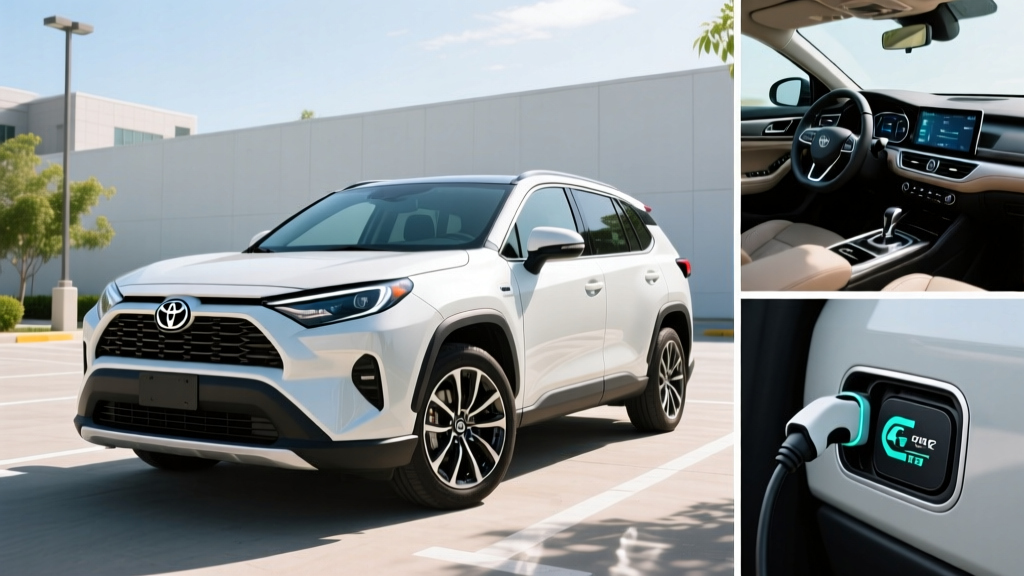
The 2018 Toyota RAV4 Hybrid occupies a specific niche in today's used market: a proven, no-plug-required compact SUV that delivers consistent fuel economy without the complexity or cost of a plug-in hybrid or full electric vehicle. With an EPA-rated 32 MPG combined, standard all-wheel drive, and Toyota's historically durable hybrid powertrain, it remains a pragmatic choice for buyers who want electrified efficiency without changing their fueling habits.
However, purchasing a 2018 model in 2026 means navigating battery warranty expiration, understanding what real-world mileage looks like after six-plus years of use, and comparing it against newer PHEV and BEV alternatives that may qualify for federal tax credits this model cannot. This guide covers every number you need to make that decision.
HEV vs. PHEV: Where the 2018 RAV4 Hybrid Fits
Before evaluating specs, it's critical to understand what the 2018 RAV4 Hybrid is — and what it isn't.
2018 RAV4 Hybrid (HEV — Conventional Hybrid)
- No plug required. The battery recharges through regenerative braking and the gasoline engine.
- No electric-only driving range beyond very low-speed, short-distance creep (under ~1 mile at parking-lot speeds).
- Cannot qualify for the federal §30D clean vehicle tax credit, which applies only to plug-in vehicles with batteries ≥7 kWh.
- Fuel economy advantage comes from the engine operating in its most efficient range more often, with the electric motor assisting during acceleration and recapturing energy during braking.
RAV4 Prime (PHEV — Plug-In Hybrid, Introduced 2021)
- Requires plug-in charging to access its 42-mile EPA electric-only range.
- 18.1 kWh battery pack (usable ~14.5 kWh) with Level 2 AC charging capability (no DC fast charging).
- 302 combined horsepower — significantly more than the 2018 HEV.
- May qualify for federal and state incentives when purchased new; used PHEV credit (up to $4,000 under §25E) may apply depending on buyer income and vehicle price.
If you're specifically searching for a 2018 hybrid RAV4, you're looking at the conventional HEV. Toyota did not offer a plug-in RAV4 until the 2021 model year with the RAV4 Prime. This distinction matters for your fueling expectations, charging infrastructure needs, and tax-credit eligibility.
Fuel Economy: EPA Ratings and Real-World MPG
The 2018 RAV4 Hybrid carries the following EPA fuel economy ratings:
| Metric | EPA Rating |
|---|---|
| City | 34 MPG |
| Highway | 30 MPG |
| Combined | 32 MPG |
| Fuel Tank | 14.8 gallons |
| Total Range | ~474 miles |
| Annual Fuel Cost (EPA est.) | ~$1,550 (based on 15,000 mi/yr at 2026 avg. gas prices) |
Real-world MPG vs. EPA: Toyota's hybrid system tends to outperform its EPA city rating in stop-and-go driving because regenerative braking recovers more energy in urban conditions. Many owners report 34–36 MPG in mixed city driving. However, sustained highway driving at 75+ mph typically yields 28–30 MPG, slightly below the EPA highway estimate. Cold-weather operation (below 30°F) reduces fuel economy by approximately 5–10% due to increased engine runtime for cabin heating and reduced battery efficiency.
For a vehicle that's now six to eight years old, expect real-world combined fuel economy in the 30–33 MPG range depending on driving style, terrain, climate, and maintenance condition. This represents minimal degradation from the EPA sticker — a testament to the maturity of Toyota's Hybrid Synergy Drive system.
Powertrain Specs: What Moves the 2018 RAV4 Hybrid
| Specification | Detail |
|---|---|
| Engine | 2.5L inline-4 Atkinson-cycle (150 hp, 138 lb-ft) |
| Front Electric Motor | 105 kW (141 hp) |
| Rear Electric Motor | 50 kW (67 hp) — enables electronic AWD |
| Net System Horsepower | 194 hp |
| Transmission | eCVT (planetary gearset, no traditional belts) |
| Drivetrain | Electronic on-demand AWD (standard on all trims) |
| 0–60 mph | ~7.8 seconds |
| Hybrid Battery | 1.6 kWh nickel-metal hydride (NiMH) |
| Towing Capacity | 1,750 lbs |
| Cargo Volume | 35.6 cu ft (rear seats up) / 70.7 cu ft (folded) |
The 2018 RAV4 Hybrid uses Toyota's well-established power-split hybrid architecture. The rear axle has no mechanical connection to the engine — it's driven entirely by the rear electric motor, which engages automatically when the system detects front-wheel slip or during hard acceleration. This "electronic AWD" is effective for rain, light snow, and gravel but is not designed for serious off-road use.
The 1.6 kWh NiMH battery pack is small by modern standards (for comparison, a RAV4 Prime PHEV carries an 18.1 kWh lithium-ion pack). However, in a conventional hybrid, the battery acts as a buffer rather than a primary energy source, so its small size has minimal impact on daily drivability. The NiMH chemistry also avoids the thermal management complexity of lithium-ion packs.
Battery Warranty, Reliability, and Replacement Cost
Hybrid Battery Warranty Status in 2026
Original coverage: Toyota warranted the 2018 RAV4 Hybrid battery for 8 years / 100,000 miles (10 years / 150,000 miles in California and states adopting CARB emissions standards: CT, ME, MD, MA, NJ, NY, OR, RI, VT, WA).
2026 reality: A 2018 model's standard 8-year/100k-mile warranty has expired for most original owners. However, vehicles originally sold in CARB states may still carry coverage through the 10-year/150k-mile provision depending on mileage. Always verify warranty status with a Toyota dealer using the VIN before purchase.
Reliability track record: The 2018 RAV4 Hybrid benefits from Toyota's decades of hybrid production experience. The Hybrid Synergy Drive system has proven exceptionally durable, with many Prius and RAV4 Hybrid vehicles exceeding 200,000 miles on original hybrid batteries. NHTSA complaint data for the 2018 RAV4 Hybrid shows relatively few powertrain-related issues compared to the broader compact SUV segment.
Battery replacement cost: If the hybrid battery fails outside warranty, expect to pay between $2,500 and $4,500 for a replacement, depending on whether you choose a new OEM unit from Toyota, a refurbished pack, or an aftermarket option. Independent hybrid repair shops can often replace individual failed cells within the NiMH pack for $500–$1,500, extending the pack's life at lower cost. Toyota also offers a refurbished hybrid battery program in some markets at reduced pricing.
What to check on a used 2018 RAV4 Hybrid:
- Use an OBD-II scanner or Toyota's Techstream diagnostic tool to check hybrid battery State of Health (SoH) and individual module voltage variance — large variance between modules signals impending failure.
- Look for the "Check Hybrid System" warning light or reduced power output during a test drive.
- Verify the inverter coolant has been maintained — low coolant can cause inverter overheating and costly failure.
- Confirm the 12V auxiliary battery (separate from the hybrid pack) is in good condition — a weak 12V battery can prevent the hybrid system from starting.
Used Pricing and Tax Credit Eligibility
As of early 2026, the 2018 RAV4 Hybrid trades in the used market at approximately:
| Trim Level | Typical Used Price Range (60k–100k miles) |
|---|---|
| XLE | $18,500 – $22,000 |
| SE (sport-tuned suspension) | $20,000 – $24,000 |
| Limited | $22,500 – $27,000 |
Federal tax credit: The 2018 RAV4 Hybrid does not qualify for the IRS §30D clean vehicle credit (up to $7,500 for new) because it is a conventional hybrid, not a plug-in vehicle. It also does not qualify for the §25E used clean vehicle credit (up to $4,000), which requires a minimum 7 kWh battery capacity — the RAV4 Hybrid's 1.6 kWh NiMH pack falls well short of this threshold.
State incentives: Some states offer rebates or HOV lane access for hybrid vehicles, but these programs have largely shifted focus to plug-in and battery-electric vehicles. Check your state's current incentive database — in most cases, no additional financial incentive applies to a used conventional hybrid purchase in 2026.
2018 RAV4 Hybrid vs. Newer Alternatives
Pros
- Proven reliability with 194 hp AWD powertrain
- No charging infrastructure needed — fuel at any gas station
- 32 MPG combined reduces fuel cost ~35% vs. a gas-only RAV4
- Strong cargo capacity (35.6 cu ft) with no battery intrusion
- Standard AWD across all trims
- Lower purchase price than comparable PHEV or BEV SUVs
- Toyota Safety Sense P included (pre-collision, lane departure, auto high beams, adaptive cruise)
Cons
- Hybrid battery warranty mostly expired (check CARB-state 10yr/150k exception)
- No electric-only driving range — always uses gasoline
- No federal or state tax credit eligibility
- Older infotainment system (no wireless CarPlay/Android Auto on 2018)
- Towing limited to 1,750 lbs (vs. 3,500 lbs on some competitors)
- Higher mileage examples may face hybrid battery replacement costs
- No DC fast charging capability (irrelevant for HEV, but limits future-proofing)
Who Should Choose the 2018 RAV4 Hybrid vs. a PHEV or EV?
Decision Framework
Choose the 2018 RAV4 Hybrid if:
- You lack access to home or workplace charging (apartment, street parking, no garage).
- Your budget is under $25,000 and you want AWD with strong fuel economy.
- You regularly drive 300+ miles in a single day and don't want to plan charging stops.
- You want minimal behavioral change — just gas up and go, with better MPG.
- You live in a region with extreme cold where EV range loss (20–40%) is a concern.
Consider a RAV4 Prime (PHEV) instead if:
- You can install a Level 2 home charger and your daily commute is under 42 miles (the Prime's electric-only range).
- You want to run most daily trips on electricity while retaining gas-engine flexibility for road trips.
- You're buying used and may qualify for the §25E used clean vehicle credit (up to $4,000, income-dependent).
Consider a full BEV (e.g., Tesla Model Y, Hyundai Ioniq 5) instead if:
- You have reliable home Level 2 charging.
- Your daily driving is under 250 miles and you're comfortable with public DC fast charging for road trips.
- You want to eliminate gasoline costs entirely and may qualify for the full $7,500 §30D credit on a new EV purchase.
- You prioritize lower long-term maintenance (no oil changes, fewer moving parts).
Ownership Economics: Fuel Savings vs. a Gas RAV4
At 2026 national average gasoline prices (~$3.30/gallon) and 15,000 miles driven annually:
| Metric | 2018 RAV4 Hybrid (32 MPG) | 2018 RAV4 Gas AWD (25 MPG) |
|---|---|---|
| Annual Fuel Consumption | 469 gallons | 600 gallons |
| Annual Fuel Cost | ~$1,548 | ~$1,980 |
| 5-Year Fuel Cost | ~$7,740 | ~$9,900 |
| 5-Year Savings (Hybrid) | ~$2,160 | |
The hybrid saves approximately $430 per year in fuel costs compared to the gas-only AWD RAV4. Over five years of ownership, that's roughly $2,160 in savings — enough to offset a modest price premium on the used market, though not enough to cover a hybrid battery replacement if one becomes necessary.
Insurance costs for the 2018 RAV4 Hybrid are typically comparable to the gas version, with some carriers applying a slight premium (3–5%) due to higher repair costs for hybrid-specific components. Always get quotes before purchasing.
Frequently Asked Questions
How many MPG does the 2018 RAV4 Hybrid actually get?
The EPA rates it at 34 city / 30 highway / 32 combined MPG. In real-world driving, most owners see 30–33 MPG combined, with city driving often exceeding the EPA estimate (34–36 MPG) and sustained highway driving at 75+ mph dropping to 28–30 MPG. Cold weather reduces these figures by approximately 5–10%.
Does the 2018 RAV4 Hybrid need to be plugged in?
No. The 2018 RAV4 Hybrid is a conventional hybrid (HEV). Its 1.6 kWh battery recharges entirely through regenerative braking and the gasoline engine. There is no plug, no charging port, and no electric-only driving range beyond trivial low-speed movement. If you want plug-in capability, you'd need the 2021+ RAV4 Prime (PHEV).
Is the hybrid battery reliable, and what does replacement cost?
Toyota's NiMH hybrid batteries have an excellent longevity record, with many lasting 150,000–200,000+ miles. However, the 8-year/100,000-mile factory warranty has expired for most 2018 models in 2026 (10-year/150,000-mile in CARB states). If replacement is needed, budget $2,500–$4,500 for a full pack or $500–$1,500 for individual cell repair at a specialist shop.
Does the 2018 RAV4 Hybrid qualify for any tax credit?
No. The federal §30D new vehicle credit and §25E used vehicle credit both require plug-in vehicles with battery capacity of at least 7 kWh. The 2018 RAV4 Hybrid's 1.6 kWh NiMH pack does not meet this threshold. No federal tax credit applies. State-level hybrid incentives have largely sunset in favor of PHEV and BEV programs.
How does the 2018 RAV4 Hybrid compare to the newer RAV4 Prime PHEV?
The RAV4 Prime (2021+) offers 42 miles of electric-only range, 302 combined horsepower, and a much larger 18.1 kWh lithium-ion battery. It qualifies for the used EV credit (§25E, up to $4,000) if buyer income and vehicle price meet requirements. However, used RAV4 Primes typically cost $32,000–$42,000 — significantly more than a 2018 HEV at $18,500–$27,000. The Prime makes sense if you can charge at home and want electric commuting; the 2018 HEV is the budget-friendly, no-plug option.
What should I inspect before buying a used 2018 RAV4 Hybrid?
Prioritize a hybrid battery health check (module voltage variance via OBD-II), inverter coolant level verification, 12V auxiliary battery condition, and a full service history. A pre-purchase inspection at a Toyota dealership or hybrid specialist is strongly recommended. Pay attention to any "Check Hybrid System" warnings during your test drive.