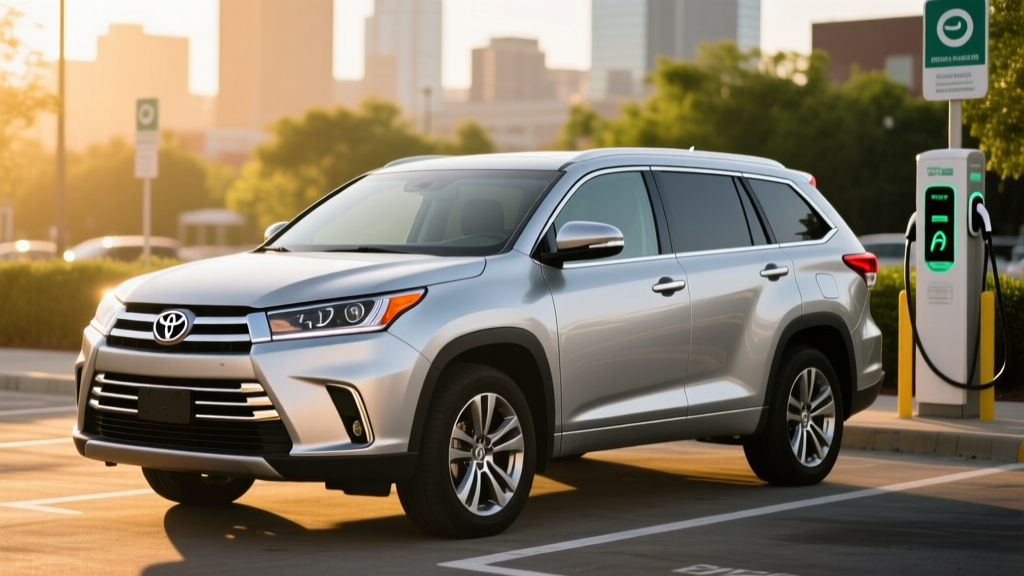
The 2018 Toyota Highlander Hybrid occupies a specific niche in the used-SUV market: a three-row family hauler that delivers genuine fuel savings without requiring a plug, a charging routine, or any change in driving habits. As a conventional hybrid electric vehicle (HEV), it generates its own electricity through regenerative braking and its gasoline engine — no charging cable needed. For buyers in 2026 weighing a used hybrid against a newer plug-in hybrid (PHEV) or full battery electric vehicle (BEV), the 2018 Highlander Hybrid remains a compelling, low-risk proposition. Here's the data-driven breakdown.
HEV vs PHEV vs EV: Where the 2018 Highlander Hybrid Fits
Before examining specs, it's critical to understand what the 2018 Highlander Hybrid is — and what it is not. Toyota never produced a plug-in version of this generation. The Highlander Hybrid is a conventional hybrid (HEV): it pairs a gasoline engine with electric motors and a small battery pack that recharges itself through regenerative braking and engine operation.
| Feature | HEV (2018 Highlander Hybrid) | PHEV (e.g., RAV4 Prime) | BEV (e.g., EV SUV) |
|---|---|---|---|
| Plug-in charging? | No — self-charging | Yes — Level 1/2 | Yes — Level 1/2/DC |
| Electric-only range | ~1 mile at low speed | 25–42 miles typical | 200–370+ miles |
| Total range | ~480 miles | ~400–500 miles combined | 200–370+ miles |
| Federal tax credit (new) | None | Up to $7,500 (§30D) | Up to $7,500 (§30D) |
| Home charging install | Not needed | Level 2 recommended | Level 2 recommended |
| Maintenance | Gas engine + hybrid system | Gas engine + hybrid + larger battery | Minimal — no engine |
If you're comparing the 2018 Highlander Hybrid to a newer PHEV or EV, the tradeoff is straightforward: you sacrifice electric-only driving and potential tax credits in exchange for zero charging infrastructure requirements and proven long-term reliability. The Highlander Hybrid asks nothing of you beyond filling up with regular unleaded.
2018 Highlander Hybrid Fuel Economy: EPA vs Real-World MPG
The EPA rates the 2018 Toyota Highlander Hybrid AWD at 29 MPG combined — specifically 29 city / 27 highway. This was a meaningful improvement over the non-hybrid V6 AWD Highlander's 22 MPG combined for the same model year. According to fueleconomy.gov, the hybrid saves approximately $1,250 in fuel costs over five years compared to the average new vehicle (based on 15,000 miles/year and national average gas prices).
| Trim / Drivetrain | City MPG | Highway MPG | Combined MPG |
|---|---|---|---|
| LE AWD (NiMH battery) | 29 | 27 | 29 |
| XLE / Limited AWD (NiMH battery) | 29 | 27 | 29 |
| Limited Platinum AWD (NiMH battery) | 29 | 27 | 29 |
Real-world MPG: Owner-reported data on fueleconomy.gov averages approximately 27–30 MPG combined across hundreds of logged fill-ups. City-heavy drivers often report 30–31 MPG because the hybrid system relies more on electric motor assist at low speeds and in stop-and-go traffic. Highway-dominant driving tends to yield 26–28 MPG, as the gasoline engine carries more of the load at sustained higher speeds. In cold weather (below 30°F), expect a 1–3 MPG reduction as the engine runs more frequently to maintain cabin heat and battery temperature.
Powertrain and Performance Specs
The 2018 Highlander Hybrid uses Toyota's proven hybrid synergy drive system, pairing a 3.5-liter V6 Atkinson-cycle engine with two electric motor-generators and an electronically controlled continuously variable transmission (eCVT). All-wheel drive comes standard via a separate rear-mounted electric motor — there's no mechanical driveshaft to the rear wheels.
| Specification | Value |
|---|---|
| Engine | 3.5L V6 Atkinson-cycle |
| Combined net horsepower | 306 HP |
| Electric motors | Front (MG2) + Rear (MGR) |
| Hybrid battery | NiMH, ~1.9 kWh (usable ~1.1 kWh) |
| Transmission | eCVT |
| Drivetrain | AWD (electric rear axle) |
| 0–60 mph | ~7.5 seconds |
| Towing capacity | 3,500 lbs |
| Seating | 7 or 8 passengers |
| Cargo (behind 3rd row) | 13.8 cu ft |
| Cargo (max, seats folded) | 81.7 cu ft |
The 306 combined horsepower figure made this one of the most powerful hybrids in its class for 2018, and the electric motor torque provides responsive acceleration from a stop. The eCVT operates smoothly without shift shock, though some drivers note a characteristic engine drone under hard acceleration — typical of Toyota's planetary-gear hybrid system.
Hybrid Battery Warranty, Lifespan, and Replacement Cost
The hybrid battery is the single biggest concern for any used-hybrid buyer. Here's what you need to know about the 2018 Highlander Hybrid's NiMH (nickel-metal hydride) pack.
• 8 years / 100,000 miles (most states)
• 10 years / 150,000 miles (California and states adopting CARB emissions standards: CT, ME, MA, NY, NJ, RI, VT, OR, WA, CO, MD, DE, NM, NV, and others as adopted)
• Coverage: battery capacity below a defined threshold or complete failure
For a 2018 model, the 8-year/100,000-mile warranty window has now expired in most states as of 2026 (unless the vehicle had very low mileage and was certified under CARB rules extending to 10 years). Buyers should verify remaining warranty status with a Toyota dealer using the VIN.
Battery lifespan reality: Toyota's NiMH hybrid batteries have an excellent longevity track record. Many first-generation Prius and Highlander Hybrid owners report 150,000–200,000+ miles on the original pack. NiMH chemistry is less prone to the degradation patterns seen in some early lithium-ion packs. That said, capacity loss is gradual — you may notice slightly reduced electric-only assist and marginally lower MPG at very high mileage rather than a sudden failure.
Replacement cost (2026 estimates):
- New OEM Toyota NiMH pack (dealer): $3,500–$5,000 including parts and labor
- Refurbished/remanufactured pack (independent hybrid specialist): $1,800–$3,000
- Individual module replacement (if only a few cells fail): $500–$1,200 at a hybrid specialist
The good news: total battery failure is relatively rare. More commonly, one or two modules degrade, and a hybrid specialist can replace individual modules rather than the entire pack. If you're shopping for a used 2018 Highlander Hybrid, a hybrid battery health check (available at Toyota dealers and independent hybrid shops) should be a mandatory pre-purchase step.
Used Pricing and Tax Credit Eligibility in 2026
The 2018 Highlander Hybrid was originally priced between approximately $40,000 (LE) and $50,000+ (Limited Platinum). In the 2026 used market, typical asking prices range from $22,000 to $34,000 depending on mileage, condition, trim, and region.
Federal tax credit: The 2018 Highlander Hybrid does not qualify for the §30D new clean vehicle credit — it was never eligible as a conventional HEV, and the §30D credit applies only to new PHEVs and BEVs meeting battery-sourcing and MSRP requirements. However, if you purchase this vehicle from a dealer for under $25,000, it may qualify for the federal used clean vehicle credit (§25E), which provides 30% of the sale price up to $4,000. Important caveats for §25E eligibility:
- Vehicle must be at least two model years old (2018 qualifies)
- Sale price must be $25,000 or less
- Buyer income caps apply: $75,000 single / $112,500 head of household / $150,000 joint (modified AGI)
- Must be purchased from a licensed dealer (private-party sales excluded)
- Vehicle must have a battery pack of at least 7 kWh — this is the catch: the 2018 Highlander Hybrid's NiMH pack is approximately 1.9 kWh, which likely disqualifies it from §25E
Per IRS guidelines on the used clean vehicle credit, the battery capacity requirement effectively excludes most conventional hybrids from this credit. Always consult a tax professional and verify with the selling dealer before counting on any credit.
Reliability and Ownership Costs
The 2018 Highlander Hybrid benefits from Toyota's strong reliability reputation and the inherent durability of its hybrid system. The eCVT transmission has no traditional gears, belts, or clutch packs to wear — it uses a planetary gearset that is extraordinarily robust. Brake pad life is often extended to 60,000–80,000+ miles because regenerative braking handles most deceleration.
According to NHTSA, the 2018 Highlander Hybrid earned a 5-Star Overall Safety Rating. The IIHS rated it Good in most crashworthiness categories, though headlight ratings varied by trim.
Expected annual maintenance (2026):
- Oil changes (0W-20 synthetic): every 10,000 miles, ~$60–$80
- Tire rotation: every 5,000 miles
- Brake inspection: every 15,000 miles (pads last longer due to regen)
- Coolant (inverter and engine): per Toyota schedule, typically 100,000 miles initial
- No transmission fluid changes typically required for the eCVT under normal use
Insurance costs for a 2018 Highlander Hybrid in 2026 are generally moderate — comparable to the non-hybrid V6 model. Get quotes from your provider before purchasing, as hybrid-specific coverage varies by insurer.
Pros
- Proven 29 MPG combined — 30+ in city driving
- 306 HP with smooth, responsive acceleration
- Standard AWD with electric rear axle (no mechanical complexity)
- Excellent Toyota reliability and parts availability
- No charging infrastructure needed
- 3,500-lb towing capacity
- Strong safety ratings (5-star NHTSA)
- Extended brake life from regenerative braking
Cons
- Highway MPG (27) lags behind city (29)
- No electric-only driving range to speak of
- NiMH battery nearing end of warranty window
- Likely ineligible for used EV tax credit (§25E) due to small battery
- Third row is tight for adults on long trips
- Infotainment feels dated vs 2026 vehicles
- No Apple CarPlay / Android Auto (added in 2019 refresh)
Who Should Buy the 2018 Highlander Hybrid?
Decision Framework
Choose the 2018 Highlander Hybrid if:
- You need three rows and AWD but want to minimize fuel costs
- You can't charge at home (apartment, no garage, street parking)
- You want a proven, low-risk used hybrid with strong resale value
- You drive a city-heavy commute where hybrid MPG shines
- You tow occasionally (up to 3,500 lbs)
Choose a PHEV (e.g., newer RAV4 Prime, Tucson PHEV) if:
- You can install a Level 2 charger at home
- Your daily commute is under 35 miles round-trip (run on electricity daily)
- You want tax-credit-eligible new or certified pre-owned vehicles
Choose a full BEV (e.g., Kia EV9, Tesla Model X) if:
- You want zero gasoline expenses and minimal maintenance
- You have reliable home and/or workplace charging
- You drive under 300 miles daily and can plan for road-trip charging
Frequently Asked Questions
How many MPG does the 2018 Highlander Hybrid get?
The EPA rates it at 29 city / 27 highway / 29 combined. Real-world owners report 27–31 MPG combined, with city-dominant driving often yielding the highest numbers. Cold weather reduces MPG by 1–3.
Does the 2018 Highlander Hybrid need to be plugged in?
No. It is a conventional hybrid (HEV) that charges its own battery through regenerative braking and the gasoline engine. There is no plug, no charging cable, and no electric-only driving range beyond very low-speed maneuvers (~1 mile at under 25 mph).
Is the 2018 Highlander Hybrid reliable?
Yes. Toyota's hybrid synergy drive system is one of the most proven in the industry, with millions of units on the road. The eCVT transmission is exceptionally durable. The NiMH battery typically lasts 150,000–200,000+ miles. Routine maintenance costs are moderate.
What does a replacement hybrid battery cost?
A new OEM NiMH battery pack from a Toyota dealer runs $3,500–$5,000 installed. Refurbished packs from hybrid specialists cost $1,800–$3,000. Individual module replacement (for partial failures) can cost $500–$1,200.
Does the 2018 Highlander Hybrid qualify for any tax credit?
It did not qualify for the new-vehicle §30D credit. For the used-vehicle §25E credit, the vehicle must sell for $25,000 or less from a dealer, and the buyer must meet income caps. However, the battery capacity must be at least 7 kWh — the Highlander Hybrid's ~1.9 kWh NiMH pack likely disqualifies it. Consult a tax professional for your specific situation.
How does it compare to the non-hybrid 2018 Highlander V6?
The V6 AWD Highlander gets 22 MPG combined (20 city / 26 highway) versus the hybrid's 29 combined. That's a ~32% fuel economy improvement. The hybrid also offers more combined horsepower (306 vs 295) and smoother low-speed acceleration thanks to electric motor torque. The hybrid carried a ~$3,000–$5,000 price premium when new, which typically pays back in fuel savings within 3–5 years at average mileage.
Can the 2018 Highlander Hybrid tow?
Yes. It's rated for 3,500 lbs of towing capacity — sufficient for a small boat trailer, utility trailer, or light camper. The hybrid system handles towing loads well, though expect MPG to drop significantly while towing.