Quick Verdict: The Original Plug-In Hybrid Minivan
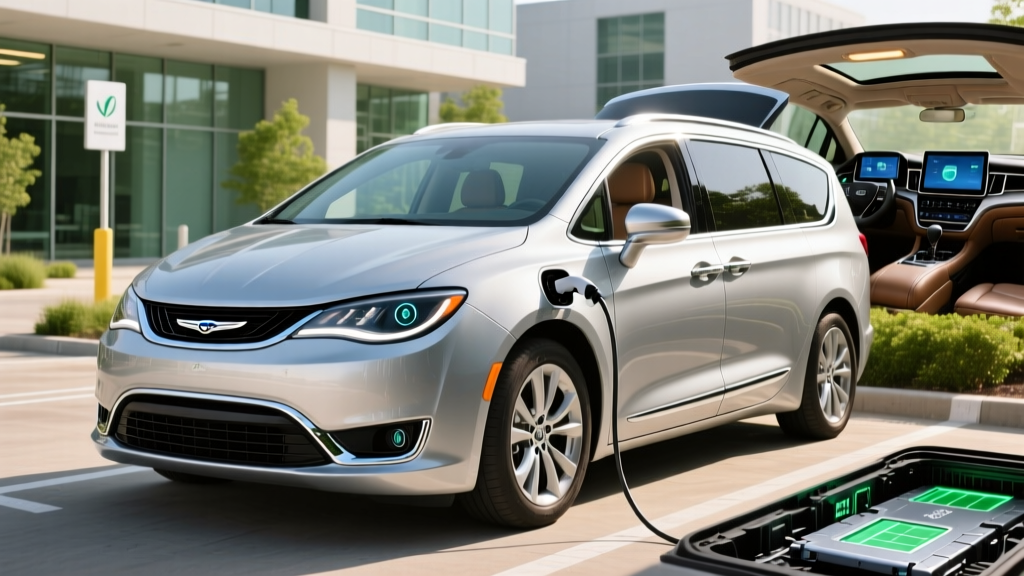
The 2018 Hybrid Chrysler Pacifica (officially the Pacifica Hybrid) was the first plug-in hybrid minivan sold in the United States, and on the used market in 2026, it remains one of the only PHEV minivans available. With 33 miles of EPA-rated electric-only range, a combined 84 MPGe when running on battery, and 32 MPG combined once the gas engine takes over, it bridges the gap between a fully electric family hauler and a conventional gas minivan — a gap that still matters for households without reliable home charging or those who regularly exceed 200 miles on road trips.
Before we dig into the numbers, a critical clarification: Chrysler marketed this vehicle as the "Pacifica Hybrid," but it is a plug-in hybrid (PHEV), not a conventional hybrid (HEV). There was no non-plug-in hybrid Pacifica in 2018. You plug it in, you charge a 16 kWh battery, and you drive on electricity alone for short trips. If you see a listing that simply says "2018 Chrysler Pacifica Hybrid," it is the PHEV variant.
HEV vs. PHEV: What the 2018 Pacifica Hybrid Actually Is
Conventional Hybrid (HEV): A small battery (typically 1–2 kWh) is recharged by regenerative braking and the engine. You never plug it in. Examples: Toyota Sienna Hybrid, Honda CR-V Hybrid. Electric-only driving is limited to very low speeds for brief distances.
Plug-In Hybrid (PHEV): A larger battery (the Pacifica Hybrid uses a 16 kWh pack) that you charge via a wall outlet or Level 2 charger. It provides meaningful electric-only range — 33 miles in this case — before the gasoline engine engages. The 2018 Pacifica Hybrid is a PHEV.
Battery Electric Vehicle (BEV): No gasoline engine at all. Examples: Tesla Model X, Rivian R1S. Full dependence on charging infrastructure.
The Pacifica Hybrid's powertrain pairs a 3.6-liter Atkinson-cycle V6 engine with two electric motors integrated into a continuously variable transmission (eVT). Combined output is 260 horsepower. One motor primarily drives the wheels; the other acts as a generator or assists under heavy load. The system seamlessly transitions between electric-only, blended, and engine-only modes depending on battery state of charge, throttle input, and speed.
Fuel Economy: EPA MPG, MPGe, and Real-World Numbers
The EPA rates the 2018 Chrysler Pacifica Hybrid at 84 MPGe (miles per gallon equivalent) when operating on electricity and 32 MPG combined once the battery is depleted and the vehicle runs as a conventional hybrid. Here is the full breakdown from fueleconomy.gov:
| Metric | City | Highway | Combined |
|---|---|---|---|
| Charge-Sustaining (gas only, MPG) | 32 | 33 | 32 |
| Charge-Depleting (electric + gas, MPGe) | — | — | 84 |
| Electric-Only Range | 33 miles (EPA) | ||
| Total Range (electric + gas) | ~566 miles | ||
| Energy Consumption (electric) | 40 kWh/100 mi | ||
Real-World Range Callout: The EPA's 33-mile electric-only figure is achievable in moderate temperatures with mixed city/suburban driving. In our experience and owner reports, expect 27–30 miles of electric range on the highway at 70 mph, and as low as 22–25 miles in freezing weather with cabin heat running. The gasoline engine will engage sooner in cold weather because the battery's effective capacity drops and the system needs engine heat for the cabin. Once the battery is depleted, real-world gas-only MPG typically lands between 28–31 MPG combined, slightly below the EPA's 32, particularly on flat highway runs where the heavy minivan's aerodynamics work against it.
Battery, Charging, and Powertrain Specifications
The 2018 Pacifica Hybrid stores energy in a 16 kWh lithium-ion battery pack (approximately 13 kWh usable, with the remainder reserved as a buffer to protect longevity). The pack is located under the second-row floor, which means the Pacifica Hybrid sacrifices the Stow 'n Go second-row seating that the gas-only Pacifica offers — the second-row seats fold flat but do not stow into the floor.
| Specification | Value |
|---|---|
| Battery Capacity (total / usable) | 16 kWh / ~13 kWh |
| Battery Chemistry | Lithium-ion (NMC) |
| Electric-Only Range (EPA) | 33 miles |
| Combined Horsepower | 260 hp |
| Engine | 3.6L Atkinson-cycle V6 + dual electric motors |
| Transmission | eVT (electrically variable) |
| Level 1 Charging (120V, 12A) | ~13 hours (0–100%) |
| Level 2 Charging (240V, 30A) | ~2 hours (0–100%) |
| DC Fast Charging | Not supported |
| Charge Port | J1772 (Level 2) |
| Fuel Tank | 16.0 gallons |
| 0–60 mph | ~7.1 seconds |
| Drivetrain | Front-wheel drive |
| Cargo Volume (behind 3rd row) | 32.3 cu ft |
Charging reality: The Pacifica Hybrid's onboard charger maxes out at 6.6 kW on Level 2 (240V). That means a full charge from empty takes roughly 2 hours on a 30-amp Level 2 circuit. On a standard 120V household outlet (Level 1), plan on an overnight-plus charge of about 13 hours. There is no DC fast-charging capability — a limitation worth noting if you hoped to top up quickly on road trips. However, for the typical PHEV use case (plug in at home overnight, drive 30-ish miles on electricity the next day), the 6.6 kW Level 2 rate is more than adequate.
Battery Warranty, Reliability, and Replacement Cost
Battery Warranty: Chrysler covers the 2018 Pacifica Hybrid's high-voltage battery for 10 years / 100,000 miles (whichever comes first) in CARB states, and 8 years / 100,000 miles in non-CARB states. The warranty guarantees the battery will retain sufficient capacity to deliver a minimum electric-only range — typically defined as a loss of more than 30% from original capacity. For a 2018 model, CARB-state coverage extends through 2028, and non-CARB through 2026.
Reliability track record: The 2018 Pacifica Hybrid had a rough launch. Early models (2017–2018) were subject to multiple recalls, including a significant 2019 recall for a potential battery-pack fire risk related to a manufacturing defect in certain cells. Chrysler replaced affected battery packs under recall. When shopping for a used 2018 model, confirm that all recall work has been completed — check the VIN on NHTSA's recall lookup before purchasing.
Beyond the battery recalls, owners have reported issues with the powertrain control module, the eVT transmission behavior (occasional shuddering), and 12V auxiliary battery drain. The hybrid system itself, once recalls were addressed, has proven reasonably durable. High-mileage examples (80,000+ miles) with completed recall work are common in owner forums without widespread reports of catastrophic battery failure.
Battery replacement cost: If the high-voltage battery fails outside of warranty, expect a replacement cost in the range of $7,000–$9,500 for parts and labor at a dealership. Third-party hybrid battery rebuilders may offer refurbished packs for $4,500–$6,000. Given the 8–10 year / 100,000-mile warranty window, most 2018 models will still have partial or full battery coverage in 2026 depending on mileage and state.
Pricing on the Used Market and Tax Credit Eligibility
The 2018 Chrysler Pacifica Hybrid originally started at an MSRP of approximately $41,995 (Touring L trim) and climbed to over $46,000 for the Limited and Platinum trims. In 2018, it qualified for the full $7,500 federal tax credit under the pre-2023 rules — but that credit was non-refundable and applied only to the original purchaser.
On the used market in 2026, expect to pay:
- $18,000–$23,000 for a 2018 Pacifica Hybrid with 60,000–90,000 miles in good condition
- $23,000–$28,000 for lower-mileage examples (under 50,000 miles) or higher trims
Used-EV tax credit (§25E): Under current IRS rules, the used clean vehicle credit offers up to $4,000 or 30% of the sale price (whichever is less) for qualifying used plug-in hybrids and EVs. To qualify:
- Sale price must be $25,000 or less
- Buyer income must not exceed $75,000 (single) / $150,000 (joint)
- Vehicle must be at least 2 model years old (the 2018 qualifies)
- Must be purchased from a licensed dealer (private-party sales do not qualify)
- Credit is non-refundable and can only be claimed once per vehicle
A 2018 Pacifica Hybrid priced at $23,000 from a dealer could yield a $4,000 credit for income-eligible buyers, effectively bringing the cost to around $19,000. Verify eligibility with a tax professional before relying on this credit.
Who Should Choose the 2018 Pacifica Hybrid vs. a Full EV or Gas Minivan?
✓ Choose the Pacifica Hybrid PHEV If:
- You need a minivan but want to eliminate most daily gasoline use
- Your commute and school runs total under 30 miles round-trip
- You have access to Level 2 home charging (240V outlet or installed charger)
- You take road trips too long for current EVs to handle comfortably with kids
- You want the lowest-risk entry into electrification — no range anxiety
✗ Look at a Gas Minivan or Full EV If:
- Gas minivan (Toyota Sienna HEV): You can't charge at home and want a simpler, proven hybrid with 36 MPG combined and no plug
- Gas minivan (Honda Odyssey): You need Stow 'n Go–style maximum cargo flexibility and don't care about electrification
- Full EV: You have reliable home and destination charging, your trips rarely exceed 250 miles, and you want zero tailpipe emissions and lower maintenance
The Toyota Sienna Hybrid comparison: The Sienna (redesigned as hybrid-only for 2021+) gets 36 MPG combined as a conventional HEV — no plug needed. It sacrifices the Pacifica Hybrid's electric-only mode but gains simplicity, better long-term reliability ratings, and a more competitive new-car price. If you're buying used in 2026 and can't install a charger, the Sienna HEV is the pragmatic choice. If you can charge at home, the Pacifica Hybrid's 33 electric miles mean most daily driving happens on cheap electricity, which can undercut the Sienna's fuel cost significantly.
Pros and Cons at a Glance
Pros
- 33 miles electric-only covers most daily family trips
- 84 MPGe when battery is charged — dramatically lower fuel cost
- 32 MPG gas-only is respectable for a 5,000+ lb minivan
- Smooth, quiet electric driving in EV mode
- Spacious cabin with premium minivan features (Uconnect, sliding doors, tri-zone climate)
- Eligible for up to $4,000 used clean vehicle credit (income/sale-price dependent)
- Battery warranty may still have coverage remaining in 2026
Cons
- Early-model recalls (battery fire risk) — must verify completion
- No DC fast charging — road-trip electric top-ups aren't practical
- Second-row seats don't fold into the floor (no Stow 'n Go)
- FWD only — no all-wheel-drive option
- Real-world electric range drops to ~22–25 miles in cold weather
- Battery replacement is $7,000+ out of warranty
- 6.6 kW Level 2 charge rate is slow by 2026 standards
Frequently Asked Questions
How many MPG does the 2018 Chrysler Pacifica Hybrid get?
The EPA rates it at 32 MPG city, 33 MPG highway, and 32 MPG combined when running on gasoline alone (after the battery is depleted). When operating with a charged battery using both electric and gas power, it achieves 84 MPGe combined. In real-world driving, owners report 28–31 MPG combined in gas-only mode, depending on driving style and conditions.
How far can the 2018 Pacifica Hybrid go on electric only?
The EPA rates the electric-only range at 33 miles. Real-world results typically fall between 27–30 miles in moderate weather with mixed driving, and 22–25 miles in freezing temperatures or sustained highway speeds above 65 mph. Once the battery is depleted, the gasoline engine takes over seamlessly, and the vehicle operates as a conventional hybrid with a total combined range of approximately 566 miles.
Is the 2018 Pacifica Hybrid reliable, and what does a battery replacement cost?
The 2018 model year had significant early reliability concerns, primarily related to battery-pack recalls for fire risk. Vehicles with completed recall repairs have proven more durable. The high-voltage battery is warrantied for 8–10 years / 100,000 miles depending on your state. Out-of-warranty replacement costs $7,000–$9,500 at a dealer, or $4,500–$6,000 from a third-party rebuilder. Always check the VIN on NHTSA.gov for open recalls before buying.
Does the 2018 Pacifica Hybrid qualify for any tax credit in 2026?
Not the original $7,500 new-vehicle credit — that was available only to the first purchaser in 2018. However, under the current §25E used clean vehicle credit, income-eligible buyers who purchase a 2018 Pacifica Hybrid from a licensed dealer for $25,000 or less can claim up to $4,000 (or 30% of the sale price, whichever is less). Income caps are $75,000 for single filers and $150,000 for joint filers. Consult a tax professional to confirm eligibility, as rules are subject to change.
Can I charge the 2018 Pacifica Hybrid at a public DC fast charger?
No. The 2018 Pacifica Hybrid only supports Level 1 (120V) and Level 2 (240V, J1772 connector) AC charging. Its onboard charger maxes out at 6.6 kW on Level 2. There is no DC fast-charging port. This is typical for PHEVs — the battery is small enough that Level 2 charging replenishes it in about 2 hours, which covers overnight home charging needs.
How does the Pacifica Hybrid compare to the Toyota Sienna Hybrid?
The Sienna is a conventional hybrid (HEV) — you never plug it in, and it gets 36 MPG combined with no electric-only mode. The Pacifica Hybrid is a PHEV with 33 miles of electric range but 32 MPG once the battery is empty. If you can charge at home, the Pacifica Hybrid will use less gasoline for daily driving. If you can't charge at home, the Sienna's simpler hybrid system delivers better MPG without the plug-in requirement and has a stronger reliability reputation.