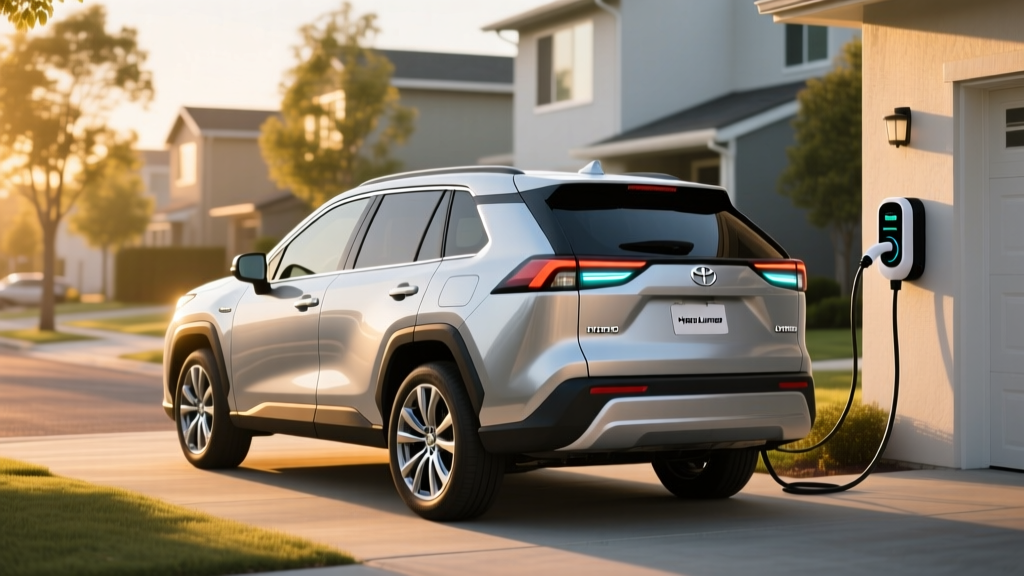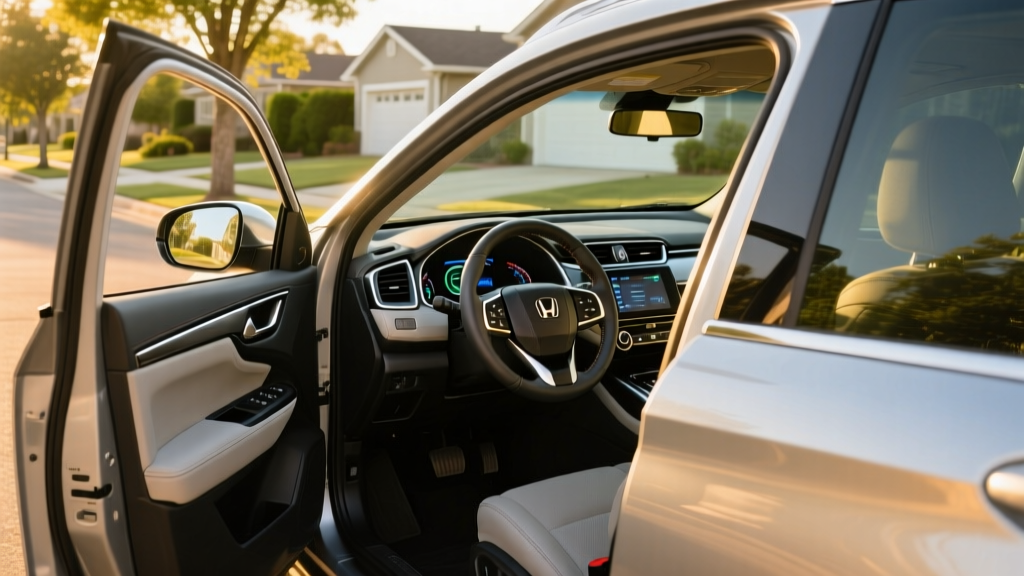
If you're shopping the used compact SUV market for an efficient, no-plug-required hybrid, the 2018 Honda CR-V Hybrid deserves a close look. Honda's fifth-generation CR-V added a hybrid variant that pairs a 2.0-liter Atkinson-cycle engine with a two-motor system, delivering strong fuel economy without ever needing to be plugged in. In 2026, as used EV prices remain elevated and charging infrastructure still varies by region, this conventional hybrid (HEV) offers a practical middle ground for buyers who want efficiency without range anxiety or home-charging requirements.
This guide breaks down everything a 2026 used-car buyer needs to know: real-world MPG versus EPA estimates, powertrain specs, battery longevity and warranty status, tax credit eligibility, and how the 2018 CR-V Hybrid stacks up against plug-in hybrids and full EVs in today's market.
2018 Honda CR-V Hybrid: Key Specifications at a Glance
| Specification | Value |
|---|---|
| Powertrain Type | Conventional Hybrid (HEV) — no plug |
| Engine | 2.0L Atkinson-cycle 4-cylinder + 2-motor hybrid system |
| Combined Horsepower | 184 hp (net system output) |
| Drivetrain | AWD (standard on all hybrid trims) |
| EPA Fuel Economy (City / Highway / Combined) | 40 / 36 / 38 MPG |
| Fuel Tank Capacity | 14.0 gallons |
| Total Driving Range | ~532 miles (EPA combined) |
| 0–60 mph (est.) | ~8.5 seconds |
| Cargo Volume (behind rear seats) | 33.5 cu ft |
| Hybrid Battery Warranty (original) | 8 years / 80,000 miles (10 yr / 150,000 mi in CARB states) |
| Original MSRP (base EX trim) | ~$30,590 |
| Typical 2026 Used Price Range | $16,000–$22,000 (depending on mileage/condition) |
Fuel Economy: EPA Ratings vs. Real-World MPG
The EPA rates the 2018 CR-V Hybrid AWD at 40 city / 36 highway / 38 combined MPG, according to fueleconomy.gov. These numbers were competitive at launch and remain strong for a compact AWD SUV in 2026.
HEV vs. PHEV vs. EV: Which Powertrain Fits Your Life?
The 2018 CR-V Hybrid is a conventional hybrid (HEV). It has no plug, no electric-only driving range to speak of (the battery provides brief low-speed electric assist, typically under 1 mile), and it refuels exclusively at gas stations. This is fundamentally different from a plug-in hybrid (PHEV) or a battery electric vehicle (BEV).
| Feature | HEV (e.g., 2018 CR-V Hybrid) | PHEV (e.g., Toyota RAV4 Prime) | BEV (e.g., Tesla Model Y) |
|---|---|---|---|
| Plug-in Required? | No — gas only | Yes — Level 1 or 2 | Yes — Level 2 or DC fast |
| Electric-Only Range | ~0.5 mi (low-speed assist) | 25–42 mi (typical) | 250–330 mi (EPA) |
| Total Range | ~532 mi | ~550–600 mi (electric + gas) | 250–330 mi |
| Fuel Cost per Mile | ~$0.09 | ~$0.04 (electric) / $0.09 (gas) | ~$0.04–$0.06 |
| Home Charging Needed? | No | Recommended for full benefit | Essential |
| Federal Tax Credit (New) | None | Up to $7,500 (§30D) | Up to $7,500 (§30D) |
| Used EV Federal Credit | Not eligible | Not eligible | Up to $4,000 (§25E) |
Choose the HEV (2018 CR-V Hybrid) if: You have no access to home or workplace charging, you want a simple ownership experience with no plug-in routine, and you prioritize low upfront cost. This is the most practical option for apartment dwellers and street parkers.
Choose a PHEV if: You can install a Level 2 charger at home and your daily commute is under 30–40 miles. You'd do most driving on electricity while keeping a gas engine for road trips. Note that Honda did not offer a CR-V PHEV in the US market in 2018.
Choose a BEV if: You have reliable home charging, your daily driving is under 250 miles, and you want the lowest per-mile fuel cost and zero tailpipe emissions. A used Model Y or Ioniq 5 may qualify for the §25E used EV credit (up to $4,000, income-capped).
Powertrain Deep Dive: How the Two-Motor System Works
The 2018 CR-V Hybrid uses Honda's Sport Hybrid i-MMD (Intelligent Multi-Mode Drive) system. Unlike Toyota's planetary-gear hybrid synergy drive, Honda's system uses two electric motors and a clutch-based approach:
- EV Drive: At low speeds and light loads, the electric traction motor powers the wheels directly from the 1.3 kWh lithium-ion battery. The engine is off.
- Hybrid Drive: Under moderate acceleration, the gasoline engine runs but only to spin a generator motor, which sends electricity to the traction motor. The engine is not mechanically connected to the wheels.
- Engine Drive: At steady highway cruising speeds, a lock-up clutch engages, connecting the engine directly to the front wheels for maximum efficiency at high speed.
The net system output is 184 horsepower — a meaningful bump over the gas-only CR-V's 184 hp from its 1.5L turbo, but delivered with smoother, more linear torque from the electric motor. AWD is standard on all hybrid trims, with the rear wheels driven mechanically via a propshaft (not a separate rear motor, as in some competitors).
Battery Longevity, Warranty, and Replacement Cost
Honda originally covered the CR-V Hybrid's 1.3 kWh lithium-ion battery pack for 8 years / 80,000 miles in most states, and 10 years / 150,000 miles in CARB-emissions states (California, New York, Massachusetts, and others that adopted CARB standards). For a 2018 model, the 8-year federal warranty expired in 2026 for non-CARB states. In CARB states, coverage extends through 2028 or 150,000 miles — meaning some 2018 CR-V Hybrids may still carry partial factory battery warranty depending on mileage and registration state.
Battery replacement cost: If the hybrid battery fails out of warranty, a replacement from a Honda dealer typically runs $2,000–$3,500 including labor. Independent hybrid specialists and refurbished battery options can reduce this to $1,200–$2,000. Given the small 1.3 kWh pack size (much smaller than a PHEV or BEV battery), costs are significantly lower than full EV battery replacements.
Longevity data: Honda's i-MMD system has proven reliable in real-world use. The small battery undergoes shallow charge/discharge cycles (the system keeps the battery in a narrow state-of-charge window, typically 40–80%), which dramatically reduces degradation. High-mileage CR-V Hybrids with 150,000+ miles on the original battery pack are common in owner forums and fleet use. The battery is not the primary reliability concern — the conventional components (suspension, brakes, A/C) follow standard Honda CR-V maintenance schedules.
Pricing, Tax Credits, and 2026 Used Market Value
The 2018 Honda CR-V Hybrid was offered in three trims: EX, EX-L, and Touring. Original MSRP ranged from approximately $30,590 (EX) to $34,790 (Touring). In the 2026 used market, expect to pay:
- EX (80,000–110,000 mi): $16,000–$18,500
- EX-L (60,000–90,000 mi): $18,000–$21,000
- Touring (50,000–80,000 mi): $19,500–$22,500
Federal tax credit eligibility: The 2018 CR-V Hybrid does not qualify for any federal tax credit. The §30D new clean vehicle credit applies only to new PHEVs and BEVs meeting battery sourcing and MSRP caps. The §25E used clean vehicle credit (up to $4,000) is limited to used BEVs and PHEVs — conventional hybrids are excluded from both programs. Some states may offer small incentives for efficient used vehicles, but these are uncommon for HEVs. Check your state's energy office for specifics.
Pros and Cons for 2026 Used Buyers
✓ Pros
- 40 MPG city — excellent for an AWD compact SUV
- No plug-in required; zero lifestyle change from a gas car
- Standard AWD on all hybrid trims
- Spacious interior (33.5 cu ft cargo, 75.8 cu ft folded)
- Low hybrid battery replacement cost (~$2,000–$3,500)
- Honda Sensing safety suite standard (AEB, lane keeping, adaptive cruise)
- Strong resale value; proven reliability track record
✗ Cons
- No electric-only driving range (not a PHEV)
- Hybrid battery warranty may have expired (non-CARB states, 2026)
- No federal tax credit eligibility (new or used)
- Infotainment system feels dated by 2026 standards (no wireless CarPlay)
- Highway MPG (36) trails city MPG (40) — typical for Honda's i-MMD system
- CVT-like driving feel under hard acceleration (engine drones at high RPM)
- Some 2018 models had oil dilution complaints on the 2.0L engine — check service history
Frequently Asked Questions
How many MPG does the 2018 Honda CR-V Hybrid actually get?
The EPA rates it at 40 city / 36 highway / 38 combined MPG. In real-world city driving, many owners report 41–44 MPG thanks to regenerative braking. Highway driving at 70+ mph typically yields 33–36 MPG. Cold weather reduces economy by 3–5 MPG.
Does the 2018 CR-V Hybrid need to be plugged in?
No. This is a conventional hybrid (HEV). The 1.3 kWh battery recharges through regenerative braking and the gasoline engine. You fuel it exclusively at gas stations, exactly like a non-hybrid car.
How far can the 2018 CR-V Hybrid drive on electric power alone?
Effectively zero meaningful distance. The battery provides brief electric assist at very low speeds (under 1 mile in ideal conditions), but the system is designed for efficiency assistance, not electric-only driving. If electric-only range matters to you, you need a PHEV or BEV.
Is the 2018 CR-V Hybrid reliable?
Yes. Honda's i-MMD hybrid system has demonstrated strong long-term reliability. The small battery pack uses shallow cycling, which minimizes degradation. The CR-V platform overall has solid reliability ratings from Consumer Reports and owner surveys. The main items to check on a used 2018 example are service records, brake wear (regenerative braking reduces pad wear, but rotors can corrode in salt-belt states), and any open recalls via NHTSA's recall lookup.
What does it cost to replace the hybrid battery?
A dealer replacement runs approximately $2,000–$3,500. Independent hybrid shops and refurbished packs can lower this to $1,200–$2,000. Given the small pack size, this is far less expensive than a BEV or large PHEV battery replacement.
Does the 2018 CR-V Hybrid qualify for any tax credit in 2026?
No. Conventional hybrids (HEVs) do not qualify for the federal §30D new vehicle credit or the §25E used vehicle credit. Both programs require a plug-in vehicle (PHEV or BEV). Some states may offer minor incentives — check your state's energy or environmental agency for details.
Should I buy the 2018 CR-V Hybrid or a newer used EV?
If you lack home charging access, drive long distances regularly, or live in an area with sparse public charging infrastructure, the CR-V Hybrid is the safer, simpler choice. If you have a garage with a 240V outlet and your daily driving is under 200 miles, a used BEV like a 2021 Model 3 or Bolt EUV offers lower per-mile fuel costs and may qualify for the $4,000 used EV credit — potentially making it cheaper to own over five years despite a higher purchase price.