Quick Verdict: A Smart Used PHEV With Real Electric Range
The 2018 Honda Clarity Plug-In Hybrid Touring occupies a specific niche that still resonates in 2026: a midsize sedan offering genuine daily electric-only commuting paired with a gasoline engine for longer trips. With an EPA-rated 47 miles of electric range and a combined 42 MPG once the battery depletes, it remains one of the most practical plug-in hybrids Honda ever produced — and a compelling used-car find for buyers who want EV-like commuting without full range commitment.
Honda discontinued the Clarity after the 2022 model year, so the 2018 Touring represents the first model year of a vehicle that was ahead of its time. If you're evaluating one on the used market today, this guide covers every spec, real-world efficiency figure, charging detail, and ownership cost you need to make an informed decision.
| Spec | Value |
|---|---|
| EPA Electric-Only Range | 47 miles |
| Total Combined Range (EV + Gas) | ~340 miles |
| EPA Combined MPG (Gas Mode) | 42 MPG |
| MPGe (Electric Mode) | 110 MPGe |
| Battery Capacity | 17.0 kWh (usable ~14 kWh) |
| Battery Chemistry | Lithium-ion (NMC) |
| Combined System Horsepower | 212 hp |
| Engine | 1.5L Atkinson-cycle 4-cylinder + electric motor |
| Level 1 Charging (120V) | ~12 hours (0–100%) |
| Level 2 Charging (240V, 32A) | ~2.5 hours (0–100%) |
| DC Fast Charging | Not supported |
| Original MSRP (Touring) | $36,620 |
| Used Price Range (2026 est.) | $14,000–$20,000 |
| Battery Warranty (Original) | 8 yr / 100,000 mi (10 yr / 150,000 mi in CARB states) |
HEV vs PHEV: Where the Clarity Fits
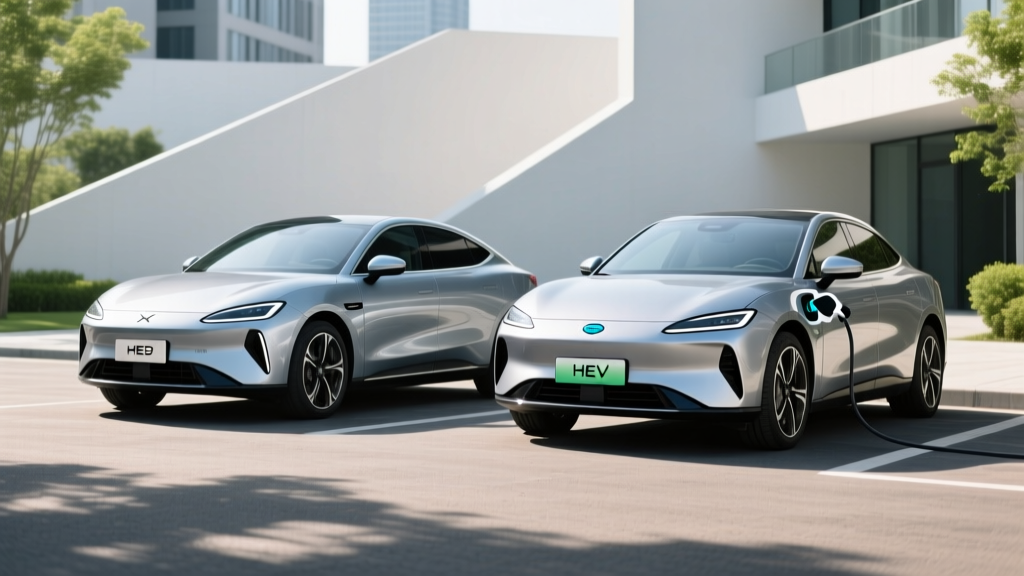
Before diving into the Clarity's specifics, it's worth clarifying the distinction between conventional hybrids (HEVs) and plug-in hybrids (PHEVs), because Honda actually sold the Clarity in three distinct powertrains for 2018:
| Feature | HEV (e.g., Accord Hybrid) | PHEV (Clarity Plug-In Hybrid) | BEV (Clarity Electric) |
|---|---|---|---|
| Plug-in Required? | No — self-charging via regen + engine | Yes — plug in to unlock EV range | Yes — only energy source |
| Electric-Only Range | ~1 mile at low speed | 47 miles EPA | 89 miles EPA |
| Gasoline Engine | Yes (primary power + charging) | Yes (backup + highway assist) | No |
| Battery Size | 1.3–1.5 kWh | 17.0 kWh | 25.5 kWh |
| Tailpipe Emissions (Typical Commute) | Reduced, never zero | Zero if within EV range | Zero |
The 2018 Honda Clarity Plug-In Hybrid Touring is the PHEV variant. It has a substantially larger battery than a conventional hybrid and can be plugged into a wall outlet or Level 2 charger. If you never plug it in, it still functions as a hybrid — but you're leaving 47 miles of free electric range on the table and paying for a larger battery you're not using.
Fuel Economy: EPA Numbers and Real-World MPG
| Mode | City | Highway | Combined |
|---|---|---|---|
| Electric Only (MPGe) | 118 MPGe | 102 MPGe | 110 MPGe |
| Gasoline Only (MPG) | 44 MPG | 40 MPG | 42 MPG |
The Clarity PHEV's 42 MPG combined rating in gasoline-only mode is competitive even by 2026 standards. According to fueleconomy.gov, that figure places it ahead of most non-plug-in midsize hybrids of its era and comparable to the Toyota Camry Hybrid LE (44 combined).
Real-World MPG: What Owners Actually See
The Clarity PHEV benefits from the same hybrid efficiency dynamics that apply broadly: city driving often exceeds the EPA estimate because regenerative braking recaptures energy that gas cars waste as heat. Owners on Fuelly and similar tracking platforms consistently report 43–48 MPG in mixed city driving once the battery is depleted, with highway-heavy routes pulling the figure down to 38–41 MPG at sustained 70+ mph speeds.
In electric mode, the 47-mile EPA range is achievable in moderate temperatures (55–80°F) with mixed-speed driving. Expect 38–42 miles in winter conditions (below 35°F) due to cabin heating demand and reduced battery efficiency, and 40–45 miles at sustained highway speeds. The Clarity uses a resistance heater rather than a heat pump, which is the primary reason for cold-weather range loss in EV mode.
Powertrain and Performance
The 2018 Clarity PHEV pairs a 1.5-liter Atkinson-cycle four-cylinder engine (producing 103 hp on its own) with a 181-hp electric motor mounted in the transmission housing. Combined system output is 212 horsepower, routed to the front wheels through Honda's two-motor hybrid system — a direct-drive setup that eliminates the traditional transmission, providing smooth, linear acceleration.
The 0–60 mph time is approximately 7.5 seconds, which is adequate for merging and passing but not sporty. The electric motor delivers its full 232 lb-ft of torque from zero RPM, giving the Clarity a responsive feel around town that belies its 4,000-pound curb weight. On the highway, the gasoline engine engages seamlessly — most drivers won't notice the transition from EV to hybrid mode.
One engineering detail worth noting: Honda's two-motor system operates primarily in series-hybrid mode at low speeds (engine generates electricity, motor drives wheels) and switches to direct engine drive via a lock-up clutch only at steady highway cruising speeds. This is fundamentally different from the Toyota Hybrid System's planetary gearset and is a key reason the Clarity achieves such strong electric-only range.
Charging: What You Need to Know
The Clarity PHEV uses a standard J1772 connector for AC charging. Here's the critical detail for prospective used buyers: this vehicle does not support DC fast charging. There is no CCS, CHAdeMO, or NACS port. All charging is AC only, which is typical for PHEVs of this era but worth understanding before purchase.
| Charging Level | Power (kW) | 0–100% Time | Practical Notes |
|---|---|---|---|
| Level 1 (120V / 12A) | 1.4 kW | ~12 hours | Standard household outlet; adequate for overnight top-up if daily driving is under 30 mi |
| Level 2 (240V / 32A) | 7.2 kW | ~2.5 hours | Requires dedicated 40A circuit; full charge during a workday or overnight |
The onboard charger is rated at 7.2 kW, which is generous for a PHEV. Many competitors from the same era (Ford Fusion Energi, Hyundai Sonata PHEV) topped out at 3.3–3.6 kW, meaning the Clarity charges roughly twice as fast on Level 2. A full 2.5-hour Level 2 charge means you can realistically replenish the battery during a workday or between errands.
Home Charging Setup Cost
If you're buying a used Clarity PHEV and don't already have a Level 2 charger installed, budget for the following:
- Level 2 EVSE (charger unit): $300–$600 (e.g., Emporia Vue, ChargePoint Home Flex, Wallbox Pulsar Plus)
- Electrician installation (240V / 40A circuit): $500–$1,500 depending on panel proximity and conduit runs
- Panel upgrade (if needed): $1,500–$3,000 if your home has a 100A service that's near capacity
Most Clarity PHEV owners find that Level 1 charging from a standard 120V outlet is sufficient if their daily commute is under 30 miles round-trip, since 12 hours of overnight charging adds roughly 40+ miles of range. However, Level 2 is strongly recommended for anyone who wants to maximize EV-mode usage across multiple daily trips.
Battery Health, Warranty, and Replacement Cost
Original Honda Battery Warranty
Standard states: 8 years / 100,000 miles
CARB states (CA, NY, MA, CT, RI, VT, ME, NJ, OR, WA, MD, CO, and others adopting CARB rules): 10 years / 150,000 miles
The warranty covers battery capacity loss below approximately 70% of original capacity. Honda defines a warranty-eligible failure as the battery's inability to hold sufficient charge to meet minimum performance standards.
For a 2018 model, the standard 8-year/100,000-mile warranty has expired as of 2026 in non-CARB states. In CARB states, coverage extends through 2028 or 150,000 miles — still potentially active for lower-mileage examples. This is a critical distinction for used buyers: check your state's CARB adoption status and the vehicle's odometer reading.
Real-World Battery Degradation
The Clarity PHEV's 17 kWh lithium-ion (NMC chemistry) pack has proven durable in owner reporting. PHEV batteries generally experience less degradation than full EV batteries because the system maintains a larger buffer — Honda reserves approximately 3 kWh at the bottom and top of the pack to prevent deep discharge and overcharge, both of which accelerate cell wear.
Based on owner data from Clarity forums and tracking platforms, typical degradation after 5–6 years is 8–12%, meaning a well-maintained 2018 Clarity PHEV in 2026 might deliver 41–43 miles of electric range instead of the original 47. This is modest and still covers most daily commutes.
Battery Replacement Cost
If the battery does require replacement outside warranty, expect the following:
- OEM Honda replacement battery: $3,000–$5,000 (part only)
- Labor: $500–$1,000
- Total installed: $3,500–$6,000
Third-party and refurbished battery options are emerging in 2026, with some independent hybrid shops offering reconditioned packs for $2,000–$3,500 installed. While full battery failure on the Clarity PHEV is rare, this cost should factor into your used-purchase budget as a worst-case reserve.
Touring Trim: What You Get for the Money
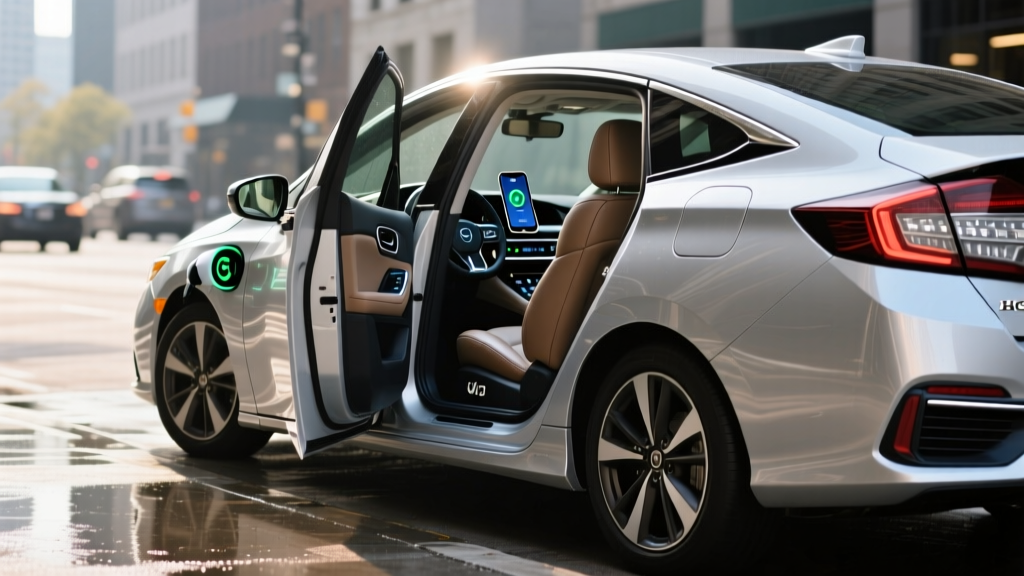
The 2018 Clarity Plug-In Hybrid was offered in two trims: base ($33,400 MSRP) and Touring ($36,620 MSRP). The Touring trim adds:
- Leather-trimmed seats with heated front seats
- Honda Sensing suite (adaptive cruise control, lane-keeping assist, forward collision warning, automatic emergency braking)
- Navigation system with 8-inch touchscreen
- Apple CarPlay and Android Auto
- Premium audio system
- Wireless phone charging pad
- LED headlights with auto high-beam
- Remote start and climate preconditioning via HondaLink app
The Honda Sensing suite is particularly valuable in 2026, as it brings the Clarity Touring in line with modern safety expectations. The adaptive cruise control operates down to a stop in traffic (low-speed follow), and the lane-keeping system provides gentle steering corrections — though this is a basic SAE Level 1 driver-assist system, not the more advanced Level 2 systems found in newer vehicles.
Tax Credits and Incentives (Used-Buyer Context)
When new, the 2018 Honda Clarity PHEV qualified for the full $7,500 federal tax credit under the pre-2023 IRS §30D rules, as Honda had not yet hit the manufacturer cap (which applied to GM and Tesla at the time). However, that credit is long gone for new purchases.
For used buyers in 2026, the relevant incentive is the Used Clean Vehicle Credit (IRS §25E), which provides:
- Credit amount: 30% of the sale price, up to a maximum of $4,000
- Vehicle price cap: Sale price must be $25,000 or less
- Buyer income cap: AGI ≤ $75,000 (single), $112,500 (head of household), $150,000 (joint)
- Vehicle age requirement: Must be at least 2 model years old (2018 qualifies)
- Dealer requirement: Must be purchased from a licensed dealer (private-party sales do not qualify)
- Battery requirement: Vehicle must have a battery capacity of at least 7 kWh (Clarity's 17 kWh qualifies)
At a typical used price of $14,000–$20,000, the Clarity PHEV falls well under the $25,000 cap. A buyer purchasing at $18,000 from a qualifying dealer could claim $4,000 (30% of $18,000 = $5,400, but the $4,000 cap applies), bringing the effective cost down to $14,000. Always verify current rules at irs.gov, as incentive regulations can shift.
Used EV Credit (§25E) Quick Checklist
- ✅ Vehicle is at least 2 model years old
- ✅ Sale price ≤ $25,000
- ✅ Purchased from a licensed dealer
- ✅ Buyer AGI within income limits
- ✅ Battery ≥ 7 kWh
- ✅ Not previously transferred under §25E after Aug 16, 2022 (verify with dealer)
Who Should Buy the 2018 Clarity PHEV Touring — and Who Shouldn't
Pros
- 47-mile EV range covers most daily commutes entirely on electricity
- 42 MPG combined in gas mode eliminates range anxiety on road trips
- Spacious midsize sedan interior with generous rear legroom (40.8 in)
- 7.2 kW onboard charger — faster than most 2018-era PHEVs
- Honda Sensing safety suite standard on Touring
- Eligible for up to $4,000 used clean vehicle credit
- Smooth, quiet EV-mode driving experience
Cons
- No DC fast charging — AC only
- 14.7 cu-ft trunk (reduced by battery placement vs. gas Clarity)
- HondaLink app is dated and occasionally unreliable
- Regenerative braking is modest — no true one-pedal driving
- Discontinued model — long-term parts availability uncertainty for body/trim pieces
- Original battery warranty expiring or expired in non-CARB states
- Ground clearance is low — not suited for rough roads or deep snow
Choose the Clarity PHEV If:
- Your daily round-trip commute is 40 miles or less and you can charge at home
- You want EV-like operating costs for daily driving but need a gas engine for occasional 200+ mile road trips
- You're not ready to commit to a full BEV due to apartment living, unreliable public charging, or frequent long-distance travel
- You want a comfortable, well-equipped midsize sedan at a used price point of $14,000–$20,000
Look at a Full EV Instead If:
- Your daily driving is consistently under 30 miles and you rarely take long trips (a used Chevy Bolt EV or Nissan Leaf offers lower operating costs)
- You want DC fast charging for road trips
- You want the latest infotainment, ADAS, and over-the-air update capability
Look at a Conventional Hybrid Instead If:
- You cannot charge at home or at work (a PHEV without charging access is just a heavier, more expensive HEV)
- You want a lower purchase price and simpler ownership experience with no plug-in routine
Frequently Asked Questions
How many MPG does the 2018 Honda Clarity Plug-In Hybrid get?
The EPA rates it at 42 MPG combined (44 city / 40 highway) in gasoline-only mode, and 110 MPGe in electric mode. Real-world owners often see 43–48 MPG in city-heavy driving and 38–41 MPG on the highway.
How far can the 2018 Clarity PHEV go on electric only?
The EPA rates it at 47 miles of electric-only range. In real-world conditions, expect 38–42 miles in cold weather (below 35°F) and 40–45 miles at sustained highway speeds. Moderate-temperature city driving can achieve the full 47 miles or slightly more.
Is the 2018 Honda Clarity PHEV reliable?
The Clarity PHEV's powertrain is based on Honda's proven two-motor hybrid system, which has demonstrated strong reliability across the Accord Hybrid and Insight lineups. The main risk area is the 17 kWh lithium-ion battery, which is now 8 years old. Most owner reports indicate 8–12% capacity degradation at this age, which is within normal parameters. Honda's hybrid components (inverter, motor, control electronics) have proven durable. Overall, it rates as above-average reliability for a PHEV of this vintage, provided maintenance records are available.
What does a replacement battery cost for the Clarity PHEV?
An OEM Honda replacement battery costs approximately $3,500–$6,000 installed. Third-party refurbished options are available for $2,000–$3,500 installed as of 2026. Full battery failure is uncommon; most degradation is gradual and the vehicle remains fully functional with reduced EV range.
Does the 2018 Clarity PHEV qualify for any tax credit in 2026?
It no longer qualifies for the new-vehicle §30D credit. However, it may qualify for the Used Clean Vehicle Credit (§25E), which provides up to $4,000 (30% of sale price) for eligible buyers purchasing from a dealer at a price of $25,000 or less. Income caps apply: $75,000 single / $150,000 joint. Confirm eligibility at irs.gov before purchasing.
Can the 2018 Clarity PHEV use DC fast chargers?
No. The Clarity PHEV only supports AC charging via a J1772 connector — Level 1 (120V, 1.4 kW) and Level 2 (240V, up to 7.2 kW). It has no DC fast-charge port. This is standard for PHEVs of this era.
How does the Clarity PHEV compare to the Toyota Prius Prime?
The 2018 Prius Prime offers 25 miles of EV range vs. the Clarity's 47 miles, but achieves 54 MPG in gas mode vs. the Clarity's 42 MPG. The Clarity is a larger, more comfortable sedan with more power (212 hp vs. 121 hp). If your commute is under 25 miles, the Prius Prime's superior gas mileage may matter more; if it's 30–45 miles, the Clarity's longer EV range keeps you in electric mode more often.
Is the Clarity PHEV a good car for cold climates?
It's adequate but not ideal. Cold weather reduces EV range by 15–20% (down to ~38 miles), and the resistance-based cabin heater draws significant battery power. The gasoline engine provides reliable heat once the battery depletes. All-season tires and the front-wheel-drive layout handle light snow, but the 5.5-inch ground clearance limits deep-snow capability. A heat pump (which the Clarity lacks) would improve cold-weather EV efficiency.