Quick Verdict: A Proven Family Hybrid With Minimal Risk
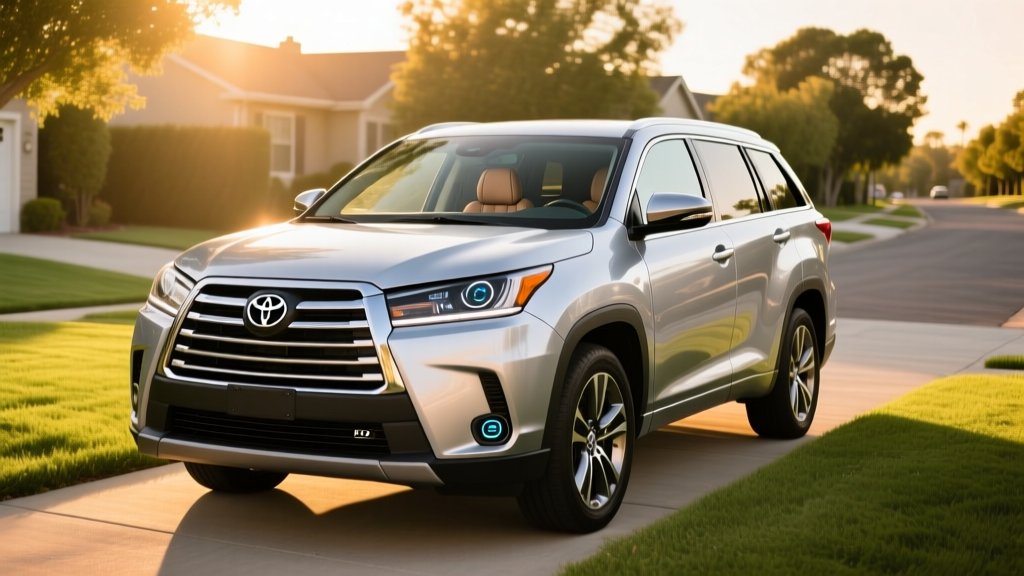
The 2018 Toyota Highlander Hybrid remains one of the most dependable three-row hybrid SUVs on the used market. It is a conventional hybrid electric vehicle (HEV) — not a plug-in hybrid (PHEV) — meaning it never needs to be plugged in. The gasoline engine and regenerative braking system recharge the battery automatically. For families who want the utility of a three-row SUV without the range anxiety or charging logistics of a full EV, and who drive more than most PHEVs can cover on electric-only range, the 2018 Highlander Hybrid is a compelling used option in 2026.
Its 29 MPG combined EPA rating holds up well in real-world driving, particularly in city conditions where hybrid systems shine. With Toyota's long-standing hybrid reliability track record and a battery warranty that may still apply on some examples, this SUV offers a lower-risk entry into electrified ownership.
HEV vs PHEV: Where the 2018 Highlander Hybrid Fits
Conventional Hybrid (HEV) — this vehicle: The 2018 Highlander Hybrid uses a small nickel-metal hydride (NiMH) battery paired with a 3.5-liter V6 and electric motors. It recovers energy from braking and engine operation. You never plug it in. It cannot drive on electric power alone for meaningful distances. Fuel savings come from the engine shutting off at stops, electric assist during acceleration, and regenerative braking.
Plug-in Hybrid (PHEV) — different vehicle class: A PHEV (such as the current Toyota RAV4 Prime or Chrysler Pacifica Hybrid) has a larger battery (typically 15–20 kWh), can be plugged into a wall outlet or charger, and offers 25–45 miles of electric-only driving before the gas engine engages. PHEVs cost more upfront but can eliminate gasoline use for short commutes. The 2018 Highlander Hybrid was never offered as a PHEV.
Battery Electric Vehicle (BEV) — no gasoline: A BEV like the Tesla Model X or Rivian R1S runs entirely on electricity, has no gas engine, and requires regular charging. BEVs offer lower per-mile fuel costs but demand home charging access and planning for road trips.
Fuel Economy: EPA Ratings and Real-World MPG
The EPA rates the 2018 Toyota Highlander Hybrid at 29 MPG combined, with 29 MPG city and 27 MPG highway. This is notable because most vehicles lose efficiency on the highway; the Highlander Hybrid's city-dominant hybrid system keeps the numbers close together.
| Driving Condition | EPA Rating | Real-World Expectation |
|---|---|---|
| City | 29 MPG | 28–31 MPG (hybrids often exceed EPA in stop-and-go) |
| Highway | 27 MPG | 25–28 MPG (sustained high speed reduces regen benefit) |
| Combined | 29 MPG | 27–30 MPG |
Real-world context: Owners consistently report that city driving yields the best results — sometimes exceeding 30 MPG — because the hybrid system frequently shuts off the engine at stops and uses electric motors for low-speed acceleration. Highway driving at 75+ MPH reduces the hybrid advantage, and expect a 10–15% drop in cold weather (below 35°F) due to the engine running longer to heat the cabin and warm up the powertrain. Towing also significantly reduces economy; Toyota rates this SUV at 3,500 lbs towing capacity, but fuel economy drops to roughly 20–22 MPG when pulling a loaded trailer.
Compared to the non-hybrid 2018 Highlander V6 AWD (22 MPG combined per the EPA), the hybrid version saves roughly 7 gallons per 1,000 miles driven. At $3.50/gallon, that's about $245 saved per 10,000 miles annually.
Powertrain and Performance Specifications
| Specification | 2018 Highlander Hybrid |
|---|---|
| Engine | 3.5L V6 (295 hp) + dual electric motors |
| Combined System Output | 306 hp |
| Drivetrain | AWD (eAWD — rear axle driven by electric motor) |
| Transmission | eCVT (electronically controlled continuously variable) |
| 0–60 MPH | ~7.8 seconds |
| Towing Capacity | 3,500 lbs |
| Hybrid Battery Type | Nickel-Metal Hydride (NiMH), ~1.6 kWh |
| Seating | 7 or 8 passengers (trim dependent) |
| Cargo (behind 3rd row) | 13.8 cu ft |
| Cargo (all rows folded) | 81.7 cu ft |
The eAWD system uses a separate rear-mounted electric motor to power the rear wheels when slip is detected or during hard acceleration — there is no mechanical driveshaft connecting the front and rear axles. This setup is lighter and more efficient than a traditional mechanical AWD system. The eCVT does not have fixed gear ratios; instead, it uses a planetary gearset to blend engine and motor power seamlessly. Some drivers note a "rubber-band" feeling during hard acceleration — engine RPM rises ahead of vehicle speed — but this is normal for Toyota's hybrid system and not a sign of a problem.
Hybrid Battery Lifespan, Warranty, and Replacement Cost
Original warranty: Toyota covered the 2018 Highlander Hybrid's battery with a 8-year / 100,000-mile warranty (10 years / 150,000 miles in California and states that follow CARB emissions standards: CT, ME, MD, MA, NJ, NY, OR, RI, VT, WA). As of 2026, an 8-year-old example is right at the edge of this coverage window. If you're buying one with under 100,000 miles, verify remaining warranty with a Toyota dealer using the VIN.
Battery degradation reality: Toyota's NiMH hybrid batteries have an excellent longevity record. Data from fleet operators and long-term owners shows most Highlander Hybrid batteries retain sufficient capacity well beyond 150,000 miles. Unlike full EV batteries, hybrid batteries are small and operate within a narrow state-of-charge window (roughly 40–80%), which dramatically reduces stress and degradation. Many first-generation Prius batteries (2001–2003) lasted 200,000+ miles.
Replacement cost: If the battery does eventually fail outside warranty, expect to pay $2,000–$4,000 for a refurbished or new replacement at a Toyota dealer. Independent hybrid specialists often offer refurbished units for $1,500–$2,500 installed. Individual module replacement (repairing only the failed cells) can cost $500–$1,200 at a specialist shop.
Warning signs of battery trouble: Watch for a dashboard hybrid system warning light, sudden drops in fuel economy (below 22 MPG consistently), the engine running constantly even at stops, or reduced regenerative braking feel. A pre-purchase scan with an OBD-II hybrid-capable tool can check battery block voltage balance — any block more than 0.3V apart from others suggests aging cells.
Pricing and Tax Credit Eligibility in 2026
As a used 2018 model, the Highlander Hybrid trades between roughly $22,000 and $32,000 depending on mileage, condition, and trim (LE, XLE, Limited, Platinum). Lower-mileage Limited and Platinum trims command the premium end.
Federal tax credit status: The IRS §30D clean vehicle credit does not apply to conventional hybrids like the Highlander Hybrid. The credit is reserved for plug-in electric vehicles (BEVs and PHEVs) with specific battery capacity, MSRP, income, and sourcing requirements. This vehicle is not eligible for any federal EV tax credit.
Used EV credit (§25E): The used clean vehicle credit (up to $4,000 or 30% of sale price) also applies only to qualified plug-in EVs and fuel cell vehicles. The 2018 Highlander Hybrid, as a non-plug-in HEV, does not qualify.
State incentives: A handful of states offer minor rebates or HOV lane access for hybrids, but most state-level incentive programs have shifted exclusively to plug-in vehicles. Check your state's energy or DMV website for current programs — these vary widely by jurisdiction.
Reliability and Long-Term Ownership Costs
The 2018 Highlander Hybrid benefits from Toyota's mature hybrid technology, which was in its third or fourth generation by this model year. The IIHS named it a Top Safety Pick when equipped with optional front crash prevention, and Toyota Safety Sense-P (automatic emergency braking, lane departure alert, adaptive cruise control, and automatic high beams) was standard on all trims.
Maintenance differences vs. the gas Highlander: The hybrid requires no additional routine maintenance beyond what the gas version needs. There is no hybrid-specific fluid to change on a regular schedule, and the eCVT has no traditional transmission fluid service interval under normal use. Brake pads often last longer (80,000–100,000+ miles) because regenerative braking handles most deceleration, reducing friction brake wear.
Common issues to check: The 2018 model year is generally reliable, but check for: water pump seepage (the hybrid uses an electric water pump that can develop leaks around 80,000–100,000 miles), inverter coolant pump operation (listen for a faint hum under the hood when the vehicle is ON — silence may indicate a failed pump, a $400–$600 repair), and standard suspension wear. The hybrid system itself is rarely the source of problems.
Who Should Choose the 2018 Highlander Hybrid?
Pros
- 29 MPG combined in a 3-row, AWD SUV — no plug-in required
- Proven Toyota hybrid reliability with low battery failure rates
- Standard Toyota Safety Sense-P (AEB, adaptive cruise, lane alert)
- 306 hp provides confident highway merging and passing
- Strong resale value retention relative to non-hybrid competitors
- Regenerative braking extends brake pad life significantly
Cons
- Only 13.8 cu ft cargo behind 3rd row — tight for a 3-row SUV
- No electric-only driving mode (not a PHEV)
- eCVT drone under hard acceleration
- No federal tax credit eligibility (new or used)
- Outdated infotainment by 2026 standards (no wireless CarPlay on most trims)
- 3,500-lb tow rating is modest for the class
Choose the 2018 Highlander Hybrid if: You need three rows and AWD, want 28–30 MPG without changing your fueling habits, don't have access to home EV charging, and plan to keep the vehicle past 150,000 miles where Toyota's hybrid longevity pays dividends.
Choose a PHEV instead if: Your daily commute is under 35 miles round-trip and you have home charging. A PHEV like the Chrysler Pacifica Hybrid (32 miles electric-only) can eliminate most gasoline use on weekdays while still offering a gas engine for road trips.
Choose a full BEV instead if: You have reliable home Level 2 charging, drive under 300 miles between charging opportunities, and want to eliminate gasoline entirely. The Tesla Model X or Kia EV9 offer three-row electric options with significantly lower per-mile energy costs.
Frequently Asked Questions
How many MPG does the 2018 Highlander Hybrid get?
The EPA rates it at 29 MPG city, 27 MPG highway, and 29 MPG combined. Real-world owners report 27–31 MPG depending on driving mix, with city-heavy driving yielding the best results. Cold weather and towing reduce economy by 10–20%.
Does the 2018 Highlander Hybrid need to be plugged in?
No. This is a conventional hybrid (HEV), not a plug-in hybrid (PHEV). The battery recharges through regenerative braking and the gasoline engine. You fuel it exactly like a standard gas car — at a gas station.
How far can it drive on electric power alone?
Effectively zero miles. The hybrid system uses electric motors to assist the gas engine and enable brief engine-off coasting or low-speed creep (under ~1 mile at very low speeds), but it cannot sustain electric-only driving like a PHEV or BEV. This is normal for conventional hybrids.
Is the hybrid battery reliable, and what does replacement cost?
Toyota's NiMH hybrid batteries are among the most reliable in the industry, routinely lasting 150,000–200,000+ miles. The original warranty was 8 years/100,000 miles (10/150,000 in CARB states). Out-of-warranty replacement runs $2,000–$4,000 at a dealer, or $1,500–$2,500 at an independent hybrid specialist.
Does the 2018 Highlander Hybrid qualify for any tax credit?
No. Federal tax credits under IRS §30D (new clean vehicles) and §25E (used clean vehicles) apply only to plug-in electric vehicles and fuel cell vehicles. As a conventional hybrid with no plug-in capability, the 2018 Highlander Hybrid is not eligible. Some states may offer minor incentives — check your state's energy office for current programs.
How does the 2018 Highlander Hybrid compare to the 2026 model?
The current-generation Highlander Hybrid uses a 2.5L 4-cylinder hybrid system rated at 243 hp and 35–36 MPG combined — a significant fuel economy improvement over the 2018's 29 MPG. However, the 2018 model's 3.5L V6 produces 306 hp and offers stronger acceleration and towing performance. If fuel economy is your top priority, the newer model wins. If you prefer the V6's power and want a lower purchase price, the 2018 is a strong used option.
What should I check before buying a used 2018 Highlander Hybrid?
Have a pre-purchase inspection performed by a Toyota dealer or hybrid specialist. Key checks include: hybrid battery block voltage balance via OBD-II scan, inverter coolant pump operation, electric water pump condition, brake pad thickness (should be high if regen is working properly), and standard suspension and drivetrain inspection. Verify remaining hybrid battery warranty via the VIN at a Toyota dealer.