Quick Verdict: A Proven Midsize Hybrid That Still Delivers
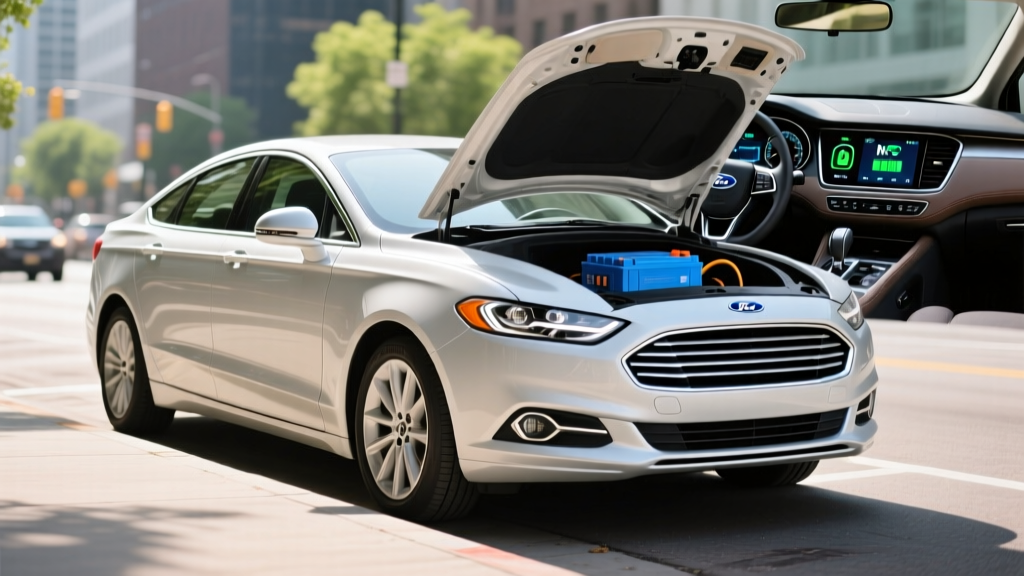
The 2018 Ford Fusion Hybrid SE remains one of the most practical used hybrid sedans on the market. With an EPA-rated 42 MPG combined and a reputation for durability, it competes directly with the Toyota Camry Hybrid and Honda Accord Hybrid of the same era. Ford discontinued the Fusion after the 2020 model year, which means every example on the road is now a used vehicle — but the hybrid powertrain's simplicity and Ford's 8-year/100,000-mile battery warranty mean many of these cars still have factory hybrid coverage remaining as of 2026.
This guide covers the SE trim specifically — the volume seller and best value in the Fusion Hybrid lineup — with real-world efficiency data, battery longevity expectations, and a clear framework for whether this hybrid fits your needs better than a plug-in hybrid (PHEV) or full battery-electric vehicle (BEV).
| Specification | 2018 Ford Fusion Hybrid SE |
|---|---|
| EPA Combined MPG | 42 MPG |
| EPA City MPG | 43 MPG |
| EPA Highway MPG | 41 MPG |
| Combined Horsepower | 188 HP (net system) |
| Engine | 2.0L Atkinson-cycle I4 (141 HP) |
| Electric Motor | 88 kW (118 HP) AC synchronous |
| Hybrid Battery | 1.4 kWh lithium-ion |
| Transmission | eCVT (planetary gearset) |
| 0-60 MPH | ~7.8 seconds |
| Original MSRP (SE) | ~$26,320 |
| Typical Used Price (2026) | $12,000–$17,500 |
| Battery Warranty | 8 years / 100,000 miles |
HEV vs. PHEV: The Fusion Hybrid Is a Conventional Hybrid — No Plug Required
Before diving deeper, it is essential to understand what the 2018 Fusion Hybrid is and is not. Ford sold two electrified Fusions in 2018: the Fusion Hybrid (a conventional hybrid electric vehicle, or HEV) and the Fusion Energi (a plug-in hybrid, or PHEV). This article focuses on the Hybrid SE — the HEV.
| Feature | Fusion Hybrid (HEV) | Fusion Energi (PHEV) |
|---|---|---|
| Requires plug-in charging? | No — self-charging via engine and regenerative braking | Yes — plug in for electric-only driving |
| Electric-only range | None (EV assist only at low speeds) | ~21 miles (EPA) |
| Battery size | 1.4 kWh | 7.6 kWh usable |
| Combined MPGe (electric mode) | N/A | 97 MPGe |
| Combined MPG (gas only) | 42 MPG | 42 MPG (after battery depleted) |
| Federal tax credit (original) | None | Up to $4,007 (expired) |
The distinction matters because the two vehicles serve different drivers. The Hybrid HEV is a "fill up and go" vehicle — you never need to think about charging. The Energi PHEV rewards owners who plug in nightly with 21 miles of electric-only commuting but carries a smaller trunk (battery intrusion) and a more complex ownership proposition. If you are reading this because you searched for the Fusion Hybrid SE specifically, you are looking at the HEV — no plug, no charging anxiety, just excellent fuel economy.
Fuel Economy: 42 MPG EPA, But Real-World Results Vary
The EPA rates the 2018 Ford Fusion Hybrid SE at 43 city / 41 highway / 42 combined MPG. These numbers come from fueleconomy.gov, and they place the Fusion Hybrid squarely in the competitive midsize hybrid segment for its model year.
| Driving Scenario | EPA Rating | Real-World Expectation |
|---|---|---|
| City (stop-and-go) | 43 MPG | 40–46 MPG (hybrids often exceed EPA in city due to regen) |
| Highway (70+ mph) | 41 MPG | 36–40 MPG (aerodynamic drag reduces hybrid advantage) |
| Combined | 42 MPG | 38–44 MPG depending on driving mix |
| Cold weather (below 32°F) | N/A | 33–38 MPG (engine runs more for cabin heat, battery less efficient) |
Hybrids tend to outperform their EPA city estimates in real-world stop-and-go driving because regenerative braking recaptures energy that a gas car wastes as heat. The Fusion Hybrid's eCVT and 88 kW electric motor handle low-speed propulsion efficiently, and the Atkinson-cycle 2.0L engine only fires when needed. Conversely, sustained highway driving at 75–80 mph reduces the hybrid advantage — the electric motor contributes less at high speeds, and the Fusion's aerodynamic profile, while respectable, cannot fully offset the energy demands of highway velocities.
In cold weather, expect a 10–15% drop in fuel economy. The gasoline engine runs more frequently to provide cabin heat (there is no electric resistance heater as standard equipment on the SE), and the lithium-ion battery's charge-discharge efficiency decreases at low temperatures. Owners in northern climates commonly report 33–38 MPG during winter months — still strong, but noticeably below the EPA sticker.
Powertrain and Driving Impressions
The 2018 Fusion Hybrid pairs a 2.0-liter Atkinson-cycle inline-4 engine (141 HP) with an 88 kW AC synchronous electric motor (118 HP). The combined net system output is 188 HP, delivered through Ford's eCVT — not a traditional continuously variable transmission with belts and pulleys, but a planetary gearset that blends engine and motor power seamlessly. This is the same type of power-split device Toyota has used for decades in its hybrids, and it is proven technology.
The 0–60 MPH time of approximately 7.8 seconds is adequate for merging and passing but won't win any drag races. Where the Fusion Hybrid shines is low-speed responsiveness: the electric motor provides instant torque from a stop, making the car feel quicker around town than its 0–60 number suggests. The transition between electric-only and engine-assisted propulsion is smooth, with only a faint drone from the Atkinson-cycle engine under hard acceleration.
The SE trim includes standard features like Ford's SYNC 3 infotainment system with an 8-inch touchscreen, Apple CarPlay and Android Auto, dual-zone automatic climate control, and Ford's Co-Pilot360 suite (on later builds, including lane-keeping assist, pre-collision assist with pedestrian detection, and a rearview camera). It is a well-equipped midsize sedan that does not feel like a penalty box.
Battery Life, Warranty, and Replacement Cost
The hybrid battery in the 2018 Fusion Hybrid SE is a 1.4 kWh lithium-ion pack — small by EV standards, but purpose-built for the charge-sustain duty cycle of a conventional hybrid. Unlike a BEV battery that cycles between 0% and 100%, the Fusion Hybrid's battery management system keeps the pack operating in a narrow state-of-charge window (roughly 40–60%), which dramatically reduces degradation stress.
Ford Hybrid Battery Warranty: 8 years or 100,000 miles (whichever comes first), covering capacity loss below a defined threshold. In California and states that adopted CARB emissions standards (including NY, MA, NJ, CT, and others), the hybrid battery warranty extends to 10 years or 150,000 miles under the PZEV/AT-PZEV classification. Check your vehicle's emissions label and state registration to confirm coverage.
As of 2026, a 2018 model is 8 years old. If the vehicle has under 100,000 miles and was originally registered in a non-CARB state, the federal hybrid battery warranty may be expiring this year. In CARB states, coverage extends through 2028 or 150,000 miles. This is worth verifying with a Ford dealer using the VIN before purchase.
Real-world battery longevity data for the Fusion Hybrid is encouraging. The 1.4 kWh pack uses conservative chemistry and shallow cycling, and widespread failures are uncommon. Most owner reports on forums and reliability databases suggest the battery lasts 150,000–200,000+ miles before meaningful degradation. When replacement is needed, a new OEM hybrid battery from Ford typically costs $2,000–$3,500 installed, though refurbished and aftermarket options are increasingly available in the $1,200–$2,000 range from independent hybrid specialists.
The eCVT transmission is also a reliability strong point. Because it uses a planetary gearset with no belts, chains, or clutches to wear out, failures are rare. This is a simpler and more durable design than traditional belt-driven CVTs found in some non-hybrid vehicles.
Pricing, Tax Credits, and Used-Car Value
The 2018 Ford Fusion Hybrid SE originally carried an MSRP of approximately $26,320 (before destination). In the current 2026 used-car market, well-maintained examples with 60,000–100,000 miles typically sell for $12,000–$17,500, depending on condition, mileage, and regional demand. Lower-mileage examples (under 50,000 miles) can command up to $19,000.
Federal tax credit eligibility: The 2018 Fusion Hybrid (HEV) never qualified for the federal §30D new EV tax credit, as that credit applies only to plug-in vehicles (PHEVs and BEVs) with a minimum battery capacity. There is no federal tax credit for purchasing a used conventional hybrid.
The used-EV federal tax credit (§25E), which provides up to $4,000 for qualifying used plug-in vehicles, also does not apply to the Fusion Hybrid HEV — it is limited to used PHEVs and BEVs. The Fusion Energi (PHEV version) may qualify under §25E if it meets the income, price, and dealer requirements outlined by the IRS.
Some states and local utilities offer rebates or incentives for hybrid purchases, though most incentive programs in 2026 prioritize plug-in vehicles. Check your state energy office or utility provider for current programs.
Reliability and What to Watch For
The 2018 Fusion Hybrid has a solid reliability record. According to IIHS, it earned a Top Safety Pick designation when equipped with optional front crash prevention. NHTSA awarded it a 5-star overall safety rating.
Common issues reported by owners and tracked by reliability databases include:
- 12V auxiliary battery drain: Like many modern vehicles, the Fusion Hybrid uses a standard 12V battery for electronics. If the car sits unused for extended periods, the 12V battery can die. This is not the hybrid traction battery — it is the conventional accessory battery, and replacement costs ~$150–$200.
- Infotainment glitches: Early SYNC 3 builds can experience occasional freezing or rebooting. A software update from Ford usually resolves this.
- Suspension wear: Front strut mounts and sway bar links may need replacement past 80,000 miles — standard wear items for a midsize sedan of this age.
- Coolant leak (minor): Some owners report slow coolant seepage from the engine-side hybrid cooling loop. Monitor coolant levels at oil changes.
The hybrid-specific components — battery, electric motor, eCVT, and inverter — have proven durable. There is no timing belt to replace (the Atkinson-cycle engine uses a timing chain), and brake pads often last 80,000+ miles thanks to regenerative braking handling most deceleration.
Pros
- 42 MPG combined with real-world city driving often exceeding EPA
- Smooth, quiet powertrain with no plug-in requirement
- Spacious midsize cabin with comfortable ride quality
- SYNC 3 with CarPlay/Android Auto is intuitive and responsive
- Strong safety ratings (IIHS Top Safety Pick, 5-star NHTSA)
- eCVT planetary gearset is extremely durable
- CARB-state battery warranty extends to 10 years / 150,000 miles
Cons
- Highway MPG drops to 36–40 at sustained 75+ mph speeds
- Modest 188 HP — passing power is adequate but not brisk
- Trunk space reduced by battery pack (12.0 cu ft vs 16.0 cu ft in gas Fusion)
- Discontinued after 2020 — no new examples available
- Federal hybrid battery warranty may be expiring on 2018 models in non-CARB states
- Regenerative braking feel takes adjustment (mild one-pedal effect)
Who Should Choose the Fusion Hybrid SE vs. a PHEV or Full EV?
Choose the 2018 Fusion Hybrid SE if:
- You cannot charge at home or at work (apartment living, street parking, no garage outlet)
- You want maximum fuel economy with zero lifestyle change — just fill up with gas
- Your commute is mostly city or suburban stop-and-go driving where the hybrid excels
- You want a proven, low-risk used vehicle with strong reliability data
- Your budget is $12,000–$18,000 and you need a spacious midsize sedan
Consider a PHEV (like the Fusion Energi or a used Toyota Prius Prime) if:
- You can plug in nightly at home and your commute is under 25 miles round-trip
- You want some electric-only driving to reduce gas consumption further
- You may qualify for the §25E used clean vehicle credit (up to $4,000 on qualifying used PHEVs)
Consider a full EV (like a used Chevrolet Bolt, Tesla Model 3, or Hyundai Kona Electric) if:
- You have reliable home Level 2 charging access
- Your daily driving is under 200 miles and you rarely take road trips over 300 miles
- You want to eliminate oil changes, spark plugs, and emissions checks entirely
- You want the lowest per-mile energy cost (electricity is typically $0.04–$0.06/mile vs. $0.10–$0.14/mile for gas in the Fusion Hybrid)
Frequently Asked Questions
How many MPG does the 2018 Ford Fusion Hybrid SE get?
The EPA rates it at 43 city / 41 highway / 42 combined MPG. In real-world driving, city commuters often see 40–46 MPG thanks to regenerative braking, while sustained highway driving at 75+ mph typically yields 36–40 MPG. Cold weather reduces economy by 10–15%.
Does the 2018 Fusion Hybrid need to be plugged in?
No. The Fusion Hybrid is a conventional hybrid (HEV). It charges its 1.4 kWh battery internally through regenerative braking and the gasoline engine. You never plug it in. If you want a plug-in Fusion, you are looking for the Fusion Energi (PHEV), which is a separate model.
Is the 2018 Fusion Hybrid reliable?
Yes. The hybrid powertrain — including the 1.4 kWh lithium-ion battery, 88 kW electric motor, and eCVT planetary gearset — has a strong track record for longevity. The battery is warrantied for 8 years/100,000 miles (10 years/150,000 miles in CARB states). Most hybrid batteries last 150,000–200,000+ miles before significant degradation.
What does it cost to replace the hybrid battery?
A new OEM replacement battery from Ford typically costs $2,000–$3,500 installed. Refurbished or aftermarket options are available from independent hybrid specialists for approximately $1,200–$2,000. However, premature battery failure is uncommon — most owners never need a replacement.
Does the 2018 Fusion Hybrid qualify for any tax credit?
No. The conventional Fusion Hybrid (HEV) does not qualify for the federal §30D new vehicle credit or the §25E used clean vehicle credit. Both credits are limited to plug-in vehicles (PHEVs and BEVs). Some state or utility programs may offer minor incentives for hybrids, but there is no federal tax benefit. The Fusion Energi (PHEV) may qualify for the §25E used credit — check IRS guidelines for eligibility details.
How does the Fusion Hybrid compare to the Toyota Camry Hybrid?
The 2018 Camry Hybrid LE achieves 52 MPG combined (EPA) — 10 MPG more than the Fusion Hybrid — thanks to Toyota's more advanced fourth-generation hybrid system. However, the Fusion Hybrid offers a quieter cabin, a more refined ride, and competitive pricing on the used market. If maximum fuel economy is your top priority, the Camry Hybrid wins. If you value driving refinement and a spacious trunk (relative to other hybrids), the Fusion Hybrid is compelling.
What is the trunk space in the Fusion Hybrid?
The hybrid battery pack reduces trunk volume to 12.0 cubic feet, compared to 16.0 cubic feet in the gasoline-only Fusion. This is adequate for groceries and luggage for two but may feel tight for families on road trips. The rear seats do not fold flat due to the battery placement behind the rear seatback.
The 2018 Ford Fusion Hybrid SE occupies a practical sweet spot in the used hybrid market: proven efficiency, strong reliability, comfortable daily-driver manners, and no charging infrastructure required. For buyers who want to cut fuel costs without changing their refueling habits, it remains a smart purchase in 2026 — especially at current used-car prices.