Quick Verdict: A Proven Midsize Hybrid Sedan at a Used-Car Price
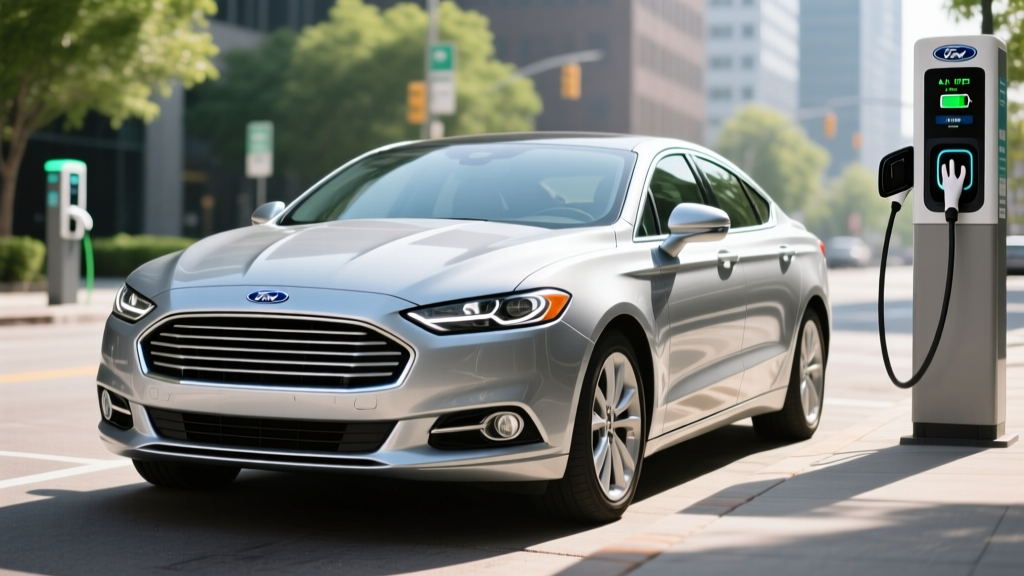
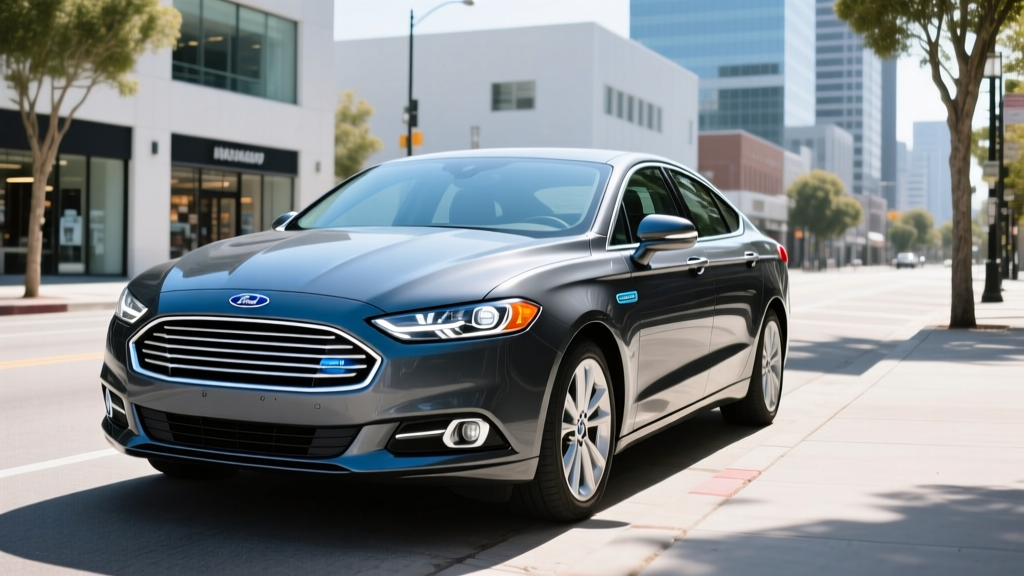
The 2018 Ford Fusion Hybrid SE FWD occupies a specific niche in 2026's used-car market: a comfortable, tech-forward midsize sedan that delivers genuine fuel savings without requiring any change to your driving or charging habits. With an EPA-rated 42 MPG combined and a proven 2.0-liter Atkinson-cycle powertrain, it remains one of the more practical hybrid sedans from its generation. Ford discontinued the Fusion after the 2020 model year, which means every example on the market is now used — and most are approaching or past the factory hybrid battery warranty window. That makes this buyer's guide essential before you sign any paperwork.
This guide covers the SE FWD trim specifically — the volume-selling hybrid configuration — and addresses the questions that matter most to used-hybrid shoppers: real-world MPG, battery longevity, replacement costs, and how this car stacks up against the plug-in hybrid (Energi) variant, a full EV, or a conventional gas Fusion.
EPA Fuel Economy and Real-World MPG
The 2018 Ford Fusion Hybrid carries the following EPA fuel economy ratings across all FWD trims (SE, Titanium):
| Metric | Value |
|---|---|
| City MPG | 43 |
| Highway MPG | 41 |
| Combined MPG | 42 |
| Fuel tank capacity | 13.5 gallons |
| Total driving range | ~567 miles |
Source: EPA fueleconomy.gov
Real-World MPG: What Owners Actually See
Conventional hybrids like the Fusion Hybrid tend to meet or even exceed their EPA city rating in stop-and-go traffic because regenerative braking recovers energy that a gas car wastes as heat. In real-world ownership:
- City driving: 42–46 MPG is common. The electric motor handles low-speed propulsion, and frequent stops maximize regen.
- Highway driving: Expect 37–40 MPG at 70–75 mph. The gasoline engine does most of the work, and aerodynamic drag reduces efficiency.
- Cold weather (below 30°F): Plan for a 5–10% drop. The engine runs more often to provide cabin heat, and battery efficiency decreases at low temperatures.
- Combined real-world average: Most owners report 39–43 MPG in mixed driving, closely tracking the EPA estimate.
The Fusion Hybrid's EV-mode button lets you force electric-only operation at low speeds (typically under 25 mph for short distances), which can help in parking lots or residential streets but does not meaningfully change overall trip MPG.
Powertrain Specs: Engine, Motor, and Combined Output
| Component | Specification |
|---|---|
| Gasoline engine | 2.0L inline-4, Atkinson cycle |
| Engine horsepower | 141 HP @ 6,000 RPM |
| Engine torque | 129 lb-ft @ 4,000 RPM |
| Electric motor | Permanent-magnet AC synchronous |
| Motor horsepower | 120 HP |
| Combined system output | 188 HP |
| Transmission | eCVT (planetary gearset, no traditional belts) |
| Drive type | Front-wheel drive (FWD) |
| 0–60 mph | ~8.1 seconds |
The eCVT in the Fusion Hybrid is not a belt-and-cone continuously variable transmission like those in some competitors. It uses a planetary gearset to blend engine and motor power, which is mechanically simpler and more durable. There are no belts to wear or pulleys to fail — a meaningful reliability advantage.
Hybrid Battery: Size, Chemistry, and Packaging
The 2018 Fusion Hybrid uses a 1.4 kWh lithium-ion traction battery pack located behind the rear seat. This is a small battery by design: it exists to buffer energy from regenerative braking and assist the gasoline engine during acceleration, not to provide meaningful electric-only range. The battery is air-cooled, which is adequate for a pack this size but means sustained high-load driving in hot climates can thermally stress the cells over many years.
For comparison, the plug-in hybrid Fusion Energi variant of the same model year carries a much larger 7.6 kWh battery and offers 22 miles of electric-only range — a fundamentally different use case discussed below.
HEV vs. PHEV: Fusion Hybrid vs. Fusion Energi
Ford offered the 2018 Fusion in two electrified variants. Understanding the difference is critical because they serve different buyers:
| Attribute | Fusion Hybrid (HEV) | Fusion Energi (PHEV) |
|---|---|---|
| Powertrain type | Conventional hybrid | Plug-in hybrid |
| Needs to be plugged in? | No — charges via engine + regen | Yes — plug in for EV range |
| Battery capacity | 1.4 kWh | 7.6 kWh |
| Electric-only range | ~1 mile at low speed | 22 miles (EPA) |
| Total range | ~567 miles | ~610 miles (EV + gas) |
| Combined MPG / MPGe | 42 MPG | 103 MPGe (EV+gas) / 42 MPG (gas only) |
| Level 1 charging (120V) | N/A | ~7 hours to full |
| Level 2 charging (240V) | N/A | ~2.5 hours to full |
| DC fast charging | N/A | Not supported |
| Trunk space | 12.0 cu ft | 8.2 cu ft (battery intrusion) |
| Combined HP | 188 | 188 |
Key takeaway: The Fusion Hybrid (HEV) generates all its own electricity. You never plug it in. It's ideal for drivers without access to home or workplace charging. The Fusion Energi (PHEV) requires regular plug-in charging to realize its efficiency advantage; if you never plug it in, you're carrying 300+ lbs of dead battery weight and getting roughly the same MPG as the standard hybrid — with less trunk space.
Reliability, Battery Lifespan, and Replacement Cost
Used-hybrid buyers' top concern is battery failure. Here's what the data shows for the 2018 Fusion Hybrid:
Hybrid Battery Longevity
Ford's lithium-ion hybrid batteries in the Fusion have demonstrated solid longevity. Based on owner reports and fleet data:
- Typical lifespan: 150,000–200,000 miles before significant capacity loss (below 70% state of health).
- Degradation pattern: Gradual, not sudden. You'll notice slightly reduced EV-mode availability and marginally lower MPG over time, not a catastrophic failure.
- Common failure triggers: Extreme heat exposure (Arizona, Texas), frequent deep cycling in mountainous terrain, and age-related cell imbalance after 10+ years.
Ford's original hybrid battery warranty for the 2018 Fusion Hybrid was 8 years / 100,000 miles (extended to 10 years / 150,000 miles in California Air Resources Board states including CA, CT, MA, ME, MD, NJ, NY, OR, RI, VT, WA). As of 2026, most 2018 models are at or beyond the 8-year mark. If you're buying from a dealer, ask whether any warranty remains — and if the car was originally sold in a CARB state, you may still have coverage through 2028 or 150,000 miles.
Battery Replacement Cost
If the hybrid battery does fail outside warranty:
- New OEM replacement (Ford dealer): $2,500–$3,500 installed
- Refurbished/remanufactured battery: $1,500–$2,200 installed
- Individual cell/module repair: $500–$1,200 at a hybrid specialist shop (replacing only the failed modules rather than the full pack)
These costs are moderate compared to full EV battery replacements. The small 1.4 kWh pack is far less expensive to replace than a 60–100 kWh EV battery. Many owners also report that independent hybrid-repair shops can diagnose and replace individual modules for a fraction of the full-pack cost.
General Reliability
The 2018 Fusion Hybrid rates well for overall reliability. The 2.0L Atkinson-cycle engine is under-stressed (it runs at lower RPMs than a conventional engine thanks to electric motor assist), and the eCVT planetary gearset has no wear-prone belts or cones. Common non-hybrid issues include:
- Infotainment screen delamination (SYNC 3 displays on 2017–2018 models)
- Transmission shudder at low speeds (typically addressed by software updates or fluid changes)
- 12V auxiliary battery drain if the car sits unused for extended periods
NHTSA gave the 2018 Fusion a 5-star overall safety rating, and the IIHS named it a Top Safety Pick when equipped with optional front crash prevention. Source: NHTSA.
SE Trim Equipment and What You Get
The SE was the mid-level hybrid trim (above the base S, below the Titanium) and the highest-volume configuration. Standard and typical equipment on the 2018 Fusion Hybrid SE FWD includes:
- SYNC 3 infotainment with 8-inch touchscreen, Apple CarPlay, and Android Auto
- Dual-zone automatic climate control
- Push-button start with intelligent access
- 17-inch aluminum wheels
- Power-adjustable driver's seat (6-way)
- Backup camera
- Ford Co-Pilot360 features (on late-build 2018 models): pre-collision assist with pedestrian detection, lane-keeping system, auto high beams, blind-spot information system (BLIS)
- EV-mode button for low-speed electric-only operation
- Brake coach and EcoGuide displays for efficiency coaching
The SE trim with the optional SE Cold Weather Group (heated seats, heated steering wheel, heated mirrors) is particularly desirable in northern climates. The Driver Assist Package added adaptive cruise control and enhanced active park assist.
Pricing and Tax Credit Eligibility in 2026
Used Market Pricing
As of early 2026, typical asking prices for a 2018 Ford Fusion Hybrid SE FWD in the used market:
- 80,000–100,000 miles, good condition: $13,000–$16,000
- 50,000–80,000 miles, good condition: $15,500–$19,000
- Under 50,000 miles, excellent condition: $18,000–$22,000
Original MSRP for the 2018 Fusion Hybrid SE FWD was approximately $26,195 (including destination). Depreciation has been significant, which is good news for used buyers.
Federal Tax Credit
The 2018 Ford Fusion Hybrid does not qualify for the federal §30D new clean vehicle credit (that credit applied only to the Fusion Energi PHEV when new, and the Fusion Hybrid was never eligible because conventional HEVs don't meet the plug-in and battery-capacity thresholds). However, if you purchase a used 2018 Fusion Hybrid from a dealer in 2026, you may qualify for the Used Clean Vehicle Credit (IRC §25E):
- Credit amount: 30% of the sale price, up to a maximum of $4,000
- The vehicle's sale price must be $25,000 or less (most 2018 Fusion Hybrids qualify)
- Buyer income limits apply: modified AGI cannot exceed $75,000 (single), $112,500 (head of household), or $150,000 (joint)
- The vehicle must be at least 2 model years old (a 2018 model qualifies in 2026)
- Must be purchased from a licensed dealer (private-party sales do not qualify)
- The credit can be transferred to the dealer at point of sale for an upfront price reduction
Confirm current eligibility rules at IRS.gov before purchasing, as incentive programs are subject to legislative change.
Fusion Hybrid vs. Full EV vs. Gas Car: Which Fits You?
Choose the 2018 Fusion Hybrid if:
- You don't have reliable access to home or workplace charging
- You want lower fuel costs without changing any habits
- You drive 12,000–18,000 miles per year in mixed city/highway conditions
- You want a proven, comfortable sedan at a used-car price point under $20K
- You frequently take road trips and don't want to plan around charging stops
Choose a full EV (e.g., used Chevrolet Bolt, Tesla Model 3) if:
- You can install a Level 2 home charger
- Your daily commute is under 200 miles round-trip
- You want to eliminate gasoline costs entirely
- You want lower maintenance (no oil changes, fewer brake replacements due to regen)
- You're willing to plan charging stops on longer road trips
Choose a conventional gas car if:
- You drive very few miles per year (under 8,000) and the fuel savings won't offset the hybrid price premium
- You want the lowest possible upfront purchase price
- You primarily drive long highway stretches where hybrid efficiency advantages shrink
Annual Fuel Cost Comparison
At 15,000 miles/year and $3.40/gallon (2026 national average for regular unleaded):
- 2018 Fusion Hybrid (42 MPG combined): ~$1,214/year in fuel
- 2018 Fusion gas (2.5L, 25 MPG combined): ~$2,040/year in fuel
- Annual savings with hybrid: ~$826/year
Over a 5-year ownership period, that's roughly $4,100 in fuel savings — which largely offsets any price premium the hybrid commands over a comparable gas Fusion on the used market.
Pros and Cons
- 42 MPG combined is excellent for a midsize sedan, especially in city driving
- Comfortable ride quality and well-insulated cabin
- SYNC 3 with CarPlay/Android Auto holds up well in 2026
- Planetary eCVT is mechanically robust — no belt failures
- Strong safety ratings (5-star NHTSA, IIHS Top Safety Pick)
- Low used prices; potential $4,000 used-EV credit eligibility
- No plug-in required — works with your existing routine
- Discontinued after 2020 — long-term parts availability may narrow
- Trunk space (12.0 cu ft) is smaller than the gas Fusion (16.0 cu ft) due to battery placement
- Most 2018 models are now outside the 8-year/100,000-mile hybrid battery warranty
- Acceleration (8.1 sec 0–60) is adequate but not quick
- Regenerative braking feel takes adjustment — some owners report a "grabby" brake pedal at low speeds
- No AWD option on the hybrid (AWD was only available on the gas Fusion)
Frequently Asked Questions
How many MPG does the 2018 Ford Fusion Hybrid SE FWD get?
The EPA rates it at 43 city / 41 highway / 42 combined MPG. Real-world owners typically report 39–43 MPG combined, with city driving sometimes exceeding the EPA estimate thanks to regenerative braking. Cold weather and sustained highway speeds reduce efficiency by 5–10%.
Does the Fusion Hybrid need to be plugged in?
No. The 2018 Fusion Hybrid is a conventional hybrid (HEV). It charges its small 1.4 kWh battery through regenerative braking and the gasoline engine. You simply fuel it with gasoline like any other car. Do not confuse it with the Fusion Energi, which is the plug-in hybrid (PHEV) variant and does require plug-in charging for its 22-mile electric range.
Is the 2018 Fusion Hybrid reliable, and what does a battery replacement cost?
Reliability is generally good. The 2.0L Atkinson-cycle engine and planetary eCVT are low-stress components. The hybrid battery typically lasts 150,000–200,000 miles. If replacement is needed outside warranty, expect $2,500–$3,500 for a new OEM pack or $1,500–$2,200 for a refurbished unit. Individual module repairs at hybrid specialists can cost $500–$1,200.
Does the 2018 Fusion Hybrid qualify for any tax credit?
Not the new-vehicle §30D credit — that was never available for conventional hybrids. However, if you buy from a dealer in 2026, you may qualify for the Used Clean Vehicle Credit (IRC §25E): up to $4,000 (30% of sale price) if the car sells for $25,000 or less and your income falls within the caps ($75K single / $150K joint). Confirm current rules at IRS.gov.
Hybrid vs. PHEV vs. EV — which should I choose?
If you lack home charging access or take frequent long road trips, the conventional hybrid (HEV) is the lowest-friction choice. If you have home charging and a short commute, a PHEV like the Fusion Energi gives you electric-only daily driving with a gas backup. If you can charge at home and your daily driving is under 200 miles, a full EV eliminates gas entirely and reduces maintenance costs — but requires road-trip charging planning.
What should I check before buying a used 2018 Fusion Hybrid?
Request a pre-purchase inspection that includes a hybrid battery state-of-health (SoH) check via OBD-II scanner. Look for battery cooling fan operation (a blocked or failed fan accelerates degradation). Verify the 12V battery age (the hybrid system depends on a healthy 12V battery to boot up). Check for SYNC 3 screen delamination and ensure all software updates have been applied. Confirm whether the original hybrid battery warranty is still in effect based on the car's in-service date and mileage.