Quick Verdict: The 2018 Ford Fusion Hybrid S in 2026
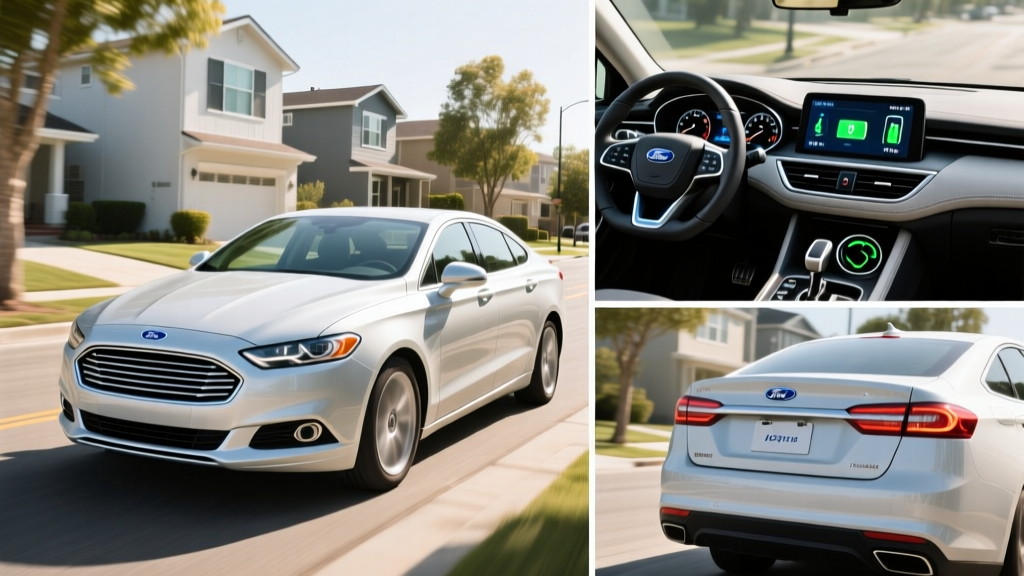
The 2018 Ford Fusion Hybrid S is a conventional hybrid electric vehicle (HEV) — not a plug-in — that pairs a 2.0-liter Atkinson-cycle four-cylinder with an electric motor and a compact lithium-ion battery. For used-car shoppers in 2026 evaluating midsize hybrid sedans, the Fusion Hybrid S remains a compelling option: it delivers an EPA-estimated 42 MPG combined, requires no plug-in charging, and benefits from Ford's long-standing hybrid powertrain warranty. With the Fusion line discontinued after 2020, this model year represents a mature, well-debugged iteration of Ford's hybrid system. Below, we break down the exact efficiency numbers, battery longevity data, ownership costs, and how it stacks up against plug-in hybrids and full EVs.
HEV vs. PHEV: Which Fusion Did Ford Sell in 2018?
Ford offered the 2018 Fusion in two electrified variants, and confusing them is one of the most common buyer mistakes on the used market:
| Attribute | 2018 Fusion Hybrid (HEV) | 2018 Fusion Energi (PHEV) |
|---|---|---|
| Powertrain type | Conventional hybrid — no plug | Plug-in hybrid — charges via outlet |
| Battery capacity | 1.4 kWh (usable ~1.0 kWh) | 7.6 kWh (usable ~5.8 kWh) |
| EPA electric-only range | N/A (EV assist only) | 21 miles (EV mode) |
| EPA combined MPG / MPGe | 42 MPG | 42 MPG (gas) / 97 MPGe (electric) |
| Plug-in charging required? | No | Yes (Level 1 or Level 2) |
| DC fast charging | No | No |
| Trunk space | 12.0 cu ft | 8.2 cu ft (battery intrusion) |
The 2018 Ford Fusion Hybrid S is the HEV variant. It captures energy through regenerative braking and the gasoline engine — you never plug it in. The Fusion Energi is the PHEV, which can charge from a wall outlet and delivers roughly 21 miles of electric-only driving before the gas engine takes over. If you see a charging port on the fender, it's an Energi, not a standard Hybrid.
Fuel Economy: EPA Numbers and Real-World MPG
| Driving Cycle | EPA Estimate | Real-World Expectation |
|---|---|---|
| City | 43 MPG | 44–48 MPG (hybrids excel in stop-and-go) |
| Highway | 41 MPG | 37–40 MPG (less regen benefit at steady speed) |
| Combined | 42 MPG | 40–44 MPG (varies by driving mix) |
Source: EPA Fuel Economy Guide — 2018 Ford Fusion Hybrid
The Fusion Hybrid S uses Ford's powersplit eCVT architecture, which lets the electric motor handle low-speed driving and assist during acceleration while the gasoline engine operates in its most efficient RPM range. This is why the city MPG actually exceeds the highway number — a hallmark of conventional hybrids. In real-world urban commuting with frequent stops, many owners report beating the EPA city estimate by 2–5 MPG. On extended highway trips at 75+ mph, expect a slight shortfall as aerodynamic drag increases and regenerative braking opportunities decrease.
For context, the 2018 Fusion Hybrid S with its 13.5-gallon fuel tank delivers approximately 540–580 miles of total range on a single tank under mixed driving conditions.
Powertrain Specs: Engine, Motor, and Combined Output
| Specification | 2018 Ford Fusion Hybrid S |
|---|---|
| Engine | 2.0L Atkinson-cycle I-4 |
| Engine power | 141 hp @ 6,000 rpm |
| Engine torque | 129 lb-ft @ 4,000 rpm |
| Electric motor | Permanent-magnet synchronous AC |
| Motor power | 118 hp (88 kW) |
| Combined system output | 188 hp (net) |
| Transmission | eCVT (planetary gearset, not belt-driven) |
| Drivetrain | Front-wheel drive |
| 0–60 mph | ~8.4 seconds (est.) |
| Battery type | Lithium-ion (1.4 kWh gross) |
| Battery location | Behind rear seat (trunk) |
The 188-hp combined output is adequate for daily commuting and highway merging, though it won't feel quick by modern EV standards. The eCVT is a planetary gearset — not a traditional belt-and-cone CVT — so it avoids the rubber-band sensation that some drivers dislike. Power delivery is smooth, with the electric motor providing instant torque at low speeds before the gasoline engine seamlessly blends in.
Battery Longevity, Warranty, and Replacement Cost
Hybrid Battery Warranty
Original coverage: 8 years / 100,000 miles (whichever comes first), federally mandated minimum for hybrid battery components.
California and CARB states: 10 years / 150,000 miles under California Air Resources Board emissions warranty requirements.
Capacity threshold: Ford warrants the battery against failure or significant capacity loss that impairs hybrid system function. Unlike full EVs, there is no published "70% retention" threshold — the standard is functional operation of the hybrid system.
For a 2018 model in 2026, the original 8-year/100,000-mile battery warranty is expiring or has already expired for most vehicles (8 years from the original in-service date). Buyers in California and states that adopted CARB standards (including New York, Massachusetts, Oregon, and others) may still have coverage through the 10-year/150,000-mile provision, depending on the vehicle's original sale date and mileage.
Real-world battery longevity: Ford's lithium-ion hybrid batteries have demonstrated strong durability. The Fusion Hybrid's small 1.4 kWh pack operates within a narrow state-of-charge window (roughly 40–60% SoC), which significantly reduces stress on the cells. Many Fusion Hybrids have exceeded 150,000–200,000 miles without battery replacement. The shallow cycling strategy — never fully charging or fully depleting the pack — is key to this longevity.
Battery replacement cost: If the hybrid battery does fail outside of warranty, expect to pay between $2,000 and $4,000 for a replacement, including labor, from a Ford dealer. Independent hybrid specialists and refurbished battery options can reduce this to $1,000–$2,500. Given the proven durability of these packs, battery replacement should not be a primary concern for most used buyers, but it's worth budgeting for as the vehicle ages past 150,000 miles.
Pricing and Tax Credit Eligibility in 2026
The 2018 Ford Fusion Hybrid S carried an original MSRP of approximately $25,995 (including destination charge). In the 2026 used market, well-maintained examples with 60,000–90,000 miles typically sell for $12,000–$16,500, depending on condition, mileage, and regional demand.
Federal tax credit status: The 2018 Fusion Hybrid S does not qualify for the IRS §30D new clean vehicle credit (that credit applies only to new vehicle purchases and was never available for conventional HEVs at this credit level). As a used vehicle, it may be eligible for the Used Clean Vehicle Credit (up to $4,000 or 30% of the sale price, whichever is less) — however, this credit applies only to battery electric vehicles (BEVs) and plug-in hybrids (PHEVs), not conventional hybrids. The Fusion Hybrid S, as an HEV, is ineligible for the used EV credit.
The Fusion Energi (PHEV variant) may qualify for the used clean vehicle credit if purchased from a licensed dealer and if the buyer meets income requirements (modified AGI ≤ $75,000 single / $150,000 joint). Verify eligibility on IRS.gov — Used Clean Vehicle Credit.
Reliability, Safety, and Ownership Costs
The 2018 Fusion Hybrid benefits from a mature powertrain that Ford had been refining since the first-generation Fusion Hybrid (2010). Key reliability considerations:
- Powertrain: The eCVT planetary gearset has no belts, clutches, or torque converter to wear out — it's among the most durable transmission designs in any vehicle. Internal combustion engine components follow standard maintenance intervals.
- Brakes: Regenerative braking handles most deceleration, so the friction brake pads and rotors last significantly longer than on gas-only vehicles. Many owners report original brake pads at 80,000+ miles.
- 12V battery: Like all modern vehicles, the Fusion Hybrid has a standard 12V auxiliary battery (separate from the hybrid traction battery) that typically needs replacement every 4–5 years. This is a routine $150–$250 maintenance item.
- Safety: The 2018 Fusion earned a 5-star overall rating from NHTSA and was an IIHS Top Safety Pick when equipped with optional forward collision warning and automatic emergency braking.
Estimated annual fuel cost: At 42 MPG combined and 12,000 miles/year with gas at $3.20/gallon, annual fuel cost is approximately $915. Compare this to a non-hybrid 2018 Fusion with the 1.5L EcoBoost (27 MPG combined): roughly $1,420/year — a savings of about $500/year with the hybrid.
Who Should Buy the 2018 Fusion Hybrid S?
Pros
- 42 MPG combined — excellent for a midsize sedan
- No plug-in charging required — works for apartment dwellers
- Proven, durable eCVT powertrain
- Comfortable ride quality and spacious cabin
- Lower brake wear thanks to regenerative braking
- Strong safety ratings (5-star NHTSA)
Cons
- Discontinued model — no new parts pipeline from Ford
- Modest 188 hp — not a performance-oriented sedan
- Trunk space reduced to 12.0 cu ft by battery placement
- Infotainment (SYNC 3) feels dated vs. 2026 systems
- Original battery warranty expiring on most examples
- No DC fast charging or plug-in capability
Decision Framework
Choose the 2018 Fusion Hybrid S if: You want maximum MPG without changing your fueling habits, you lack access to home or workplace charging, you primarily drive in city/suburban conditions where hybrid efficiency peaks, and you want a proven sedan under $17,000.
Choose a PHEV (like the Fusion Energi) if: You have reliable Level 2 charging at home or work, your daily commute is under 25 miles (so you can drive mostly on electricity), and you want the option of electric-only driving for short trips while retaining gas range for road trips.
Choose a full EV (like a used Chevrolet Bolt or Nissan LEAF) if: You have home charging access, your daily driving is under 200 miles, you want zero tailpipe emissions and minimal powertrain maintenance, and you're ready to adapt to charging routines for longer trips.
Frequently Asked Questions
How many MPG does the 2018 Ford Fusion Hybrid S get?
The EPA rates it at 43 MPG city, 41 MPG highway, and 42 MPG combined. In real-world driving, city MPG often exceeds the EPA estimate (44–48 MPG) thanks to regenerative braking, while highway MPG may fall slightly short (37–40 MPG) at speeds above 70 mph.
Does the 2018 Fusion Hybrid need to be plugged in?
No. The Fusion Hybrid S is a conventional hybrid (HEV). Its small 1.4 kWh battery recharges entirely through regenerative braking and the gasoline engine. There is no charging port. If you see a Fusion with a charging port, it's the Energi (PHEV) variant, which is a different vehicle.
How long does the hybrid battery last?
Ford's lithium-ion hybrid battery is designed for shallow cycling (operating between roughly 40–60% state of charge), which greatly extends cell life. Many Fusion Hybrids have reached 150,000–200,000+ miles on the original battery pack. The original warranty was 8 years/100,000 miles (10 years/150,000 miles in CARB states).
What does a replacement hybrid battery cost?
A new OEM replacement battery from a Ford dealer typically costs $2,000–$4,000 including labor. Refurbished or aftermarket options from independent hybrid specialists can cost $1,000–$2,500. Battery failure before 150,000 miles is uncommon based on fleet and owner data.
Does the 2018 Fusion Hybrid qualify for any tax credit?
No. As a conventional hybrid (HEV), the Fusion Hybrid S is not eligible for the federal §30D new vehicle credit or the used clean vehicle credit — both require a plug-in vehicle (BEV or PHEV). Some states may offer separate incentives for hybrids, but these vary by jurisdiction. Check your state's energy office for current programs.
How does the Fusion Hybrid compare to the Toyota Camry Hybrid?
The 2018 Toyota Camry Hybrid LE is rated at 52 MPG combined (EPA) — roughly 10 MPG better than the Fusion Hybrid — and benefits from Toyota's extensive hybrid parts network and strong resale value. The Fusion Hybrid offers a more engaging driving feel and a slightly roomier rear seat, but the Camry Hybrid's efficiency advantage and ongoing production (ensuring parts availability) make it the more pragmatic used buy in 2026. Compare EPA data at fueleconomy.gov.
Is the eCVT transmission reliable?
Yes. Ford's eCVT is a planetary gearset (powersplit device), not a belt-driven CVT like those found in some Nissan and Subaru models. It has no belts, pulleys, or friction clutches to wear out. With standard fluid maintenance, the eCVT is one of the most durable transmission types available and routinely outlasts conventional automatic transmissions.