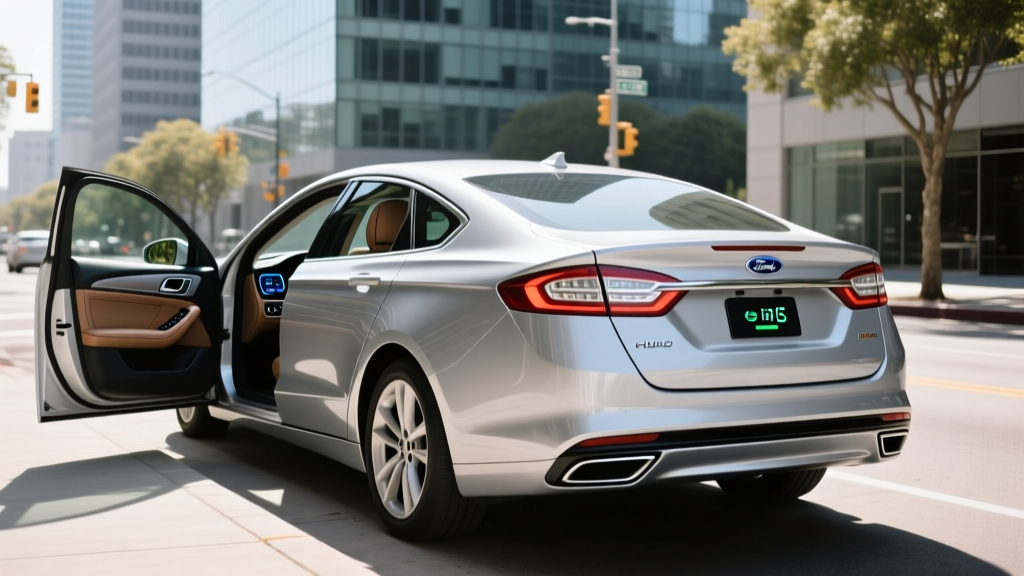
The Ford Fusion Hybrid was discontinued after the 2020 model year when Ford exited the sedan market, but the 2018 model year remains one of the most popular listings on the used-hybrid market. With over 1.4 million Fusions sold across all powertrains, buyers considering a used 2018 Ford Fusion Hybrid want one thing answered above all else: is it actually reliable eight years later, and what will the battery cost when it eventually fails?
This guide covers the 2018 Fusion Hybrid (the conventional HEV) and its plug-in sibling, the Fusion Energi, with hard data on fuel economy, battery longevity, warranty coverage, and real-world ownership costs. We'll also clarify which powertrain fits your driving pattern — and where a full battery-electric vehicle (BEV) might be a smarter move in 2026.
HEV vs PHEV: Which 2018 Fusion Is Which?
Ford offered two electrified Fusion variants in 2018, and confusing them is the single most common buyer mistake on the used market.
| Attribute | 2018 Fusion Hybrid (HEV) | 2018 Fusion Energi (PHEV) |
|---|---|---|
| Powertrain type | Conventional hybrid — no plug | Plug-in hybrid — charges via outlet or station |
| EPA combined MPG / MPGe | 42 MPG combined | 42 MPG (gas) / 97 MPGe (electric+gas) |
| Electric-only range | Not applicable (motor assists engine) | 21 miles EPA electric-only |
| Battery capacity | 1.4 kWh (nickel-metal hydride) | 7.6 kWh usable (lithium-ion) |
| Charging | Regenerative braking + engine only | Level 1 (120V): ~7 hrs; Level 2 (240V): ~2.5 hrs; No DC fast charge |
| Combined horsepower | 188 hp net | 188 hp net |
| Engine | 2.0L Atkinson-cycle I4 + electric motor | 2.0L Atkinson-cycle I4 + electric motor |
| Trunk space | 12.0 cu ft | 8.2 cu ft (battery intrudes) |
The HEV is the volume seller and the simpler ownership proposition. The Energi makes sense only if you have reliable Level 2 home charging and a commute under 21 miles each way — otherwise you're carrying dead battery weight for no electric benefit.
Fuel Economy: EPA Sticker vs Real-World MPG
The EPA rates the 2018 Fusion Hybrid at 43 city / 41 highway / 42 combined MPG (source: fueleconomy.gov). The Fusion Energi, when operating in hybrid mode after its electric range is depleted, returns the same 42 MPG combined.
| Driving Scenario | Fusion Hybrid (HEV) | Fusion Energi (PHEV, charge-depleted) |
|---|---|---|
| EPA City | 43 MPG | 43 MPG |
| EPA Highway | 41 MPG | 41 MPG |
| EPA Combined | 42 MPG | 42 MPG |
| Real-world city (owner-reported avg) | 44–47 MPG | 43–46 MPG |
| Real-world highway (75 mph cruise) | 36–39 MPG | 36–39 MPG |
| Real-world combined (mixed driving) | 39–43 MPG | 39–43 MPG |
Like most hybrids, the Fusion Hybrid tends to exceed its EPA city rating in stop-and-go traffic because regenerative braking recovers energy the gasoline engine would otherwise waste. Highway driving is the opposite story: sustained high speeds reduce the hybrid advantage, and real-world 75-mph cruising typically yields 36–39 MPG. Cold weather (below 32°F) can knock 3–5 MPG off combined figures due to the engine running longer to warm the cabin and reduced battery efficiency.
The Energi's 21-mile electric-only range (EPA) translates to roughly 17–19 real-world miles on a full charge in mixed driving, or as few as 14 miles in winter. Total range when combining a full charge plus a full 14-gallon tank is approximately 570 miles.
2018 Ford Fusion Hybrid Reliability: What the Data Shows
The 2018 Fusion Hybrid benefits from being a late-cycle model — Ford's fourth model year using the second-generation Fusion platform and the third iteration of its hybrid powertrain. By 2018, most early-production bugs had been resolved.
Key reliability data points:
- NHTSA recalls: The 2018 Fusion Hybrid had relatively few powertrain-specific recalls. Ford issued a recall for certain 2013–2019 Fusion Hybrid and Energi models related to a potential 12V battery cable issue, but the high-voltage traction battery was not implicated. Always check the NHTSA recall lookup with the specific VIN before purchase.
- Consumer-reported trouble spots: The most common complaints across Fusion Hybrid forums and databases center on the 12V auxiliary battery draining (not the hybrid battery), infotainment SYNC 3 glitches, and occasional transmission shudder at low speeds — none of which are hybrid-specific failures.
- Hybrid battery track record: Ford's hybrid battery packs, both the NiMH unit in the HEV and the lithium-ion pack in the Energi, have demonstrated strong longevity. Fleet data and owner reports indicate the HEV NiMH battery typically retains adequate capacity well past 150,000 miles. Failures before 100,000 miles are uncommon but not unheard of.
- IIHS safety: The 2018 Fusion earned a Top Safety Pick rating from the Insurance Institute for Highway Safety with Good ratings in all crashworthiness tests when equipped with optional front crash prevention.
Battery Lifespan, Warranty & Replacement Cost
Factory hybrid battery warranty (original): 8 years / 100,000 miles (10 years / 150,000 miles in California Air Resources Board states including CA, CT, MA, ME, MD, NJ, NY, OR, RI, VT, WA). This warranty applied from the original in-service date.
2026 status: A 2018 model's 8-year/100k federal warranty has expired. However, vehicles originally sold in CARB states may still have coverage under the 10-year/150k mandate if mileage is under 150,000. Always verify with a Ford dealer using the VIN.
If the hybrid battery does require replacement out of warranty, here's what to budget:
| Replacement Option | Fusion Hybrid (NiMH) | Fusion Energi (Li-ion) |
|---|---|---|
| New OEM battery (Ford dealer) | $3,000–$4,000 + labor | $5,500–$7,500 + labor |
| Remanufactured battery (independent shop) | $1,500–$2,500 installed | $3,500–$5,000 installed |
| Used/salvage battery | $500–$1,200 (risky, unknown SoH) | $1,500–$3,000 (risky, unknown SoH) |
| Cell-level repair (specialist) | $800–$1,500 | $2,000–$3,500 |
The HEV's smaller NiMH pack is notably cheaper to replace than the Energi's larger lithium-ion pack. This is a meaningful ownership-cost differentiator that buyers often overlook. Independent hybrid-battery specialists have become far more common by 2026, making remanufactured packs a viable and cost-effective option.
Pre-purchase battery health check: Ask a Ford dealer or qualified hybrid technician to pull the battery's State of Health (SoH) via OBD-II scan. A healthy 2018 Fusion Hybrid battery at 80,000 miles should show 85–92% capacity retention. Anything below 80% signals accelerated degradation and warrants negotiation on price or a preemptive replacement budget.
Powertrain Specs and Driving Experience
| Specification | 2018 Fusion Hybrid | 2018 Fusion Energi |
|---|---|---|
| Engine | 2.0L Atkinson I4 (141 hp, 129 lb-ft) | 2.0L Atkinson I4 (141 hp, 129 lb-ft) |
| Electric motor | 88 kW (118 hp) | 88 kW (118 hp) |
| Net system horsepower | 188 hp | 188 hp |
| Transmission | eCVT (planetary gearset) | eCVT (planetary gearset) |
| 0–60 mph | ~7.8 seconds | ~8.3 seconds (heavier) |
| Drivetrain | Front-wheel drive | Front-wheel drive |
| Curb weight | ~3,472 lbs | ~3,930 lbs |
| Fuel tank | 13.5 gal | 14.0 gal |
| Total range (HEV: gas / Energi: elec+gas) | ~567 miles | ~570 miles (21 elec + 549 gas) |
The eCVT is not a traditional belt-and-pulley CVT — it uses a planetary gearset to blend engine and motor power with no fixed gear ratios. This design is inherently durable (fewer wear components than a conventional automatic) and contributes to the Fusion Hybrid's strong reliability record. Acceleration is adequate for merging and passing but won't thrill; the Energi's extra 460 pounds of battery mass makes it the slower of the two.
Used Pricing and Tax Credit Eligibility in 2026
As a used vehicle, the 2018 Fusion Hybrid does not qualify for the new-vehicle §30D federal tax credit (up to $7,500 for new EVs/PHEVs). However, it may qualify for the Used Clean Vehicle Credit under IRS §25E:
- Credit amount: 30% of the sale price, capped at $4,000
- Vehicle eligibility: Must be at least 2 model years old (2018 qualifies), sold by a licensed dealer, sale price at or below $25,000
- Buyer income limits (2026): $75,000 single / $112,500 head of household / $150,000 joint filers (modified AGI)
- Claim frequency: Once every 3 years per buyer
- Point-of-sale transfer: Available — the dealer can apply the credit as a down-payment reduction at purchase
Always verify current rules at irs.gov, as income thresholds and eligible vehicle lists update periodically.
| Trim (2018 Fusion Hybrid) | Original MSRP | Typical 2026 Used Price (80k–100k mi) |
|---|---|---|
| S Hybrid | $25,995 | $11,000–$13,500 |
| SE Hybrid | $27,995 | $12,500–$15,500 |
| Titanium Hybrid | $32,495 | $14,500–$18,000 |
| Platinum Hybrid | $35,495 | $16,000–$19,500 |
| Energi Platinum (PHEV) | $37,495 | $14,000–$17,500 |
Most 2018 Fusion Hybrid listings from dealers fall under the $25,000 used-credit cap, making the $4,000 credit achievable for income-eligible buyers. That credit can effectively reduce an SE Hybrid from $14,000 to $10,000 — a compelling value for a 42-MPG midsize sedan.
Who Should Buy This Hybrid vs a Full EV or Gas Car?
Choose the 2018 Fusion Hybrid (HEV) if:
- You don't have access to home or workplace charging (Level 1 or Level 2)
- Your commute involves heavy stop-and-go city traffic where the hybrid excels
- You want a proven, low-risk used vehicle under $15,000 with 40+ MPG
- You drive 12,000–15,000 miles/year and want to minimize fuel cost without charging logistics
Choose the 2018 Fusion Energi (PHEV) if:
- You have reliable Level 2 home charging and a commute under 20 miles each way
- You want electric-only daily driving but need gas-engine range for road trips
- You can accept reduced trunk space (8.2 cu ft vs 12.0)
Choose a full EV (BEV) instead if:
- You have Level 2 home charging and your daily driving is under 200 miles
- You want to eliminate oil changes, spark plugs, and transmission fluid entirely
- You qualify for the full $7,500 new-vehicle §30D credit on a current EV, narrowing the price gap
- You plan to own the vehicle 8+ years and want lower lifetime maintenance
The Fusion Hybrid's sweet spot is the buyer who needs a dependable daily commuter, can't or won't install a home charger, and wants to spend $10,000–$15,000 (after the used credit) on a vehicle that will return 40+ MPG for years. It's not exciting, but it's rational — and that's exactly what a used-hybrid purchase should be.
Pros
- 42 MPG combined EPA; often exceeds in city driving
- Mature, proven hybrid powertrain with low failure rates
- eCVT planetary gearset is inherently durable
- Comfortable ride, quiet cabin, spacious rear seat
- Used prices well under $25K cap for §25E credit
- Strong IIHS crash-test performance
Cons
- Discontinued — no new examples, limited dealer support long-term
- Highway MPG drops to 36–39 at sustained 75+ mph
- SYNC 3 infotainment feels dated vs 2026 systems
- No DC fast charging (Energi) — Level 2 only
- Hybrid battery replacement is $1,500–$4,000 out of warranty
- Trunk space reduced vs gas Fusion (12.0 vs 16.0 cu ft)
Frequently Asked Questions
How many MPG does the 2018 Ford Fusion Hybrid get?
The EPA rates it at 43 city / 41 highway / 42 combined MPG. In real-world city driving, many owners report 44–47 MPG thanks to regenerative braking. Highway driving at 75 mph typically yields 36–39 MPG. Cold weather reduces combined figures by 3–5 MPG.
How far can the 2018 Fusion Energi go on electric only?
The EPA rates the Energi at 21 miles of electric-only range on a full charge. Real-world results are typically 17–19 miles in mild weather and as low as 14 miles in freezing temperatures. Once the battery depletes, the car operates as a conventional hybrid at 42 MPG combined.
Is the 2018 Ford Fusion Hybrid reliable?
Yes, with caveats. The 2018 model year is among the most reliable in the Fusion Hybrid's production run, benefiting from multiple years of powertrain refinement. The eCVT transmission and 2.0L Atkinson-cycle engine are proven designs. The most common issues are non-hybrid-specific: 12V battery drain, SYNC 3 software quirks, and minor suspension wear. The high-voltage hybrid battery typically lasts well past 150,000 miles.
What does a hybrid battery replacement cost for the 2018 Fusion?
For the Fusion Hybrid (NiMH battery), expect $3,000–$4,000 for a new OEM pack at a Ford dealer, or $1,500–$2,500 for a remanufactured pack at an independent hybrid specialist. The Fusion Energi's lithium-ion pack is more expensive: $5,500–$7,500 OEM or $3,500–$5,000 remanufactured. Cell-level repair by a specialist can reduce costs further.
Does the 2018 Fusion Hybrid qualify for any tax credit?
Not the new-vehicle §30D credit, which applies only to new EV and PHEV purchases. However, income-eligible buyers purchasing from a licensed dealer at or below $25,000 may qualify for the Used Clean Vehicle Credit (§25E): 30% of the sale price up to $4,000. Income limits apply ($75K single / $150K joint for 2026). This credit can be transferred to the dealer at point of sale as a price reduction.
Does the Fusion Hybrid need to be plugged in?
No. The Fusion Hybrid (HEV) charges its battery exclusively through regenerative braking and the gasoline engine. You never plug it in. Only the Fusion Energi (PHEV) requires plugging in to access its 21-mile electric-only range — it can still operate as a regular hybrid without ever being plugged in, but you'd forfeit the electric driving benefit.
Hybrid vs PHEV vs full EV — which should I choose in 2026?
If you have no home charging access, the conventional hybrid (HEV) is your best option — it requires zero infrastructure changes. If you have Level 2 home charging and a short commute, a PHEV like the Fusion Energi gives you electric-only daily driving with gas-engine backup. If you have home charging, drive under 200 miles daily, and can afford a newer vehicle, a full BEV eliminates nearly all powertrain maintenance and offers the lowest per-mile fuel cost. The used Fusion Hybrid occupies the value sweet spot: proven reliability, no charging needed, and sub-$15,000 pricing after the used-vehicle credit.