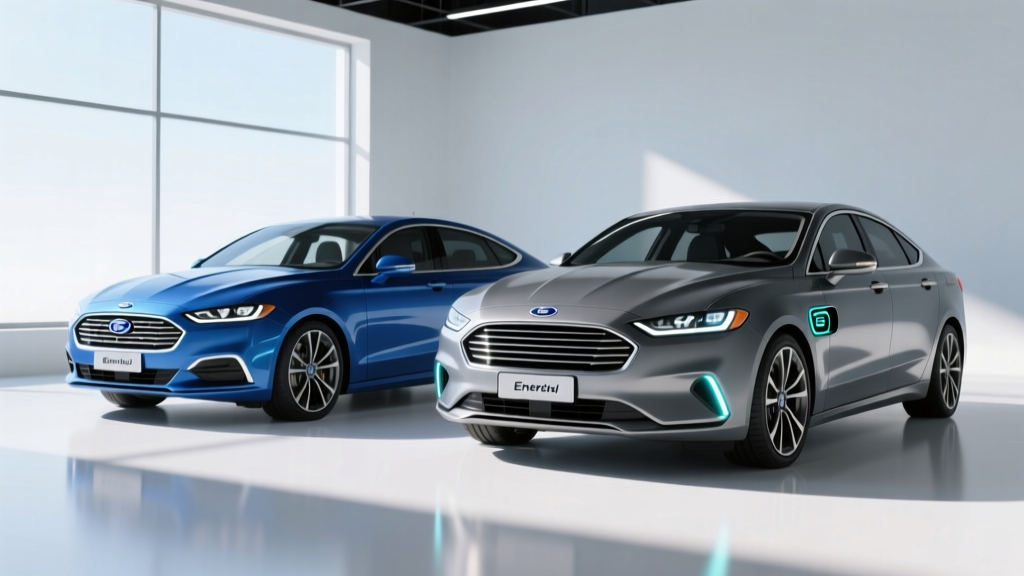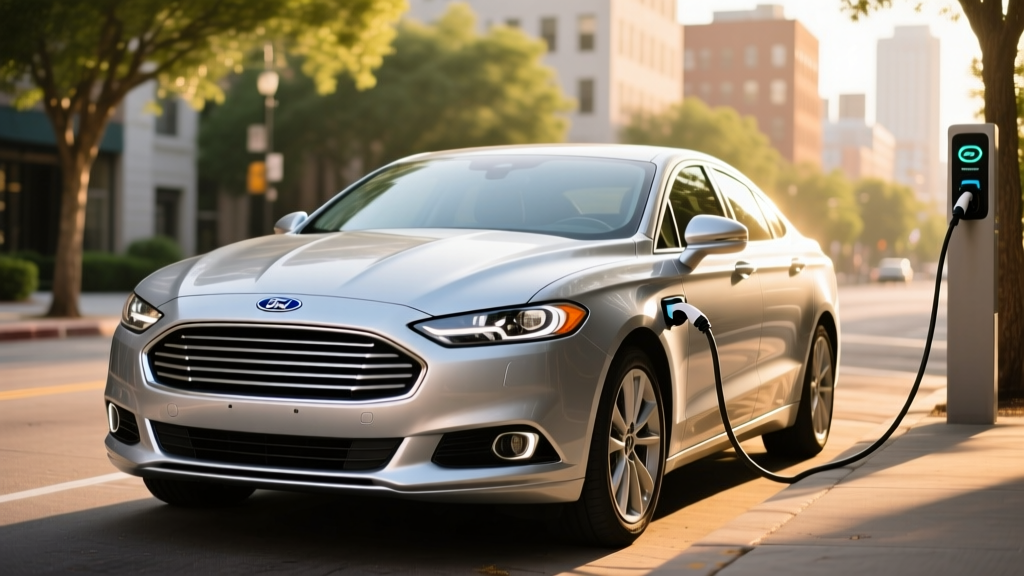
The midsize hybrid sedan market was a battlefield in 2018, and the Ford Fusion Hybrid was a serious contender against the Toyota Camry Hybrid and Honda Accord Hybrid. Now, with Ford having discontinued the Fusion after the 2020 model year, the 2018 Fusion Hybrid has become a popular target on the used market. Buyers want to know one thing above all else: what kind of fuel economy does it actually deliver?
This guide breaks down the 2018 Ford Fusion Hybrid MPG ratings, real-world efficiency expectations, powertrain details, battery longevity, and whether this discontinued sedan still makes financial sense in 2026.
2018 Ford Fusion Hybrid MPG: EPA Ratings vs. Real-World Results
The EPA rated the 2018 Ford Fusion Hybrid at 43 mpg city / 41 mpg highway / 42 mpg combined. Those numbers placed it near the top of the midsize hybrid segment for that model year, trailing the Toyota Camry Hybrid LE (44 combined) but edging out several competitors in city driving.
| Driving Cycle | EPA Rating | Real-World Expectation |
|---|---|---|
| City | 43 mpg | 42–48 mpg (regenerative braking favors stop-and-go) |
| Highway | 41 mpg | 36–40 mpg (aero drag and engine engagement at speed) |
| Combined | 42 mpg | 38–44 mpg (depends on driving mix) |
According to fueleconomy.gov, the 2018 Fusion Hybrid's 42-mpg combined rating translates to an estimated annual fuel cost of approximately $1,050 (based on 15,000 miles/year at $3.20/gallon), saving roughly $2,250 over five years compared to the average new vehicle.
HEV vs. PHEV: Understanding the Two Fusion Hybrids
Ford offered two electrified Fusion variants in 2018: the Fusion Hybrid (HEV) and the Fusion Energi (PHEV). These are fundamentally different powertrains, and confusing them is a common mistake among used-car shoppers.
| Specification | Fusion Hybrid (HEV) | Fusion Energi (PHEV) |
|---|---|---|
| Type | Conventional Hybrid | Plug-in Hybrid |
| Plug-in Charging | No — self-charging via engine + regen | Yes — Level 1 (120V) and Level 2 (240V) |
| Battery Capacity | 1.4 kWh (usable ~1.0 kWh) | 7.6 kWh (usable ~5.8 kWh) |
| Electric-Only Range | ~1 mile at low speed | 21 miles (EPA) |
| EPA Combined MPG / MPGe | 42 mpg | 97 MPGe (electric) / 42 mpg (gas-only) |
| Total Range | ~610 miles | ~610 miles (gas + electric combined) |
| DC Fast Charging | N/A | No — AC only (Level 1/2) |
| Level 2 Charge Time | N/A | ~2.5 hours (0–100%) |
| Combined Horsepower | 188 hp | 188 hp |
The key distinction: The Fusion Hybrid (HEV) never plugs in. It generates electricity through its gasoline engine and regenerative braking, storing energy in a small battery for short electric-assist bursts. The Fusion Energi (PHEV) has a much larger battery that you plug in to charge, giving it a genuine 21-mile electric-only commute range before the gas engine takes over.
If you're searching specifically for 2018 Ford Fusion Hybrid MPG, you're most likely looking at the conventional HEV — the volume seller and the simpler ownership proposition. The Energi is better suited to drivers with short commutes and access to home or workplace charging.
Powertrain Deep Dive: What Powers the Fusion Hybrid
The 2018 Fusion Hybrid uses Ford's third-generation hybrid powertrain, a well-proven system shared with the C-Max Hybrid and Lincoln MKZ Hybrid of the same era.
- Engine: 2.0L Atkinson-cycle inline-4, 141 hp / 129 lb-ft torque
- Electric Motor: Permanent-magnet AC synchronous, 118 hp / 117 lb-ft
- Combined System Output: 188 hp
- Transmission: eCVT (electronically controlled continuously variable transmission — planetary gearset, no traditional belt)
- Drivetrain: Front-wheel drive
- 0–60 mph: ~8.4 seconds
- Battery: 1.4 kWh lithium-ion (located behind the rear seat)
The Atkinson-cycle engine sacrifices some low-end torque for superior thermal efficiency, while the electric motor fills the torque gap during acceleration. The eCVT isn't a belt-driven CVT like those in some Nissan products — it's a planetary gearset that seamlessly blends engine and motor power with no rubber-band effect. This is the same fundamental architecture Toyota uses in its Hybrid Synergy Drive, and it's proven to be one of the most durable transmission designs in the industry.
Battery Warranty, Lifespan, and Replacement Cost
For 2026 used buyers, this is a critical data point. A 2018 model's standard 8-year/100,000-mile warranty expires in 2026 unless the vehicle is registered in a CARB state (where coverage extends through 2028). If you're buying a 2018 Fusion Hybrid today, verify the warranty status with a Ford dealer using the VIN.
Real-world battery longevity has been encouraging. Ford's lithium-ion pack in the Fusion Hybrid has shown modest degradation — typically 8–12% capacity loss over 100,000 miles based on owner reports. Because the battery is small (1.4 kWh) and the system keeps state of charge in a narrow window (roughly 40–60%), the cells experience less stress than those in full EVs or larger PHEV packs.
Battery replacement cost: If the battery does eventually need replacement out of warranty, expect to pay between $2,000 and $4,000 for a refurbished or new pack plus installation at a dealership. Independent hybrid specialists often offer refurbished units for $1,500–$2,500. Given the modest degradation rates, most Fusion Hybrids will never need a battery swap during typical ownership.
Reliability and Common Issues
The 2018 Fusion Hybrid benefits from a mature, third-generation powertrain with very few moving parts that wear out. There's no traditional transmission to fail, no alternator, no starter motor, and the regenerative braking system extends the life of the friction brake pads (often lasting 80,000+ miles).
According to owner surveys and reliability data, the Fusion Hybrid has been one of Ford's more dependable models. Key points:
- Powertrain: Very few reports of hybrid system failures. The eCVT planetary gearset is essentially bulletproof under normal use.
- Brakes: Regen braking means pads and rotors last significantly longer than in gas-only models.
- Electronics: The SYNC 3 infotainment system is generally stable, though some owners report occasional screen freezes resolved with software updates.
- Coolant system: Some Fusion models of this era had coolant intrusion issues in the 1.5L EcoBoost engine — but this does not apply to the 2.0L Atkinson-cycle engine in the Hybrid.
The NHTSA gave the 2018 Fusion a 5-star overall safety rating, and the IIHS named it a Top Safety Pick when equipped with optional front crash prevention.
Used Pricing and Tax Credit Eligibility in 2026
The 2018 Fusion Hybrid was originally priced from roughly $25,395 (S trim) to $34,595 (Platinum trim) when new. In the 2026 used market, expect to pay:
- S / SE trims (60k–90k miles): $10,000–$14,000
- Titanium trim (50k–80k miles): $13,000–$17,000
- Platinum trim (40k–70k miles): $15,000–$19,000
Tax credit eligibility: The federal §30D new-vehicle tax credit does not apply to used purchases of this vehicle. However, the Used Clean Vehicle Credit (§25E) may apply if you purchase from a licensed dealer for $25,000 or less. This credit provides 30% of the sale price, up to $4,000, subject to buyer income caps ($75,000 single / $150,000 joint filers) and the vehicle being at least two model years old (which a 2018 model qualifies for). The vehicle must also have a battery capacity of at least 7 kWh — and here's the catch: the conventional Fusion Hybrid's 1.4 kWh battery does not meet this threshold. Only the Fusion Energi (PHEV) with its 7.6 kWh pack qualifies for the used credit.
Always verify current IRS §25E rules with a tax professional, as eligibility requirements can change.
Who Should Buy the 2018 Fusion Hybrid (and Who Shouldn't)
- You want a proven, comfortable midsize sedan with 40+ mpg
- You don't have access to home or workplace charging
- You drive a mix of city and highway miles
- You want low running costs without EV range planning
- You value a spacious trunk (12.0 cu ft) over a plug-in setup
- You want electric-only commuting (consider the Fusion Energi or a full EV)
- You need AWD (the Fusion Hybrid is FWD only)
- You want current warranty coverage (the 8-year battery warranty expires in 2026)
- You prioritize the latest ADAS tech (2018's Co-Pilot360 is basic by 2026 standards)
- You want a hatchback or SUV cargo layout
Hybrid vs. PHEV vs. EV — which fits you?
- Hybrid (HEV): Best for drivers without charging access who want better fuel economy with zero lifestyle change. The Fusion Hybrid is ideal here.
- PHEV: Best for drivers with home charging and a commute under 25 miles. The Fusion Energi offers 21 miles electric, but its smaller trunk (due to the larger battery) is a trade-off.
- Full EV (BEV): Best for drivers with reliable home charging who want zero gas stations and lower maintenance. A used Chevrolet Bolt EV or Nissan Leaf may cost a similar amount but requires charging infrastructure.
Frequently Asked Questions
How many MPG does the 2018 Ford Fusion Hybrid get?
The EPA rates it at 43 city / 41 highway / 42 combined mpg. In real-world driving, many owners report 38–48 mpg depending on driving conditions, with city driving often exceeding the EPA rating thanks to regenerative braking.
Does the 2018 Ford Fusion Hybrid need to be plugged in?
No. The Fusion Hybrid (HEV) is a conventional hybrid that charges its battery through the gasoline engine and regenerative braking. It has no plug and no electric-only range beyond brief low-speed assist. Only the Fusion Energi (PHEV) variant requires plugging in.
Is the 2018 Fusion Hybrid battery reliable, and what does replacement cost?
The hybrid battery has shown strong longevity, with typical degradation of 8–12% over 100,000 miles. Ford's warranty covered 8 years / 100,000 miles (10 years / 150,000 in CARB states). Out-of-warranty replacement costs $2,000–$4,000 at a dealer, or $1,500–$2,500 from an independent hybrid specialist.
Does the 2018 Fusion Hybrid qualify for any tax credit?
The conventional Fusion Hybrid (HEV) does not qualify for the federal used EV credit (§25E) because its battery is below the 7 kWh minimum. The Fusion Energi (PHEV) may qualify if purchased from a dealer for under $25,000 and the buyer meets income requirements. Check current IRS guidelines.
How does the Fusion Hybrid compare to the Toyota Camry Hybrid?
The 2018 Camry Hybrid LE rates at 52 mpg combined (vs. 42 for the Fusion), but the Camry was redesigned that year with a higher starting price on the used market. The Fusion Hybrid offers a more engaging driving feel and available AWD was not an option on either. If pure fuel economy is your top priority, the Camry Hybrid wins. If you prefer Ford's interior ergonomics and find a good deal, the Fusion Hybrid remains a solid choice.
What is the trunk space like?
The 2018 Fusion Hybrid offers 12.0 cubic feet of trunk space — less than the gas-only Fusion's 16.0 cu ft because the hybrid battery sits behind the rear seat. This is adequate for most daily use but tighter than some competitors. The Fusion Energi (PHEV) drops further to 8.2 cu ft due to its larger battery pack.