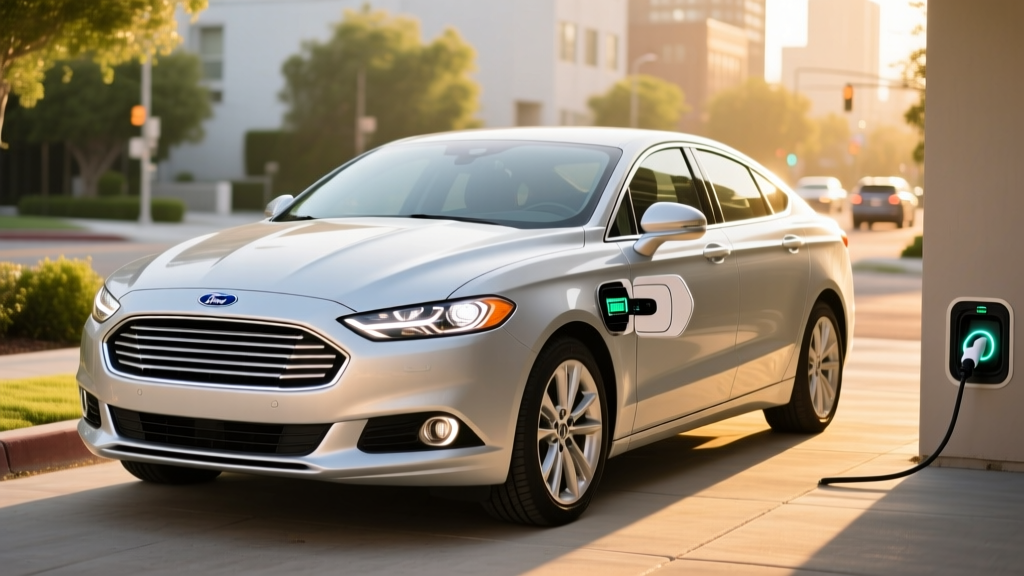
The 2018 Ford Fusion Hybrid remains one of the most popular used midsize sedans on the market, and for good reason: it delivers strong fuel economy, a comfortable ride, and Ford's proven hybrid powertrain. But with Ford having discontinued the Fusion after the 2020 model year, buyers in 2026 are evaluating these cars on the used market — where battery health, real-world MPG, and long-term reliability matter more than ever.
This guide covers both the conventional Fusion Hybrid (HEV) and the plug-in Fusion Energi (PHEV), breaking down EPA numbers, real-world efficiency, battery longevity, and whether either variant still makes financial sense compared to a modern full EV or a gas-only sedan.
2018 Ford Fusion Hybrid vs. Fusion Energi: HEV or PHEV?
Ford offered two electrified Fusion variants in 2018, and confusing them is the most common buyer mistake. Here's the critical distinction:
| Feature | Fusion Hybrid (HEV) | Fusion Energi (PHEV) |
|---|---|---|
| Plug-in required? | No — self-charging via regenerative braking and engine | Yes — plug in to access electric-only driving |
| Battery capacity | 1.4 kWh (lithium-ion) | 7.6 kWh (lithium-ion) |
| Electric-only range | N/A (EV mode at very low speeds only) | EPA 21 miles |
| EPA combined MPG | 42 MPG | 42 MPG (charge-sustaining) / 97 MPGe (with charge) |
| DC fast charging | No | No — AC Level 1/2 only |
| Federal tax credit (new) | None | Expired — was up to ~$4,007 when new |
The bottom line: If you can charge at home and your commute is under 20 miles, the Energi PHEV lets you drive most days on electricity alone. If you lack charging access or want simplicity, the conventional Hybrid is the stronger pick.
Fuel Economy: EPA Ratings and Real-World MPG
| Metric | Fusion Hybrid (HEV) | Fusion Energi (PHEV) |
|---|---|---|
| EPA City | 43 MPG | 104 MPGe (electric) / 43 MPG (gas) |
| EPA Highway | 41 MPG | 91 MPGe (electric) / 41 MPG (gas) |
| EPA Combined | 42 MPG | 97 MPGe / 42 MPG |
| Real-world combined (owner reports) | 39–45 MPG | 38–43 MPG (gas-only mode) |
| Fuel tank | 13.5 gal | 14.0 gal |
| Total range | ~567 miles | ~21 mi electric + ~567 mi gas |
According to fueleconomy.gov, the 2018 Fusion Hybrid achieves 43 city / 41 highway / 42 combined. In practice, many owners report exceeding the EPA city figure — hybrids excel in stop-and-go traffic where regenerative braking recovers energy. Highway-heavy commutes tend to land closer to 38–40 MPG.
For the Energi, the 21-mile electric-only range is modest by 2026 standards (the Toyota RAV4 Prime delivers 42 miles), but it covers most short commutes. Once the battery depletes, the Energi operates as a conventional hybrid at 42 MPG combined — though real-world tests often show 38–41 MPG due to the extra weight of the larger battery pack.
Real-world MPG tip: Hybrids lose efficiency in extreme cold (below 30°F) because the engine runs more often for cabin heat. Expect a 10–15% MPG drop in winter. The Fusion Hybrid does not have a heat pump — a feature found on newer EVs and some modern PHEVs.
Powertrain Specs: Engine, Motor, and Horsepower
| Specification | Fusion Hybrid | Fusion Energi |
|---|---|---|
| Engine | 2.0L Atkinson-cycle I-4 | 2.0L Atkinson-cycle I-4 |
| Engine output | 141 hp / 129 lb-ft | 141 hp / 129 lb-ft |
| Electric motor | 118 hp / 117 lb-ft | 118 hp / 117 lb-ft |
| Net system horsepower | 188 hp | 188 hp |
| Transmission | eCVT (planetary gearset) | eCVT (planetary gearset) |
| 0–60 mph | ~7.8 seconds | ~8.1 seconds |
| Drivetrain | FWD | FWD |
The 188 combined horsepower is adequate for daily driving and highway merging, though it won't feel quick. Ford's eCVT is a planetary gearset — not a belt-driven CVT — so it avoids the rubber-band feeling that plagues some competitors. Acceleration is linear and predictable.
Fusion Energi Charging: What Plug-In Owners Need to Know
The 2018 Fusion Energi's 7.6 kWh battery charges exclusively via AC power. There is no DC fast-charging capability — a notable limitation even in 2018 and a dealbreaker for road-trip-focused buyers.
| Charging Level | Power (kW) | Time (0–100%) | Connector |
|---|---|---|---|
| Level 1 (120V household outlet) | ~1.2 kW | ~7 hours | Standard J1772 |
| Level 2 (240V home/public) | ~3.3 kW | ~2.5 hours | J1772 |
| DC Fast Charge | Not supported | N/A | N/A |
Most Energi owners charge overnight on a standard 120V outlet, which is sufficient given the small battery. A Level 2 home charger (240V) fills the pack in roughly 2.5 hours — useful if you want to top up between commutes. The onboard charger is limited to 3.3 kW, so even a 7.2 kW or 11.5 kW Level 2 station won't charge the Energi any faster.
Battery Warranty, Lifespan, and Replacement Cost
Original Ford hybrid battery warranty: 8 years / 100,000 miles (whichever comes first) for the high-voltage battery pack, covering defects and capacity loss below a defined threshold. In states that adopted California's CARB standards (including CA, NY, MA, and others), the warranty extended to 10 years / 150,000 miles.
For a 2018 model in 2026, the standard 8-year/100,000-mile warranty has either expired or is expiring this year. CARB-state vehicles may still have coverage through 2028. Buyers should check the vehicle's registration history and current odometer reading.
Real-world battery longevity: Ford's hybrid battery packs have proven durable. Many Fusion Hybrid taxis and fleet vehicles have exceeded 200,000 miles on the original pack. Degradation is gradual — expect 10–15% capacity loss over 150,000 miles, which translates to a small MPG reduction rather than a sudden failure.
Replacement cost: A new OEM high-voltage battery for the Fusion Hybrid runs approximately $2,000–$3,500 (parts and labor) at a dealership. Third-party refurbished packs are available for $1,000–$2,000. The Energi's larger 7.6 kWh pack is more expensive to replace — typically $4,000–$6,000 OEM. These costs are significantly lower than full EV battery replacements.
Reliability and Safety Ratings
The 2018 Fusion earned strong safety marks: a 5-star overall rating from NHTSA and an IIHS Top Safety Pick designation (with optional front crash prevention and acceptable-rated headlights on higher trims). Standard safety features include forward collision warning, lane-keeping assist, and a rearview camera.
Reliability is a strong point. The 2.0L Atkinson-cycle engine is under-stressed, the eCVT has no wear-prone belts or clutches, and regenerative braking extends pad life — many owners report 80,000+ miles on original brake pads. Common complaints center on the SYNC 3 infotainment system (occasional freezes, fixable via software updates) and the 12V auxiliary battery (a standard maintenance item, not unique to hybrids).
Used Pricing in 2026 and Tax Credit Reality
The Fusion Hybrid was discontinued after 2020, so all 2018 models are now purchased used. As of early 2026, typical used-market pricing:
- Fusion Hybrid S/SE: $11,000–$15,000 (60,000–100,000 miles)
- Fusion Hybrid Titanium: $14,000–$18,000 (50,000–80,000 miles)
- Fusion Energi (plug-in): $12,000–$17,000 depending on battery health and mileage
Tax credit status: The Fusion Energi's original federal tax credit (up to ~$4,007 under the pre-2023 rules) is no longer available. Under current IRS §30D rules, the clean vehicle credit applies only to new vehicles meeting strict battery sourcing, MSRP caps, and buyer income requirements — and even the used-EV credit (§25E, up to $4,000) applies only to vehicles with a sale price of $25,000 or less purchased from a dealer, which most qualifying used EVs/PHEVs must meet specific battery-capacity thresholds. The 2018 Fusion Energi's 7.6 kWh pack may fall below the 7 kWh minimum required for the used-vehicle credit; verify with a tax professional before counting on this incentive.
The conventional Fusion Hybrid never qualified for a federal tax credit — it's a self-charging HEV, not a plug-in vehicle.
Who Should Buy the 2018 Fusion Hybrid in 2026?
Pros
- Proven 42 MPG combined; often exceeds EPA in city driving
- No plug-in infrastructure needed (HEV)
- Low used-market entry price ($11K–$18K)
- Strong safety ratings (5-star NHTSA)
- Spacious midsize cabin; comfortable highway cruiser
- eCVT reliability; extended brake pad life from regen
Cons
- Discontinued — no new models, limited dealer support long-term
- Energi PHEV range (21 mi) is low vs. modern PHEVs
- No DC fast charging on Energi
- SYNC 3 infotainment feels dated vs. 2026 systems
- FWD only — no AWD option for snow-belt buyers
- Original battery warranty expiring on most examples
Choose the Fusion Hybrid (HEV) if:
- You want a budget-friendly, high-MPG daily driver without needing a home charger
- Your commute is mostly city/suburban stop-and-go (where hybrids shine)
- You want a proven, low-maintenance sedan under $16,000
Choose the Fusion Energi (PHEV) if:
- You have Level 1 or Level 2 charging at home or work
- Your daily round-trip commute is under 20 miles (electric-only covers it)
- You want to reduce fuel consumption without committing to a full EV
Look at a full EV instead if:
- You want zero tailpipe emissions and lower per-mile energy cost
- You have reliable home charging and a budget above $25,000
- You want current-year federal tax credits (§30D) on a new purchase
Frequently Asked Questions
How many MPG does the 2018 Ford Fusion Hybrid get?
The EPA rates the 2018 Fusion Hybrid at 43 city / 41 highway / 42 combined MPG. Real-world results typically range from 39–45 MPG depending on driving style, temperature, and the city/highway mix. City-heavy driving often exceeds the EPA estimate thanks to regenerative braking.
How far can the Fusion Energi go on electric only?
The EPA rates the 2018 Fusion Energi at 21 miles of electric-only range. In mild weather at moderate speeds, some owners report 23–25 miles. In cold weather or at highway speeds, expect 15–18 miles before the gasoline engine engages.
Is the 2018 Fusion Hybrid reliable?
Yes. The Fusion Hybrid's powertrain — a 2.0L Atkinson-cycle engine paired with a planetary eCVT — is one of Ford's most dependable setups. The high-voltage battery has demonstrated 200,000+ mile longevity in fleet use. Common wear items are standard (12V battery, tires, brakes), and regen braking significantly extends pad life.
What does a Fusion Hybrid battery replacement cost?
An OEM replacement high-voltage battery for the Fusion Hybrid costs approximately $2,000–$3,500 installed at a dealership. Refurbished aftermarket packs run $1,000–$2,000. The Energi's larger 7.6 kWh pack costs $4,000–$6,000 OEM. Most original packs are lasting well beyond 150,000 miles.
Does the 2018 Fusion Hybrid qualify for any tax credit?
No. The conventional Fusion Hybrid (HEV) never qualified for a federal tax credit because it doesn't plug in. The Fusion Energi (PHEV) originally qualified for up to ~$4,007, but that credit is no longer available for new purchases. The used clean-vehicle credit (§25E, up to $4,000) has strict battery-capacity and price requirements that may exclude the Energi — consult a tax professional for your specific situation.
Hybrid vs. PHEV vs. full EV — which should I choose?
A conventional hybrid (HEV) like the Fusion Hybrid is best if you can't charge at home and want maximum MPG with zero behavior change. A PHEV like the Energi suits home-chargers with short commutes who want electric driving most days plus gas-engine flexibility for road trips. A full EV (like a used Chevrolet Bolt or Tesla Model 3) offers the lowest per-mile cost and zero tailpipe emissions but requires reliable charging access and a higher upfront budget.
Does the Fusion Hybrid need to be plugged in?
No. The conventional Fusion Hybrid charges its small 1.4 kWh battery entirely through regenerative braking and the gasoline engine. You never plug it in. Only the Fusion Energi (PHEV) requires plug-in charging to access its electric-only range.