Quick Verdict: The Used PHEV Minivan That Still Makes Sense
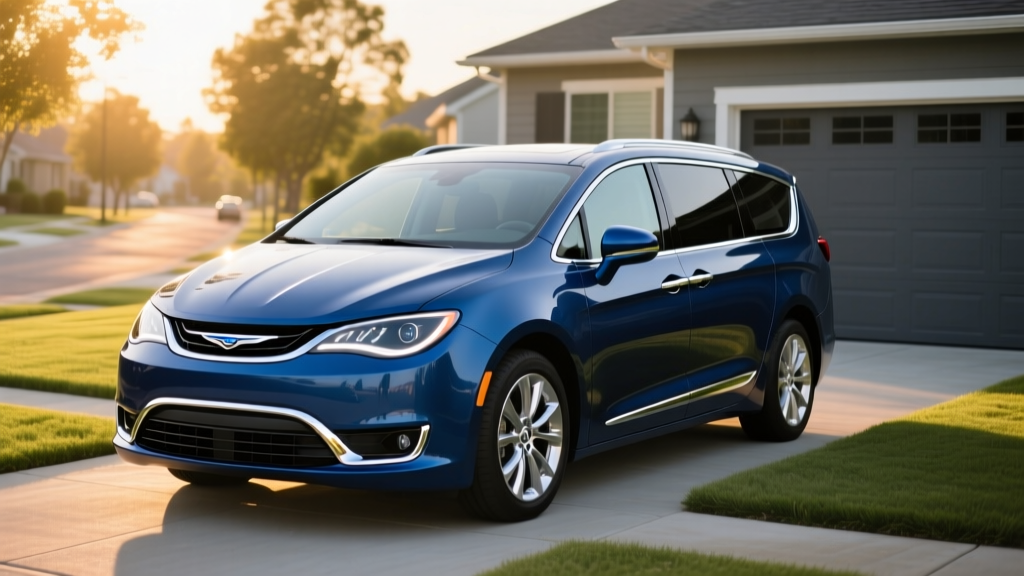
If you're shopping the used minivan market and want electric commuting without range anxiety on road trips, the 2018 Chrysler Pacifica Hybrid remains one of the only plug-in hybrid minivans ever sold in the US. With 32 miles of EPA-rated electric-only range and a combined 84 MPGe, it covers most school runs and grocery trips on battery alone, then switches to a conventional hybrid powertrain for longer hauls.
As a plug-in hybrid (PHEV), the Pacifica Hybrid bridges two worlds: it plugs in to charge a 16 kWh battery for short electric trips, but also carries a 3.6L V6 engine so you never worry about finding a charger on a 500-mile family vacation. For 2026 buyers evaluating used examples, the key questions are real-world efficiency, battery longevity, and whether this PHEV qualifies for any remaining tax incentives.
| Spec | Value |
|---|---|
| Powertrain | 3.6L V6 + 2 electric motors (eCVT) |
| Combined Horsepower | 260 hp |
| Battery (usable) | 16 kWh lithium-ion (NMC) |
| EPA Electric Range | 32 miles |
| EPA MPGe (electric + gas) | 84 MPGe combined |
| EPA MPG (gas-only hybrid mode) | 32 MPG combined |
| Total Combined Range | ~566 miles |
| Level 2 Charge Time (0–100%) | ~2 hours at 6.6 kW |
| Level 1 Charge Time (120V) | ~14 hours |
| DC Fast Charging | Not supported |
| Battery Warranty (original) | 10 years / 100,000 miles |
| Original MSRP (base Touring L) | $41,995 |
HEV vs PHEV: Where the Pacifica Hybrid Fits
Before diving deeper, it's worth clarifying what makes this minivan different from a conventional hybrid like the Toyota Sienna Hybrid.
| Feature | Conventional Hybrid (HEV) | Plug-In Hybrid (PHEV) |
|---|---|---|
| Plug-in charging | No — charges via regenerative braking and engine | Yes — plug in to access electric-only range |
| Battery size | Small (~1–2 kWh) | Larger (16 kWh in Pacifica Hybrid) |
| Electric-only driving | Minimal (low-speed assist only) | 32 miles EPA (Pacifica Hybrid) |
| Example | Toyota Sienna Hybrid (36 MPG) | 2018 Chrysler Pacifica Hybrid (84 MPGe) |
The Pacifica Hybrid is strictly a PHEV. You get maximum benefit by plugging it in — whether at home on a Level 2 (240V) charger or a standard 120V outlet. If you never plug it in, it still operates as a conventional hybrid at 32 MPG combined, but you're leaving its best feature on the table.
Fuel Economy: EPA Numbers vs Real-World Results
According to fueleconomy.gov, the 2018 Chrysler Pacifica Hybrid earns the following ratings:
| Mode | City | Highway | Combined |
|---|---|---|---|
| Electric + Gas (MPGe) | 84 MPGe | 84 MPGe | 84 MPGe |
| Gas-only hybrid (MPG) | 29 MPG | 30 MPG | 32 MPG |
Real-world expectations: Owners who plug in nightly and drive under 30 miles daily report routinely seeing 70–90 MPGe because most trips happen on electricity alone. On long highway road trips where the battery depletes quickly, expect the gas-only hybrid figure of roughly 28–31 MPG at 70–75 mph — slightly below the EPA sticker due to the minivan's 5,000+ lb curb weight and aerodynamic profile. In cold weather (below 30°F), electric-only range drops to approximately 22–26 miles due to cabin heating demands and reduced battery efficiency.
Electric Range, Charging Times, and Battery Specs
The Pacifica Hybrid's 16 kWh lithium-ion battery pack (NMC chemistry) delivers an EPA-rated 32 miles of electric-only range. In practice, most drivers see 28–35 miles depending on temperature, terrain, and driving style. City driving with regenerative braking can stretch it slightly beyond the EPA estimate; sustained highway speeds above 65 mph will shorten it.
Charging options:
- Level 1 (120V household outlet): Approximately 14 hours from empty to full using the included portable cordset. This works if you park in a garage near an outlet and drive under 30 miles daily.
- Level 2 (240V, 32A): The onboard charger accepts up to 6.6 kW, reaching a full charge in about 2 hours. A home Level 2 station (like a ChargePoint Home Flex or Wallbox Pulsar Plus) is the practical choice for daily PHEV use.
- DC Fast Charging: Not available. The Pacifica Hybrid has no DC fast-charge port. This is typical for PHEVs — the battery is small enough that Level 2 replenishes it quickly.
One practical note: the Pacifica Hybrid uses the standard J1772 connector for Level 1 and Level 2 charging. No adapter is needed for any public Level 2 station in the US.
Powertrain: V6 Meets Dual Electric Motors
The 2018 Pacifica Hybrid pairs Chrysler's 3.6L Pentastar V6 (running an Atkinson-cycle variant for efficiency) with two electric motors integrated into an electronically controlled continuously variable transmission (eCVT). Combined system output is 260 horsepower.
The electric motors handle low-speed driving and assist during acceleration. When the battery depletes below its buffer threshold (around 10–12% state of charge), the V6 takes over seamlessly and the vehicle operates as a conventional series-parallel hybrid. The transition is generally smooth, though the engine can become audible under hard acceleration or when climbing grades with a full load of passengers.
Towing capacity is rated at 1,500 lbs — lower than the gas-only Pacifica's 3,600-lb rating. If you need to tow a camper or boat, this PHEV is not the right fit.
Battery Warranty, Reliability, and Replacement Cost
Original Battery Warranty
Chrysler warranted the Pacifica Hybrid's high-voltage battery for 10 years or 100,000 miles (whichever comes first) in CARB states, and 8 years / 100,000 miles in non-CARB states. The warranty covers defects and capacity loss below approximately 70% of original capacity.
For a 2018 model evaluated in 2026, that original warranty is either expiring or already expired depending on mileage and your state. This is a critical ownership consideration for used buyers.
Reliability track record: The Pacifica Hybrid has had a mixed reliability history. Early 2017–2018 models were subject to several recalls, including a notable battery pack fire risk recall (NHTSA Recall 22V-703) that required dealers to inspect and, in some cases, replace high-voltage battery modules. Before purchasing any used 2018 Pacifica Hybrid, verify all recall work has been completed by checking the VIN at nhtsa.gov/recalls.
Battery replacement cost: If the high-voltage battery fails out of warranty, a full replacement runs approximately $7,000–$9,500 including parts and labor at a dealership. Independent hybrid battery shops may offer refurbished packs for $4,500–$6,000. Individual module replacement (the pack contains 16 modules) is sometimes possible for $300–$600 per module, which can address isolated cell failures without a full pack swap.
Pricing, Tax Credits, and Used-EV Incentives
The 2018 Pacifica Hybrid originally started at $41,995 (Touring L trim) and reached $47,000+ in Limited and Platinum trims. In the 2026 used market, expect to pay roughly $17,000–$26,000 depending on mileage, condition, and trim level.
Federal tax credit for used PHEVs (§25E): Under current IRS rules, purchasing a used 2018 Pacifica Hybrid from a dealer may qualify you for the Used Clean Vehicle Credit of up to $4,000 (30% of the sale price, capped at $4,000). Key eligibility requirements per irs.gov:
- Sale price must be $25,000 or less
- Buyer income cap: $75,000 (single) / $112,500 (head of household) / $150,000 (joint)
- Vehicle must be at least 2 model years old (2018 qualifies)
- Must purchase from a licensed dealer (private-party sales do not qualify)
- Battery must have at least 4 kWh capacity (the 16 kWh pack qualifies)
- Credit is non-refundable — you must have tax liability to use it
Important note: The original $7,500 new-vehicle credit (§30D) is no longer available for a 2018 purchase. The §25E used-vehicle credit is the relevant incentive. Always confirm eligibility with a tax professional before filing.
Pros
- Only PHEV minivan on the used market — no direct competitor
- 32 miles electric covers most daily family driving
- Stow 'n Go second-row seats fold flat (though third row does not fold into the floor due to battery placement)
- Smooth, quiet electric driving around town
- Qualifies for up to $4,000 used-EV tax credit if priced under $25K
Cons
- Average reliability record; verify recall completion before purchase
- No DC fast charging
- Towing limited to 1,500 lbs
- Battery warranty likely expired on 2018 models
- Third-row seats do not fold into the floor (battery occupies the well)
- Higher insurance costs compared to gas Pacifica
Who Should Choose the Pacifica Hybrid vs a Full EV or Gas Minivan?
Choose the 2018 Pacifica Hybrid if:
- You have home charging access (even a 120V outlet works for daily needs)
- Your daily driving is under 35 miles but you take occasional long road trips
- You need minivan space but want to reduce fuel costs
- You're not ready to commit to a full EV due to charging-infrastructure concerns on road trips
Choose a full EV (like a used Tesla Model X or upcoming electric minivans) if:
- You want zero tailpipe emissions and no gasoline engine maintenance
- You have reliable home and workplace charging
- You rarely drive more than 250 miles in a single day
Choose a conventional hybrid (Toyota Sienna Hybrid, 36 MPG) if:
- You cannot charge at home or work
- You want simpler ownership with no plug-in routine
- You prioritize long-term reliability data (Toyota's hybrid track record is stronger)
Frequently Asked Questions
How many MPG does the 2018 Chrysler Pacifica Hybrid get?
The EPA rates it at 84 MPGe combined when using both electric and gas power. Once the battery is depleted, it operates as a conventional hybrid at 32 MPG combined (29 city / 30 highway). Real-world results vary: plugged-in owners with short commutes often achieve 70–90 MPGe, while highway-only road trips yield 28–31 MPG.
How far can the Pacifica Hybrid go on electric only?
The EPA rates it at 32 miles of electric-only range. In real-world conditions, expect 28–35 miles depending on temperature and driving style. Cold weather (below 30°F) reduces this to approximately 22–26 miles.
Does the 2018 Pacifica Hybrid qualify for any tax credit?
It no longer qualifies for the new-vehicle §30D credit. However, if you buy one from a dealer for $25,000 or less and meet IRS income limits, you may qualify for the §25E Used Clean Vehicle Credit of up to $4,000. Verify current rules at irs.gov and consult a tax professional.
Is the 2018 Pacifica Hybrid reliable?
It has an average-to-below-average reliability record. Early model years (2017–2018) had several recalls, including a high-voltage battery fire risk. Always check the VIN at nhtsa.gov/recalls to confirm all recall repairs are complete. The powertrain itself is proven, but the hybrid system's complexity adds potential failure points compared to a conventional minivan.
What does a replacement battery cost?
A full high-voltage battery replacement runs $7,000–$9,500 at a dealership. Refurbished packs from independent shops cost $4,500–$6,000. Individual module replacement is sometimes possible for $300–$600 per module if only a few cells have degraded.
Can I charge the Pacifica Hybrid at a public fast charger?
No. The Pacifica Hybrid does not support DC fast charging. It charges via Level 1 (120V, ~14 hours) or Level 2 (240V at 6.6 kW, ~2 hours) using a standard J1772 connector. Public Level 2 chargers at grocery stores, workplaces, and parking garages work fine.
Does the battery take up cargo space?
Partially. The high-voltage battery sits beneath the second-row floor, which eliminates the Stow 'n Go feature for the second-row seats (they can be removed but not folded into the floor). The third-row seats still fold flat, and overall cargo volume remains practical for a minivan.