Quick Verdict: The 2018 Camry Hybrid at a Glance
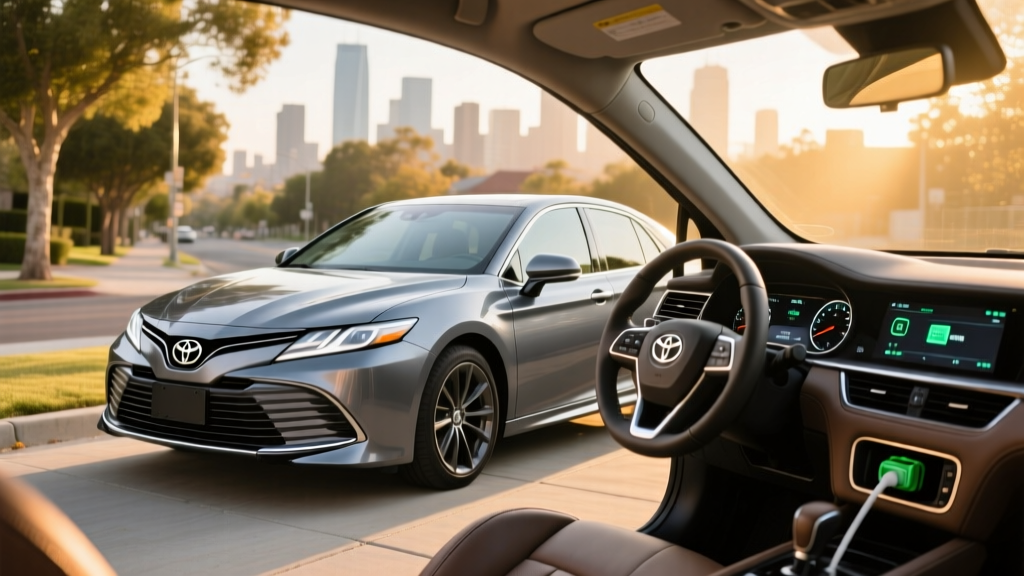
The 2018 Toyota Camry Hybrid arrived as part of an all-new eighth-generation redesign, bringing a lower center of gravity, Toyota's New Global Architecture (TNGA) platform, and a more refined hybrid powertrain. As a conventional hybrid electric vehicle (HEV), it requires no plug-in charging — it generates and recaptures all its electricity internally. For used-car shoppers in 2026 evaluating a midsize sedan that sips fuel without lifestyle compromise, this model year remains one of the strongest picks on the secondary market.
HEV vs. PHEV vs. EV: Where Does the Camry Hybrid Fit?
Before diving into specs, it's essential to understand what the 2018 Camry Hybrid is — and what it isn't. Toyota did not offer a plug-in hybrid (PHEV) version of the Camry in 2018. The Prius Prime carried that role in Toyota's lineup. Here's how the three electrified categories break down:
| Feature | HEV (e.g., 2018 Camry Hybrid) | PHEV (e.g., Prius Prime) | BEV (e.g., Tesla Model 3) |
|---|---|---|---|
| Plug-in charging? | No | Yes | Yes |
| Electric-only range | ~1 mile at low speed | 20–40 miles typical | 200–400 miles |
| Battery size | 1.6 kWh (NiMH) | 8.8–18 kWh (Li-ion) | 50–100 kWh |
| Gasoline engine? | Yes — primary power | Yes — backup/range extender | No |
| Federal tax credit (new) | None | Up to $7,500 (§30D) | Up to $7,500 (§30D) |
The 2018 Camry Hybrid is purely an HEV. Its 1.6 kWh nickel-metal hydride (NiMH) battery pack is small by design — it buffers energy for electric-motor assist during acceleration and captures energy during braking. You will never see a charge port on this car.
Fuel Economy: EPA MPG and Real-World Numbers
Fuel efficiency is the headline reason buyers choose the Camry Hybrid over the standard four-cylinder or V6 models. The 2018 model year offered two distinct EPA ratings depending on trim:
| Trim | City MPG | Highway MPG | Combined MPG |
|---|---|---|---|
| LE Hybrid | 51 | 53 | 52 |
| SE / XLE Hybrid | 44 | 47 | 46 |
Source: EPA / fueleconomy.gov
The LE trim achieves higher MPG due to lighter 16-inch alloy wheels, lower rolling-resistance tires, and slightly different final-drive gearing. If maximum fuel savings is your priority, the LE is the efficiency pick. The SE and XLE trade roughly 6 MPG combined for sportier wheels, a tuned suspension, and more interior features.
Powertrain and Performance Specs
The 2018 Camry Hybrid pairs a 2.5-liter Dynamic Force four-cylinder gasoline engine with a permanent-magnet electric motor through Toyota's Hybrid Synergy Drive (eCVT). This is the same generation of powertrain architecture proven across millions of Prius and Camry Hybrid units worldwide.
| Specification | Value |
|---|---|
| Gasoline engine | 2.5L inline-4 (A25A-FXS), 176 hp / 163 lb-ft |
| Electric motor | Permanent magnet, 118 hp / 149 lb-ft |
| Net combined system output | 208 hp |
| Transmission | eCVT (planetary gearset, not a belt CVT) |
| Hybrid battery | 1.6 kWh NiMH (244.8V nominal) |
| 0–60 mph (est.) | ~7.5 seconds |
| Drivetrain | Front-wheel drive |
| Fuel tank | 13.2 gallons |
| Total driving range (est.) | ~620–690 miles per tank |
A critical distinction: Toyota's eCVT is not the rubber-belt continuously variable transmission found in some competitors. It uses a planetary gearset that blends engine and motor power mechanically. There are no belts to wear, no simulated "shifts," and no droning engine note under acceleration — the 2018 Camry Hybrid is notably quieter than prior generations under load.
With 208 net horsepower, the 2018 Camry Hybrid delivers adequate passing power and confident highway merging. It's not a performance sedan, but it's meaningfully quicker than the previous-generation Camry Hybrid (which produced 200 hp from a 2.5L pairing) and feels responsive in daily driving.
Battery Longevity, Warranty, and Replacement Cost
Hybrid battery lifespan is the single most common concern among used hybrid buyers. The 2018 Camry Hybrid's NiMH pack is one of the most battle-tested battery systems in the automotive industry — the same fundamental chemistry and management strategy Toyota has refined since the 1997 Prius.
Toyota covers the hybrid battery for 8 years / 100,000 miles in most states, and 10 years / 150,000 miles in California and states that follow CARB emissions rules (including NY, MA, CT, RI, VT, ME, NJ, MD, DE, OR, WA, CO, MN, NM, NV as of the 2018 model year).
For a 2018 model in 2026: The 8-year/100k federal warranty has expired. If you're in a CARB state and the car has under 150,000 miles, the 10-year coverage may still apply through the 2028 model-year anniversary. Verify with a Toyota dealer using the VIN.
Real-World Battery Lifespan
Toyota's NiMH hybrid batteries routinely last 150,000–200,000+ miles before significant degradation. The battery management system keeps the pack operating in a narrow 40–80% state-of-charge window, avoiding the deep cycles that accelerate wear. Fleet data and owner reports show that many first-generation Prius packs exceeded 200,000 miles with less than 20% capacity loss.
For a 2018 Camry Hybrid, the battery is now 8 years old. NiMH chemistry ages primarily through calendar degradation and heat exposure rather than cycle count. If the vehicle was garaged or kept in a moderate climate, the pack likely retains 85–95% of its original capacity. Cars that spent years in extreme-heat states (AZ, TX, FL) with outdoor parking may show slightly more degradation.
Battery Replacement Cost
If the hybrid battery does eventually need replacement:
- Toyota dealer (new OEM pack): $2,500–$4,000 including labor
- Refurbished/remanufactured pack: $1,200–$2,000 including labor (from specialists like Green Bean Battery or Hybrid Automotive)
- Individual cell/module replacement: $200–$500 if only a few modules have failed (requires diagnostic scan)
Before buying, request a hybrid battery health check. Any Toyota dealer can run a diagnostic that shows battery internal resistance, module voltage balance, and state-of-charge behavior. Independent hybrid specialists can do the same. A healthy pack will show module voltages within 0.2V of each other at rest.
Pricing, Tax Credits, and Used Market Value
Original MSRP (2018)
- Camry Hybrid LE: $28,150 (including destination)
- Camry Hybrid SE: $29,650
- Camry Hybrid XLE: $32,600
Used Pricing in 2026
As of early 2026, a 2018 Camry Hybrid in good condition with 70,000–100,000 miles typically sells for $16,000–$22,000 depending on trim, mileage, and condition. LE models cluster toward the lower end; XLE models with low miles and clean history command the top of the range.
Federal Tax Credit Eligibility
The 2018 Camry Hybrid did not qualify for the federal §30D tax credit when new, and it does not qualify now. Under IRS rules, conventional hybrids (HEVs) are ineligible — only plug-in hybrid electric vehicles (PHEVs) and battery electric vehicles (BEVs) with sufficient battery capacity (≥4 kWh for PHEVs, ≥7 kWh for BEVs under current rules) can receive the credit. See the IRS clean vehicle credit page for current eligibility requirements.
Reliability, Safety, and Ownership Costs
Reliability Track Record
The 2018 Camry Hybrid benefits from Toyota's long-standing reliability reputation and a powertrain with fewer wear components than a conventional gasoline car. The eCVT has no clutch packs, torque converter, or shift solenoids to fail. Regenerative braking handles much of the deceleration, so brake pads routinely last 60,000–100,000 miles. There is no alternator or starter motor — the hybrid motor/generator handles both functions.
Consumer Reports and J.D. Power have consistently rated the eighth-generation Camry Hybrid above average for reliability. The most commonly reported issues are minor: infotainment software quirks, occasional 12V auxiliary battery drain if the car sits unused for weeks, and wind noise at highway speeds on early-build units.
Safety Ratings
The 2018 Camry earned top marks from both major testing agencies:
- IIHS: Top Safety Pick+ (with optional front crash prevention)
- NHTSA: 5-Star Overall Safety Rating — see NHTSA details
Toyota Safety Sense-P (TSS-P) came standard on all 2018 Camry Hybrid trims: automatic emergency braking with pedestrian detection, lane departure alert with steering assist, automatic high beams, and full-speed-range adaptive cruise control. This was notably generous for the class at the time — Honda and Hyundai charged extra for comparable suites on competing models.
Estimated Annual Ownership Costs
At 52 MPG combined (LE) and a national average of $3.25/gallon for regular unleaded, the Camry Hybrid LE costs approximately $750 per year in fuel for 12,000 miles of driving. A comparable non-hybrid midsize sedan at 30 MPG combined would cost roughly $1,300 — a savings of ~$550/year or ~$2,750 over five years. Insurance premiums for the Camry Hybrid run close to the gas model, typically $1,200–$1,600/year depending on driver profile and state.
✓ Pros
- 52 MPG combined (LE) — among the best of any midsize sedan
- No plug-in required; zero lifestyle change from a gas car
- 208 hp provides confident acceleration
- Standard Toyota Safety Sense-P (AEB, ACC, lane assist)
- Proven NiMH battery with 150k–200k+ mile track record
- Spacious cabin with 15.1 cu-ft trunk (no battery hump)
- Low brake wear from regen braking
✗ Cons
- No plug-in / no electric-only driving range to speak of
- No federal tax credit eligibility (new or used)
- SE/XLE trims drop to 46 MPG combined
- Infotainment system feels dated by 2026 standards (no wireless CarPlay)
- 8-year hybrid battery warranty has expired for most owners
- FWD only — no AWD option (AWD arrived in 2020 model year)
- NiMH battery is heavier and less energy-dense than modern Li-ion
Who Should Buy the 2018 Camry Hybrid?
Decision Framework
Choose the 2018 Camry Hybrid if:
- You want maximum fuel savings with zero charging infrastructure needed
- You drive 12,000–20,000 miles/year and want to minimize fuel cost
- You live in an apartment or lack access to home/work charging
- You want a proven, low-risk used sedan with strong reliability data
- You need a spacious back seat and trunk for family duty
Consider a PHEV or full EV instead if:
- You have home Level 2 charging and a short commute (a PHEV like the RAV4 Prime or a BEV like the Model 3 will eliminate most gasoline use)
- You want federal tax credits — a used PHEV or BEV may qualify for the up-to-$4,000 used clean vehicle credit (§25E) if it meets price, income, and sourcing requirements
- You want electric-only driving for silent, zero-emission neighborhood operation
- You're buying new and want the latest ADAS and infotainment technology
Frequently Asked Questions
How many MPG does the 2018 Camry Hybrid get?
The EPA rates the 2018 Camry Hybrid LE at 51 city / 53 highway / 52 combined MPG. The SE and XLE trims are rated at 44 city / 47 highway / 46 combined. In real-world city driving with frequent stops, many owners report exceeding the EPA city number — sometimes reaching 54–56 MPG on the LE.
Does the 2018 Camry Hybrid need to be plugged in?
No. The 2018 Camry Hybrid is a conventional hybrid (HEV) with no plug and no charge port. It charges its own small battery through regenerative braking and the gasoline engine. You fuel it exactly like a regular gas car.
Can the 2018 Camry Hybrid drive on electric power only?
Only at very low speeds (under ~25 mph) for roughly one mile or less, such as creeping through a parking lot. It cannot sustain highway speeds on electric power alone. This is fundamentally different from a PHEV, which can drive 20–40 miles at full speed on electricity.
Is the hybrid battery reliable and what does replacement cost?
Toyota's NiMH hybrid batteries are among the most reliable in the industry, commonly lasting 150,000–200,000+ miles. A new OEM replacement costs $2,500–$4,000 at a dealer; refurbished packs run $1,200–$2,000 installed. Individual module replacement is possible for $200–$500 if only partial failure occurs.
Does the 2018 Camry Hybrid qualify for any tax credit?
No. Conventional hybrids are not eligible for the federal §30D new vehicle credit or the §25E used vehicle credit. Only plug-in hybrids and full electric vehicles qualify. Check your state's energy office for any local hybrid incentives, as these vary by jurisdiction.
How does the 2018 Camry Hybrid compare to the gas-only Camry?
The gas-only 2018 Camry (2.5L 4-cylinder) is rated at 28 city / 39 highway / 32 combined MPG. The Hybrid LE at 52 combined saves roughly 2.6 gallons per 100 miles — translating to about $550/year in fuel savings at 12,000 miles driven and $3.25/gallon. The hybrid also delivers smoother stop-start behavior and more low-end torque from the electric motor.
What should I check before buying a used 2018 Camry Hybrid?
Request a hybrid battery health diagnostic from a Toyota dealer (shows module voltage balance and internal resistance). Check for consistent maintenance records — the 2.5L engine still requires regular oil changes every 10,000 miles. Verify the 12V auxiliary battery has been replaced (it typically lasts 4–6 years). Inspect brake pad thickness; regen braking preserves pads, but they still need periodic service.