Quick Verdict: A Luxury Hybrid SUV That Still Holds Up
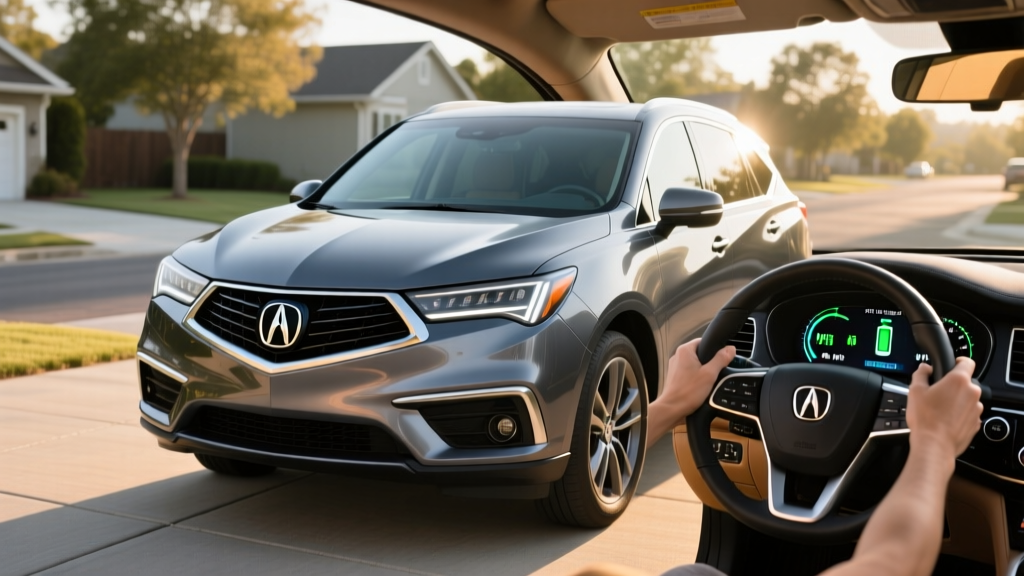
The 2018 Acura MDX Sport Hybrid occupies a specific niche: a three-row luxury crossover that uses hybridization not primarily for fuel-sipping, but for smoother torque delivery and all-wheel-drive capability without a mechanical driveshaft. With an EPA-estimated 27 MPG combined and 321 combined horsepower, it bridges the gap between the gas-only MDX and full-electric alternatives that were still limited in 2018.
Now that this model is firmly in the used market, the question for 2026 buyers is whether its hybrid system has aged well and whether it still makes financial sense against newer PHEVs and BEVs. This guide breaks down the real-world numbers.
HEV vs. PHEV: What the MDX Sport Hybrid Actually Is
The 2018 Acura MDX Sport Hybrid is a conventional hybrid (HEV), not a plug-in hybrid (PHEV). This distinction matters because it shapes everything about ownership:
- HEV (this vehicle): The battery charges exclusively through regenerative braking and the gasoline engine. You never plug it in. There is no electric-only driving range to speak of — the electric motors assist the engine but cannot propel the vehicle alone for meaningful distances.
- PHEV (e.g., Toyota RAV4 Prime, Chrysler Pacifica Hybrid): Features a larger battery (typically 15–20 kWh) that you plug in to charge, offering 25–45 miles of electric-only driving before the gas engine engages.
- BEV (e.g., Tesla Model X, Rivian R1S): Fully electric with no gasoline engine. Requires regular plug-in charging and offers 250–400+ miles of range.
Acura never produced a plug-in version of this generation MDX. If you want plug-in capability in a luxury three-row SUV, you'll need to look at competitors or step up to a full EV.
Fuel Economy: EPA Ratings and Real-World MPG
The 2018 MDX Sport Hybrid carries EPA estimates that, while modest by 2026 standards, represented a meaningful improvement over the gas-only MDX AWD.
| Driving Cycle | EPA Estimate | Real-World Expectation |
|---|---|---|
| City | 26 MPG | 27–29 MPG (hybrids excel in stop-and-go) |
| Highway | 27 MPG | 25–26 MPG (less regen benefit at steady speed) |
| Combined | 27 MPG | 26–28 MPG depending on driving mix |
Real-world note: Unlike conventional gas vehicles that get better mileage on the highway, hybrids typically achieve their best numbers in city driving where regenerative braking recaptures energy frequently. Owners who do mostly urban and suburban driving often report exceeding the EPA combined figure, while those with long highway commutes may fall 1–2 MPG short.
For comparison, the gas-only 2018 MDX AWD is rated at 19 city / 26 highway / 22 combined — making the Sport Hybrid roughly 5 MPG better in combined driving, with the most dramatic improvement in city conditions (+7 MPG).
Powertrain: 321 HP from a Unique Three-Motor System
| Specification | 2018 Acura MDX Sport Hybrid |
|---|---|
| Engine | 3.0L V6 (257 HP, 218 lb-ft) |
| Front Electric Motor | 47 HP (integrated into 7-speed DCT) |
| Rear Electric Motors (Twin) | 36 HP each (one per rear wheel) |
| Combined System Output | 321 HP, 289 lb-ft torque |
| Transmission | 7-speed dual-clutch automatic (front) |
| Drivetrain | SH-AWD (torque-vectoring rear electric motors) |
| Hybrid Battery | 1.3 kWh lithium-ion (under cargo floor) |
| 0–60 MPH | 6.1 seconds (est.) |
| Curb Weight | ~4,670 lbs |
The Sport Hybrid's powertrain is genuinely distinctive. Rather than using a single electric motor sandwiched between the engine and transmission (like most hybrids), Acura employs three electric motors: one up front integrated into the dual-clutch transmission, and two at the rear axle — one driving each rear wheel independently. This arrangement enables true torque vectoring, where the outside rear wheel can receive more torque during cornering, improving handling dynamics.
The 1.3 kWh battery pack is small by modern standards — far too small to plug in or drive on electric power alone. It functions as a buffer, storing recaptured braking energy and deploying it for acceleration assist. This is the hallmark of a conventional HEV architecture.
Reliability, Battery Lifespan, and Warranty Coverage
Hybrid Battery Warranty: Acura covers the hybrid battery and related components for 8 years or 100,000 miles (whichever comes first) under the emissions-related hybrid component warranty. In states that follow California Air Resources Board (CARB) standards — including California, New York, Massachusetts, and several others — coverage extends to 10 years or 150,000 miles.
Remaining Coverage in 2026: A 2018 model's 8-year/100k federal warranty has expired for most original owners. CARB-state 10-year/150k coverage may still apply to low-mileage examples through mid-2028.
Real-world reliability: The MDX Sport Hybrid's three-motor system is complex, but Honda/Acura's hybrid technology has proven durable across the brand's lineup. The lithium-ion battery pack is small and operates within a narrow state-of-charge window (rarely fully charged or fully depleted), which reduces degradation stress. There is no widespread pattern of premature hybrid battery failure on this generation.
Battery replacement cost: If the hybrid battery does require replacement out of warranty, expect to pay approximately $2,500–$4,500 for the battery pack and installation at a dealership. Independent hybrid specialists may offer refurbished packs for less. The individual rear electric motors, if they fail, are more expensive — roughly $1,500–$2,500 per motor plus labor.
For context, many 2018 MDX Sport Hybrids on the used market have 70,000–110,000 miles, which is within the expected lifespan of the hybrid system. Checking for hybrid system diagnostic codes during a pre-purchase inspection is essential.
Pricing, Tax Credits, and Used Market Value
Original MSRP (2018): The MDX Sport Hybrid was offered in three trims:
- Technology Package: ~$52,930
- Advance Package: ~$57,030
- Entertainment Package: ~$55,030
Used Market Pricing (2026): Expect to pay approximately $22,000–$30,000 for a 2018 MDX Sport Hybrid depending on mileage, condition, and trim level. Well-maintained examples under 80,000 miles command the higher end of this range.
Tax credit eligibility: The 2018 MDX Sport Hybrid does not qualify for the federal §30D new clean vehicle credit — that credit applies only to new vehicle purchases. For used purchases, the Used Clean Vehicle Credit (up to $4,000 or 30% of the sale price, whichever is less) is available only for plug-in electric vehicles and fuel cell vehicles with a minimum 7 kWh battery capacity. Since the MDX Sport Hybrid is a conventional HEV with a 1.3 kWh battery and no plug-in capability, it does not qualify for the used EV tax credit either.
Per IRS guidelines on the Used Clean Vehicle Credit, only PHEVs and BEVs meeting specific battery capacity and sourcing requirements are eligible. Conventional hybrids like this MDX are excluded.
Driving Experience and Practicality
The Sport Hybrid differentiates itself from the gas MDX in ways beyond fuel economy. The electric motors provide instant torque fill at low RPMs, eliminating the slight turbo-lag-like hesitation you might feel in a conventional powertrain. Acceleration from stops feels more immediate, and the combined 321 HP makes highway merging effortless.
The SH-AWD system's torque vectoring is genuinely noticeable on winding roads — the vehicle rotates into corners with more eagerness than a 4,670-lb SUV has any right to. This was Acura's intent: the "Sport" in the name isn't just marketing.
Pros
- 27 MPG combined is solid for a 3-row luxury SUV
- 321 HP with smooth, instant electric torque assist
- SH-AWD torque vectoring improves handling
- No plug-in charging required — refuel like a gas car
- Proven Honda/Acura hybrid reliability
- Three rows of seating; practical family hauler
Cons
- No electric-only driving capability
- No federal tax credit eligibility (new or used)
- Hybrid system complexity raises long-term repair risk
- 1.3 kWh battery is tiny; no meaningful EV mode
- Infotainment system (2018-era dual-screen) feels dated
- Used prices still elevated for an 8-year-old vehicle
Who Should Buy This Hybrid vs. a PHEV or Full EV?
Choose the 2018 MDX Sport Hybrid if:
- You want a three-row luxury SUV with better fuel economy but cannot charge at home
- You want AWD capability with torque vectoring for spirited driving
- You prefer the simplicity of gas-station refueling with no plug-in routine
- You want a proven, non-plug-in hybrid with strong reliability data
Look at a PHEV instead if:
- You can install a Level 2 home charger and want 25–40 miles of daily electric-only driving
- Your commute is under 35 miles round-trip (a PHEV can cover it gas-free)
- You want to qualify for the used clean vehicle tax credit (up to $4,000)
Consider a full EV (BEV) if:
- You have reliable home charging and want to eliminate gasoline entirely
- You want the lowest per-mile "fuel" cost (electricity is typically $0.04–$0.08/mile vs. $0.15–$0.20/mile for this hybrid)
- You're willing to adapt to charging routines and plan road trips around DC fast-charging stops
Frequently Asked Questions
How many MPG does the 2018 Acura MDX Sport Hybrid get?
The EPA rates it at 26 city / 27 highway / 27 combined. In real-world driving, owners who do mostly city and suburban driving often see 27–29 MPG thanks to regenerative braking. Highway-heavy commutes may yield 25–26 MPG.
Can I plug in the 2018 MDX Sport Hybrid to charge?
No. This is a conventional hybrid (HEV), not a plug-in hybrid (PHEV). The 1.3 kWh battery charges only through regenerative braking and the gasoline engine. There is no charging port and no electric-only driving mode.
Is the 2018 MDX Sport Hybrid reliable?
Acura's hybrid systems have a strong reliability track record. The small battery operates within a narrow charge window, reducing degradation. The main long-term concern is the complexity of the three-motor system. A pre-purchase inspection should include a hybrid system diagnostic scan to check for stored fault codes.
How much does it cost to replace the hybrid battery?
Expect $2,500–$4,500 for a new OEM battery pack and installation at a dealership. Refurbished or aftermarket options may be available for less. The rear electric motors, if they fail, cost approximately $1,500–$2,500 each plus labor.
Does the 2018 MDX Sport Hybrid qualify for any tax credit?
No. As a conventional hybrid with no plug-in capability and a battery under 7 kWh, it does not qualify for the federal §30D new vehicle credit or the Used Clean Vehicle Credit. Some states may offer minor incentives for hybrid purchases, but these are typically limited and vary by jurisdiction.
How does the MDX Sport Hybrid compare to the gas-only MDX?
The Sport Hybrid delivers 27 MPG combined versus 22 MPG for the gas AWD model — a 5 MPG improvement. It also adds 31 horsepower and the torque-vectoring SH-AWD system. The trade-off is higher purchase price, slightly more cargo-floor intrusion from the battery, and greater powertrain complexity.
What's the total range on a tank of gas?
With a 19.5-gallon fuel tank and 27 MPG combined, expect approximately 525 miles of total range under normal driving conditions. Highway-heavy driving may reduce this to roughly 490 miles.