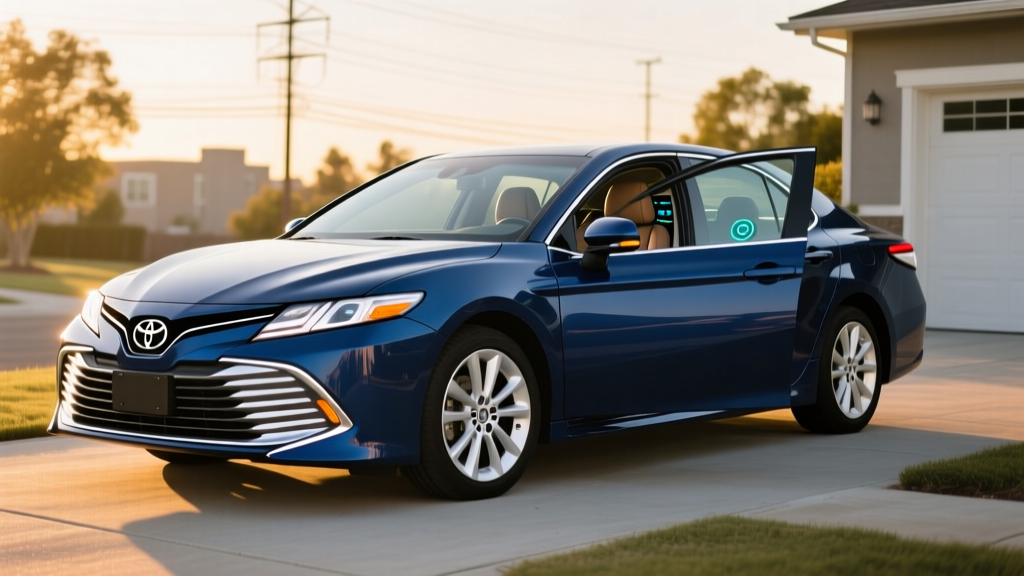
Quick Verdict: A Proven Hybrid Sedan for High-Mileage Drivers
The 2017 Toyota Camry Hybrid XLE sits in a specific lane: it's a conventional hybrid electric vehicle (HEV) — not a plug-in — that prioritizes fuel-sipping comfort over electrified performance. With an EPA-rated 40 MPG combined and Toyota's hybrid synergy drive system now proven across millions of miles in real-world use, the XLE trim adds leather, premium audio, and advanced safety tech over the base LE and SE trims.
For 2026 used-car shoppers, this generation (the XV50 facelift) represents a value sweet spot. Prices have depreciated significantly from the original ~$31,000 MSRP, while the hybrid powertrain remains one of the most reliable in the industry. If you want a sedan that cuts fuel costs nearly in half versus the gas-only Camry without ever needing a plug, this is a strong candidate.
Fuel Economy: EPA Ratings vs Real-World MPG
| Metric | HEV (All Trims) |
|---|---|
| City MPG | 42 |
| Highway MPG | 38 |
| Combined MPG | 40 |
| Fuel Tank Capacity | 17.0 gal |
| Total Range (est.) | ~680 miles |
Source: EPA / fueleconomy.gov
Powertrain Specs: Engine, Motor, and Combined Output
| Component | Specification |
|---|---|
| Gasoline Engine | 2.5L 4-cylinder Atkinson cycle (156 hp) |
| Electric Motor | Permanent magnet AC synchronous (105 kW / 141 hp) |
| Net Combined Horsepower | 200 hp |
| Transmission | eCVT (electronically controlled) |
| Drivetrain | Front-wheel drive |
| 0–60 MPH | ~7.6 seconds |
| Hybrid Battery | 1.6 kWh NiMH (nickel-metal hydride) |
The 200 net horsepower figure may surprise buyers who associate "hybrid" with sluggish performance. The Camry Hybrid XLE pulls confidently from stops — the electric motor delivers instant torque while the Atkinson-cycle engine handles sustained cruising. The eCVT is smooth and avoids the rubber-band feel of older continuously variable transmissions, though enthusiasts will note it lacks the engagement of a geared automatic.
Importantly, the 1.6 kWh NiMH battery is small by electrified-vehicle standards. It's not designed to drive the car on electricity alone for meaningful distances. Instead, it acts as a buffer — capturing braking energy and assisting the gas engine during acceleration. This is the fundamental architecture of a conventional HEV.
XLE Trim: What You Get Over LE and SE
The XLE was the top trim for the 2017 Camry Hybrid lineup, and it adds meaningful comfort and technology upgrades:
- Interior: Leather-trimmed seats, heated front seats, leather-wrapped steering wheel, auto-dimming rearview mirror
- Technology: 7-inch touchscreen with Entune Audio Plus, integrated navigation, JBL premium audio (9 speakers), Bluetooth, USB, Siri Eyes Free
- Safety (Toyota Safety Sense-P): Pre-collision system with pedestrian detection, lane departure alert with steering assist, automatic high beams, dynamic radar cruise control — all standard
- Exterior: 17-inch alloy wheels, chrome exterior accents, blind spot monitor with rear cross-traffic alert
- Convenience: Smart Key with push-button start, dual-zone automatic climate control, power tilt/slide moonroof
The standard inclusion of Toyota Safety Sense-P on the 2017 model year was a significant value add — competitors like the 2017 Honda Accord Hybrid and 2017 Hyundai Sonata Hybrid didn't match this level of standard ADAS equipment at the same price point.
Hybrid Battery Reliability, Lifespan, and Replacement Cost
The NiMH battery in the 2017 Camry Hybrid is among the most proven in the industry. Toyota has deployed variations of this chemistry since the original 1997 Prius, and fleet data consistently shows these packs lasting 150,000–200,000+ miles before significant degradation. Unlike the lithium-ion packs in full EVs and PHEVs, NiMH cells degrade more gradually and predictably.
When replacement does become necessary, here's what to budget:
- New OEM battery (Toyota dealer): $3,000–$4,000 installed
- Remanufactured battery: $1,500–$2,500 installed
- Individual cell/module replacement: $500–$1,200 (only the failed modules are swapped — a common repair for NiMH packs)
The module-level repair option is a significant cost advantage of NiMH over lithium-ion. A qualified hybrid specialist can test individual cells and replace only the degraded ones, extending the pack's life at a fraction of a full replacement. This is rarely an option with modern NMC or LFP EV batteries.
For a 2017 model purchased in 2026, the original 8-year/100,000-mile warranty has likely expired unless the vehicle has exceptionally low mileage. Factor a potential $1,500–$3,000 battery reserve into your ownership budget if the car has over 120,000 miles.
Used Pricing and Tax Credit Eligibility in 2026
The 2017 Camry Hybrid XLE originally carried an MSRP of approximately $31,370 (before destination). In the 2026 used market, expect to pay:
- 80,000–100,000 miles: $14,000–$17,000
- 100,000–130,000 miles: $11,000–$14,000
- 130,000+ miles: $9,000–$12,000
Pricing varies by region, condition, and whether the vehicle has a documented service history.
Camry Hybrid vs PHEV vs Full EV: Which Fits You?
| Factor | HEV (Camry Hybrid) | PHEV (e.g., Prius Prime) | BEV (e.g., Tesla Model 3) |
|---|---|---|---|
| Plug-in Required? | No | Yes (for max benefit) | Yes |
| Electric-Only Range | ~1 mile (low speed) | 25–44 miles | 250–360 miles |
| Home Charging Needed | No | Recommended (120V OK) | Required (240V ideal) |
| Federal Tax Credit (New) | None | Up to $7,500* | Up to $7,500* |
| Fuel Cost per Mile | ~$0.09 | ~$0.04–$0.09 | ~$0.03–$0.05 |
| Road Trip Simplicity | Excellent (gas stations) | Excellent (gas backup) | Requires DC fast charging |
| Maintenance Cost | Low (oil changes, etc.) | Low-Moderate | Very Low |
* §30D credit eligibility depends on MSRP caps, buyer income limits, battery critical-mineral sourcing, and point-of-sale transfer rules. See IRS.gov for current requirements.
- Choose the Camry Hybrid (HEV) if: You lack home charging access, drive 15,000+ miles/year in mixed city/highway conditions, want minimal ownership complexity, and prefer the lowest upfront cost.
- Choose a PHEV if: You have home charging (even a standard 120V outlet), your daily commute is under 40 miles, and you want electric-only daily driving with gas-engine flexibility for road trips.
- Choose a full EV (BEV) if: You have reliable home Level 2 charging, want the lowest per-mile fuel cost, qualify for the §30D credit, and are comfortable planning road trips around DC fast-charging networks.
Pros and Cons of the 2017 Camry Hybrid XLE
✓ Pros
- 40 MPG combined — real-world city often exceeds 42 MPG
- Toyota Safety Sense-P standard (AEB, lane keep, adaptive cruise)
- Proven NiMH battery with 150K–200K+ mile lifespan
- Module-level battery repair keeps long-term costs low
- XLE trim includes leather, JBL audio, nav, moonroof
- ~680-mile total range between fill-ups
- Strong resale value and parts availability
✗ Cons
- No electric-only driving mode for meaningful distances
- No federal tax credit eligibility (new or used)
- eCVT lacks sporty feel; not an enthusiast's sedan
- Infotainment feels dated by 2026 standards (no wireless CarPlay)
- NiMH battery is heavier and less energy-dense than modern Li-ion
- Rear seat doesn't fold flat (battery placement limits cargo)
- 8-year battery warranty likely expired on 2026 used purchases
Frequently Asked Questions
How many MPG does the 2017 Toyota Camry Hybrid XLE get?
The EPA rates it at 42 city / 38 highway / 40 combined MPG. Real-world city driving often exceeds the 42 MPG sticker thanks to regenerative braking, while sustained highway driving at higher speeds typically returns 35–37 MPG. Cold weather reduces efficiency by 5–10%.
Does the 2017 Camry Hybrid need to be plugged in?
No. This is a conventional hybrid (HEV), not a plug-in hybrid. The 1.6 kWh NiMH battery charges entirely through regenerative braking and the gasoline engine. You fuel it like any other car — at a gas station — and it requires no charging infrastructure.
How far can the 2017 Camry Hybrid drive on electric power alone?
Effectively zero miles in any practical sense. The hybrid system can propel the car on electric-only power for roughly 1 mile at very low speeds (under 25 MPH) on a full battery charge, such as creeping through a parking lot. This is not a PHEV — there is no meaningful electric-only range. The electric motor's primary role is to assist the gas engine, not replace it.
Is the 2017 Camry Hybrid reliable, and what does a battery replacement cost?
Yes — this is one of the most reliable hybrid powertrains ever built. Toyota's NiMH hybrid system has been in production since 1997 with continuous refinement. The hybrid battery typically lasts 150,000–200,000+ miles. If replacement is needed, a new OEM pack runs $3,000–$4,000, while remanufactured packs cost $1,500–$2,500. Individual module replacement — a common repair — can cost as little as $500–$1,200.
Does the 2017 Camry Hybrid qualify for any tax credit?
No federal tax credit is available. The §30D Clean Vehicle Credit applies only to plug-in vehicles (BEVs and PHEVs) meeting specific battery-sourcing and MSRP requirements. The original Hybrid Energy Credit for conventional hybrids expired for Toyota vehicles in 2007. Some states may offer used-hybrid incentives — check your state energy office for current programs.
How does the Camry Hybrid compare to a modern EV or PHEV in 2026?
The Camry Hybrid trades cutting-edge electrification for simplicity and proven reliability. A 2026 PHEV like the Toyota Prius Prime offers 44 miles of electric-only range plus a gas backup, while a BEV like the Tesla Model 3 provides 340+ miles of all-electric range and lower per-mile fuel costs. However, the Camry Hybrid requires zero charging infrastructure, has lower upfront cost on the used market, and eliminates range anxiety entirely. For high-mileage drivers without home charging access, it remains a compelling choice.
What should I inspect before buying a used 2017 Camry Hybrid?
Prioritize: (1) hybrid battery health check — ask a Toyota dealer or hybrid specialist to run a battery diagnostic showing individual module voltages; (2) maintenance records, especially oil changes (the Atkinson-cycle engine is durable but needs regular maintenance); (3) brake wear — regenerative braking extends pad life significantly, but original pads at 100K+ miles should be inspected; (4) inverter coolant level and condition; (5) verify no outstanding recalls via NHTSA.gov.