Quick Verdict: A Proven Hybrid for the Used Market
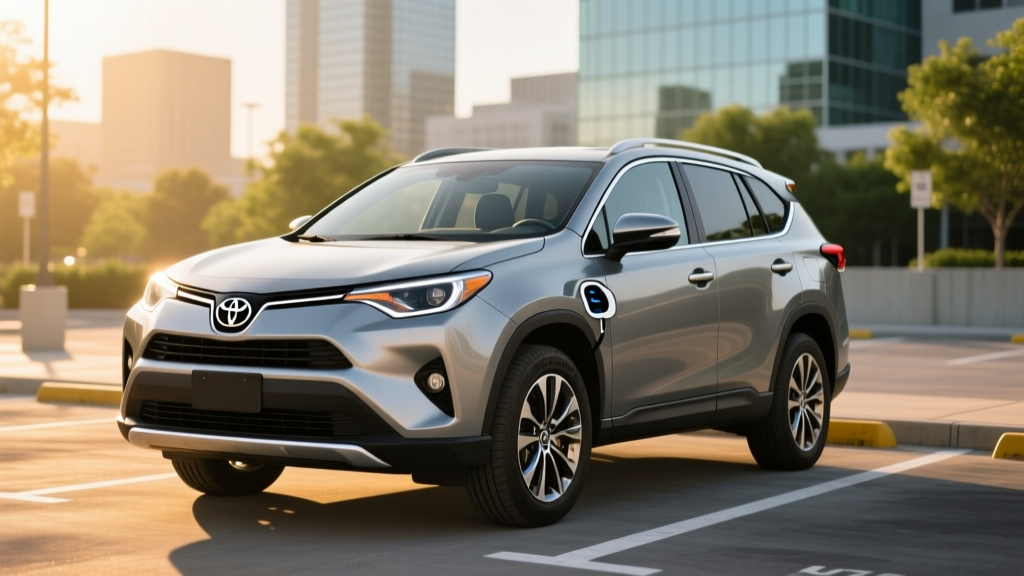
The 2017 Toyota RAV4 Hybrid XLE occupies a specific niche in 2026's used-car landscape: it's a conventional hybrid electric vehicle (HEV) that never needed to be plugged in, delivers predictable fuel economy, and carries Toyota's reputation for hybrid powertrain longevity. With EPA ratings of 34 city / 30 highway / 32 combined MPG, it remains competitive against newer compact hybrid SUVs — and it does so without the range anxiety, charging infrastructure dependence, or premium pricing of a full battery-electric vehicle.
This guide breaks down everything a used-car shopper needs to know about the 2017 RAV4 Hybrid XLE: real-world fuel economy, the hybrid battery's expected lifespan and replacement cost, powertrain specs, what you'll pay in 2026, and whether this HEV is the right fit compared to a PHEV or full EV.
HEV vs PHEV: Where the 2017 RAV4 Hybrid Fits
Before diving into specs, it's essential to distinguish what the 2017 RAV4 Hybrid XLE is — and isn't.
| Feature | 2017 RAV4 Hybrid (HEV) | RAV4 Prime (PHEV, 2021+) | bZ4X (Full EV, 2023+) |
|---|---|---|---|
| Plug-in required? | No — charges via regenerative braking and engine | Yes — Level 1/2 charging | Yes — Level 1/2/DC fast charging |
| Battery capacity | 1.6 kWh (NiMH) | 18.1 kWh (lithium-ion) | 71.4 kWh (lithium-ion) |
| Electric-only range | ~0.5 mi at low speed | 42 mi EPA | 222–252 mi EPA |
| Total range | ~470 mi (14.5-gal tank) | ~600 mi combined | 222–252 mi |
| Federal tax credit (new) | None | Up to $7,500 (§30D) | Up to $7,500 (§30D) |
The 2017 RAV4 Hybrid is a conventional hybrid (HEV). It has a small 1.6 kWh nickel-metal hydride (NiMH) battery that charges itself through regenerative braking and the gasoline engine. You never plug it in. It cannot drive meaningful distances on electricity alone — the electric motor assists the gas engine and enables brief low-speed electric-only creep, but the engine is always the primary power source.
Toyota didn't offer a RAV4 plug-in hybrid (the RAV4 Prime) until the 2021 model year. If you need electric-only commuting range, the 2017 RAV4 Hybrid won't provide it — you'd need to look at a newer PHEV or a full EV.
Fuel Economy: EPA Ratings and Real-World MPG
| Driving Cycle | EPA Rating | Real-World Expectation |
|---|---|---|
| City | 34 MPG | 33–38 MPG (hybrids excel in stop-and-go) |
| Highway | 30 MPG | 28–32 MPG |
| Combined | 32 MPG | 30–35 MPG |
Source: EPA / fueleconomy.gov
The 2017 RAV4 Hybrid's fuel economy advantage is most pronounced in city driving. Like all Toyota hybrids using the Hybrid Synergy Drive system, the electric motor handles low-speed acceleration — the least efficient phase for a gas engine — while regenerative braking recaptures energy during stops. Owners who drive predominantly in urban or suburban traffic frequently report exceeding the 34 MPG city EPA figure, with some seeing 36–38 MPG in warm-weather city conditions.
Highway efficiency is less impressive. At sustained speeds above 65 mph, the gasoline engine does most of the work, and the hybrid system's advantage narrows. Expect 28–30 MPG on long highway trips, especially in colder weather or with roof cargo. Cold temperatures reduce battery efficiency and increase engine warm-up time, typically dropping combined MPG by 2–4 points in winter months.
With a 14.5-gallon fuel tank, total range sits around 450–490 miles depending on driving conditions — competitive with most compact SUVs and adequate for road trips without range planning.
Powertrain Specs: What Moves the 2017 RAV4 Hybrid
| Specification | 2017 RAV4 Hybrid XLE |
|---|---|
| Engine | 2.5L 4-cylinder Atkinson cycle |
| Engine output | 150 hp / 152 lb-ft torque |
| Front electric motor | 141 hp / 295 lb-ft |
| Rear electric motor (AWD) | 67 hp / 120 lb-ft |
| Net combined system horsepower | 194 hp |
| Transmission | eCVT (electronically controlled continuously variable) |
| Drivetrain | AWD (electronic on-demand rear motor) |
| Hybrid battery | 1.6 kWh NiMH (204V nominal) |
| 0–60 mph | ~7.8 seconds (est.) |
| Towing capacity | 1,750 lbs |
| Cargo volume | 35.6 cu ft (rear seats up) / 73.4 cu ft (folded) |
The hybrid powertrain pairs a 2.5-liter Atkinson-cycle four-cylinder engine with Toyota's Hybrid Synergy Drive eCVT. Unlike a belt-driven CVT found in some competitors, Toyota's eCVT uses a planetary gearset to blend engine and motor power — there are no belts to wear or slip, which contributes to the system's long-term reliability.
The AWD system is worth noting: the rear axle is driven entirely by a dedicated electric motor, not a mechanical driveshaft from the engine. This means rear-wheel engagement is on-demand and software-controlled, activating during acceleration or when front-wheel slip is detected. It's effective for rain and light snow but not designed for serious off-road use.
Hybrid Battery Lifespan, Warranty, and Replacement Cost
Original hybrid battery warranty: 8 years / 100,000 miles (10 years / 150,000 miles in CARB states including CA, CT, ME, MA, NJ, NY, OR, RI, VT, WA).
2026 status: The 8-year/100,000-mile federal warranty has expired for a 2017 model. CARB-state 10-year coverage may still apply through 2027 if under 150,000 miles.
This is the single most important question for any used hybrid buyer: how long will the battery last, and what does it cost to replace?
Expected lifespan: Toyota's NiMH hybrid batteries have an excellent track record. Data from fleet operators and long-term owners suggests the 2017 RAV4 Hybrid's battery typically lasts 150,000–200,000 miles before significant capacity degradation. Unlike full EV batteries where degradation directly reduces range, a hybrid battery's degradation primarily affects fuel economy — the engine compensates as the battery weakens, so you'll see MPG slowly decline rather than experience a sudden failure.
Replacement cost in 2026: A new OEM replacement hybrid battery from Toyota costs approximately $3,000–$4,000 including labor at a dealership. Refurbished or reconditioned NiMH battery packs are available from third-party suppliers for $1,500–$2,500 installed. Individual cell module replacement (if only a few cells have failed) can be done by specialist hybrid repair shops for $500–$1,200.
Degradation warning signs: Watch for a noticeable drop in city MPG (falling below 28–30 MPG in stop-and-go driving), more frequent engine cycling on and off, or a dashboard hybrid system warning light. A pre-purchase battery health check at a Toyota dealer or hybrid specialist can assess State of Health (SoH) before you buy.
2026 Used Pricing and Tax Credit Eligibility
As of early 2026, the 2017 RAV4 Hybrid XLE trades in the used market at approximately:
- 80,000–100,000 miles: $17,000–$21,000 (private party/dealer)
- 100,000–130,000 miles: $14,000–$18,000
- 130,000+ miles: $11,000–$15,000
Federal tax credit: The 2017 RAV4 Hybrid XLE does not qualify for the IRS §30D Clean Vehicle Credit. This credit applies only to plug-in electric vehicles (PHEVs and BEVs) with sufficient battery capacity — conventional hybrids like this one are excluded. The IRS used EV credit (§25E, up to $4,000) also requires a plug-in vehicle with at least 7 kWh of battery capacity, which disqualifies the 1.6 kWh HEV system. See IRS §25E guidelines for details.
State incentives: A handful of states offer used hybrid incentives or HOV lane access for hybrids, but these programs are increasingly focused on plug-in vehicles. Check your state's DMV or energy office for current programs. No federal or state incentive currently provides meaningful financial offset for purchasing a used conventional hybrid.
XLE Trim Features and What to Inspect
The XLE was the mid-level trim for the 2017 RAV4 Hybrid, sitting above the base LE and below the Limited. Standard equipment included:
- Toyota Safety Sense P (pre-collision system, lane departure alert, automatic high beams, dynamic radar cruise control)
- Blind spot monitor with rear cross-traffic alert
- 7-inch touchscreen with Entune Audio Plus
- Power moonroof
- Smart Key with push-button start
- 18-inch alloy wheels
- Dual-zone automatic climate control
The inclusion of Toyota Safety Sense P as standard equipment is a significant value point — adaptive cruise control and automatic emergency braking were still optional or unavailable on many competitors at this price point in 2017.
Pre-purchase inspection priorities for the 2017 RAV4 Hybrid XLE:
- Hybrid battery health: Request a battery SoH report from a Toyota dealer or hybrid specialist.
- Inverter coolant: Toyota recommends replacement at 100,000 miles. Verify this service was performed.
- Brake actuator: Some 2015–2018 RAV4 Hybrids experienced brake booster pump issues. Check for recalls and listen for unusual brake pedal feel or pump cycling.
- AWD rear motor: Test-drive on a wet surface or loose gravel to confirm the rear motor engages properly.
- Standard items: Suspension, tires, cabin electronics, and HVAC function.
Who Should Choose the 2017 RAV4 Hybrid XLE?
Pros
- Proven hybrid reliability — NiMH battery track record over 20+ years
- No charging infrastructure needed — works for apartment dwellers
- Strong city MPG (34 EPA, often exceeded in practice)
- Standard Toyota Safety Sense P (AEB, adaptive cruise, lane alert)
- AWD as standard on all Hybrid trims
- Low maintenance — no timing belt, eCVT has no belts
- Competitive used pricing vs newer hybrids
Cons
- Highway MPG only marginally better than gas RAV4
- 1.6 kWh battery — no meaningful electric-only driving
- No federal tax credit eligibility (new or used)
- Original 8-year hybrid warranty has expired for most examples
- Dated infotainment (no Apple CarPlay/Android Auto on 2017)
- Modest towing capacity (1,750 lbs)
- NiMH battery chemistry less energy-dense than modern lithium-ion
Hybrid vs PHEV vs EV: Which Fits Your Situation?
The decision between a conventional hybrid like the 2017 RAV4 Hybrid, a plug-in hybrid, or a full electric vehicle depends on three factors: charging access, daily mileage, and budget.
Choose the 2017 RAV4 Hybrid (HEV) if:
- You lack access to home or workplace charging (apartment, street parking, no garage outlet)
- Your budget is under $22,000 for a used SUV
- You want better fuel economy without changing your refueling habits
- You drive a mix of city and highway with no single dominant pattern
- You value Toyota's long-term reliability track record
Choose a PHEV (e.g., RAV4 Prime, 2021+) if:
- You have Level 2 home charging and a commute under 40 miles
- You want electric-only daily driving with gas-engine flexibility for road trips
- You're eligible for the §30D federal tax credit (income and sourcing rules apply)
- Your budget allows $35,000+ for a used PHEV
Choose a full EV (e.g., RAV4-equivalent like the bZ4X or Hyundai Ioniq 5) if:
- You have reliable Level 2 home charging
- Your daily driving is under 200 miles and you can plan for road-trip charging
- You want the lowest per-mile fuel cost and zero tailpipe emissions
- You're comfortable with DC fast charging infrastructure in your region
Frequently Asked Questions
How many MPG does the 2017 RAV4 Hybrid XLE get?
The EPA rates it at 34 city / 30 highway / 32 combined MPG. In real-world driving, city-heavy commuters often see 33–38 MPG, while highway-dominant drivers should expect 28–32 MPG. Cold weather reduces efficiency by 2–4 MPG combined.
Does the 2017 RAV4 Hybrid need to be plugged in?
No. This is a conventional hybrid (HEV), not a plug-in hybrid. The 1.6 kWh battery charges through regenerative braking and the gasoline engine. You refuel only at gas stations, exactly like a conventional car.
Is the 2017 RAV4 Hybrid reliable?
Yes. Toyota's Hybrid Synergy Drive system has been in production since 1997 (Prius), and the eCVT planetary gearset has no wear-prone belts or clutches. The primary long-term concern is hybrid battery degradation after 150,000+ miles. The 2017 RAV4 Hybrid earns strong reliability scores from IIHS and owner surveys.
What does a replacement hybrid battery cost?
A new OEM Toyota NiMH battery runs $3,000–$4,000 installed at a dealer. Refurbished packs cost $1,500–$2,500, and individual cell module replacement at a hybrid specialist runs $500–$1,200. Most original batteries last 150,000–200,000 miles.
Does the 2017 RAV4 Hybrid qualify for any tax credit?
No. The federal §30D Clean Vehicle Credit and the §25E Used Clean Vehicle Credit both require plug-in vehicles with minimum battery capacity thresholds. The 2017 RAV4 Hybrid's 1.6 kWh NiMH battery does not meet these requirements. Check your state for any hybrid-specific incentives, though most have shifted to plug-in vehicles.
How far can it drive on electric only?
Less than one mile, and only at very low speeds (under 25 mph) with a fully charged hybrid battery. This is not an electric-commuting vehicle — the electric motor assists the gas engine and enables smooth stop-and-go operation, but the engine is the primary power source at all meaningful speeds and distances.
Does the 2017 RAV4 Hybrid XLE have Apple CarPlay or Android Auto?
No. Toyota did not add Apple CarPlay to the RAV4 until the 2019 model year refresh, and Android Auto arrived in 2020. The 2017 XLE uses Toyota's Entune Audio Plus system with a 7-inch touchscreen, Bluetooth, and USB connectivity. Aftermarket head-unit replacements are available if smartphone integration is a priority.
Is the AWD system always active?
No. The rear electric motor engages on-demand — during hard acceleration, when front-wheel slip is detected, or in low-traction conditions. Under steady-state cruising, the RAV4 Hybrid operates primarily as a front-wheel-drive vehicle to maximize efficiency. This is effective for rain and light snow but not a substitute for a dedicated off-road AWD system.