Quick Verdict: The 2017 RAV4 Hybrid as a Used Buy in 2026
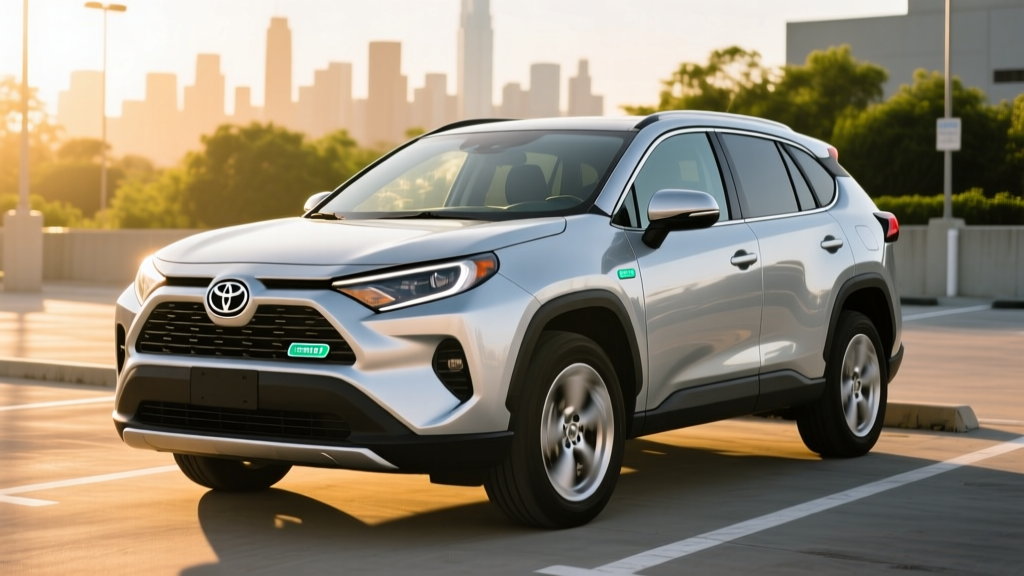
If you're searching for a rav 2017 hybrid on the used market, you're looking at one of Toyota's most dependable hybrid SUVs. The 2017 RAV4 Hybrid pairs a 2.5-liter Atkinson-cycle four-cylinder with Toyota's proven eCVT transaxle and dual electric motors to deliver 194 combined horsepower and an EPA-estimated 32 MPG combined. Nearly a decade after it rolled off the line, this compact hybrid crossover remains a pragmatic choice for buyers who want electrified efficiency without plug-in complexity — especially now that used examples are trading between $14,000 and $20,000 depending on mileage and condition.
But buying a nearly 10-year-old hybrid raises specific concerns: How long does the battery last? What does replacement cost? And does it still make sense versus a newer PHEV or a full EV? This guide breaks down every number you need.
2017 RAV4 Hybrid Specs at a Glance
| Specification | 2017 Toyota RAV4 Hybrid |
|---|---|
| Powertrain | 2.5L 4-cyl Atkinson + 2 electric motors (eCVT) |
| Combined Horsepower | 194 hp (net system) |
| Drivetrain | AWD (electronic rear motor, no mechanical driveshaft) |
| EPA Fuel Economy (City/Hwy/Combined) | 34 / 30 / 32 MPG |
| Hybrid Battery Type | Nickel-Metal Hydride (NiMH), ~1.6 kWh |
| Fuel Tank | 14.8 gallons |
| Total Driving Range | ~474 miles (EPA est.) |
| 0-60 mph | ~7.8 seconds |
| Cargo Volume | 35.6 cu ft (rear seats up) / 70.7 cu ft (folded) |
| Original MSRP (XLE / Limited) | $29,270 / $34,510 |
| Used Price Range (2026 est.) | $14,000 – $20,000 |
Fuel Economy: EPA Numbers vs. Real-World MPG
The EPA rates the 2017 RAV4 Hybrid at 34 MPG city / 30 MPG highway / 32 MPG combined, according to fueleconomy.gov. That city-heavy advantage is typical of Toyota's Hybrid Synergy Drive: the electric motors handle low-speed acceleration where gas engines are least efficient, while regenerative braking recaptures energy in stop-and-go traffic.
Real-World MPG Expectations
In practice, many owners report exceeding the EPA city estimate. On suburban routes with frequent stops, 35-37 MPG is achievable in mild weather. Highway driving at 70+ mph drops efficiency closer to 28-29 MPG, since the electric motors contribute less at sustained high speeds and the 2.5-liter engine carries more of the load.
- City/suburban real-world: 33-37 MPG
- Highway real-world (70-75 mph): 27-30 MPG
- Cold-weather penalty (below 32°F): 2-4 MPG reduction (engine runs more for cabin heat)
- Combined real-world average (owner-reported): 31-33 MPG
With the 14.8-gallon tank, expect a real-world range of roughly 440-490 miles between fill-ups — excellent for a compact AWD SUV, and a significant improvement over the gas-only 2017 RAV4's 25 MPG combined.
HEV vs. PHEV vs. EV: Where Does This RAV4 Fit?
The 2017 RAV4 Hybrid is a conventional hybrid (HEV). It does not plug in. The small ~1.6 kWh NiMH battery charges exclusively through regenerative braking and the gas engine. There is no meaningful electric-only driving range — the EV mode allows roughly 0.5-1 mile at very low speeds (under 25 mph) before the engine restarts.
HEV vs. PHEV vs. BEV — Which Fits You?
| Factor | HEV (This RAV4) | PHEV (e.g., RAV4 Prime) | Full EV (e.g., Tesla Model Y) |
|---|---|---|---|
| Plug-in Required? | No | Yes (Level 1/2) | Yes (Level 2 + DCFC) |
| Electric-Only Range | ~0.5 mi (low speed) | 42 mi (RAV4 Prime) | 260-330 mi |
| Home Charging Needed? | No | Recommended | Essential |
| Federal Tax Credit (New) | None | Up to $7,500 (§30D) | Up to $7,500 (§30D) |
| Used Tax Credit (§25E) | None | Up to $4,000 | Up to $4,000 |
| Best For | No home charging, simplicity | Short commutes + road trips | Home charging, low running cost |
Choose the 2017 RAV4 Hybrid (HEV) if: You don't have reliable access to home or workplace charging, you want a low-maintenance electrified vehicle, and your budget is under $20,000. This is the "set it and forget it" hybrid — no cords, no apps, no charging logistics.
Look at a PHEV or EV instead if: You have a garage or driveway where you can install a Level 2 charger, your daily commute is under 40 miles (making a PHEV like the RAV4 Prime ideal), or you want to eliminate most gasoline use. The IRS §30D credit applies only to new PHEVs and EVs — not to used conventional hybrids like this RAV4.
Hybrid Battery Lifespan, Warranty, and Replacement Cost
The 2017 RAV4 Hybrid uses a nickel-metal hydride (NiMH) battery pack — older chemistry than the lithium-ion packs in modern EVs, but extremely well-proven in Toyota's hybrid lineup. This is the same fundamental battery architecture Toyota has used since the original Prius, with continuous refinement.
Battery Warranty & Longevity
Original warranty: 8 years / 100,000 miles (10 years / 150,000 miles in CARB states including CA, NY, MA, and others)
Expected lifespan: Most Toyota hybrid NiMH packs last 150,000-200,000+ miles before significant degradation. Many first-generation Prius batteries exceeded 200,000 miles.
2026 status: The original 8-year/100k warranty has expired for most 2017 examples unless the vehicle was certified pre-owned with an extended warranty. CARB-state 10-year warranties may still apply to low-mileage examples through 2027.
Hybrid Battery Replacement Cost
If the battery does fail, here's what to budget:
- New OEM battery (Toyota dealer): $2,500 - $3,500 (parts) + $500 - $800 labor = ~$3,000 - $4,300 total
- Refurbished/remanufactured battery: $1,200 - $2,000 installed (from shops like Green Bean Battery or similar)
- Individual cell/module replacement: $400 - $800 if only a few cells have failed (diagnostic-dependent)
The good news: catastrophic hybrid battery failure before 150,000 miles is uncommon in Toyota's system. A pre-purchase hybrid battery health check (available at any Toyota dealer or hybrid-specialist shop) can reveal cell imbalance before you buy.
Powertrain Deep Dive: How Toyota's Hybrid Synergy Drive Works Here
The 2017 RAV4 Hybrid uses Toyota's third-generation Hybrid Synergy Drive adapted for the SUV platform. The front axle is powered by the 2.5-liter 2AR-FXE Atkinson-cycle engine (150 hp, 152 lb-ft on its own) paired with two motor-generators (MG1 and MG2) inside the transaxle. MG2 provides the primary electric drive torque, while MG1 acts as a generator and engine starter.
The rear axle gets its own independent 67 hp electric motor — there is no mechanical driveshaft connecting front and rear. This "e-AWD" system engages the rear motor on demand for acceleration, low-traction starts, and stability correction, then disconnects during steady cruising to save energy.
Combined system output is 194 hp. The result is smooth, linear acceleration with a 0-60 mph time of approximately 7.8 seconds — adequate for highway merging and everyday driving, though not sporty. The eCVT eliminates shift shock entirely, though it can produce the characteristic "rubber band" drone under hard acceleration that Toyota hybrids are known for.
Pricing, Tax Credits, and Total Cost of Ownership
As of early 2026, a used 2017 RAV4 Hybrid typically lists between $14,000 and $20,000 depending on mileage (70k-130k miles is the common range), trim level, and condition. The XLE Hybrid is the most common trim; the Limited Hybrid adds leather, navigation, and premium audio.
Tax Credit Reality
The 2017 RAV4 Hybrid does not qualify for the federal §30D new clean vehicle credit — that credit applies only to new plug-in vehicles (PHEVs and BEVs). It also does not qualify for the §25E used clean vehicle credit (up to $4,000), which requires the vehicle to be a plug-in electric vehicle or fuel cell vehicle.
Some states offer separate incentives for used hybrids, but these are uncommon and vary by jurisdiction. Check your state's energy office or DMV for current programs.
Estimated 5-Year Cost of Ownership (Used Purchase)
| Cost Category | 2017 RAV4 Hybrid (est.) | Gas-Only 2017 RAV4 (est.) |
|---|---|---|
| Purchase Price | $17,000 | $14,000 |
| Fuel (15,000 mi/yr, $3.40/gal) | $7,970 (32 MPG) | $10,200 (25 MPG) |
| Insurance (avg.) | $6,500 | $6,200 |
| Maintenance (5 yr) | $3,000 | $3,500 |
| Total 5-Year | ~$34,470 | ~$33,900 |
The hybrid's fuel savings (~$2,230 over 5 years at these assumptions) nearly offset its higher purchase price. If gas prices rise above $4/gallon in your area, the hybrid pulls ahead decisively.
Reliability, Safety, and Known Issues
Toyota's hybrid system is among the most reliable powertrains ever mass-produced. The 2017 RAV4 Hybrid carries the brand's reputation for longevity, with the hybrid components (inverter, motor-generators, eCVT) proving extremely durable in long-term fleet data. Consumer Reports and J.D. Power have consistently rated the RAV4 Hybrid above average for reliability in its model years.
Safety-wise, the 2017 RAV4 earned an IIHS Top Safety Pick+ rating with the optional front crash prevention package. Standard equipment includes Toyota Safety Sense P (TSS-P): pre-collision system with pedestrian detection, lane departure alert with steering assist, automatic high beams, and full-speed-range dynamic radar cruise control. Per NHTSA, the RAV4 received a 5-star overall safety rating.
Known Issues to Watch For (Used Purchase)
- Hybrid battery cooling fan: Dust and pet hair can clog the rear-seat-mounted battery cooling fan intake. Check and clean regularly — a blocked fan accelerates battery degradation.
- Brake actuator: Some 2016-2018 RAV4 Hybrids have had brake booster pump recalls. Verify recall status via the VIN at nhtsa.gov.
- eCVT whine: A faint whine under acceleration is normal; loud grinding or clunking is not — have it inspected.
- 12V auxiliary battery: Like all hybrids, the 12V battery can fail and prevent the vehicle from starting even though the hybrid battery is fine. Budget $200-$300 for a replacement if the current one is over 4 years old.
Pros
- Proven, ultra-reliable hybrid system
- 32 MPG combined — real-world often better in city
- No plug-in charging required
- AWD with no mechanical complexity
- Strong safety ratings (IIHS TSP+, NHTSA 5-star)
- Affordable used pricing ($14k-$20k)
- Toyota Safety Sense P standard
Cons
- No electric-only driving range (HEV limitation)
- eCVT drone under hard acceleration
- Original hybrid battery warranty likely expired
- No federal tax credit eligibility
- Dated infotainment (no Apple CarPlay/Android Auto in 2017)
- Modest 194 hp — adequate, not quick
- Rear battery fan requires periodic cleaning
Who Should Buy the 2017 RAV4 Hybrid?
This hybrid is the right call if you want electrified fuel savings with zero lifestyle change — no charging to plan, no range to monitor, no apps to manage. It's ideal for:
- Apartment dwellers or renters who cannot install a home charger
- High-mileage commuters (15,000+ mi/yr) who benefit most from the 7 MPG advantage over the gas RAV4
- Budget-conscious buyers who want hybrid efficiency under $20,000
- Toyota loyalists who prioritize reliability and low maintenance
It's the wrong choice if you have home charging and want to drive mostly on electricity (consider a used RAV4 Prime PHEV or a full EV like a used Tesla Model Y or Hyundai Ioniq 5), or if you want the latest infotainment and driver-assist technology.
Frequently Asked Questions
How many MPG does the 2017 RAV4 Hybrid get?
The EPA rates it at 34 city / 30 highway / 32 combined MPG. Real-world driving typically yields 31-33 MPG combined, with city driving sometimes exceeding the EPA estimate (35-37 MPG) thanks to regenerative braking, and highway cruising dropping to 27-30 MPG.
Can the 2017 RAV4 Hybrid drive on electric power only?
Only in very limited circumstances — roughly 0.5 to 1 mile at speeds under 25 mph in EV mode. This is a conventional hybrid (HEV), not a plug-in. The electric motors assist the gas engine but cannot power the vehicle for meaningful distances alone. If electric-only commuting matters to you, look at the RAV4 Prime (PHEV, 42 miles electric-only) or a full EV.
Is the 2017 RAV4 Hybrid reliable? What does a battery replacement cost?
Yes — Toyota's hybrid system is among the most reliable powertrains in the industry. The NiMH hybrid battery typically lasts 150,000-200,000+ miles. If replacement is needed, expect $3,000-$4,300 for a new OEM battery installed, or $1,200-$2,000 for a refurbished unit. Get a hybrid battery health check before purchasing any used example.
Does the 2017 RAV4 Hybrid qualify for any tax credit?
No. Federal tax credits (§30D for new vehicles, §25E for used) apply only to plug-in electric vehicles — PHEVs and full EVs. Conventional hybrids like the 2017 RAV4 Hybrid are not eligible. Some states may offer minor incentives; check your state energy office.
How does the 2017 RAV4 Hybrid compare to the newer RAV4 Prime PHEV?
The RAV4 Prime (introduced for 2021) offers 42 miles of electric-only range, 302 combined hp, and a 18.1 kWh lithium-ion battery that plugs in. It qualifies for up to $7,500 in federal tax credits when purchased new and up to $4,000 used (§25E). However, used RAV4 Primes currently trade for $30,000-$40,000 — roughly double the cost of a 2017 RAV4 Hybrid. The Prime is the better vehicle, but the 2017 HEV is the better value for buyers who can't charge at home.
What should I check before buying a used 2017 RAV4 Hybrid?
Prioritize a hybrid battery health diagnostic (any Toyota dealer can run this), verify all open recalls via the VIN at nhtsa.gov, inspect the battery cooling fan intake behind the rear seat for blockage, and confirm the 12V auxiliary battery age. A pre-purchase inspection by a hybrid-experienced mechanic is strongly recommended.