Quick Verdict: The 2017 RAV4 Hybrid Limited at a Glance
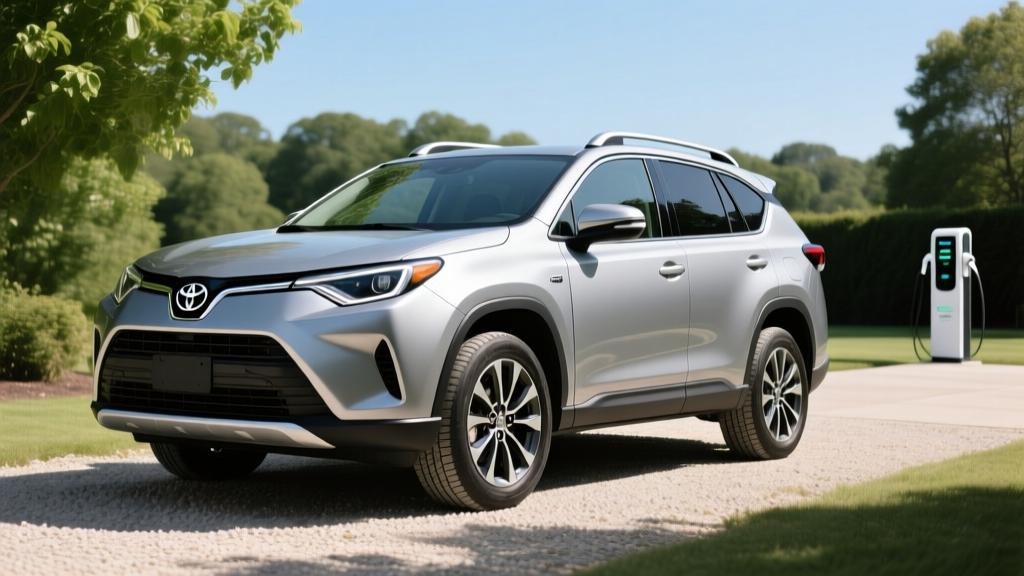
If you're researching the 2017 Toyota RAV4 Hybrid Limited as a used purchase in 2026, you're looking at one of the most dependable hybrid compact SUVs ever built. This is a conventional hybrid (HEV) — it charges its own battery through regenerative braking and the gasoline engine, so there is no plug, no charging cable, and no range anxiety. The Limited trim was the top-of-the-line offering for 2017, bundling premium features like SofTex-trimmed seats, a power liftgate, and Toyota's Safety Sense P suite.
Nearly a decade after its release, the 2017 RAV4 Hybrid Limited remains a smart used buy for drivers who want SUV practicality, all-wheel drive, and fuel savings without the commitment of plugging in. Here's everything you need to evaluate one today.
| Spec | Value |
|---|---|
| Powertrain | 2.5L 4-cyl + 2 electric motors (AWD) |
| Combined Horsepower | 194 hp (net system) |
| EPA Fuel Economy | 34 city / 30 hwy / 32 combined MPG |
| Drivetrain | Electronic on-demand AWD (AWD-i) |
| Hybrid Battery | ~1.6 kWh NiMH (sealed, self-charging) |
| Cargo Volume | 35.6 cu ft (rear seats up) / 70.7 cu ft (folded) |
| 0-60 mph | ~7.8 seconds |
| Original MSRP (Limited AWD) | ~$36,610 |
| Typical Used Price (2026) | $16,000–$22,000 depending on mileage |
| Hybrid Battery Warranty (orig.) | 8 years / 100,000 miles |
How Many MPG Does the 2017 RAV4 Hybrid Get?
The EPA rates the 2017 Toyota RAV4 Hybrid at 34 MPG city, 30 MPG highway, and 32 MPG combined, per fueleconomy.gov. These numbers apply to all trims including the Limited — there is no fuel-economy penalty for the higher trim level.
| Model | City MPG | Highway MPG | Combined MPG |
|---|---|---|---|
| 2017 RAV4 Hybrid AWD | 34 | 30 | 32 |
| 2017 RAV4 Gas AWD (auto) | 22 | 28 | 25 |
| Advantage | +12 | +2 | +7 |
Real-World MPG vs. EPA Sticker
The hybrid's city MPG advantage is real and often exceeds the EPA estimate. In stop-and-go traffic, the electric motors do most of the work at low speeds, and regenerative braking recaptures energy that a gas-only RAV4 would waste as heat. Many owners report 35–38 MPG in urban driving on forums and fuel-tracking apps like Fuelly.
Highway driving tells a different story. Above 65 mph, the gasoline engine carries nearly all the load, and the aerodynamic profile of an SUV works against efficiency. Expect 28–31 MPG on sustained highway trips. In cold weather (below 30°F), the engine runs more frequently to maintain cabin heat and battery temperature, which can drop combined economy to 27–29 MPG until the system warms up.
Hybrid vs. PHEV vs. EV: Which Fits Your Driving Life?
The 2017 RAV4 Hybrid is a conventional hybrid (HEV). It is not a plug-in hybrid (PHEV) and not a battery-electric vehicle (BEV). Toyota did not offer a RAV4 Prime (PHEV) until the 2021 model year. Understanding this distinction is essential before you buy.
| Feature | HEV (This RAV4) | PHEV (e.g., RAV4 Prime) | BEV (e.g., Tesla Model Y) |
|---|---|---|---|
| Plug-in required? | No | Yes (Level 1 or 2) | Yes (Level 2 or DC fast) |
| Electric-only range | ~0.5 mi at low speed | 42 mi (RAV4 Prime) | 260–330 mi |
| Total range | ~470 mi (gas) | ~600 mi (gas + electric) | 260–330 mi (electric only) |
| Battery size | ~1.6 kWh NiMH | 18.1 kWh Li-ion | 60–82 kWh Li-ion |
| Fuel cost (per mile) | ~$0.10–$0.12 | ~$0.04 (elec) / $0.10 (gas) | ~$0.03–$0.05 |
| Federal tax credit | None | Up to $7,500 (new only) | Up to $7,500 (new/used rules vary) |
Choose the HEV (2017 RAV4 Hybrid) If:
- You don't have access to home or workplace charging
- You want zero behavior change — just fill up with gas as usual
- Your budget is $16,000–$22,000 for a used SUV
- You prioritize proven long-term reliability over maximum efficiency
Look at a PHEV or BEV Instead If:
- You have reliable Level 2 home charging and a short commute (PHEV covers it electrically)
- You want to minimize fuel cost below $0.05/mile
- You qualify for federal or state incentives on a new or newer used electrified vehicle
- You drive more than 15,000 miles per year and want to maximize per-mile savings
Powertrain Deep Dive: How the Hybrid System Works
The 2017 RAV4 Hybrid Limited uses Toyota's Hybrid Synergy Drive, pairing a 2.5-liter Atkinson-cycle four-cylinder engine (150 hp, 152 lb-ft) with a front electric motor (141 hp, 295 lb-ft) and a rear electric motor (67 hp, 120 lb-ft). The net system output is 194 horsepower.
The rear motor provides electronic on-demand all-wheel drive (AWD-i) without a mechanical driveshaft. It activates during acceleration from a stop, in slippery conditions, and when the system detects front-wheel slip. This is not a traditional AWD system — there's no center differential or rear driveshaft — but it's effective for rain, light snow, and gravel.
The continuously variable transmission (eCVT) uses a planetary gearset rather than belts or pulleys, which is a key reason for the system's legendary durability. There are no friction bands or clutch packs to wear out. Toyota's eCVT design has proven essentially bulletproof across millions of vehicles.
2017 RAV4 Hybrid Limited Trim Features & What's Included
The Limited was the top trim for the 2017 RAV4 Hybrid lineup, sitting above the XLE. Here's what distinguishes it:
- Toyota Safety Sense P (TSS-P): Pre-collision system with pedestrian detection, lane departure alert with steering assist, automatic high beams, and full-speed dynamic radar cruise control
- SofTex-trimmed heated front seats with driver memory settings
- Power liftgate with jam protection
- Entune Audio Plus with Navigation and 7-inch touchscreen
- Blind Spot Monitor with Rear Cross-Traffic Alert
- 18-inch alloy wheels (unique to Limited)
- LED headlights and daytime running lights
One caveat for used buyers: the 2017 model year predates Apple CarPlay and Android Auto in the RAV4. If smartphone integration is a priority, you'll need an aftermarket head unit (~$400–$700 installed) or look at the 2019+ refresh.
Tax Credits and Incentives: What Applies in 2026?
Because the 2017 Toyota RAV4 Hybrid is a conventional hybrid (HEV), it does not qualify for the federal §30D new clean vehicle credit or the §25E used clean vehicle credit. These credits apply only to plug-in electric vehicles (PHEVs and BEVs) with sufficient battery capacity, per IRS guidelines.
There is no federal tax credit available for conventional hybrids purchased new or used in 2026. Some states may offer registration discounts or HOV lane access for hybrids, but these programs vary widely and are phasing out in many jurisdictions. Check your state's department of motor vehicles or energy office for current details.
Reliability, Maintenance, and Long-Term Ownership Costs
Toyota's hybrid powertrain has accumulated an enviable reliability record over two decades. The 2017 RAV4 Hybrid benefits from several design choices that reduce long-term maintenance costs compared to the gas-only RAV4:
- No traditional starter motor: The hybrid system starts the engine using the electric motor, eliminating a common failure point
- Regenerative braking: Extends brake pad life significantly — many owners report 80,000+ miles on original pads
- eCVT planetary gearset: No belts, bands, or clutch packs to replace, unlike conventional automatics or belt-driven CVTs
- Engine runs less: The Atkinson-cycle engine operates only when needed, reducing wear on pistons, rings, and bearings
Common Issues to Inspect on a Used 2017 RAV4 Hybrid
While the powertrain is robust, used buyers should check for these model-year-specific items:
- Hybrid battery health: Ask for a hybrid battery diagnostic report from a Toyota dealer or qualified hybrid shop. Look for voltage balance across all 28 NiMH modules. An imbalance exceeding 0.3V between modules signals aging.
- Hybrid battery cooling fan: Located behind the rear seat. Ensure it's clean and operational — a clogged fan can accelerate battery degradation.
- AWD-i rear motor: Listen for unusual whining or grinding from the rear axle during a test drive.
- 12V auxiliary battery: Like all vehicles, the 12V battery ages. The RAV4 Hybrid's 12V battery is located in the rear cargo area and typically lasts 4–6 years.
- Brake actuator recall: Check NHTSA for any open recalls. Toyota issued recalls for certain brake components on this generation.
Estimated 5-Year Ownership Cost (Used Purchase)
| Category | Estimated Cost |
|---|---|
| Purchase price | $18,000 |
| Fuel (12,000 mi/yr, $3.40/gal avg) | $6,375 |
| Insurance (national avg) | $7,500 |
| Maintenance & repairs | $3,000 |
| Taxes & registration | $1,500 |
| 5-Year Total | ~$36,375 |
For comparison, a gas-only 2017 RAV4 AWD at 25 MPG combined would cost roughly $8,160 in fuel over the same period — a difference of about $1,785 in fuel savings with the hybrid over five years.
Who Should Buy the 2017 RAV4 Hybrid Limited?
Pros
- Proven hybrid reliability with 200k+ mile potential
- 34 MPG city beats nearly every compact SUV competitor
- Standard AWD-i for all-weather confidence
- TSS-P safety suite was advanced for 2017
- Strong cargo space (70.7 cu ft max)
- No charging infrastructure needed
- Low brake wear from regen braking
Cons
- No Apple CarPlay or Android Auto
- Highway MPG (30) less impressive than city (34)
- Limited trim commands a used-price premium
- Factory hybrid warranty has expired
- No EV-only driving mode for meaningful distance
- No federal tax credit eligibility
- Rear visibility slightly compromised by battery packaging
Frequently Asked Questions
How many MPG does the 2017 Toyota RAV4 Hybrid Limited get?
The EPA rates it at 34 city / 30 highway / 32 combined MPG. In real-world city driving, many owners achieve 35–38 MPG thanks to frequent electric-motor assist at low speeds. Highway trips typically return 28–31 MPG.
Does the 2017 RAV4 Hybrid need to be plugged in?
No. This is a conventional hybrid (HEV), not a plug-in hybrid. The battery recharges through regenerative braking and the gasoline engine. You never plug it in — just fill up with gas as you would with any other vehicle.
How long does the hybrid battery last, and what does replacement cost?
Toyota's NiMH hybrid batteries commonly last 150,000–250,000 miles before significant degradation. If replacement is needed, expect to pay $2,000–$3,000 for a refurbished pack or $3,500–$5,000 for a new OEM battery, installed. The original 8-year/100,000-mile warranty has expired on all 2017 models.
Does the 2017 RAV4 Hybrid qualify for any tax credit?
No. Federal tax credits (§30D for new vehicles, §25E for used) apply only to plug-in electric vehicles (PHEVs and BEVs). Conventional hybrids like this RAV4 do not qualify for any federal incentive. Check your state for any remaining hybrid-specific programs.
Is the AWD system in the RAV4 Hybrid good in snow?
The AWD-i system provides confident traction in light to moderate snow and rain. The rear electric motor engages automatically when front-wheel slip is detected. It's not a substitute for dedicated winter tires in heavy snow, but it outperforms front-wheel-drive competitors and is comparable to the gas RAV4's mechanical AWD system.
How does the 2017 RAV4 Hybrid compare to the RAV4 Prime?
The RAV4 Prime (introduced in 2021) is a plug-in hybrid with 42 miles of electric-only range, 302 combined horsepower, and a much larger 18.1 kWh lithium-ion battery. It's significantly more capable but also costs $40,000+ even on the used market. The 2017 Hybrid is the budget-friendly, no-plug-needed alternative at roughly half the price.
What should I check before buying a used 2017 RAV4 Hybrid?
Request a hybrid battery health diagnostic from a Toyota dealer or qualified hybrid shop. Verify the AWD-i rear motor operates smoothly. Check for open recalls on NHTSA.gov using the VIN. Inspect the hybrid battery cooling fan intake (behind the rear seat) for dust buildup. Confirm all TSS-P features (lane departure alert, cruise control, pre-collision) are functional.
Sources: EPA fuel economy data via fueleconomy.gov, Toyota Motor Corporation press archives, IRS clean vehicle credit rules via irs.gov, NHTSA recall database.