Quick Verdict: The 2017 RAV4 Hybrid Limited in 2026
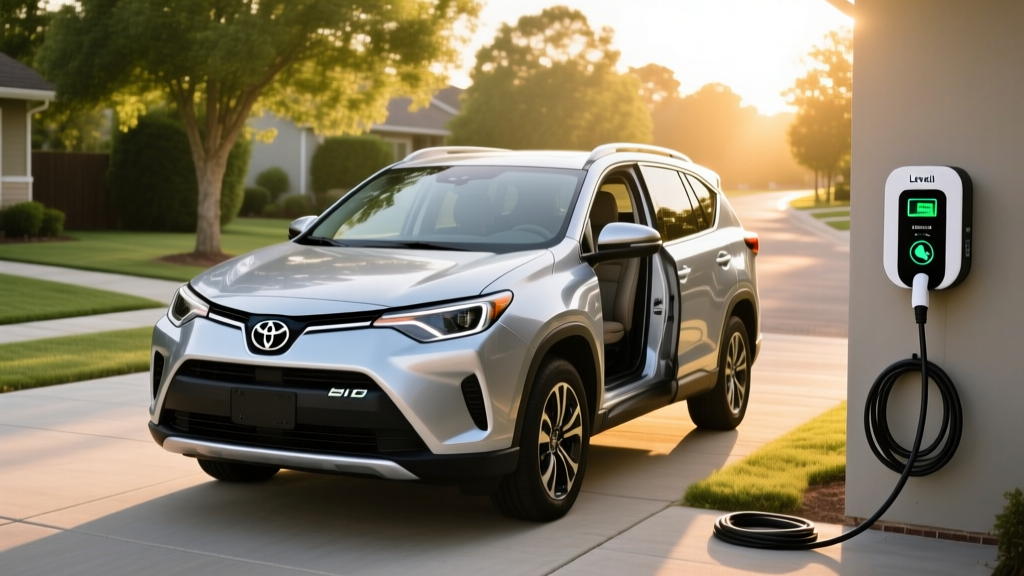
Nine years after its debut, the 2017 Toyota RAV4 Hybrid Limited remains one of the most sensible used compact SUVs on the road. With an EPA-rated 34 MPG city / 30 MPG highway / 32 MPG combined, a proven hybrid powertrain, and Toyota's reputation for longevity, this model is a strong candidate for buyers who want electrified efficiency without ever plugging in.
But buying a nearly decade-old hybrid raises specific questions: How much does the battery degrade? What does replacement cost? And how does this conventional hybrid (HEV) compare to modern plug-in hybrids (PHEVs) or full battery-electric vehicles (BEVs)? This guide answers every question with hard data.
Fuel Economy: EPA Ratings vs Real-World MPG
| Metric | Value |
|---|---|
| City MPG | 34 |
| Highway MPG | 30 |
| Combined MPG | 32 |
| Fuel Tank Capacity | 14.8 gal |
| Total Range (est.) | ~474 miles |
Source: fueleconomy.gov
Real-World MPG: What Owners Actually See
Toyota's hybrid system excels in stop-and-go city driving, where the electric motor handles low-speed propulsion and regenerative braking recaptures energy. Many owners report 35–37 MPG in mixed city driving, slightly exceeding the EPA city estimate. Highway-only driving at 70–75 MPH typically yields 28–30 MPG, which aligns with or slightly underperforms the EPA highway figure.
In cold climates (below 32°F), expect a 5–10% fuel economy reduction during short trips because the gasoline engine runs more frequently to heat the cabin and warm the catalytic converter. Once the system reaches operating temperature, the penalty shrinks to roughly 2–4%.
Powertrain and Performance Specs
| Spec | Value |
|---|---|
| Gasoline Engine | 2.5L 4-cylinder Atkinson cycle |
| Engine Power | 150 hp / 152 lb-ft torque |
| Front Electric Motor | 105 kW (141 hp) |
| Rear Electric Motor (AWD-i) | 50 kW (67 hp) |
| Net Combined System Power | 194 hp |
| 0–60 MPH | ~7.8 seconds |
| Drivetrain | eCVT, Electronic AWD (AWD-i) |
| Hybrid Battery | 1.6 kWh (NiMH), sealed |
| Towing Capacity | 1,750 lbs |
The AWD-i system uses the rear electric motor to power the rear wheels when additional traction is needed — there is no mechanical driveshaft connecting the engine to the rear axle. This keeps weight down and packaging efficient, though it's not designed for serious off-road use.
Hybrid Battery: Lifespan, Degradation, and Replacement Cost
How Long Does the RAV4 Hybrid Battery Last?
Toyota's nickel-metal hydride (NiMH) hybrid batteries have an excellent longevity track record. The 1.6 kWh pack in the 2017 RAV4 Hybrid is small and operates within a conservative state-of-charge window (roughly 40–80%), which dramatically reduces stress on the cells. Based on data from Toyota's hybrid fleet — including the Prius, which shares similar battery architecture — most hybrid batteries last 150,000 to 200,000+ miles before significant degradation occurs.
"Significant degradation" in a conventional hybrid doesn't mean the car stops running. It means a gradual reduction in electric-motor assist and a slight fuel economy drop — typically 2–4 MPG. The gasoline engine compensates, and the vehicle remains drivable.
Battery Replacement Cost
If the hybrid battery does fail, here's what to budget:
- OEM new battery (Toyota dealer): $3,000–$4,500 installed
- Refurbished/remanufactured battery: $1,500–$2,500 installed
- Individual cell module replacement: $500–$1,200 at a hybrid specialist shop (only the failed modules are replaced)
Given the vehicle's current resale value ($14,000–$20,000 depending on mileage and condition in the 2026 used market), a full OEM battery replacement represents a meaningful expense. Many owners opt for refurbished packs or cell-level repair, which restores the battery to functional condition at a fraction of the cost.
2017 RAV4 Hybrid Limited: Features and What You Get
The Limited was the top trim for the 2017 RAV4 Hybrid, and it came well-equipped. Standard features include:
- Toyota Safety Sense P (TSS-P): pre-collision system, lane departure alert, automatic high beams, dynamic radar cruise control
- 7-inch touchscreen with Entune Audio Plus, navigation, and JBL audio
- SofTex synthetic leather seats, heated front seats
- Power liftgate
- Blind spot monitor with rear cross-traffic alert
- 18-inch alloy wheels
- LED headlights and daytime running lights
From a 2026 perspective, the infotainment system feels dated — no wireless Apple CarPlay or Android Auto (wired CarPlay was not available until the 2019 refresh), and the screen resolution is low by modern standards. The TSS-P suite, however, remains competitive with basic ADAS offerings on newer vehicles.
HEV vs PHEV vs BEV: Which Fits Your Needs?
| Factor | HEV (This RAV4) | PHEV (RAV4 Prime) | BEV (e.g., Tesla Model Y) |
|---|---|---|---|
| Plug in to charge? | No | Yes (optional) | Yes (required) |
| Electric-only range | 0 miles | 42 miles | 260–330 miles |
| Home charging needed? | No | Recommended | Essential |
| Fuel cost per mile (est.) | $0.11 | $0.04–$0.10 | $0.03–$0.06 |
| Road-trip convenience | Excellent | Excellent | Requires planning |
| Federal tax credit (§30D) | No | No (discontinued credit) | Up to $7,500* |
| Best for | No home charging access | Short commutes + road trips | Home charging + lower running costs |
* Federal §30D tax credit eligibility depends on MSRP caps, buyer income limits, battery sourcing requirements, and point-of-sale transfer rules per current IRS guidelines. Consult a tax professional.
Choose a PHEV or BEV instead if: You have Level 2 home charging, your daily commute is under 40 miles (PHEV covers it on electricity), or you want to maximize per-mile savings and reduce tailpipe emissions.
Pros and Cons of the 2017 RAV4 Hybrid Limited
Pros
- Proven, reliable hybrid system with 200K+ mile battery track record
- 32 MPG combined — real-world often higher in city driving
- Standard AWD-i without fuel economy penalty vs FWD
- No plug-in charging required — works with any lifestyle
- Toyota Safety Sense P standard (automatic emergency braking, adaptive cruise)
- Strong resale value relative to non-hybrid competitors
- Low maintenance costs (no timing belt, regenerative braking extends pad life)
Cons
- Dated infotainment — no Apple CarPlay/Android Auto
- NiMH battery (not lithium-ion) — heavier, less energy-dense
- CVT drone under hard acceleration
- Factory battery warranty has expired for most examples
- Limited cargo space vs newer RAV4 generations (38.4 cu ft behind rear seats)
- Only 194 hp — adequate but not quick by 2026 standards
- No federal tax credit eligibility (conventional HEV)
Frequently Asked Questions
How many MPG does the 2017 RAV4 Hybrid Limited get?
The EPA rates it at 34 city / 30 highway / 32 combined MPG. In real-world driving, owners commonly see 33–37 MPG depending on driving mix. City-heavy routes favor the hybrid system and often exceed the EPA city estimate. Sustained highway driving at high speeds may dip to 28–30 MPG.
Does the 2017 RAV4 Hybrid need to be plugged in?
No. This is a conventional hybrid (HEV), not a plug-in hybrid (PHEV). The 1.6 kWh NiMH battery charges entirely through regenerative braking and the gasoline engine. You refuel only at gas stations, exactly like a conventional vehicle.
Is the 2017 RAV4 Hybrid reliable, and what does battery replacement cost?
Yes — Toyota's hybrid powertrain is among the most reliable in the industry. The NiMH battery typically lasts 150,000–200,000+ miles. If replacement is needed, expect $1,500–$2,500 for a refurbished pack or $3,000–$4,500 for a new OEM battery, installed. The gasoline engine and eCVT transmission have excellent longevity records as well.
Does the 2017 RAV4 Hybrid qualify for any tax credit?
No. The federal §30D Clean Vehicle Credit applies only to plug-in electric vehicles (BEVs and PHEVs) that meet battery capacity, sourcing, MSRP, and buyer income requirements. Conventional hybrids like this RAV4 do not qualify for the federal credit. Some states may offer minor incentives for used hybrid purchases, but these vary by jurisdiction — check your state's energy or DMV website for current programs.
How does the 2017 RAV4 Hybrid compare to the RAV4 Prime PHEV?
The RAV4 Prime (introduced for 2021) is a plug-in hybrid with an 18.1 kWh lithium-ion battery, 42 miles of electric-only range, 302 combined horsepower, and a 0–60 time of 5.7 seconds. It's significantly faster and more efficient on short trips but costs substantially more — even on the used market, RAV4 Primes command $35,000+. The 2017 RAV4 Hybrid is a budget-friendly alternative for buyers who don't need plug-in capability.
What should I check before buying a used 2017 RAV4 Hybrid?
Prioritize these inspections:
- Hybrid battery health: A Toyota dealer or hybrid specialist can run a battery health check using Techstream diagnostics. Look for voltage delta between modules — a spread greater than 0.3V under load indicates imbalance.
- Brake actuator assembly: Some 2016–2018 RAV4 Hybrids had brake booster pump issues. Check for recalls and listen for abnormal pump cycling.
- Maintenance records: While hybrids require less maintenance, verify regular oil changes (every 10,000 miles with synthetic), coolant flushes, and inverter coolant service.
- Tire wear pattern: Uneven wear may indicate alignment issues or worn suspension components, which are not hybrid-specific but affect overall cost.
Sources: EPA fuel economy data from fueleconomy.gov, Toyota specification archives, IRS §30D credit rules via irs.gov, NHTSA recall database at nhtsa.gov.