Quick Verdict: The 2017 MKZ Hybrid in 2026
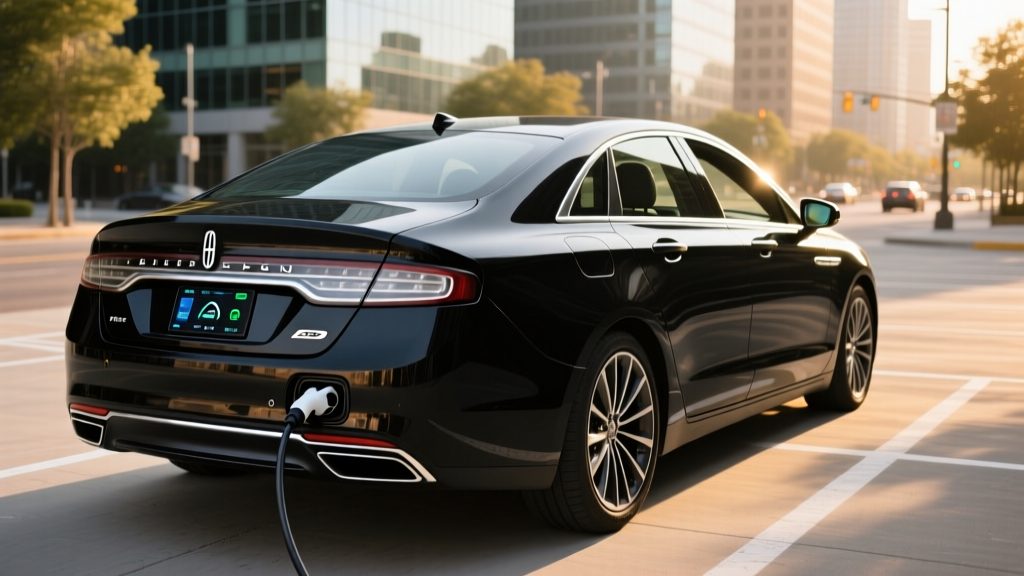
The 2017 Lincoln MKZ Hybrid occupies a specific niche in today's used-car market: a midsize luxury sedan that delivers genuine hybrid efficiency without the complexity of a plug-in system. Built on Ford's proven third-generation hybrid powertrain (shared with the Fusion Hybrid), the MKZ Hybrid pairs a 2.0-liter Atkinson-cycle four-cylinder with an electric motor for a combined 188 horsepower and an EPA-estimated 40 MPG combined. In 2026, well-maintained examples are selling between $10,000 and $16,000 depending on mileage and condition — making it one of the most affordable entry points into luxury hybrid ownership.
This is a conventional hybrid (HEV), not a plug-in hybrid (PHEV). You never plug it in. The battery charges through regenerative braking and the gasoline engine. If you're looking for electric-only driving, you'll want to explore PHEVs or full BEVs instead. But if your goal is straightforward, no-behavior-change fuel savings in a comfortable luxury sedan, the 2017 MKZ Hybrid still makes a compelling case nearly a decade after its debut.
HEV vs PHEV: Where the MKZ Hybrid Fits
Before diving into specs, it's essential to clarify what the 2017 Lincoln MKZ Hybrid is — and isn't. Lincoln never offered a plug-in hybrid version of this generation MKZ. The vehicle is exclusively a conventional hybrid.
| Feature | HEV (MKZ Hybrid) | PHEV | BEV |
|---|---|---|---|
| Plug in to charge? | No — self-charging | Yes — required for EV range | Yes — required |
| Electric-only range | ~1 mile at low speed | 20–50 miles typical | 200–400+ miles |
| Total range | ~600+ miles (gas tank) | 400–550 miles combined | 200–400+ miles |
| Fuel needed? | Yes — gasoline | Yes — gasoline + electricity | No — electricity only |
| Federal tax credit (new) | None | Up to $7,500 (§30D) | Up to $7,500 (§30D) |
| Home charging required? | No | Recommended for EV range | Essential |
| Behavior change needed? | None | Plug in nightly for best value | Plan charging routines |
The MKZ Hybrid's appeal is its simplicity. You fuel it like any conventional car, and the hybrid system transparently shaves your fuel consumption by 30–40% compared to a gasoline-only midsize luxury sedan. There's no charging cable, no range planning, and no dependency on charging infrastructure.
Fuel Economy: EPA Ratings vs Real-World MPG
The EPA rates the 2017 Lincoln MKZ Hybrid at 42 MPG city / 39 MPG highway / 40 MPG combined. These are strong numbers for a 3,700-pound luxury sedan, and they reflect the hybrid system's particular advantage in stop-and-go urban driving where regenerative braking recovers the most energy.
| Driving Cycle | EPA Estimate | Real-World Expectation |
|---|---|---|
| City | 42 MPG | 39–44 MPG (hybrids often beat EPA city) |
| Highway | 39 MPG | 35–38 MPG (aerodynamic drag, sustained speed) |
| Combined | 40 MPG | 37–41 MPG depending on driving mix |
Why real-world can exceed EPA in city driving: Conventional hybrids like the MKZ recapture kinetic energy every time you brake or decelerate. In heavy urban traffic with frequent stops, the electric motor handles more of the propulsion load, and the gasoline engine shuts off at idle. Owners who drive predominantly in city conditions regularly report 41–44 MPG on forums and fuel-tracking apps. Highway driving, where the gasoline engine runs continuously at higher RPMs, tends to fall slightly below the EPA estimate.
Cold-weather note: Expect a 5–10% MPG reduction in winter months (roughly 36–38 MPG combined). The engine runs more frequently to maintain cabin heat and bring the catalytic converter to operating temperature. This is normal for all hybrids and is far less severe than the 20–30% range loss EVs experience in cold weather.
With its 13.5-gallon fuel tank, the MKZ Hybrid delivers a real-world total range of approximately 500–550 miles per tank — competitive with the best diesel sedans and far exceeding most EVs on a single "fill."
Powertrain and Performance Specifications
The 2017 MKZ Hybrid uses Ford's third-generation hybrid system, a mature and well-documented powertrain that also underpins the Ford Fusion Hybrid and C-Max Hybrid. Here's the complete specification breakdown:
| Specification | Value |
|---|---|
| Engine | 2.0L Atkinson-cycle I-4 |
| Engine horsepower | 141 hp @ 6,000 RPM |
| Engine torque | 129 lb-ft @ 4,000 RPM |
| Electric motor output | 120 hp (88 kW) |
| Combined system horsepower | 188 hp |
| Transmission | eCVT (planetary gearset, not belt-driven) |
| Drivetrain | Front-wheel drive |
| 0–60 mph | ~8.5 seconds |
| Battery type | 1.4 kWh lithium-ion (NiMH on early builds) |
| Battery location | Behind rear seats (trunk pass-through retained) |
| Curb weight | ~3,713 lbs |
| Fuel tank capacity | 13.5 gallons |
| EPA combined MPG | 40 MPG |
| CO₂ emissions | ~220 g/mile |
The eCVT transmission deserves specific mention. Unlike a traditional continuously variable transmission that uses belts and pulleys (which can feel rubbery and drone under acceleration), Ford's eCVT is a planetary gearset that mechanically blends power from the engine and electric motor. There are no belts to wear, no simulated "shifts," and the result is smooth, linear acceleration. The tradeoff is the characteristic hybrid drone under hard acceleration as the engine holds at its optimal RPM — but in normal driving, the system is refined and quiet.
Performance is adequate rather than exciting. The 188 combined horsepower moves the MKZ Hybrid to 60 mph in approximately 8.5 seconds, which trails the turbocharged 2.0T gasoline MKZ (which hits 60 in about 7.3 seconds). For a luxury sedan focused on comfort and efficiency, this is entirely appropriate, but buyers coming from sport sedans should set expectations accordingly.
Battery Reliability, Warranty, and Replacement Costs
Hybrid battery longevity is consistently the top concern for used hybrid buyers. The 2017 MKZ Hybrid's track record here is reassuring, thanks largely to the powertrain's shared lineage with Ford's high-volume hybrid fleet vehicles (including the Fusion Hybrid used extensively in taxi and rideshare service).
Original Battery Warranty Coverage
- Hybrid battery: 8 years / 100,000 miles (whichever comes first)
- Hybrid battery (CARB states): 10 years / 150,000 miles in California and states adopting California emissions standards
- Hybrid system components: 8 years / 100,000 miles (inverter, eCVT, control modules)
- Powertrain warranty: 6 years / 70,000 miles
Note: In 2026, a 2017 model is 9 years old. Original factory battery warranty has expired in non-CARB states and is expiring in CARB states. Most 2017 examples are now out of factory coverage unless under 100K miles in a CARB state.
Real-world battery lifespan data: Ford's third-generation hybrid system has demonstrated strong battery durability in fleet and owner data. The lithium-ion traction battery (1.4 kWh usable capacity) is conservatively sized and operates within a narrow state-of-charge window — the hybrid control system never fully charges or fully depletes it, which significantly extends cycle life. Taxi fleets running the Fusion Hybrid powertrain have documented 200,000–300,000 miles on original batteries with manageable degradation.
Battery replacement cost in 2026: If the hybrid battery does fail outside warranty, replacement costs have come down substantially:
- New OEM battery (Lincoln/Ford dealer): $2,500–$3,500 installed
- Remanufactured battery (specialist shops): $1,500–$2,200 installed
- Used/salvage battery: $800–$1,200 plus installation labor (~$300–$500)
Independent hybrid specialists like GreenCars and regional shops offer remanufactured units with 3-year warranties. Given the battery's small 1.4 kWh capacity (compared to a 75+ kWh EV battery), replacement costs are a fraction of what EV owners face. The battery is also modular — individual cells can sometimes be replaced rather than the entire pack.
Reliability ratings: The MKZ Hybrid benefits from the broader Ford hybrid platform's strong reliability record. J.D. Power and Consumer Reports have rated the Fusion Hybrid (mechanical twin) as above-average for reliability in the 2017 model year. The MKZ specifically has fewer reported powertrain complaints than its gasoline-only counterparts, likely because the eCVT eliminates the conventional automatic transmission — a common failure point in non-hybrid vehicles.
Pricing, Used Market Value, and Tax Credit Reality
The 2017 Lincoln MKZ Hybrid is no longer in production (Lincoln discontinued the MKZ after the 2020 model year), so all purchases in 2026 are on the used market. Here's what you can expect to pay:
| Mileage Range | Condition | Typical Price (2026) |
|---|---|---|
| 40,000–60,000 miles | Excellent / CPO | $14,000–$16,500 |
| 60,000–90,000 miles | Good | $11,500–$14,000 |
| 90,000–130,000 miles | Fair | $9,000–$11,500 |
| 130,000+ miles | High mileage | $7,000–$9,500 |
Tax credit eligibility: The federal §30D new clean vehicle credit does not apply — this vehicle is used and was never eligible as a new hybrid (conventional HEVs have never qualified for §30D). However, the federal used clean vehicle credit (§25E) may apply, but with a critical caveat: only PHEVs and BEVs qualify, not conventional hybrids. The MKZ Hybrid, as an HEV, is not eligible for any federal tax credit under current IRS rules.
Some states offer their own incentives for used hybrids, but these are increasingly rare as state programs shift focus to zero-emission vehicles. Check your state's energy office or DMV website for any local programs.
Total cost of ownership advantage: At 40 MPG combined versus ~25 MPG for the gasoline MKZ 2.0T, the hybrid saves approximately $600–$800 per year in fuel costs (assuming 12,000 miles/year and $3.25/gallon). Over five years of ownership, that's $3,000–$4,000 in fuel savings — a meaningful offset against the purchase price, and a strong argument for choosing the hybrid trim over the gasoline version.
Who Should Buy the 2017 MKZ Hybrid — And Who Shouldn't
Strengths
- 40 MPG combined with no behavior change required
- Proven, reliable Ford hybrid powertrain with deep parts availability
- Luxury interior with genuine leather, quiet cabin, comfortable ride
- Strong city MPG that can exceed EPA estimates
- Low battery replacement cost ($1,500–$3,500) if needed
- eCVT eliminates conventional transmission failure risk
- 500+ mile total range per tank
Limitations
- No electric-only driving capability (not a PHEV)
- Modest 188 hp — not a performance sedan
- No federal or state tax credit eligibility
- Trunk space slightly reduced by battery placement
- Discontinued model — long-term parts support uncertain for body/interior
- Infotainment system (SYNC 3) feels dated by 2026 standards
- Most examples now out of factory battery warranty
Decision Framework: Is the 2017 MKZ Hybrid Right for You?
Choose the MKZ Hybrid if: You want a comfortable luxury sedan for commuting and errands, you average 10,000–15,000 miles per year, you lack access to home or workplace charging, and you want to reduce fuel costs without changing your driving habits or worrying about charging infrastructure.
Choose a PHEV instead if: You have reliable Level 2 home charging, your daily commute is under 30 miles round-trip, and you want to drive primarily on electricity while retaining a gas engine for road trips. Consider a used BMW 330e, Chrysler Pacifica Hybrid, or Toyota RAV4 Prime.
Choose a full EV instead if: You have home charging, your daily driving is under 250 miles, you want zero tailpipe emissions, and you're ready to fully transition to electric. A used Tesla Model 3, Chevrolet Bolt, or Hyundai Ioniq 5 will offer dramatically lower per-mile energy costs (3–4 cents/mile vs 8–9 cents/mile for the MKZ Hybrid).
Buying Checklist: What to Inspect on a Used 2017 MKZ Hybrid
If you're evaluating a specific vehicle, here's what to prioritize during inspection and test drive:
- Hybrid battery health: Ask for a scan tool reading of battery state-of-health (SoH). Any reputable hybrid shop or Ford/Lincoln dealer can pull this data. Look for 85%+ capacity retention.
- Maintenance records: The gasoline engine still requires regular oil changes (every 7,500–10,000 miles with full synthetic), coolant flushes, and air filter replacements. Verify these were performed.
- Brake pad condition: Hybrids use regenerative braking heavily, so friction brake pads last much longer than on conventional cars (often 80,000–120,000 miles). If the car is under 100K miles and has had brake work, investigate why.
- eCVT operation: During the test drive, the transition between electric-only and engine-assisted driving should be seamless. Any shuddering, hesitation, or warning lights warrant a professional hybrid system diagnostic.
- 12V battery age: Like all modern vehicles, the MKZ Hybrid has a conventional 12V battery for accessories and starting electronics. These typically last 4–6 years. A 2017 model should be on its second or third 12V battery by now.
Frequently Asked Questions
How many MPG does the 2017 Lincoln MKZ Hybrid get?
The EPA rates it at 42 MPG city, 39 MPG highway, and 40 MPG combined. In real-world driving, city-heavy commuters often see 41–44 MPG, while highway-dominant drivers should expect 35–38 MPG. Cold weather reduces these figures by roughly 5–10%.
Is the 2017 MKZ Hybrid a plug-in hybrid?
No. The 2017 MKZ Hybrid is a conventional hybrid (HEV). It has no plug, no electric-only driving range to speak of, and charges its small 1.4 kWh battery entirely through regenerative braking and the gasoline engine. Lincoln never produced a plug-in version of the MKZ.
How far can it go on electric only?
Effectively zero miles at meaningful speeds. The MKZ Hybrid can creep at very low speeds (under 25 mph) for brief distances on electric power alone — roughly 0.5 to 1 mile in ideal conditions — but the system is designed to blend electric and gasoline power continuously, not to drive on electricity alone. If electric-only range is a priority, you need a PHEV or BEV.
Is the 2017 MKZ Hybrid reliable?
Yes, by luxury sedan standards. The Ford third-generation hybrid powertrain is one of the most proven in the industry, with extensive fleet and taxi use documenting 200,000+ mile lifespans on original batteries. The eCVT transmission eliminates conventional automatic transmission failure points. Common issues are typical Ford electronics quirks (SYNC 3 infotainment glitches) rather than powertrain failures.
What does it cost to replace the hybrid battery?
In 2026, expect to pay $2,500–$3,500 for a new OEM battery at a Lincoln dealer, $1,500–$2,200 for a remanufactured unit from an independent hybrid specialist, or $800–$1,200 for a used/salvage battery plus installation. Given the battery's small size and conservative management, most original batteries are lasting well beyond 150,000 miles.
Does the 2017 MKZ Hybrid qualify for any tax credits?
No. As a conventional hybrid (HEV), the MKZ Hybrid does not qualify for the federal §30D new vehicle credit or the §25E used clean vehicle credit. Both programs require the vehicle to be a plug-in hybrid (PHEV) or battery electric vehicle (BEV) with a minimum battery capacity. Check your state's energy office for any local hybrid incentives, though these are uncommon in 2026.
Should I buy the MKZ Hybrid or a full EV in 2026?
It depends on your charging access and driving patterns. If you can install a Level 2 home charger and your daily driving is under 250 miles, a used EV (Tesla Model 3, Chevrolet Bolt, Hyundai Kona Electric) will offer lower per-mile energy costs and zero tailpipe emissions. If you lack reliable charging access, drive long distances frequently, or simply want zero behavior change, the MKZ Hybrid's 40 MPG and 500+ mile range per tank remain genuinely compelling. For a detailed breakdown of HEV vs PHEV vs EV ownership costs, see the EPA's fuel economy comparison tool.
What is the difference between the MKZ Hybrid and the gasoline MKZ?
The gasoline 2017 MKZ uses a turbocharged 2.0L EcoBoost engine producing 245 horsepower, rated at approximately 23 MPG combined. The Hybrid sacrifices 57 horsepower for a 74% improvement in fuel economy (40 vs 23 MPG combined). The Hybrid also uses an eCVT instead of a 6-speed automatic, is slightly heavier, and has marginally less trunk space due to battery placement. For most buyers prioritizing comfort and low running costs, the Hybrid is the stronger value proposition on the used market.