Quick Verdict: The 2017 Lexus RX 450h at a Glance
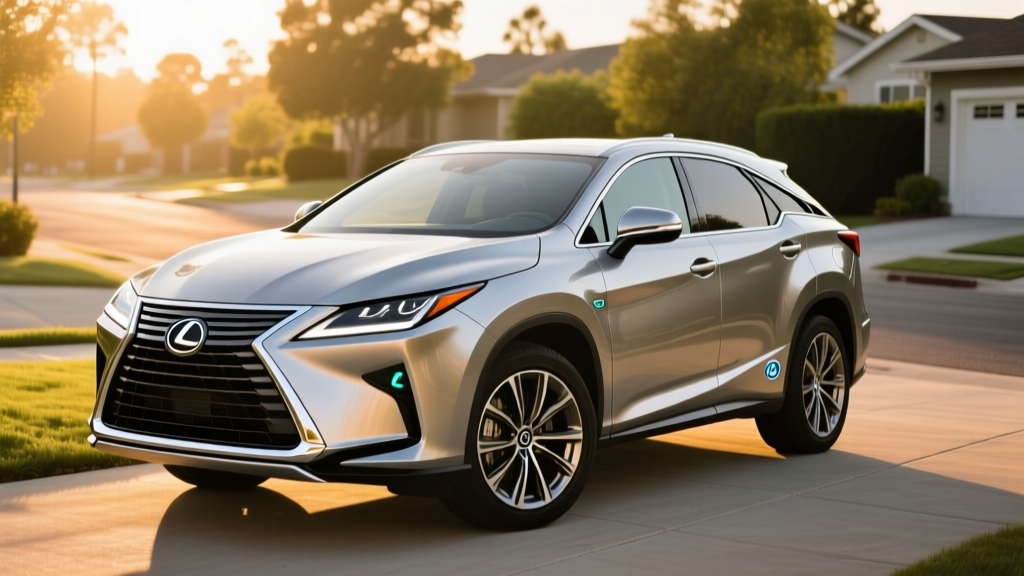
If you're researching the 2017 Lexus RX hybrid on the used market, you're looking at the RX 450h — a conventional hybrid electric vehicle (HEV) that pairs a 3.5-liter V6 with electric motors for all-wheel drive and solid fuel economy. This is not a plug-in hybrid. You never plug it in; the battery recharges through regenerative braking and the gasoline engine. Nearly a decade after its debut, the 2017 RX 450h remains one of the most dependable luxury hybrid SUVs available, and its used-market pricing has dropped into territory that makes it a compelling alternative to newer, less-proven crossovers.
2017 Lexus RX 450h: Full Powertrain Specifications
| Specification | Detail |
|---|---|
| Model Designation | RX 450h (AWD) |
| Gasoline Engine | 3.5L V6 (2GR-FXS), Atkinson cycle |
| Engine Output | 259 hp @ 6,000 rpm |
| Electric Motors | Front motor (123 kW) + Rear motor (50 kW) |
| Net System Horsepower | 308 hp combined |
| Transmission | eCVT (electronically controlled CVT) |
| Drivetrain | E-Four AWD (electric rear axle, no mechanical driveshaft) |
| Hybrid Battery | Nickel-Metal Hydride (NiMH), ~3.6 kWh gross |
| 0-60 mph | 7.7 seconds |
| Towing Capacity | 3,500 lbs |
| Fuel Tank | 17.2 gallons (premium 91+ octane recommended) |
The E-Four all-wheel-drive system is worth understanding. Unlike traditional AWD with a mechanical driveshaft to the rear wheels, the RX 450h uses a dedicated rear electric motor that engages when the system detects slip or under hard acceleration. This means the rear axle is electrically driven, reducing parasitic losses and contributing to the hybrid's efficiency advantage over the gas-only RX 350.
Fuel Economy: EPA Ratings vs. Real-World MPG
| Driving Cycle | EPA MPG | Real-World Expectation |
|---|---|---|
| City | 31 MPG | 30–34 MPG (hybrids excel in stop-and-go) |
| Highway | 28 MPG | 26–29 MPG (less regen benefit at steady speed) |
| Combined | 30 MPG | 28–32 MPG depending on driving mix |
Source: EPA Fuel Economy
The 2017 RX 450h's hybrid system shines in city driving, where frequent braking events recharge the NiMH battery and allow the electric motors to handle low-speed propulsion. Many owners report exceeding the EPA city estimate in heavy traffic — a trait common to Toyota/Lexus hybrids that is the opposite of what gas-only vehicles experience. On sustained highway runs at 75+ mph, however, the aerodynamic drag of this 4,700-lb SUV and the limited electric assist at high speeds bring real-world highway MPG closer to 26–27 in some conditions.
One important ownership note: Lexus recommends premium unleaded (91 octane or higher) for the RX 450h. At current fuel prices, this adds roughly $0.40–$0.60 per gallon over regular, which partially offsets the hybrid's fuel-economy advantage over the RX 350 (which also requires premium). Factor this into your cost-per-mile calculations.
Hybrid Battery Health: Lifespan, Warranty, and Replacement Cost
The NiMH battery pack in the 2017 RX 450h is proven technology. Toyota and Lexus have used NiMH chemistry in their hybrids since the original Prius in 1997, and the degradation profile is well-documented. Unlike lithium-ion packs in full EVs and PHEVs, NiMH batteries in Lexus hybrids tend to degrade gradually rather than experiencing sudden capacity cliffs. Most RX 450h batteries remain functional well past 150,000 miles, though with measurable capacity loss that slightly reduces the electric motor's assist contribution over time.
Hybrid battery replacement cost (2025–2026 estimates):
- OEM new battery (Lexus dealer): $4,000–$6,500 installed
- Remanufactured battery: $2,000–$3,500 installed
- Individual module replacement (reconditioning): $800–$1,500 at a hybrid specialist shop
When inspecting a used 2017 RX 450h, request a hybrid battery health check from a Lexus dealer or qualified hybrid technician. They can pull the battery's internal resistance data and state-of-charge variance across modules — a large spread between modules signals impending failure. Also check for any stored hybrid system diagnostic trouble codes (DTCs) using an OBD-II scanner capable of reading Toyota/Lexus hybrid-specific codes.
How Does the 2017 RX 450h Compare: HEV vs. PHEV vs. Full EV?
If you're cross-shopping the 2017 RX 450h against plug-in hybrids or full battery-electric vehicles, here's how the decision framework breaks down for a buyer in 2026:
| Factor | HEV (RX 450h) | PHEV (e.g., RX 450h+) | BEV (e.g., Tesla Model X) |
|---|---|---|---|
| Plug-in Required? | No | Yes (for EV range) | Yes |
| Electric-Only Range | ~0.5 mi (low-speed only) | 30–40 mi typical | 250–350 mi |
| Home Charging Needed? | No | Recommended (Level 2) | Essential |
| Federal Tax Credit (§30D) | Not eligible | Up to $3,751* | Up to $7,500* |
| Used Purchase Price (2026) | $22,000–$32,000 | $55,000+ (newer models) | $35,000–$70,000+ |
| Best For | No home charging, budget buyers | Short commutes + road trips | Home charging, low running cost |
*Federal §30D tax credit eligibility depends on MSRP caps, buyer income limits, battery component sourcing, and point-of-sale transfer rules per current IRS guidelines. Consult a tax professional.
The 2017 RX 450h occupies a specific niche: buyers who want hybrid fuel savings and Lexus reliability without changing their fueling habits. You still visit gas stations. You never think about charging. The trade-off is that you don't get electric-only commuting, and you don't qualify for any federal electrification tax credit.
Tax Credit Eligibility: Does the 2017 RX 450h Qualify?
No. The 2017 Lexus RX 450h does not qualify for the federal §30D Clean Vehicle Credit. Under current IRS rules, the §30D credit applies only to plug-in electric vehicles — battery-electric vehicles (BEVs) and plug-in hybrids (PHEVs) with a minimum battery capacity of 7 kWh that can be recharged from an external power source. The RX 450h's NiMH battery is approximately 3.6 kWh and charges only internally through regenerative braking and the gasoline engine.
If you're buying a used 2017 RX 450h, you also cannot claim the Used Clean Vehicle Credit (§25E), which provides up to $4,000 (30% of sale price, capped) for pre-owned plug-in EVs and PHEVs. Again, conventional hybrids are excluded.
Some states and local utilities offer incentives for hybrid vehicle purchases, but these vary widely by jurisdiction and are typically smaller than EV incentives. Check your state's energy office or utility provider for current programs.
Reliability and Long-Term Ownership Costs
The 2017 RX 450h benefits from Lexus's reputation for reliability and the proven maturity of Toyota's Hybrid Synergy Drive system. The 2GR-FXS V6 engine is a well-understood powerplant with minimal systemic failure points, and the eCVT transmission has no traditional gears, belts, or clutches to wear — it uses planetary gearsets and motor-generators, which are exceptionally durable.
Key reliability considerations for used buyers:
- Hybrid battery: As discussed, NiMH packs commonly last 150,000–200,000+ miles. Budget for potential replacement if the vehicle is above 120,000 miles and shows no recent battery service history.
- Hybrid inverter coolant pump: A known maintenance item on Toyota/Lexus hybrids. Check service records for coolant pump replacement; failure can lead to inverter overheating ($2,000–$3,500 repair).
- Brake actuator assembly: Some 2016–2018 RX models have experienced brake actuator issues. Check for any open recalls or technical service bulletins (TSBs) via NHTSA's recall lookup.
- 12V auxiliary battery: Like all hybrids, the RX 450h has a standard 12V battery that powers electronics. This is separate from the hybrid traction battery and should be replaced every 4–5 years.
Estimated annual maintenance cost: $550–$750 per year for routine service (oil changes, brake fluid, cabin air filters, tire rotation). This is comparable to the gas-only RX 350 and significantly lower than European luxury SUV competitors. Regenerative braking extends pad life considerably — many owners report original brake pads lasting 80,000+ miles.
Pros and Cons: The Honest Assessment
✓ Pros
- Proven, mature hybrid system with excellent reliability track record
- 30 MPG combined in a 4,700-lb luxury SUV — still competitive in 2026
- No charging infrastructure needed — ideal for apartment dwellers or those without garage access
- E-Four AWD provides confident traction without a fuel-economy penalty
- Spacious, quiet cabin with strong Lexus build quality
- 3,500-lb towing capacity (adequate for small trailers, boat)
- Strong resale value relative to non-Lexus competitors
✗ Cons
- Requires premium fuel (91+ octane), eroding some fuel-cost savings
- No electric-only driving range — not a PHEV
- No federal or state EV/PHEV tax credit eligibility
- Hybrid battery replacement ($2,000–$6,500) is a looming cost on high-mileage examples
- Infotainment system uses Lexus Remote Touch interface — widely criticized for usability
- eCVT produces a drone under hard acceleration (rubber-band effect)
- Older ADAS suite: Lexus Safety System+ (pre-collision, lane departure) lacks modern features like stop-and-go adaptive cruise or lane centering
Who Should Buy the 2017 Lexus RX 450h?
This hybrid SUV is the right choice if you:
- Cannot install home charging — you live in an apartment, rent, or lack a dedicated parking spot with electrical access. The RX 450h eliminates this barrier entirely.
- Want a luxury SUV under $30,000 — used 2017 RX 450h pricing in 2026 typically ranges from $22,000 (higher mileage, base trim) to $32,000 (lower mileage, F Sport or Luxury trim).
- Prioritize reliability over technology — the 2017 RX 450h won't give you the latest ADAS or infotainment, but its powertrain will likely outlast competitors with more complex turbocharged or plug-in systems.
- Drive a mix of city and highway — the hybrid system's city MPG advantage is substantial for urban commuters.
Look elsewhere if you want electric-only commuting (consider a PHEV like the newer RX 450h+ or a RAV4 Prime), if you need the latest driver-assistance features, or if you want to reduce your gasoline consumption to zero (a full BEV is the answer there).
Frequently Asked Questions
How many MPG does the 2017 Lexus RX 450h get?
The EPA rates the 2017 RX 450h at 31 MPG city, 28 MPG highway, and 30 MPG combined. In real-world driving, city MPG often exceeds the EPA estimate (32–34 MPG in heavy traffic), while highway driving at sustained high speeds may return 26–28 MPG. Premium fuel (91+ octane) is required.
Can the 2017 RX 450h drive on electric power only?
Only at very low speeds (under ~25 mph) for extremely short distances (roughly half a mile or less) when the battery has sufficient charge. This is not a meaningful electric-only range — it's a feature of the hybrid system's low-speed maneuvering capability, not a commuter mode. For usable electric-only driving, you need a PHEV or BEV.
Is the 2017 Lexus RX hybrid reliable?
Yes. The RX 450h uses Toyota's mature Hybrid Synergy Drive with a NiMH battery and eCVT — both of which have decades of reliability data. The primary concern on a used 2017 model is hybrid battery age; most packs last 150,000–200,000+ miles, but replacement costs $2,000–$6,500 if needed. Check the hybrid inverter coolant pump service history and verify no open recalls via NHTSA.
What does it cost to replace the hybrid battery in a 2017 RX 450h?
An OEM new battery from a Lexus dealer runs $4,000–$6,500 installed. Remanufactured batteries cost $2,000–$3,500 installed. Some hybrid specialist shops offer individual module reconditioning for $800–$1,500, which can extend battery life at a lower cost but with less predictable longevity.
Does the 2017 Lexus RX 450h qualify for any tax credit?
No. The 2017 RX 450h is a conventional hybrid (HEV), not a plug-in vehicle. Federal §30D and §25E tax credits apply only to plug-in electric vehicles (BEVs and PHEVs). Some state or utility incentives may exist for hybrids, but these vary by jurisdiction. Check your local programs.
How does the RX 450h compare to the gas-only RX 350 in fuel costs?
The 2017 RX 350 AWD is EPA-rated at 22 MPG combined (19 city / 26 highway). At 30 MPG combined, the RX 450h uses roughly 27% less fuel. Assuming 15,000 miles/year and $4.20/gallon premium fuel, the RX 450h saves approximately $640–$750 per year in fuel costs. Over five years, that's $3,200–$3,750 — a meaningful offset against a potential battery replacement.