Quick Verdict: A Performance Hybrid That Still Holds Up
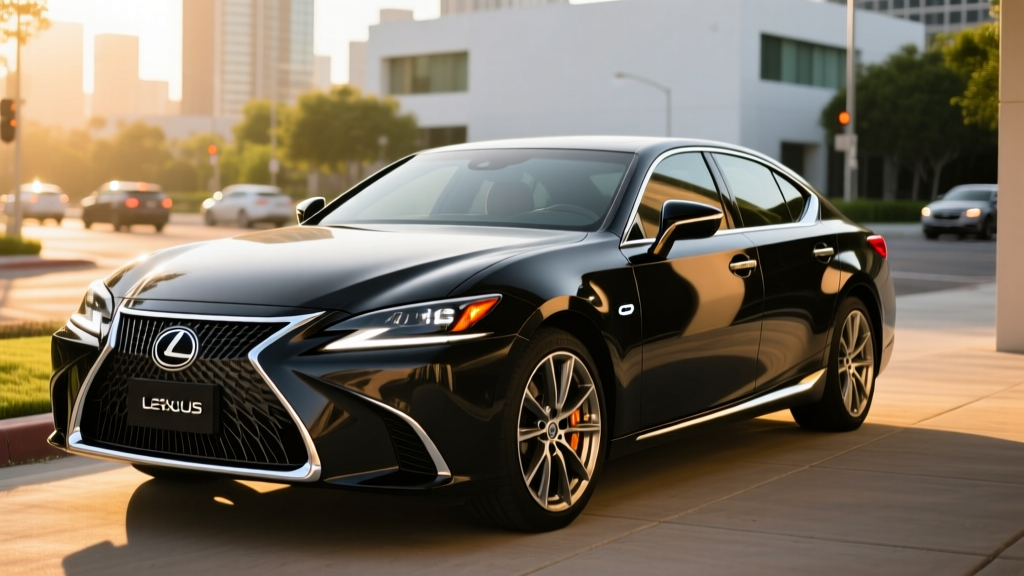
The 2017 Lexus GS 450h occupies a rare niche: a mid-size luxury sedan that pairs a 3.5-liter V6 with an electric motor for 338 combined horsepower while returning an EPA-estimated 29 MPG combined. Lexus discontinued the GS lineup after 2020, but the 2017 GS 450h remains a compelling used purchase for buyers who want Lexus reliability, rear-wheel-drive dynamics, and hybrid efficiency without plugging in.
This is a conventional hybrid (HEV), not a plug-in hybrid (PHEV). You never plug it in — the gasoline engine and regenerative braking recharge the battery automatically. If you're shopping the used luxury-hybrid market, here's everything you need to know about real-world fuel economy, battery longevity, and whether the GS 450h still makes sense in 2026.
HEV vs PHEV: Where the GS 450h Fits
Conventional Hybrid (HEV) — 2017 Lexus GS 450h: The gasoline engine and electric motor work together seamlessly. The battery is small (~2 kWh usable) and recharges through regenerative braking and engine power. No plug, no charging cable, no range anxiety. You simply drive it like any other car and it uses less fuel.
Plug-In Hybrid (PHEV): A PHEV has a larger battery (typically 10-25 kWh) that you charge by plugging in. It can drive 20-40 miles on electricity alone before the gas engine kicks in. Lexus did not offer a plug-in GS variant — if you want a Lexus PHEV, you'd need to look at the NX 450h+ or RX 500h+ from newer model years.
Full Battery Electric (BEV): No gasoline engine at all. Zero tailpipe emissions but requires access to charging infrastructure. The GS 450h is for drivers who want hybrid efficiency without changing their fueling habits.
Fuel Economy: EPA Estimates and Real-World MPG
| Metric | EPA Estimate | Real-World Expectation |
|---|---|---|
| City MPG | 29 MPG | 30-33 MPG (hybrids excel in stop-and-go) |
| Highway MPG | 28 MPG | 25-27 MPG (less regen benefit at sustained speed) |
| Combined MPG | 29 MPG | 27-30 MPG depending on driving mix |
| Fuel Tank | 17.4 gallons | ~470-500 miles total range |
The GS 450h's hybrid system shines in city driving, where frequent braking regenerates the battery and the electric motor handles low-speed acceleration. Owners regularly report exceeding the EPA city estimate in urban commuting. Highway driving is where the gap narrows — at 70+ MPH, the V6 engine does most of the work and aerodynamic drag dominates, pulling real-world highway MPG below the sticker.
For context, the non-hybrid 2017 GS 350 (same V6 without the electric motor) returns an EPA-estimated 20 city / 28 highway / 23 combined. The hybrid's 6 MPG combined advantage translates to roughly 100 fewer gallons per year at 15,000 miles annually — about $350-$450 in annual fuel savings depending on local gas prices.
Source: EPA Fuel Economy Guide — 2017 Lexus GS 450h
Powertrain Specs: 338 HP With Hybrid Efficiency
| Specification | 2017 Lexus GS 450h |
|---|---|
| Engine | 3.5L V6 Atkinson-cycle + electric motor |
| Combined System Output | 338 HP |
| Engine Power | 286 HP @ 6,000 RPM |
| Electric Motor Power | 197 HP (147 kW) |
| Transmission | CVT (electronically controlled) |
| Drivetrain | Rear-wheel drive |
| 0-60 MPH | 5.6 seconds |
| Hybrid Battery Type | Nickel-Metal Hydride (NiMH) |
| Hybrid Battery Capacity | ~2 kWh (nominal) |
| EPA Combined MPG | 29 MPG |
| Curb Weight | ~4,255 lbs |
The GS 450h uses Lexus's proven hybrid synergy drive system. The Atkinson-cycle V6 prioritizes efficiency over raw power, while the electric motor fills in torque at low RPMs where the engine is weakest. The result is a powertrain that feels punchy off the line (electric motors deliver instant torque) and refined at cruising speeds. The CVT is smooth but can drone under hard acceleration — a common trade-off in Toyota/Lexus hybrids of this era.
Unlike some competitors that use turbocharged engines, the GS 450h's naturally aspirated V6 is mechanically simpler, which benefits long-term reliability. There are no turbos to fail, no complex exhaust aftertreatment systems, and the hybrid system actually reduces brake wear thanks to regenerative braking.
Battery Longevity, Warranty, and Replacement Cost
Original Warranty: Lexus covered the 2017 GS 450h hybrid battery for 8 years / 100,000 miles (10 years / 150,000 miles in California and states adopting CARB emissions standards). For most 2017 models, the factory hybrid battery warranty has now expired or is expiring in 2025-2027.
Real-World Battery Lifespan: Lexus/Toyota NiMH hybrid batteries have an exceptional track record. Data from owner forums and repair networks shows these packs commonly last 150,000-200,000+ miles before significant degradation. The GS 450h's NiMH chemistry is less energy-dense than modern lithium-ion but is extremely durable and tolerant of temperature extremes.
Replacement Cost (2026): A new OEM hybrid battery from Lexus runs approximately $3,000-$4,500 installed. Refurbished/remanufactured packs are available for $1,500-$2,500 installed from independent hybrid specialists. Individual module replacement (only the weak cells) can cost $500-$1,200 at a hybrid-specialty shop.
The NiMH battery in the GS 450h is one of the most reliable components in the car. Unlike early lithium-ion packs that showed steep degradation curves, NiMH degrades gradually — you'll notice slightly reduced fuel economy and less electric-only low-speed driving before the system throws a fault code. Most high-mileage GS 450h sedans still running on original batteries are a testament to this chemistry's durability.
Used Pricing and Tax Credit Eligibility
As of early 2026, used 2017 Lexus GS 450h sedans typically trade between $22,000 and $32,000 depending on mileage, condition, and trim (base vs. F Sport). The original MSRP started around $61,000, so depreciation has been substantial — good news for used buyers.
Federal Tax Credit: The 2017 GS 450h does not qualify for the §30D new clean vehicle credit (that applies only to new purchases of eligible EVs and PHEVs). However, it may qualify for the Used Clean Vehicle Credit under IRS §25E — up to $4,000 or 30% of the sale price (whichever is less). Key requirements per IRS guidelines:
- Sale price must be $25,000 or less
- Buyer income caps: $75,000 single / $112,500 head of household / $150,000 joint
- Vehicle must be at least 2 model years old (2017 qualifies)
- Must purchase from a licensed dealer (private-party sales excluded)
- The hybrid must appear on the IRS qualified used clean vehicle list
Because the $25,000 sale-price cap is tight for a GS 450h in good condition, many examples will exceed the threshold. If you find one priced at or below $25,000 from a dealer and your income qualifies, the credit can be applied at the point of sale starting in 2024. Consult a tax professional to confirm eligibility.
Reliability and Ownership Costs
The 2017 GS 450h benefits from Lexus's reputation for long-term reliability, and the hybrid system adds surprisingly little complexity. The electric motor has no brushes, no belts, and essentially no wear components. The CVT, while not exciting, has fewer moving parts than a conventional automatic. Regenerative braking extends pad and rotor life — many GS 450h owners report 60,000-80,000 miles on original brake pads.
Common issues to watch for in pre-purchase inspections:
- Hybrid battery health: Have a hybrid specialist run a battery health check (State of Health / SoH). Look for voltage imbalance between modules.
- Hybrid inverter coolant: The inverter has its own coolant loop. Check for leaks or low fluid — inverter replacement is expensive ($2,000+).
- 12V auxiliary battery: Like all hybrids, the GS 450h has a standard 12V battery for electronics. These typically last 4-5 years and are inexpensive to replace.
- Suspension components: The GS 450h is heavy (~4,255 lbs). Bushings, control arms, and shocks may need attention past 100,000 miles.
Insurance costs run slightly higher than the non-hybrid GS 350 due to the higher original MSRP and specialized hybrid components. Expect annual premiums in the $1,800-$2,400 range depending on your profile and state.
Who Should Choose the GS 450h vs. a PHEV or Full EV?
Pros
- 30 MPG combined in a 338 HP luxury sedan
- No plug-in charging required — drive like a normal car
- Proven NiMH battery with 150K-200K+ mile lifespan
- Strong Lexus reliability and dealer support network
- Smooth, quiet powertrain with instant electric torque
- Reduced brake wear from regenerative braking
- Premium interior with excellent build quality
Cons
- CVT can drone under hard acceleration
- Heavy curb weight (4,255 lbs) affects tire wear
- Original hybrid battery warranty expiring or expired
- Discontinued model — body panels may be harder to source
- No electric-only driving range (unlike a PHEV)
- Dated infotainment compared to 2026 competitors
- Used tax credit limited by $25K price cap
Choose the 2017 GS 450h if: You want a luxurious, reliable daily driver with strong fuel economy and no charging hassle. You don't have access to home or workplace charging. You value Lexus build quality and plan to keep the car past 150,000 miles.
Choose a PHEV instead if: You have home charging and a short commute (under 30 miles). A PHEV like the newer Lexus NX 450h+ or Toyota RAV4 Prime gives you 30-40 miles of electric-only driving, eliminating gas use on most daily trips while keeping a gas engine for road trips.
Choose a full EV instead if: You have reliable home Level 2 charging and want zero tailpipe emissions, minimal maintenance (no oil changes, no spark plugs, no transmission fluid), and access to the full $7,500 federal tax credit on new purchases. Models like the Tesla Model S, BMW i5, or Mercedes EQE offer comparable luxury with 300+ miles of range.
Frequently Asked Questions
How many MPG does the 2017 Lexus GS 450h hybrid get?
The EPA rates the 2017 GS 450h at 29 city / 28 highway / 29 combined MPG. In real-world driving, expect 30-33 MPG in city commuting (where regenerative braking helps most) and 25-27 MPG on sustained highway trips. Combined real-world driving typically lands at 27-30 MPG.
Does the 2017 GS 450h need to be plugged in?
No. The GS 450h is a conventional hybrid (HEV), not a plug-in hybrid (PHEV). The battery recharges automatically through regenerative braking and the gasoline engine. You never plug it in — you just fill up at the gas station like any other car.
How far can the GS 450h drive on electric power alone?
As a conventional hybrid, the GS 450h can only travel very short distances (roughly 1-2 miles) at low speeds (under 25 MPH) on electric power alone, such as in a parking lot or heavy stop-and-go traffic. This is not a meaningful electric-only range — the system is designed to assist the gas engine, not replace it. If you want 30+ miles of electric-only driving, you need a PHEV.
Is the 2017 Lexus GS 450h reliable?
Yes. The GS 450h uses Toyota/Lexus's well-proven hybrid system with a NiMH battery that commonly lasts 150,000-200,000+ miles. The naturally aspirated V6 has no turbocharger to fail, and regenerative braking extends brake life. Lexus's overall reliability ratings are among the highest in the industry, and the GS platform is known for longevity when properly maintained.
What does a replacement hybrid battery cost for the GS 450h?
A new OEM hybrid battery from Lexus costs approximately $3,000-$4,500 installed. Refurbished or remanufactured packs from independent hybrid specialists run $1,500-$2,500 installed. Individual module replacement (targeting only the degraded cells) can cost $500-$1,200. Given the NiMH battery's typical 150K-200K+ mile lifespan, many owners will never need a replacement.
Does the 2017 GS 450h qualify for any tax credit?
Not for the new-vehicle §30D credit. However, it may qualify for the IRS §25E Used Clean Vehicle Credit of up to $4,000 if: the sale price is $25,000 or less, you buy from a licensed dealer, and your modified adjusted gross income falls within IRS limits ($75K single / $150K joint). Because many GS 450h examples sell above $25,000, eligibility is limited. Always verify with the IRS qualified vehicle list and a tax professional.
Hybrid vs PHEV vs EV — which should I buy?
Choose a conventional hybrid like the GS 450h if you lack charging access and want fuel savings with zero behavior change. Choose a PHEV if you can charge at home and want electric-only commuting with gas-engine backup for longer trips. Choose a full EV if you have reliable home charging, want maximum fuel savings, zero tailpipe emissions, and the lowest maintenance costs. The right choice depends entirely on your charging access, commute distance, and willingness to adapt your fueling routine.