The 2017 Lexus CT 200h: A Compact Hybrid Hatchback Revisited
If you've been searching for a lexus hatchback hybrid 2017 model year, you're looking at the Lexus CT 200h — a compact luxury five-door that shares its powertrain DNA with the Toyota Prius but wraps it in Lexus refinement. Now that the CT 200h has been discontinued for several years (its final U.S. model year was 2017), it lives on exclusively in the used-car market. But with proven hybrid reliability, strong city fuel economy, and Lexus build quality, it remains a compelling buy for shoppers who want hybrid efficiency without plugging in.
This guide breaks down everything a 2026 buyer needs to know: real-world MPG versus EPA estimates, the hybrid battery's expected lifespan and replacement cost, how the CT 200h stacks up against modern PHEVs and full EVs, and whether any tax incentives still apply to this used hybrid.
HEV vs. PHEV: What the CT 200h Actually Is
Before we dive into specs, it's critical to understand what kind of hybrid the CT 200h is — because confusion between conventional hybrids and plug-in hybrids is the most common buyer mistake.
| Feature | Conventional Hybrid (HEV) — CT 200h | Plug-In Hybrid (PHEV) |
|---|---|---|
| Plug in to charge? | No — charges via regenerative braking and engine | Yes — has a charge port for grid electricity |
| Electric-only range | Less than 1 mile at low speeds | Typically 20–45 miles (modern PHEVs) |
| Battery size | 1.3 kWh (small, nickel-metal hydride) | 10–20+ kWh (lithium-ion typically) |
| Fuel economy advantage | Best in stop-and-go city driving | Best if you can charge daily for short commutes |
| Tax credit (new) | None (expired long ago) | Up to $7,500 under §30D (current-year rules apply) |
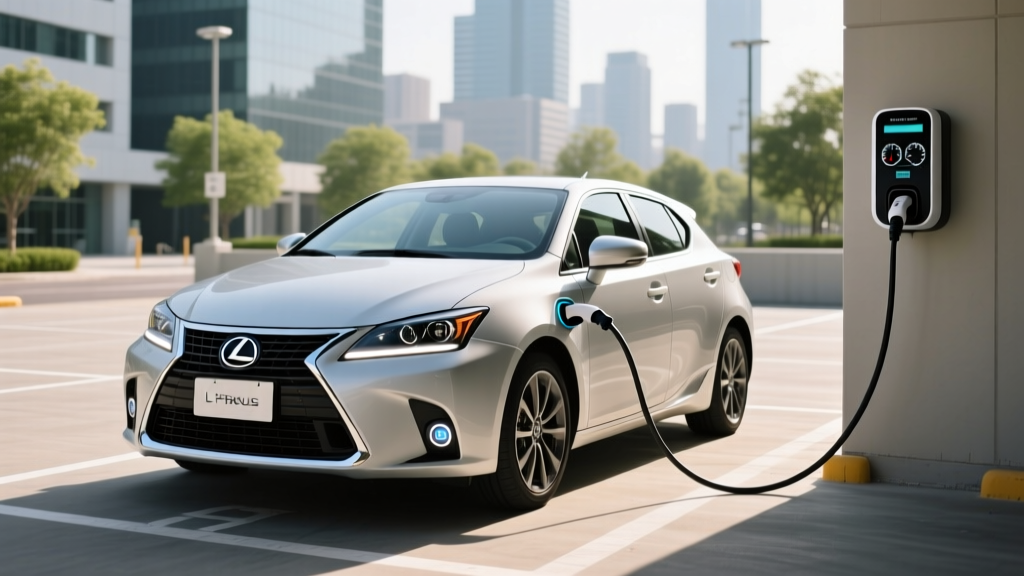
The 2017 Lexus CT 200h is a conventional hybrid electric vehicle (HEV). You never plug it in. The gasoline engine and regenerative braking keep the small battery charged. If you want electric-only commuting capability, you'd need a PHEV like the Toyota Prius Prime or a full battery-electric vehicle (BEV).
Fuel Economy: EPA Ratings and Real-World MPG
How many MPG does this hybrid get? The EPA rated the 2017 CT 200h at the following figures, which you can verify via fueleconomy.gov:
| Driving Cycle | EPA Rating | Real-World Expectation |
|---|---|---|
| City | 43 MPG | 44–48 MPG (hybrids often exceed EPA in city) |
| Highway | 40 MPG | 36–39 MPG (highway driving favors gas engines) |
| Combined | 42 MPG | 40–44 MPG depending on driving mix |
The CT 200h's hybrid system shines in urban traffic. At low speeds and during stop-and-go conditions, the electric motor does heavy lifting, and the regenerative braking system recovers energy that would otherwise be lost. This is why the city MPG is actually higher than the highway figure — the opposite of a conventional gas car.
On the highway, the 1.8-liter Atkinson-cycle four-cylinder engine runs more frequently, and the aerodynamic profile of a compact hatchback works against efficiency at sustained speeds above 70 mph. Expect 36–39 MPG on long interstate trips, and potentially lower in winter conditions when cold temperatures reduce battery efficiency and increase engine idling for cabin heat.
With a 11.9-gallon fuel tank, total range sits around 500 miles per tank in mixed driving — competitive with many modern hybrids and far less range-stressful than early EVs.
Powertrain Specs: Engine, Motor, and Combined Output
| Specification | 2017 Lexus CT 200h |
|---|---|
| Engine | 1.8L 4-cylinder Atkinson-cycle (98 hp) |
| Electric Motor | Permanent-magnet synchronous (80 hp / 153 lb-ft) |
| Combined Net Horsepower | 134 hp |
| Transmission | Electronically controlled CVT (eCVT) |
| Hybrid Battery | 1.3 kWh, Nickel-Metal Hydride (NiMH) |
| 0–60 mph | ~9.8 seconds |
| Drivetrain | Front-wheel drive |
| Curb Weight | ~3,130 lbs |
| Cargo Volume | 14.3 cu ft (rear seats up) / 37.4 cu ft (folded) |
| EPA Combined MPG | 42 MPG |
The powertrain is essentially Toyota's third-generation Hybrid Synergy Drive — the same system found in the 2010–2015 Prius. That matters because this is one of the most thoroughly proven hybrid systems ever mass-produced. The eCVT isn't a belt-driven CVT like those in some Nissan models; it's a planetary gearset that splits power between the engine and motor(s) with no belts or clutches to wear out.
Performance is the CT 200h's weakest point by modern standards. At 134 combined horsepower and 9.8 seconds to 60 mph, it's leisurely. Overtaking on two-lane highways requires planning. If performance is a priority, the modern Lexus UX 250h (181 hp) or a used BMW i3 with range extender will feel significantly quicker.
Battery Reliability, Warranty, and Replacement Cost
Hybrid Battery Warranty (Original)
When new, Lexus warranted the CT 200h hybrid battery for 8 years / 100,000 miles (10 years / 150,000 miles in California Air Resources Board states including CA, NY, MA, and others that adopted CARB rules). By 2026, most 2017 models will be beyond the standard 8-year warranty window unless they have low mileage or fall under the CARB extension.
Is the 2017 CT 200h hybrid reliable, and what does battery replacement cost? This is the top concern for any used hybrid buyer, so let's address it with data.
Longevity: The NiMH battery pack in the CT 200h is shared with the Prius family, and real-world evidence from taxi fleets and high-mileage owners shows these packs routinely last 150,000–200,000+ miles before significant degradation. Unlike the lithium-ion packs in EVs and PHEVs, NiMH degrades more gradually — you'll notice a slow decline in MPG and EV-mode frequency rather than a sudden failure.
Replacement cost: If the hybrid battery does fail out of warranty, you have several options:
- New OEM battery from Lexus: Approximately $2,500–$3,500 for the battery pack, plus $500–$1,000 in labor. Total: roughly $3,000–$4,500.
- Refurbished/remanufactured battery: $1,500–$2,500 installed from independent hybrid specialists.
- Individual module replacement: A skilled hybrid technician can test and replace only the failed cell modules within the pack for $500–$1,200 — this is the most cost-effective route and increasingly common.
For context, a NHTSA search shows no major battery-related recalls for the 2017 CT 200h. The hybrid system's track record across Toyota and Lexus vehicles is among the best in the industry. Lexus consistently ranks at or near the top of J.D. Power Vehicle Dependability Studies, and the CT 200h benefits from that engineering heritage.
Pricing in 2026: What You'll Pay on the Used Market
The 2017 Lexus CT 200h originally started at an MSRP of approximately $31,120 (base) and climbed to around $36,000+ with the Premium package and F Sport trim. In the 2026 used-car market, expect the following ranges based on mileage and condition:
- High mileage (100k+ miles): $10,000–$13,000
- Average mileage (60k–100k miles): $13,000–$17,000
- Low mileage (under 60k miles, excellent condition): $17,000–$21,000
Tax Credit Eligibility
Does the 2017 CT 200h qualify for any tax credit? No. As a conventional hybrid (HEV), the CT 200h never qualified for the federal §30D plug-in vehicle tax credit — that credit applies only to plug-in hybrids (PHEVs) and battery-electric vehicles (BEVs). The separate hybrid tax credit that existed for early hybrids like the original Prius was phased out years ago. State-level incentives for used hybrids are extremely rare. Check IRS.gov for current credit rules, which apply to new qualifying plug-in vehicles only.
CT 200h vs. Modern Alternatives: Hybrid, PHEV, or EV?
The 2017 CT 200h competes in a used-car landscape that now includes modern PHEVs and affordable long-range EVs. Here's a decision framework:
Choose the 2017 CT 200h (HEV) if:
- You can't charge at home or at work (apartment, street parking)
- You want proven reliability with minimal maintenance
- Your budget is $12,000–$18,000 and you want a luxury badge
- You drive mostly in the city where the 43 MPG city rating shines
- You don't want to think about charging — just fill up with gas
Choose a used PHEV (e.g., Prius Prime, Clarity PHEV) if:
- You can charge at home (Level 1 outlet is sufficient for overnight)
- Your daily commute is under 25 miles and you want electric-only driving most days
- You want the option of gas-free commuting but need road-trip flexibility
Choose a used full EV (e.g., Chevy Bolt EV, Nissan Leaf, Tesla Model 3) if:
- You have reliable home Level 2 charging
- Your daily driving is under 200 miles
- You want the lowest per-mile fuel cost (electricity vs. gasoline)
- You want stronger acceleration and modern tech features
The CT 200h's biggest advantage in 2026 is its independence from charging infrastructure. If you live in an apartment, park on the street, or frequently drive in areas with sparse charging networks, a conventional hybrid eliminates all range and charging anxiety. You get 42 MPG combined without ever touching a plug.
Pros and Cons of the 2017 Lexus CT 200h
Pros
- 42 MPG combined, even better in city driving (43–48 real-world)
- Proven Toyota/Lexus hybrid system with 200k+ mile battery longevity
- Lexus build quality, quiet cabin, and strong resale value
- No plug-in required — zero charging infrastructure dependency
- Hatchback versatility with 37.4 cu ft cargo space (seats folded)
- Low maintenance costs (no timing belt, eCVT is bulletproof)
- Affordable used pricing ($12k–$18k for most examples)
Cons
- Sluggish performance: 134 hp and 9.8-second 0–60
- Dated interior technology (small screen, no Apple CarPlay/Android Auto)
- Tight rear-seat legroom compared to modern compact crossovers
- NiMH battery is older technology; less efficient than modern lithium-ion hybrids
- No all-wheel-drive option
- No federal or state tax credit available
- Discontinued — limited dealer support for model-specific parts long-term
Frequently Asked Questions
How many MPG does the 2017 Lexus CT 200h get?
The EPA rates the 2017 CT 200h at 43 city / 40 highway / 42 combined MPG. In real-world city driving, many owners report 44–48 MPG thanks to the hybrid system's efficiency in stop-and-go traffic. Highway driving typically yields 36–39 MPG.
Does the Lexus CT 200h need to be plugged in?
No. The CT 200h is a conventional hybrid (HEV), not a plug-in hybrid. The battery charges automatically through regenerative braking and the gasoline engine. You never need to plug it in — just fill up at any gas station.
How far can the CT 200h drive on electric power alone?
Less than one mile, and only at very low speeds (under 25 mph). The CT 200h's EV mode is designed for creeping through parking lots or residential streets, not for meaningful electric-only commuting. If you want 20+ miles of electric range, you need a PHEV like the Toyota Prius Prime.
Is the 2017 CT 200h reliable, and what does a hybrid battery replacement cost?
Yes, the CT 200h is among the most reliable vehicles in the Lexus lineup, sharing its hybrid drivetrain with the extensively proven Toyota Prius. The NiMH hybrid battery typically lasts 150,000–200,000+ miles. If replacement is needed, expect $3,000–$4,500 for a new OEM battery installed, or $500–$2,500 for refurbished/module-level repair.
Does the 2017 Lexus CT 200h qualify for any tax credit in 2026?
No. The CT 200h is a conventional hybrid (HEV) and never qualified for the federal §30D plug-in vehicle tax credit. That credit applies only to plug-in hybrids (PHEVs) and battery-electric vehicles (BEVs) meeting current-year sourcing, MSRP, and income requirements. No state-level hybrid purchase incentives currently apply to used HEVs either.
What should I check before buying a used 2017 CT 200h?
Prioritize a hybrid battery health check — many Toyota/Lexus dealers can read the battery's State of Health (SoH) via OBD-II diagnostics. Also check for consistent maintenance records (oil changes every 10,000 miles), brake pad wear (regenerative braking extends pad life significantly, but they still need eventual replacement), and inverter coolant service intervals. A pre-purchase inspection by a hybrid-experienced technician is worth the $150–$200 investment.
How does the CT 200h compare to the Toyota Prius of the same era?
Mechanically, they're nearly identical — same 1.8L hybrid powertrain, same eCVT, same battery chemistry. The CT 200h adds Lexus sound insulation, a more premium interior, sportier suspension tuning, and the Lexus dealership experience. The trade-off is a higher used-car price (roughly $2,000–$4,000 more than a comparable 2017 Prius) and slightly lower cargo space due to the hatchback design differences.
Final Verdict: Who Should Buy the 2017 Lexus CT 200h in 2026?
The 2017 Lexus CT 200h occupies a specific niche: budget-conscious buyers who want a reliable, fuel-efficient, no-plug-required daily driver with a luxury badge and hatchback practicality. At $12,000–$18,000 on the used market with 42 MPG combined and a hybrid system proven to exceed 200,000 miles, it delivers strong value per mile.
It's not the right choice if you want brisk acceleration, cutting-edge infotainment, or the ability to commute on electricity alone. For those needs, a used PHEV or BEV makes more sense — provided you have charging access. But if your priority is dependable, efficient transportation that asks nothing more than an occasional fill-up and routine maintenance, the CT 200h remains one of the smartest used hybrid buys available.