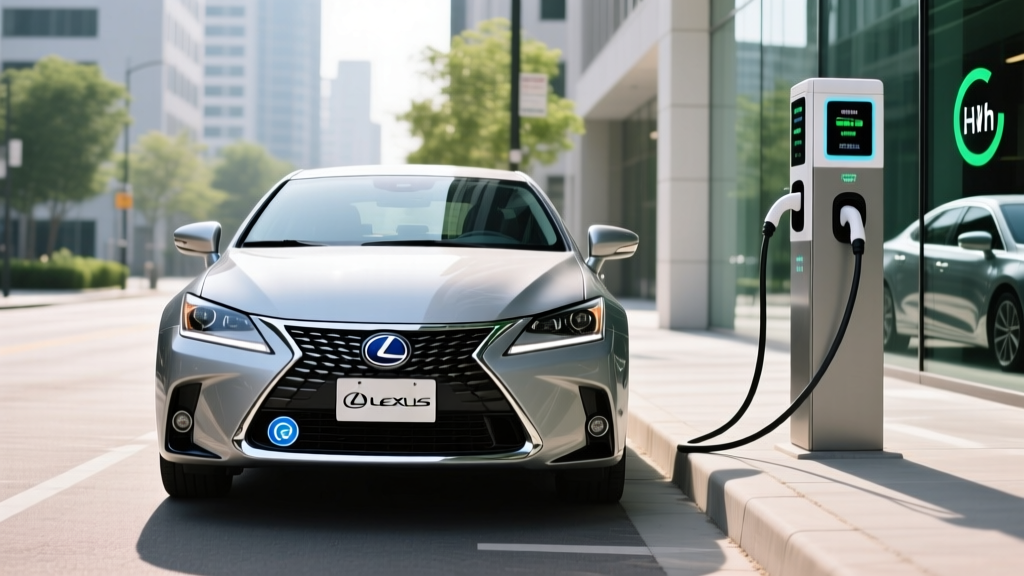
The 2017 Lexus CT 200h occupies a specific niche: a premium compact hatchback that sips fuel without requiring a plug. As Lexus phased this model out after the 2017 model year in the United States, it now lives entirely on the used market. For buyers researching the ct hybrid 2017 as a potential daily driver in 2026, the key questions revolve around real-world fuel economy, long-term hybrid battery health, and whether this aging but efficient hatchback still makes sense against modern hybrids and EVs.
This guide covers the 2017 CT 200h's powertrain, EPA and real-world MPG, battery longevity, ownership costs, and how it stacks up against the alternatives you can buy today.
What Is the 2017 Lexus CT 200h? HEV vs. PHEV Clarity
The 2017 Lexus CT 200h is a conventional hybrid electric vehicle (HEV), not a plug-in hybrid (PHEV). This distinction matters because it defines how you own and operate the car.
| Feature | HEV (2017 CT 200h) | PHEV (e.g., Toyota Prius Prime) |
|---|---|---|
| Plug-in charging required? | No — charges via regenerative braking and engine | Yes — plugs into Level 1 or Level 2 |
| Electric-only range | ~1 mile at very low speed | 25–44 miles (model dependent) |
| Battery capacity | 1.3 kWh (NiMH) | 8.8–13.6 kWh (Li-ion) |
| DC fast charging | Not available | Rarely available on PHEVs |
| Federal tax credit (§30D) | Not eligible | Up to $7,500 (new purchases only) |
| Fuel source | Gasoline only | Gasoline + grid electricity |
The CT 200h never plugs in. Its small nickel-metal hydride (NiMH) battery recharges through regenerative braking and the gasoline engine. You simply fill up at a gas station and drive. This simplicity is a feature, not a limitation, for buyers without access to home or workplace charging.
Fuel Economy: EPA Ratings and Real-World MPG
The 2017 CT 200h shares its hybrid powertrain with the Toyota Prius (third-generation architecture), which gives it proven efficiency. Here are the official EPA figures as published on fueleconomy.gov:
| Metric | 2017 Lexus CT 200h |
|---|---|
| EPA City MPG | 43 MPG |
| EPA Highway MPG | 40 MPG |
| EPA Combined MPG | 42 MPG |
| Fuel tank capacity | 11.9 gallons |
| Total driving range | ~499 miles |
| Annual fuel cost (EPA est.) | ~$1,150 (15k mi/yr, $3.25/gal) |
Real-World MPG vs. EPA Sticker
Hybrids typically match or exceed their EPA city ratings in stop-and-go traffic because regenerative braking recovers energy that gas-only cars waste as heat. On the highway, the advantage narrows since regen opportunities decrease and aerodynamic drag dominates.
Based on aggregated owner data from Fuelly and long-term fleet testing, expect the following in real-world driving:
- City / suburban driving: 42–46 MPG (often exceeds EPA)
- Highway (70–75 mph): 37–40 MPG (slightly below EPA due to the CT's heavier curb weight vs. Prius)
- Cold weather (below 30°F): 36–39 MPG combined (engine runs more to heat the cabin and warm the catalytic converter)
- Combined mixed driving: 40–43 MPG
The CT 200h weighs approximately 3,130 lbs — about 100 lbs heavier than the contemporary Prius — which accounts for its slightly lower highway efficiency despite sharing the same powertrain.
Powertrain: Engine, Motor, and Combined Output
The 2017 CT 200h uses Toyota's Hybrid Synergy Drive, the same system found in the third-generation Prius. Here's the exact breakdown:
| Specification | Detail |
|---|---|
| Gasoline engine | 1.8L inline-4 (2ZR-FXE), Atkinson cycle |
| Engine horsepower | 98 hp @ 5,200 rpm |
| Engine torque | 105 lb-ft @ 4,000 rpm |
| Electric motor | Permanent magnet synchronous (AC) |
| Motor horsepower | 80 hp (60 kW) |
| Combined net output | 134 hp |
| Transmission | ECVT (planetary gearset, not a belt CVT) |
| 0–60 mph | ~9.8 seconds |
| Drivetrain | Front-wheel drive |
| Curb weight | ~3,130 lbs |
The combined 134 hp figure is not simply the sum of engine and motor horsepower — the two power sources peak at different RPM points. The result is adequate for city merging and commuting but not quick by modern standards. The 9.8-second 0–60 time places the CT 200h behind competitors like the Hyundai Ioniq Hybrid (8.9 sec) and well behind any modern EV or PHEV.
The ECVT is worth noting: unlike belt-driven CVTs found in some competitors, Toyota's planetary gearset design has no belt to wear or slip, contributing to the powertrain's strong reliability record.
Hybrid Battery: Size, Warranty, and Replacement Cost
2017 CT 200h Battery Warranty
Original factory warranty: 8 years / 100,000 miles (10 years / 150,000 miles in CARB states including CA, CT, ME, MA, NJ, NY, OR, RI, VT, WA)
Battery type: Nickel-metal hydride (NiMH), 1.3 kWh, 201.6V nominal
Warranty coverage: Defects and capacity loss below functional threshold
For a 2017 model in 2026, the original 8-year/100,000-mile federal hybrid battery warranty has expired for most owners. However, in CARB-emissions states, the 10-year/150,000-mile coverage may still be active through the 2027 model-year anniversary.
Hybrid Battery Lifespan and Degradation
Toyota/Lexus NiMH hybrid batteries have demonstrated exceptional longevity in real-world use. Data from fleet operators and owner surveys indicates:
- Typical lifespan: 150,000–200,000+ miles before replacement is needed
- Degradation pattern: Gradual capacity loss (not sudden failure), reducing EV-mode assist and slightly lowering MPG over time
- Failure mode: Individual cell imbalance rather than full-pack death; reconditioning is sometimes possible
NiMH chemistry is less energy-dense than modern lithium-ion but is extremely tolerant of the shallow charge/discharge cycles that hybrids use. The battery is kept in a narrow state-of-charge window (roughly 40–80%) by the hybrid control system, which dramatically extends cycle life.
Battery Replacement Cost
If the hybrid battery does require replacement on a 2017 CT 200h:
- New OEM battery (Lexus dealer): $2,500–$3,500 installed
- Remanufactured battery (independent hybrid shop): $1,200–$2,000 installed
- Individual cell module replacement: $300–$800 (if only 1–2 modules are weak)
Given that a clean 2017 CT 200h trades for $12,000–$18,000 on the used market in 2026, a full OEM battery replacement represents a meaningful percentage of the car's value. Most buyers should budget for a potential remanufactured replacement or seek a vehicle with documented battery health testing before purchase.
Pricing: Used Market Values and Tax Credit Reality
The 2017 Lexus CT 200h was discontinued in the US after that model year. Original MSRP ranged from approximately $31,250 (base) to $36,000+ (with F Sport or Luxury packages).
As of early 2026, used-market pricing for the 2017 CT 200h:
- Base trim, 80k–100k miles: $12,000–$14,500
- Premium/F Sport, 50k–80k miles: $14,500–$17,000
- Low mileage (under 50k): $17,000–$19,500
Tax Credit Eligibility
The 2017 Lexus CT 200h does not qualify for the federal §30D clean vehicle tax credit. That credit applies only to new plug-in vehicles (BEVs and PHEVs) meeting battery sourcing, MSRP cap, and buyer income requirements as defined by the IRS. Conventional hybrids like the CT 200h have never been eligible for §30D.
Some states previously offered hybrid purchase rebates, but most have shifted incentive budgets toward plug-in vehicles. Check your state's energy office or AFDC state incentive database for any remaining local programs — but set expectations low for a used HEV.
Reliability, Safety, and Ownership Costs
The CT 200h benefits from one of the strongest reliability reputations in the Lexus lineup, largely because its powertrain is shared with the Toyota Prius — a vehicle with decades of proven durability data.
Reliability Highlights
- Powertrain: The 2ZR-FXE engine and hybrid transaxle routinely exceed 200,000 miles with basic maintenance (oil changes, coolant service)
- Brakes: Regenerative braking significantly reduces pad wear; original brake pads lasting 80,000–100,000 miles is common
- ECVT: Planetary gearset design has no belt, clutch pack, or torque converter to fail — one of the most durable transmissions in any vehicle
- Common issues: Water pump failure (around 100k miles, ~$500 repair), 12V auxiliary battery replacement every 4–5 years, occasional inverter coolant pump recall
Safety Ratings
The 2017 CT 200h earned strong marks when new. The NHTSA gave it a 4-star overall rating. The IIHS rated it "Good" in most crash tests, though it received a "Marginal" rating in the small overlap front test (driver side) — a common weakness of vehicles on this platform generation. It lacks modern ADAS features like automatic emergency braking or lane-keeping assist, which became standard on the CT's successor platform.
Estimated Annual Ownership Costs (2026)
- Fuel (15,000 mi/yr at 42 MPG, $3.25/gal): ~$1,160
- Insurance (national avg.): ~$1,300–$1,600
- Maintenance: ~$400–$600 (oil, filters, tire rotation, cabin filter)
- Estimated total annual operating cost: ~$2,860–$3,360
Pros
- 42 MPG combined EPA; often exceeds in city driving
- Lexus build quality and interior materials
- Proven, ultra-reliable Toyota hybrid powertrain
- No plug-in charging required
- Hatchback cargo versatility (14.3 cu ft rear, 37.4 cu ft folded)
- Strong resale value relative to non-Lexus hybrids
Cons
- Slow acceleration (9.8 sec 0–60)
- Dated infotainment (no Apple CarPlay/Android Auto in 2017)
- Firm ride on F Sport suspension
- Marginal IIHS small-overlap crash rating
- No modern ADAS (AEB, lane centering) available
- Discontinued — no new models or warranty remaining
CT 200h vs. Modern Alternatives: Hybrid, PHEV, or EV?
Buying a 2017 CT 200h in 2026 means choosing a used HEV over new alternatives. Here's a decision framework based on your situation:
Choose the 2017 CT 200h if:
- Your budget is $12,000–$18,000 and you want a premium-badge hybrid
- You cannot charge at home or work (no access to Level 2 or DC charging)
- You drive primarily in city/suburban traffic where the HEV excels
- You value Lexus reliability and want minimal technology complexity
Choose a new PHEV (e.g., 2026 Toyota Prius Prime) if:
- You can install a Level 2 home charger and want 40+ miles of electric-only commuting
- You want the $7,500 federal tax credit (subject to income and sourcing rules)
- You want modern safety tech (AEB, lane centering, adaptive cruise)
- Your budget allows $33,000–$40,000 new
Choose a used BEV (e.g., 2021–2023 Tesla Model 3 or Chevrolet Bolt) if:
- You have reliable home charging and want the lowest per-mile fuel cost
- You want zero tailpipe emissions and instant torque
- You drive under 200 miles daily and can manage public charging for road trips
- You're comfortable with battery degradation monitoring
For context, a 2026 Toyota Prius LE hybrid achieves 57 MPG combined EPA — a massive 15 MPG improvement over the CT 200h — starting at around $29,000. The Prius Prime PHEV adds 44 miles of electric-only range. If fuel cost minimization is your top priority and budget allows, the newer Prius is objectively more efficient. But at roughly half the price, a used CT 200h delivers Lexus comfort with excellent efficiency on a tight budget.
Buying Tips for a Used 2017 CT 200h
If you've decided the 2017 CT 200h fits your needs, follow these steps before purchasing:
- Check hybrid battery health: Ask a Lexus dealer or hybrid specialist to run a battery health diagnostic. Look for individual module voltage delta (should be under 0.20V between modules).
- Verify recall completion: Confirm the inverter coolant pump and brake accumulator recalls (if applicable to the VIN) were performed.
- Inspect the 12V battery: The auxiliary 12V battery (AGM type, located in the rear) should be less than 4 years old. A weak 12V can prevent the hybrid system from starting.
- Review maintenance records: Confirm regular engine oil changes (0W-20 synthetic, every 10,000 miles) and inverter/transaxle coolant changes (at 100k miles).
- Test-drive in EV mode: At low speed in a parking lot, the CT should operate on electric motor alone briefly. If the engine immediately starts and never shuts off, the hybrid battery may be degraded.
Frequently Asked Questions
How many MPG does the 2017 Lexus CT 200h get?
The EPA rates the 2017 CT 200h at 43 city / 40 highway / 42 combined MPG. In real-world city driving, many owners report 42–46 MPG. Highway driving at 70+ mph typically yields 37–40 MPG. Cold weather reduces combined efficiency to approximately 36–39 MPG.
Does the 2017 CT 200h plug in?
No. The CT 200h is a conventional hybrid (HEV), not a plug-in hybrid. It charges its small battery through regenerative braking and the gasoline engine. You never plug it in — just fill up with gasoline.
Is the 2017 CT 200h reliable?
Yes. The CT 200h shares its powertrain with the Toyota Prius, one of the most reliable vehicles ever produced. The planetary ECVT transmission, Atkinson-cycle engine, and NiMH battery are all proven to exceed 200,000 miles with routine maintenance. Common repairs are minor: water pump replacement (~$500), 12V battery replacement, and standard wear items.
What does a replacement hybrid battery cost for the CT 200h?
A new OEM Lexus hybrid battery costs $2,500–$3,500 installed. Remanufactured batteries from independent hybrid specialists cost $1,200–$2,000 installed. Individual cell module replacement (if only partial degradation) can cost $300–$800. Most CT 200h batteries last 150,000–200,000+ miles before needing service.
Does the 2017 CT 200h qualify for any tax credit?
No. The federal §30D clean vehicle credit applies only to new plug-in vehicles (BEVs and PHEVs). Conventional hybrids like the CT 200h are not eligible. Some states previously offered hybrid incentives, but most have been discontinued or redirected to plug-in vehicles. Always verify current state programs through the AFDC database.
How does the CT 200h compare to a Prius?
The 2017 CT 200h uses the same third-generation Prius powertrain (1.8L + hybrid system, 134 hp combined) but in a heavier, more premium package. The contemporary 2017 Prius achieves 52 MPG combined — 10 MPG more than the CT — due to lighter weight and better aerodynamics. The CT trades efficiency for Lexus interior quality, a quieter cabin, and a sportier hatchback design. On the used market, the CT typically costs $2,000–$4,000 more than an equivalent Prius.
Can I still get the CT 200h serviced at a Lexus dealer?
Yes. Lexus dealers fully support the CT 200h for maintenance, repairs, and hybrid battery diagnostics. Parts availability remains strong because the powertrain is shared with the Prius and other Toyota/Lexus hybrids still in production.