Quick Verdict: A Smart Used Hybrid Sedan in 2026
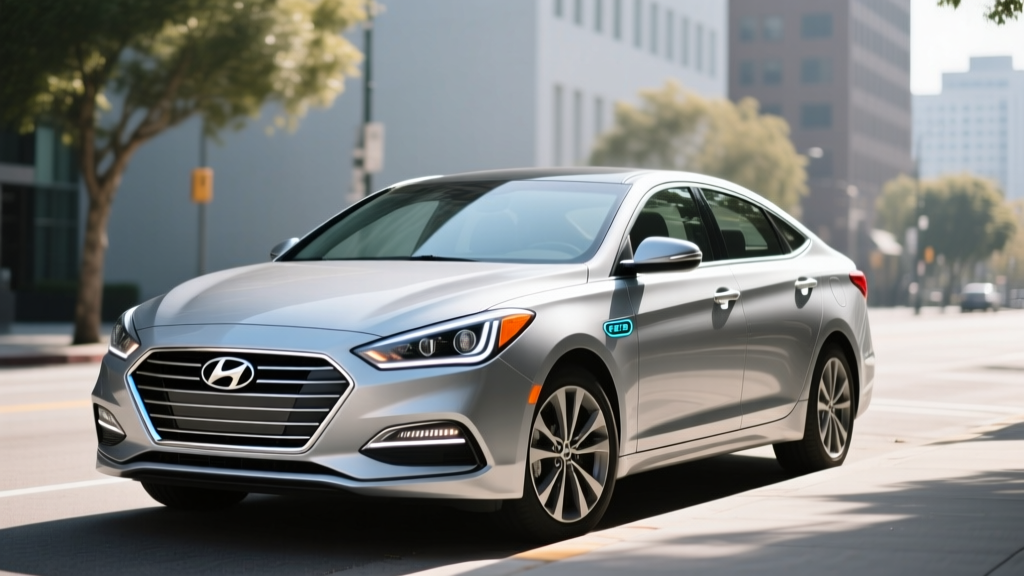
The 2017 Hyundai Sonata Hybrid occupies a practical sweet spot for buyers who want sedan efficiency without plugging in. With an EPA-estimated 40 MPG combined, a spacious cabin, and Hyundai's industry-leading hybrid battery warranty, it remains one of the most compelling used midsize hybrids on the market. Nearly a decade after its release, the Sonata Hybrid's 2.0-liter four-cylinder paired with a 38 kW electric motor delivers smooth, predictable power — and its real-world city fuel economy often exceeds the EPA sticker thanks to aggressive regenerative braking.
This guide breaks down everything a prospective used buyer in 2026 needs to know: exact MPG figures, how the conventional hybrid (HEV) powertrain differs from a plug-in hybrid (PHEV), battery longevity and replacement costs, and whether this car still makes sense versus a newer hybrid or a full battery-electric vehicle (BEV).
| Specification | Value |
|---|---|
| Powertrain Type | Conventional Hybrid (HEV) — no plug-in required |
| Engine | 2.0L GDI inline-4 (154 hp) |
| Electric Motor | 38 kW permanent-magnet synchronous (51 hp) |
| Combined System Output | 193 hp |
| Transmission | 6-speed automatic |
| Hybrid Battery | 1.62 kWh lithium-ion polymer |
| EPA Fuel Economy (City / Hwy / Combined) | 39 / 43 / 40 MPG |
| Fuel Tank | 18.5 gallons |
| Total Range (est.) | ~740 miles |
| 0–60 mph | ~8.3 seconds |
| Original MSRP (base Blue / Limited) | $26,000 / $30,700 |
| Typical 2026 Used Price | $9,000 – $14,500 |
| Hybrid Battery Warranty (original) | 10 years / 100,000 miles (original owner); 10 yr/100k mi emissions-related |
Understanding the 2017 Sonata Hybrid: HEV, Not PHEV
A critical distinction for shoppers: the 2017 Hyundai Sonata Hybrid is a conventional hybrid electric vehicle (HEV). It does not have a plug, cannot be charged from a wall outlet, and has no meaningful electric-only driving range. The small 1.62 kWh lithium-ion polymer battery recharges exclusively through regenerative braking and the gasoline engine.
Hyundai did offer a separate Sonata Plug-in Hybrid (PHEV) for the 2016–2017 model years. That variant featured a larger 9.8 kWh battery, approximately 27 miles of EPA-rated electric-only range, and a J1772 charge port for Level 2 AC charging. The PHEV was discontinued after 2017 and is a fundamentally different vehicle. This review focuses on the conventional HEV, but the comparison table below clarifies the differences.
| Attribute | Sonata Hybrid (HEV) | Sonata Plug-in Hybrid (PHEV) |
|---|---|---|
| Battery Capacity | 1.62 kWh | 9.8 kWh |
| Plug-in Charging | No | Yes (J1772, Level 2 AC only — no DC fast charge) |
| Electric-Only Range | None (motor assists at low speed) | ~27 miles (EPA) |
| EPA Combined MPG / MPGe | 40 MPG | 99 MPGe (electric) / 40 MPG (gas-only) |
| Total System HP | 193 hp | 202 hp |
| Level 2 Charge Time | N/A | ~2.5 hours (240V / 3.3 kW onboard charger) |
| DC Fast Charge | N/A | Not available |
| Federal Tax Credit (original purchase) | None | Up to $4,543 (§30D, now expired for new purchases) |
Fuel Economy: EPA Numbers vs. Real-World MPG
The EPA rates the 2017 Hyundai Sonata Hybrid at 39 MPG city / 43 MPG highway / 40 MPG combined. These figures apply to the base Blue trim. The higher-equipped Limited trim, which adds weight from additional features, carries a slightly lower rating of 38 city / 43 highway / 39 combined.
| Trim | City MPG | Highway MPG | Combined MPG |
|---|---|---|---|
| Blue (base) | 39 | 43 | 40 |
| Limited | 38 | 43 | 39 |
Real-World MPG: What Owners Actually See
Hybrid sedans like the Sonata tend to perform close to or slightly above EPA estimates in city driving, where regenerative braking recovers the most energy. Based on aggregated owner data from FuelEconomy.gov's My MPG tracker, real-world combined fuel economy clusters around 37–43 MPG, with a median near 40 MPG.
City-heavy commuters frequently report 41–44 MPG, while sustained highway driving at 75+ mph can drop efficiency to 35–38 MPG — a common hybrid characteristic since the electric motor contributes less at high, steady speeds. Cold weather (below 30°F) typically reduces fuel economy by 5–10% due to extended engine warm-up cycles and increased battery internal resistance.
Powertrain Deep Dive: How the 2017 Sonata Hybrid Works
The 2017 Sonata Hybrid pairs a naturally aspirated 2.0-liter GDI four-cylinder engine (154 hp, 140 lb-ft torque) with a 38 kW (51 hp) electric motor integrated into the transmission housing. Hyundai's system uses a traditional 6-speed automatic rather than the continuously variable transmission (CVT) found in the Toyota Camry Hybrid. This gives the Sonata Hybrid a more conventional, linear acceleration feel — though it sacrifices a fraction of efficiency compared to CVT-equipped competitors.
Total system output is 193 hp, adequate for daily commuting and highway merging. The 0–60 mph time of approximately 8.3 seconds is competitive within the midsize hybrid sedan segment. The electric motor handles low-speed propulsion (up to roughly 25 mph under light load), seamlessly blending in the gasoline engine as speed or load demands increase.
The 1.62 kWh lithium-ion polymer battery pack sits behind the rear seat, reducing trunk capacity from the gas Sonata's 16.3 cubic feet to 13.3 cubic feet — a meaningful trade-off for cargo-heavy buyers.
Hybrid Battery Longevity, Warranty, and Replacement Cost
Hybrid battery degradation is the top concern for used hybrid buyers, and for good reason: a replacement is one of the largest single expenses an aging hybrid can incur.
Battery Warranty Coverage
Hyundai originally warranted the 2017 Sonata Hybrid's battery pack for 10 years or 100,000 miles to the original owner. Under federal emissions warranty requirements, hybrid battery components are also covered for 8 years or 80,000 miles, and this federal warranty transfers to subsequent owners. Since the 2017 model year is now approaching or past the 8-year / 80,000-mile mark in 2025–2026, most used examples will be outside original warranty coverage unless mileage is exceptionally low.
Real-World Battery Lifespan
Hyundai's lithium-ion polymer cells have demonstrated strong longevity in practice. Industry data and owner forums indicate that the Sonata Hybrid's battery pack typically retains 85–90% of original capacity at 150,000 miles. Complete failures before 200,000 miles are uncommon, though individual cell degradation can trigger check-engine codes and reduced efficiency.
Battery Replacement Cost
If the hybrid battery does require replacement, expect the following cost ranges in 2026:
- Dealership OEM replacement: $3,500 – $5,000 (parts + labor)
- Independent hybrid specialist: $2,200 – $3,500 (remanufactured or refurbished pack)
- Individual cell replacement: $800 – $1,500 (if only specific modules have degraded — requires diagnostic testing)
Before purchasing a used 2017 Sonata Hybrid, request a hybrid battery state-of-health (SoH) scan from a Hyundai dealer or qualified hybrid technician. This diagnostic reads individual cell voltages and internal resistance — the most reliable predictor of remaining battery life.
Pricing, Tax Credits, and Total Cost of Ownership
As a conventional hybrid (HEV), the 2017 Sonata Hybrid does not qualify for the federal §30D clean vehicle tax credit, nor did it at original purchase. The §30D credit applies only to plug-in electric vehicles (PHEVs and BEVs) with sufficient battery capacity and meeting current sourcing requirements. Some states offer modest used-hybrid rebates, but these vary widely — check your state energy office or IRS guidance on clean vehicle credits for current eligibility.
Used Market Pricing in 2026
The 2017 Sonata Hybrid trades between $9,000 and $14,500 depending on mileage, condition, and trim. Blue (base) models cluster at the lower end, while well-maintained Limited trims with under 80,000 miles command premiums.
5-Year Ownership Cost Estimate
| Category | 2017 Sonata Hybrid (HEV) | Comparable Gas Sedan (30 MPG) |
|---|---|---|
| Purchase Price | $12,000 | $10,500 |
| Fuel (5 years / 60,000 mi) | $5,100 | $6,800 |
| Maintenance (5 years) | $2,200 | $2,500 |
| Insurance (5 years) | $5,500 | $5,200 |
| Estimated Total | $24,800 | $25,000 |
The hybrid's fuel savings of approximately $1,700 over five years largely offset its higher purchase price, making total cost of ownership roughly equivalent to a gas-only midsize sedan — with the added benefit of fewer emissions and a smoother, quieter powertrain at low speeds.
Who Should Buy the 2017 Sonata Hybrid vs. a BEV or Gas Car?
Choose the 2017 Sonata Hybrid (HEV) if:
- You want 40 MPG without changing your fueling habits — no plugs, no charging apps, no route planning.
- You live in an apartment or lack access to home Level 2 charging, making a PHEV or BEV impractical.
- Your budget is under $15,000 and you want a reliable, comfortable midsize sedan.
- You drive a mix of city and highway miles and want strong real-world efficiency in both.
Choose a Plug-in Hybrid (PHEV) instead if:
- You have home charging access and a short commute (under 30 miles) — a modern PHEV like the Toyota RAV4 Prime or Hyundai Tucson PHEV can handle most daily driving on electricity alone.
- You want to reduce gasoline consumption by 60–80% without committing to a full BEV.
Choose a Full Battery-Electric Vehicle (BEV) if:
- You have reliable home or workplace Level 2 charging.
- Your daily driving is under 250 miles and you want zero tailpipe emissions with minimal maintenance.
- You're eligible for the up-to-$7,500 federal §30D tax credit (subject to MSRP caps, income limits, and battery-sourcing rules — see IRS.gov for current 2026 eligibility).
Pros
- 40 MPG combined EPA; real-world city MPG often exceeds 41
- Smooth, conventional 6-speed automatic — no CVT drone
- Spacious rear seat and comfortable ride quality
- Strong standard safety features (rearview camera, blind-spot monitoring on Limited)
- Low running costs; no plug-in infrastructure needed
Cons
- Trunk reduced to 13.3 cu ft due to battery placement
- Hybrid battery warranty nearing expiration on most used examples
- No electric-only driving capability
- Dated infotainment compared to 2024+ models (no wireless CarPlay/Android Auto)
- Accelerates adequately but not quickly (8.3 sec 0–60)
Frequently Asked Questions
How many MPG does the 2017 Hyundai Sonata Hybrid get?
The EPA rates it at 39 city / 43 highway / 40 combined MPG (Blue trim). Real-world owners typically see 37–43 MPG combined, with city-heavy driving often yielding 41+ MPG.
Does the 2017 Sonata Hybrid need to be plugged in?
No. The conventional Sonata Hybrid (HEV) has no charge port and cannot be plugged in. The battery recharges through regenerative braking and the gasoline engine. The separate 2017 Sonata Plug-in Hybrid (PHEV) does require plugging in for electric-only range.
Is the 2017 Sonata Hybrid reliable, and what does a battery replacement cost?
The 2017 Sonata Hybrid has above-average reliability for its class. The hybrid battery typically lasts 150,000–200,000+ miles. If replacement is needed, expect $2,200–$5,000 depending on whether you use an independent specialist or dealership OEM parts.
Does the 2017 Sonata Hybrid qualify for any tax credit?
No. As a conventional hybrid (HEV), it does not qualify for the federal §30D clean vehicle tax credit, which applies only to plug-in vehicles (PHEVs and BEVs). Some states may offer minor incentives for used hybrids — check local programs.
Hybrid vs. PHEV vs. EV — which should I choose?
If you lack home charging, the conventional hybrid (HEV) is the simplest path to 40 MPG. If you can charge at home and have a short commute, a PHEV offers 25–40 miles of electric-only driving before the gas engine kicks in. If you have reliable charging and want the lowest operating cost and zero tailpipe emissions, a BEV is the long-term answer — but requires a higher upfront budget and charging access.
What should I check before buying a used 2017 Sonata Hybrid?
Request a hybrid battery state-of-health (SoH) diagnostic scan, review maintenance records (especially oil change intervals — hybrids still need regular engine maintenance), and check for any open recalls via NHTSA.gov. Also inspect the regenerative braking feel — if the brake pedal feels inconsistent or the transition between regen and friction braking is jerky, the hybrid system may need service.