Quick Verdict: A Proven Hybrid That Still Delivers in 2026
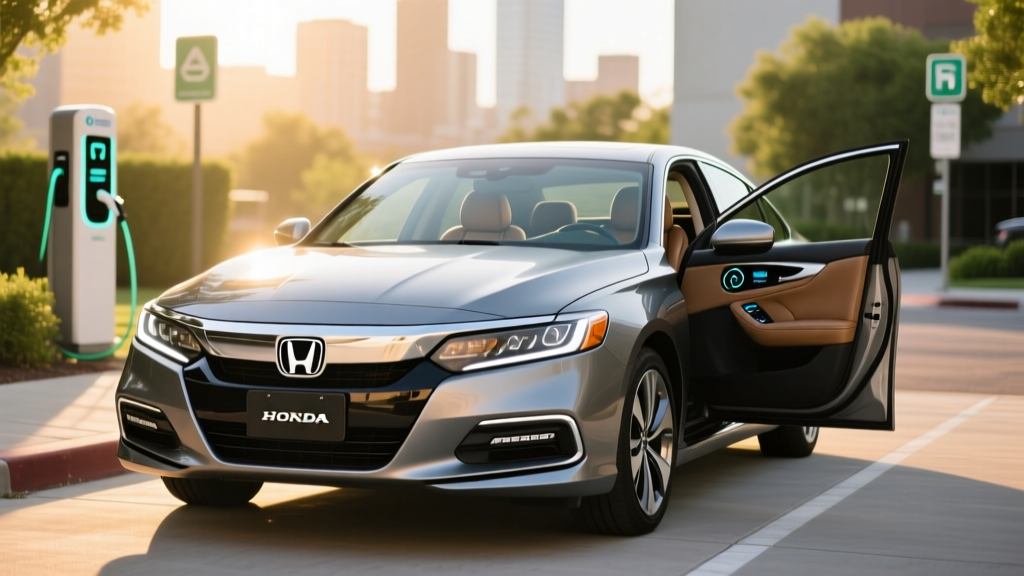
The 2017 Honda Accord Hybrid sedan remains one of the smartest used-hybrid purchases on the market. With an EPA-estimated 49 MPG city and 47 MPG highway, a two-motor powertrain that produces a combined 212 horsepower, and Honda's long-standing hybrid reliability record, this midsize sedan bridges the gap between conventional gas cars and full electric vehicles — without requiring a plug or any change in driving habits. For buyers navigating today's EV landscape and wondering whether a used hybrid still makes financial sense, the 2017 Accord Hybrid offers a compelling, data-backed answer.
| Specification | Value |
|---|---|
| Powertrain Type | Conventional Hybrid (HEV) — no plug |
| Combined Horsepower | 212 hp |
| Engine | 2.0L Atkinson-cycle 4-cylinder (143 hp, 129 lb-ft) |
| Electric Motors | Two-motor i-MMD system (184 hp drive motor) |
| Hybrid Battery | 1.3 kWh lithium-ion |
| EPA MPG (City / Hwy / Combined) | 49 / 47 / 48 |
| Transmission | Electronic CVT (e-CVT, no fixed gears) |
| 0-60 mph | ~7.5 seconds |
| Fuel Tank | 12.8 gallons |
| Total Range (est.) | ~600+ miles |
| Original MSRP (base Hybrid) | $29,605 |
| Typical Used Price (2026) | $12,000 – $18,000 |
| Hybrid Battery Warranty (original) | 8 years / 80,000 miles (10 yr/150k in CARB states) |
How Many MPG Does the 2017 Honda Accord Hybrid Get?
According to fueleconomy.gov, the 2017 Honda Accord Hybrid achieves an EPA-estimated 49 MPG city, 47 MPG highway, and 48 MPG combined. These numbers apply to all trims (Hybrid, Hybrid EX-L, and Hybrid Touring) because the powertrain is identical across the lineup.
| Vehicle | City MPG | Highway MPG | Combined MPG |
|---|---|---|---|
| 2017 Honda Accord Hybrid | 49 | 47 | 48 |
| 2017 Toyota Camry Hybrid (LE) | 42 | 38 | 40 |
| 2017 Ford Fusion Hybrid | 43 | 41 | 42 |
| 2017 Hyundai Sonata Hybrid | 39 | 45 | 41 |
| 2017 Honda Accord (2.4L gas) | 27 | 36 | 30 |
Real-World MPG vs. EPA Sticker
Conventional hybrids like the Accord often exceed their EPA city rating in real-world stop-and-go driving because regenerative braking recaptures energy that gas-only cars waste as heat. Owner-reported data on Fuelly and similar platforms shows many drivers averaging 44–52 MPG combined in mixed driving. Highway-only trips at 75+ mph tend to pull the number down to around 40–43 MPG, since the electric motor assists less at sustained high speeds and the Atkinson-cycle engine operates less efficiently under continuous high load.
In cold weather (below 35°F), expect a temporary 5–10% MPG reduction as the engine runs more frequently to maintain cabin heat and bring the hybrid battery to optimal operating temperature. This is far less severe than the 20–30% range loss a full EV experiences in winter, because the Accord Hybrid's gasoline engine generates waste heat that is repurposed for the cabin.
HEV vs. PHEV vs. EV: Where Does the Accord Hybrid Fit?
Buyers researching electrified vehicles encounter three categories. Understanding the distinction is essential before committing to any platform.
| Feature | HEV (Accord Hybrid) | PHEV (e.g., Prius Prime) | BEV (e.g., Tesla Model 3) |
|---|---|---|---|
| Plug-in Charging Required? | No | Yes (for EV range) | Yes (always) |
| Electric-Only Range | ~1 mile at low speed | 25–45 miles | 250–400+ miles |
| Total Range | 600+ miles | 500–600+ miles | 250–400 miles |
| Battery Size | 1.3 kWh | 8–18 kWh | 50–100 kWh |
| Fuel Type | Gasoline + regen | Gasoline + electricity | Electricity only |
| Federal Tax Credit (new) | None | Up to $7,500 (§30D) | Up to $7,500 (§30D) |
| Home Charging Needed? | No | Recommended (Level 2) | Essential |
The 2017 Honda Accord Hybrid is a conventional hybrid (HEV). It has no plug, no charging port, and no meaningful electric-only range. Its 1.3 kWh lithium-ion battery charges exclusively through regenerative braking and the gasoline engine. You fuel it at any gas station and drive it exactly like a conventional sedan — the hybrid system operates transparently in the background.
Who Should Choose the Accord Hybrid Over a PHEV or EV?
The Accord Hybrid is the right fit if you:
- Lack access to home or workplace charging (apartment dwellers, street parkers)
- Drive more than 500 miles between fill-ups regularly and don't want to plan charging stops
- Want maximum fuel efficiency with zero behavioral change
- Are buying used on a budget ($12K–$18K) and want proven reliability
- Live in a region with limited public charging infrastructure
A PHEV or full EV makes more sense if you have reliable Level 2 home charging, a daily commute under 40 miles (PHEV), or want to eliminate gasoline entirely (BEV) and can accommodate a higher purchase price.
Powertrain Deep Dive: Honda's Two-Motor i-MMD System
The 2017 Accord Hybrid uses Honda's Intelligent Multi-Mode Drive (i-MMD), a two-motor hybrid architecture that differs fundamentally from the planetary-gear systems used by Toyota. There is no traditional transmission — the system operates in three modes:
- EV Drive: The 184-hp drive motor powers the wheels using battery energy. Active at low speeds and light loads. Range is roughly 1 mile.
- Hybrid Drive: The gasoline engine spins the generator motor to produce electricity, which feeds the drive motor. The engine is not mechanically connected to the wheels. This mode covers most city and suburban driving.
- Engine Drive: At steady highway speeds, a lock-up clutch mechanically links the 2.0L engine directly to the front wheels for maximum efficiency. The drive motor can still provide assist.
The combined system output is 212 horsepower — competitive with the V6-equipped gas Accord of the same era. The 0-60 mph time of approximately 7.5 seconds puts it ahead of most four-cylinder midsize sedans and makes highway merging effortless. The electric motor's instant torque delivery gives the Accord Hybrid a responsive, punchy feel around town that the EPA numbers alone don't convey.
Battery Health, Warranty, and Replacement Cost
Hybrid battery longevity is the number-one concern for used-hybrid buyers, and it should be addressed with data rather than speculation.
2017 Accord Hybrid Battery Warranty (Original)
- Standard coverage: 8 years / 80,000 miles
- CARB-state coverage: 10 years / 150,000 miles (California, New York, Massachusetts, and other states adopting California emissions standards)
- What's covered: Hybrid battery pack and hybrid system components (power control unit, drive motor, generator motor)
- Capacity threshold: Honda covers the battery if it fails to function or drops below a usable capacity that triggers a system fault — unlike EVs, HEV batteries are not warrantied to a specific percentage of original capacity because the pack is small and constantly cycled within a narrow state-of-charge window
Battery Replacement Cost in 2026
If the hybrid battery in a 2017 Accord Hybrid fails outside of warranty, replacement costs typically range from $2,000 to $4,000 depending on whether you choose a new OEM pack, a refurbished unit, or an aftermarket option. Dealership-installed OEM batteries trend toward the higher end ($3,500–$4,000 including labor), while independent hybrid specialists can install refurbished packs for $2,000–$2,800.
For context, the 1.3 kWh pack in the Accord Hybrid is far smaller and less expensive to replace than a full EV battery (which can cost $8,000–$20,000+). Honda's i-MMD system also keeps the battery within a narrow 40–80% state-of-charge window during normal operation, which significantly reduces degradation. Many 2017 Accord Hybrids now approaching 150,000+ miles are still running on their original battery packs.
Pre-Purchase Battery Check
When evaluating a used 2017 Accord Hybrid, request a hybrid battery health report from a Honda dealer or qualified hybrid technician. The OBD-II system stores battery module voltage data that reveals cell imbalance. Additionally, check for any stored diagnostic trouble codes (DTCs) related to the hybrid system (P0A7F–P0A9C range). A clean report with no codes and balanced cell voltages is a strong indicator of remaining battery life.
Pricing, Trims, and Tax Credit Eligibility
The 2017 Accord Hybrid was offered in three trims when new:
- Hybrid (base): $29,605 MSRP
- Hybrid EX-L: ~$32,905 MSRP (adds leather, heated seats, premium audio)
- Hybrid Touring: ~$35,405 MSRP (adds navigation, Honda Sensing suite, LED headlights)
In the 2026 used market, expect to pay $12,000–$18,000 depending on mileage, condition, trim, and regional demand. Touring models with under 80,000 miles command the premium end.
Does the 2017 Accord Hybrid Qualify for Any Tax Credit?
No. The 2017 Honda Accord Hybrid is a conventional HEV, not a plug-in vehicle. Under current IRS §30D rules, only plug-in electric vehicles (PHEVs and BEVs) with sufficient battery capacity and qualifying battery-sourcing/critical-minerals content are eligible for the federal clean vehicle credit of up to $7,500. Conventional hybrids have never qualified for this credit.
Some states offer minor incentives for hybrid purchases (reduced registration fees, HOV lane access in certain jurisdictions), but these vary widely. Check your state's department of revenue or energy office for current programs. A licensed tax professional can confirm whether any local incentives apply to your situation.
Ownership Economics: Accord Hybrid vs. Gas Accord in 2026
To determine whether a used 2017 Accord Hybrid still saves money versus a comparable gas-only Accord, consider the following annual fuel cost comparison assuming 15,000 miles/year, 55% city driving, and $3.50/gallon regular unleaded:
- 2017 Accord Hybrid (48 MPG combined): ~$1,094/year in fuel
- 2017 Accord 2.4L gas (30 MPG combined): ~$1,750/year in fuel
- Annual savings: ~$656/year
- 5-year fuel savings: ~$3,280
This savings partially offsets the hybrid's higher initial purchase price when new, and on the used market, the price gap between a hybrid and gas Accord has narrowed to $1,000–$2,500, meaning the hybrid pays for its premium in roughly 2–4 years of typical driving.
Pros and Cons of the 2017 Accord Hybrid
Pros
- 49 MPG city EPA — class-leading real-world fuel economy
- 212 hp combined provides strong acceleration and highway passing power
- No plug required — zero lifestyle change from a gas car
- 600+ mile total range eliminates range anxiety entirely
- Honda Sensing safety suite on Touring trim (adaptive cruise, lane-keeping, collision mitigation)
- Proven hybrid reliability; battery replacement cost is manageable ($2K–$4K)
- Spacious interior with 13.5 cu-ft trunk (only 0.9 cu-ft less than gas Accord)
Cons
- Original hybrid battery warranty may be expiring on lower-mileage examples (8-year/80k limit)
- No electric-only driving range to speak of — not a PHEV
- Infotainment system is dated by 2026 standards (no wireless CarPlay, sluggish touchscreen)
- Road noise is noticeable at highway speeds compared to newer midsize sedans
- No DC fast charging or plug-in capability (by design, but limits flexibility)
- Higher upfront used cost vs. gas Accord ($1K–$2.5K premium)
Frequently Asked Questions
How many MPG does the 2017 Honda Accord Hybrid get in real-world driving?
The EPA rates it at 49 city / 47 highway / 48 combined. Real-world owner reports cluster between 44 and 52 MPG combined depending on driving mix. City-heavy routes tend to yield higher numbers because regenerative braking is most effective at lower speeds with frequent stops.
Can I plug in the 2017 Honda Accord Hybrid to charge?
No. The Accord Hybrid is a conventional HEV, not a plug-in hybrid. There is no charging port. The 1.3 kWh battery charges entirely through regenerative braking and the gasoline engine. You fuel it like any other car at a gas station.
How far can the 2017 Accord Hybrid drive on electric power alone?
Roughly 1 mile at very low speeds (under 25 mph) in EV Drive mode, assuming the battery is sufficiently charged from prior regenerative braking. This is not a meaningful electric-only range — the system is designed for electric assist, not electric-only driving. If electric-only commuting is a priority, look at a PHEV like the Toyota Prius Prime or a full BEV.
Is the 2017 Honda Accord Hybrid reliable?
Yes. Honda's i-MMD two-motor hybrid system has proven durable, and the 2017 model year benefits from the second generation of this powertrain (first introduced in the 2014 Accord Hybrid). The 2.0L Atkinson-cycle engine is lightly stressed, and the e-CVT has no traditional transmission bands or clutches to wear. Honda's hybrid components carry strong reliability records across model years. Check the NHTSA vehicle page for any open recalls.
What does it cost to replace the hybrid battery in a 2017 Accord Hybrid?
Battery replacement typically costs $2,000–$4,000 depending on whether you use a new OEM pack or a refurbished unit and whether the work is done at a dealership or independent hybrid specialist. The 1.3 kWh pack is far less expensive to replace than an EV battery. Many examples reach 150,000+ miles on the original pack.
Does the 2017 Accord Hybrid qualify for a federal tax credit?
No. Under IRS §30D, only plug-in electric vehicles (PHEVs and BEVs) qualify for the federal clean vehicle credit. Conventional hybrids like the Accord Hybrid are not eligible. Used hybrid purchases also do not qualify for the up-to-$4,000 used clean vehicle credit, which applies only to used PHEVs and BEVs meeting specific criteria.
How does the 2017 Accord Hybrid compare to a full EV in 2026?
A full EV like a used Tesla Model 3 or Chevrolet Bolt offers zero tailpipe emissions, lower per-mile fueling costs (electricity vs. gasoline), and near-silent operation. However, EVs require home or workplace charging access, cost more on the used market ($15K–$25K for comparable-age examples), and involve range planning for long road trips. The Accord Hybrid is the pragmatic choice for buyers who want excellent fuel economy without infrastructure dependency.
What should I check before buying a used 2017 Accord Hybrid?
Request a hybrid battery health report showing cell voltage balance, verify no hybrid system diagnostic trouble codes are stored, confirm the remaining hybrid warranty status (especially if under 80,000 miles or in a CARB state), and check for completed recall campaigns via the VIN at nhtsa.gov. A pre-purchase inspection by a technician experienced with Honda's i-MMD system is strongly recommended.