Quick Verdict: A Proven Midsize Hybrid for Budget-Conscious Buyers
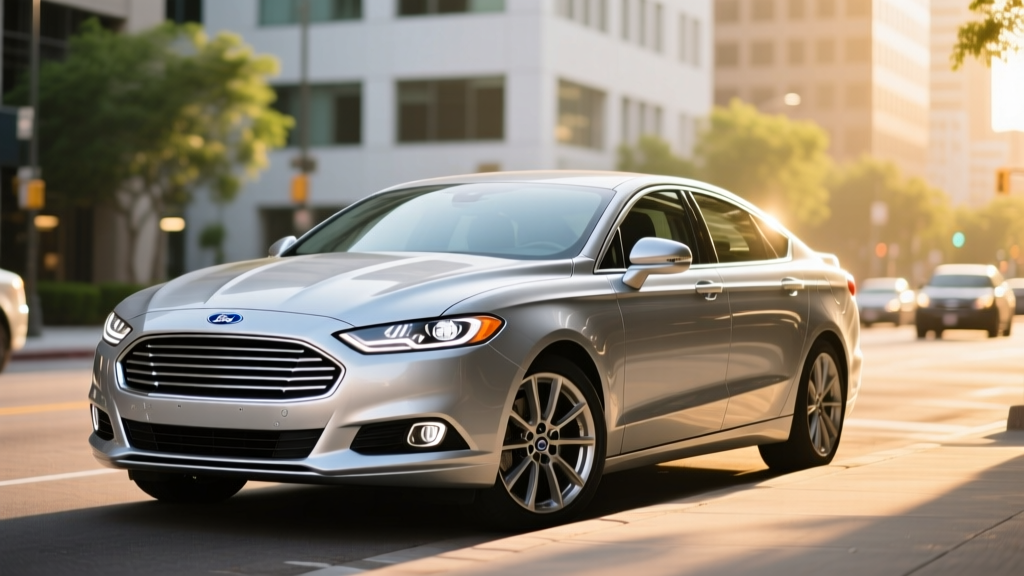
The 2017 Ford Fusion Hybrid SE sedan occupies a specific niche in the 2026 used-car market: a comfortable, well-equipped midsize hybrid that delivers strong real-world fuel economy without requiring a plug. With EPA ratings of 43 city / 41 highway / 42 combined MPG, the Fusion Hybrid SE remains competitive against newer hybrid sedans costing thousands more. For buyers who want hybrid efficiency without the complexity of plug-in charging or the range limitations of a full EV, this generation of Fusion Hybrid deserves serious consideration.
But buying a nine-year-old hybrid raises legitimate questions about battery health, replacement costs, and long-term reliability. This guide breaks down every number that matters.
HEV vs PHEV: Which Fusion Hybrid Are You Looking At?
Ford offered two electrified Fusion variants for 2017, and confusing them is the most common mistake shoppers make:
Fusion Hybrid (HEV) — This Article
- Type: Conventional hybrid — no plug required
- Battery: 1.4 kWh lithium-ion (small, recharges via regenerative braking and engine)
- Electric-only driving: Brief low-speed EV mode (~0.5-1 mile at very low speeds)
- Charging: Self-charging; gasoline engine and regen maintain the battery
- Best for: Drivers without home charging access who want better MPG
Fusion Energi (PHEV) — Different Model
- Type: Plug-in hybrid — requires a plug for full benefit
- Battery: 7.6 kWh lithium-ion (usable ~5.8 kWh)
- Electric-only range: EPA-rated 22 miles on battery alone
- Charging: Level 1 (120V) ~7 hours; Level 2 (240V) ~2.5 hours; no DC fast charging
- Best for: Drivers with home/workplace charging and short commutes
If the listing says "Fusion Hybrid SE," it is the conventional HEV. If it says "Fusion Energi," it is the PHEV. The SE trim was available on both, which adds to the confusion. This article focuses on the Fusion Hybrid SE (HEV), with Energi notes where relevant.
Fuel Economy: EPA Ratings vs Real-World MPG
| Metric | Fusion Hybrid SE (HEV) | Fusion Energi (PHEV) |
|---|---|---|
| EPA City MPG | 43 MPG | 43 MPG (hybrid mode after EV range) |
| EPA Highway MPG | 41 MPG | 41 MPG (hybrid mode after EV range) |
| EPA Combined MPG | 42 MPG | 42 MPG (hybrid mode) / 97 MPGe (with EV) |
| EV-Only Range (PHEV) | N/A | 22 miles |
| Total Range (PHEV) | N/A | ~610 miles (EV + gas) |
| Fuel Tank | 13.5 gallons | 14.0 gallons |
Source: fueleconomy.gov
Real-World MPG: What Owners Actually Report
The Fusion Hybrid's EPA numbers hold up well in practice. On FuelEconomy.gov's My MPG tracker, owners report an average of 39-44 MPG combined, with many exceeding the EPA city estimate in stop-and-go traffic. This is typical of Toyota- and Ford-derived hybrid systems: regenerative braking recaptures energy that conventional cars waste, so city MPG often equals or exceeds highway MPG.
Expect lower numbers (35-38 MPG) if your driving is predominantly 75+ MPH highway in cold weather. Hybrids lose efficiency in freezing temperatures because the engine runs more often to provide cabin heat and maintain battery temperature.
Powertrain and Performance Specs
| Specification | 2017 Fusion Hybrid SE |
|---|---|
| Engine | 2.0L Atkinson-cycle 4-cylinder |
| Engine HP | 141 hp @ 6,000 RPM |
| Electric Motor HP | 118 hp (88 kW) |
| Combined System HP | 188 hp |
| Transmission | eCVT (planetary gearset, not a belt CVT) |
| Drivetrain | Front-wheel drive |
| 0-60 MPH | ~7.8 seconds |
| Battery Chemistry | Lithium-ion (NMC) |
| Battery Capacity | 1.4 kWh (HEV) |
| Curb Weight | ~3,627 lbs |
| Cargo Volume | 12.0 cu ft (trunk; battery reduces space vs gas model) |
The 2.0L Atkinson-cycle engine prioritizes efficiency over peak power, but the electric motor fills torque gaps seamlessly. The eCVT is a planetary gearset — not the rubber-band-feel belt CVT found in some competitors — so acceleration feels linear and natural. The combined 188 hp is adequate for merging and passing, though not sporty.
Battery Health, Warranty, and Replacement Cost
Hybrid Battery Warranty (Original)
- Ford's original coverage: 8 years / 100,000 miles (whichever comes first) on hybrid battery and hybrid-specific components
- California/PZEV states: 10 years / 150,000 miles
- Status in 2026: The 2017 model year's 8-year/100k warranty has expired for most vehicles unless mileage is still under 100,000. California-emissions vehicles may retain coverage through 2027.
How Long Does the Fusion Hybrid Battery Last?
Ford's lithium-ion hybrid battery pack is designed for longevity. Real-world data from fleet and owner reports suggests these batteries commonly reach 150,000-200,000 miles before significant degradation. Unlike full EVs, the Fusion Hybrid's small 1.4 kWh battery operates within a narrow state-of-charge window (roughly 40-60% SoC), which dramatically reduces stress on the cells. The battery management system never allows full charges or full discharges — this buffer is the primary reason hybrid batteries outlast their warranty periods.
Battery Replacement Cost in 2026
If the hybrid battery does fail outside warranty:
- New OEM battery from Ford: $2,500-$3,500 (part only)
- Refurbished/remanufactured battery: $1,200-$2,000
- Labor (dealership): $500-$900
- Total replacement range: $1,700-$4,400 depending on source and installer
Independent hybrid specialists often perform replacements for less than dealership pricing. Individual cell module replacement (rather than the full pack) is sometimes possible for $500-$1,000 if only one or two modules have degraded.
Used Market Pricing and Tax Credit Eligibility
2026 Used Market Pricing
The 2017 Fusion Hybrid SE typically lists between $9,000 and $15,000 depending on mileage, condition, and region. Well-maintained examples under 80,000 miles command the higher end; high-mileage fleet vehicles sit at the lower end.
Does It Qualify for Any Tax Credit?
- Federal §30D New EV Credit: No. This credit applies only to new vehicles. The Fusion Hybrid is no longer in production.
- Federal Used Clean Vehicle Credit (§25E): Potentially yes, with strict limits. This credit offers up to $4,000 (or 30% of sale price, whichever is less) for qualified used EVs and PHEVs purchased from a dealer for $25,000 or less. However, the conventional Fusion Hybrid (HEV) does NOT qualify — only the Fusion Energi (PHEV) meets the definition of a qualified plug-in hybrid. See IRS.gov §25E rules for income caps and dealer reporting requirements.
- State incentives: Vary by jurisdiction. Some states offer rebates for used hybrids, but most have shifted focus to BEVs and PHEVs. Check your state's energy office or DMV for current programs.
Reliability and Common Issues
The 2017 Fusion Hybrid has a solid reliability record. The hybrid powertrain (engine, eCVT, battery) is among the most dependable components Ford has produced. Specific notes:
- eCVT transmission: Extremely reliable; no belt or cone wear like conventional CVTs. Failures are rare.
- Hybrid battery: Low failure rate at typical mileages (80k-150k). See battery section above.
- 12V auxiliary battery: Like all hybrids, the Fusion uses a standard 12V battery for accessories. This is a common failure point around years 4-6 and is a standard $150-$250 replacement.
- Brake wear: Regenerative braking significantly extends pad life. Many owners report original brake pads at 80,000+ miles.
- Infotainment (SYNC 3): Generally reliable and supports Apple CarPlay and Android Auto. Occasional software glitches resolved with updates.
- Known recalls: Check NHTSA.gov by VIN for any open recalls, particularly related to steering and drivetrain software.
Who Should Buy This Hybrid — And Who Shouldn't
Choose the Fusion Hybrid SE If:
- You want 40+ MPG without plugging in or changing habits
- You lack home or workplace charging access
- Your budget is $10,000-$15,000 for a reliable midsize sedan
- You drive mostly city/suburban routes where hybrid efficiency peaks
- You want a comfortable, quiet ride with good trunk space
- You prefer a proven powertrain with abundant parts availability
Look Elsewhere If:
- You want electric-only driving for your commute (consider the Fusion Energi PHEV or a full BEV)
- You need AWD (the Fusion Hybrid is FWD only; consider a RAV4 Hybrid or Prius AWD)
- You want the latest ADAS features (2017 lacks standard automatic emergency braking on SE trim)
- You drive predominantly highway miles at 80+ MPH (a diesel or efficient gas car may match hybrid MPG)
- You want a vehicle still under factory warranty
Hybrid vs PHEV vs Full EV: Quick Decision Framework
- HEV (Fusion Hybrid): Best for drivers who can't charge at home, want zero behavior change, and prioritize lowest total cost on a budget.
- PHEV (Fusion Energi or modern equivalent): Best for drivers with home charging and a sub-25-mile commute who want EV driving most days with gas-engine backup for road trips.
- Full EV (BEV): Best for drivers with reliable home/work charging, who want zero gas stops, lower maintenance, and access to the full federal tax credit on new purchases.
Frequently Asked Questions
How many MPG does the 2017 Ford Fusion Hybrid SE get?
The EPA rates it at 43 city / 41 highway / 42 combined MPG. Real-world owners average 39-44 MPG combined, with city driving often exceeding the EPA estimate thanks to regenerative braking.
Does the Fusion Hybrid need to be plugged in?
No. The Fusion Hybrid (HEV) is a self-charging conventional hybrid. It generates electricity through regenerative braking and the gasoline engine. Only the Fusion Energi (PHEV) requires plug-in charging to access its electric-only range.
Is the 2017 Fusion Hybrid battery expensive to replace?
A full hybrid battery replacement runs $1,700-$4,400 depending on whether you choose refurbished or new OEM parts and whether you use an independent shop or dealership. However, these batteries commonly last 150,000-200,000 miles, and many never need replacement during typical ownership.
Does the 2017 Fusion Hybrid qualify for a tax credit in 2026?
The conventional Fusion Hybrid (HEV) does not qualify for any federal tax credit. The Fusion Energi (PHEV) may qualify for the federal Used Clean Vehicle Credit (§25E) of up to $4,000 if purchased from a dealer for under $25,000, subject to buyer income limits. Consult IRS guidelines and a tax professional for your specific situation.
How does the Fusion Hybrid compare to a Toyota Camry Hybrid?
The 2017 Camry Hybrid LE is rated at 40 combined MPG (slightly lower than the Fusion's 42), but the Camry generally has stronger long-term reliability ratings and higher resale value. The Fusion offers a more refined ride and better infotainment (SYNC 3 with CarPlay/Android Auto). Both are excellent used hybrid choices — prioritize the one with lower mileage and better maintenance records.
What should I check before buying a used 2017 Fusion Hybrid?
Request a pre-purchase inspection that includes a hybrid battery health check (many dealers and hybrid specialists can read the battery's state-of-health percentage via OBD-II). Verify no open recalls on NHTSA.gov using the VIN. Check maintenance records for regular oil changes (yes, hybrids still need them) and confirm the 12V battery has been replaced recently.