2017 Ford Fusion Hybrid MPG: What the Numbers Actually Show
If you're researching the 2017 Ford Fusion Hybrid MPG figures, you're likely shopping the used market for a midsize sedan that sips fuel without requiring a plug. Ford's second-generation Fusion Hybrid was one of the most efficient non-plug midsize sedans of its era, and nearly a decade later, its powertrain data from real-world owners tells us how those EPA sticker numbers hold up today.
The 2017 Fusion Hybrid carries an EPA rating of 43 MPG city / 41 MPG highway / 42 MPG combined. In practice, owners who drive predominantly in stop-and-go urban traffic frequently report hitting or slightly exceeding that city figure — regenerative braking does its best work at low speeds. Highway-heavy commuters should expect closer to 37–40 MPG at sustained 70–75 mph speeds, especially as these vehicles accumulate mileage.
| Driving Cycle | EPA MPG | Real-World Expectation (2026) |
|---|---|---|
| City | 43 MPG | 40–45 MPG (regen-heavy routes can exceed EPA) |
| Highway | 41 MPG | 37–40 MPG (aero drag dominates above 65 mph) |
| Combined | 42 MPG | 38–42 MPG (depends on commute mix) |
Source: fueleconomy.gov — 2017 Ford Fusion Hybrid.
HEV vs. PHEV: Which Fusion Hybrid Are You Looking At?
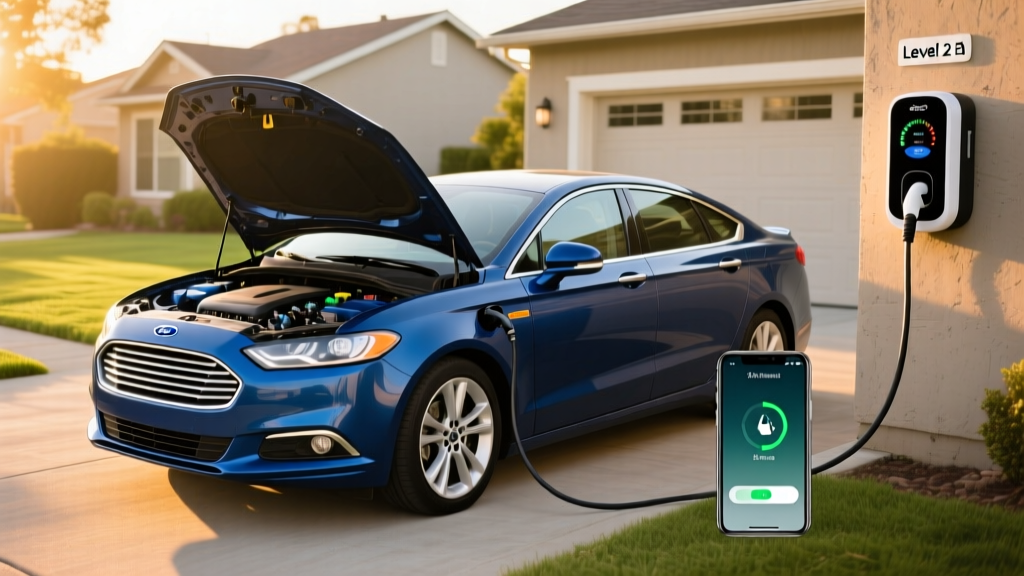
Ford sold two electrified Fusion variants in 2017, and confusing them is a common buyer mistake. Here's the breakdown:
| Attribute | Fusion Hybrid (HEV) | Fusion Energi (PHEV) |
|---|---|---|
| Drivetrain | Conventional hybrid — no plug | Plug-in hybrid — charges via outlet |
| Battery (usable) | 1.4 kWh (NiMH) | 7.6 kWh (Li-ion) |
| Electric-only range | N/A (EV assist only) | 22 miles (EPA) |
| Total range | ~600+ miles | ~610 miles (EV + gas) |
| EPA Combined | 42 MPG | 42 MPG (gas) / 97 MPGe (EV+gas) |
| Charging | Regen + engine only | Level 1 (~7 hr) / Level 2 (~2.5 hr); no DCFC |
| Trunk space | 12.0 cu ft | 8.2 cu ft (battery intrusion) |
If your search is specifically for the 2017 Ford Fusion Hybrid MPG, you're looking at the HEV — a car that never needs plugging in, generates all its electricity from regenerative braking and the gasoline engine, and delivers consistent fuel economy regardless of whether you have garage access. The Energi PHEV is a different animal entirely: it rewards plug-in access with 22 miles of electric-only driving before the engine kicks in.
Powertrain Specs: What Moves the 2017 Fusion Hybrid
| Engine | 2.0L Atkinson-cycle inline-4 |
| Engine output | 141 HP @ 6,000 rpm / 129 lb-ft torque |
| Electric motor | Permanent-magnet AC synchronous, 88 kW (118 HP) |
| Combined system output | 188 HP |
| Transmission | eCVT (planetary gearset, not a belt CVT) |
| Battery type | NiMH (Nickel-Metal Hydride), 1.4 kWh |
| 0–60 mph | ~7.8 seconds |
| Drivetrain | Front-wheel drive |
| Curb weight | ~3,654 lbs |
The Atkinson-cycle engine sacrifices some low-end torque for thermal efficiency — it's a design optimized for MPG, not acceleration. The eCVT uses a planetary gearset (Toyota-derived Hybrid Synergy Drive architecture licensed to Ford), meaning there are no belts or pulleys to wear out. This is one of the most proven hybrid powertrain designs on the road, shared conceptually with the Toyota Camry Hybrid and Prius.
Battery Health, Warranty, and Replacement Cost
In 2026: A 2017 model is at the tail end or just past the original 8-year federal warranty. CARB-state examples may still have coverage through 2027 if under 150,000 miles. Always verify with a Ford dealer using the VIN.
NiMH hybrid batteries like the one in the Fusion Hybrid degrade more gracefully than early lithium-ion packs. They lose capacity slowly and predictably. Most 2017 Fusion Hybrids still on the road in 2026 retain 85–92% of their original battery capacity — which matters less for range (since the engine compensates) and more for the seamless EV-assist feel at low speeds.
Battery replacement cost (2026 estimates):
- New OEM battery from Ford: $2,500–$3,800 installed
- Refurbished/reconditioned pack (specialist hybrid shops): $1,200–$2,000 installed
- Individual cell replacement (if only a few modules fail): $400–$800
For most buyers, a pre-purchase battery health scan via an OBD-II reader (looking at battery SoH percentage and individual module voltage delta) is the single most important step before purchasing a used 2017 Fusion Hybrid.
Used Pricing and Tax Credit Eligibility in 2026
The 2017 Fusion Hybrid is long discontinued (Ford ended Fusion production after the 2020 model year), so you're shopping the used market exclusively. As of early 2026, typical asking prices run:
- SE trim (60k–90k miles): $11,000–$14,500
- Titanium trim (60k–90k miles): $13,500–$17,000
- Platinum trim (lower miles, well-maintained): $15,000–$19,000
Federal tax credit: The IRS §30D clean vehicle credit does not apply to the 2017 Fusion Hybrid. The used-EV credit (§25E, up to $4,000) covers used plug-in vehicles — meaning the Fusion Energi PHEV may qualify if purchased from a dealer for $25,000 or less and buyer income is under $75,000 (single) / $150,000 (joint). The conventional Fusion Hybrid (HEV) does not qualify for any federal tax credit because it has no plug-in capability.
Some states offer rebates for used hybrids, but these vary widely and change annually. Check your state's energy or environmental agency for current programs.
Who Should Buy the 2017 Fusion Hybrid (and Who Shouldn't)
- Proven 42 MPG combined — real-world city drivers often exceed this
- No plug-in needed — works for apartment dwellers and street parkers
- Smooth eCVT with no belt wear concerns
- Comfortable, quiet midsize sedan ride
- Low used-market entry price ($11k–$17k)
- Strong parts availability and independent shop familiarity
- Fusion discontinued — no new models or warranty extensions from Ford
- NiMH battery nearing end of original warranty window
- Modest 188 HP — adequate, not quick
- Trunk space (12 cu ft) trails non-hybrid Fusion (16 cu ft)
- Infotainment (SYNC 3) feels dated by 2026 standards
- No DC fast charging (not applicable for HEV, but worth noting vs. PHEVs)
- You want 40+ MPG without plugging in or changing habits
- You lack home/work charging access (apartment, street parking)
- Your budget is $12k–$17k and you want low running costs
- Your commute is city-heavy where regen braking shines
- You have Level 2 charging at home and want electric-only daily driving
- You want current-model warranty coverage and modern ADAS features
- You drive 40+ miles daily and want to eliminate most gas usage
- You value eligibility for the §30D or §25E tax credits
How the 2017 Fusion Hybrid Compares to Alternatives
| Vehicle | EPA Combined | City / Hwy | System HP | Used Price Range (2026) |
|---|---|---|---|---|
| Ford Fusion Hybrid | 42 MPG | 43 / 41 | 188 HP | $11,000–$17,000 |
| Toyota Camry Hybrid (LE) | 42 MPG | 42 / 42 | 200 HP | $13,000–$18,500 |
| Honda Accord Hybrid | 48 MPG | 49 / 47 | 212 HP | $14,000–$19,500 |
| Hyundai Sonata Hybrid | 40 MPG | 39 / 43 | 193 HP | $10,500–$15,000 |
The Honda Accord Hybrid leads on pure MPG (48 combined thanks to its two-motor i-MMD system), but commands a used-market premium. The Camry Hybrid matches the Fusion on EPA numbers but holds value better. The Fusion Hybrid occupies a value sweet spot — it's often $2,000–$4,000 cheaper than equivalent Camry and Accord listings while delivering nearly identical real-world fuel economy.
Frequently Asked Questions
How many MPG does the 2017 Ford Fusion Hybrid get?
The EPA rates it at 43 city / 41 highway / 42 combined. Real-world results vary: city-heavy drivers often see 43–45 MPG thanks to regenerative braking, while sustained highway driving at 70+ mph typically yields 37–40 MPG. A well-maintained 2017 example in 2026 should still deliver 38–42 MPG combined.
Does the 2017 Fusion Hybrid need to be plugged in?
No. The Fusion Hybrid (HEV) is a conventional hybrid — it charges its small 1.4 kWh NiMH battery through regenerative braking and the gasoline engine. You never plug it in. If you're looking for a plug-in version, that's the Fusion Energi (PHEV), which is a separate model with a larger 7.6 kWh battery and 22 miles of electric-only range.
Is the 2017 Fusion Hybrid reliable?
The Fusion Hybrid's powertrain — particularly the eCVT planetary gearset and Atkinson-cycle engine — is among Ford's most reliable setups. The NiMH battery degrades slowly. The main reliability concerns for 2017 models are non-powertrain items: SYNC 3 infotainment glitches, electric power steering calibration, and standard wear items. Independent hybrid shops are well-versed in servicing these vehicles.
What does a replacement hybrid battery cost?
As of 2026, a new OEM NiMH battery from Ford runs $2,500–$3,800 installed. Refurbished packs from hybrid specialists cost $1,200–$2,000 installed. In many cases, only individual cell modules fail, and targeted module replacement costs $400–$800. Most 2017 examples still on the road have not yet needed a full battery replacement.
Does the 2017 Ford Fusion Hybrid qualify for any tax credit?
No federal tax credit applies. The §30D new clean vehicle credit requires a new plug-in vehicle, and the §25E used clean vehicle credit covers only plug-in models (the Fusion Energi PHEV may qualify, but the conventional Hybrid does not). Some state-level programs may offer small rebates for used hybrids — check your state energy office for current offerings.
Hybrid vs. PHEV vs. EV — which should I buy?
Choose the conventional hybrid (HEV) like the Fusion Hybrid if you want maximum MPG with zero lifestyle change — no plug, no range planning, just fill up less often. Choose a PHEV if you have home charging and a short commute (under 30 miles) to drive mostly on electricity while keeping gas for road trips. Choose a full EV if you want the lowest per-mile fuel cost, have reliable charging access, and are ready to plan longer trips around DC fast charging. The 2017 Fusion Hybrid is ideal for buyers in the first category who want a proven, affordable, no-compromise fuel-sipper.