Quick Verdict: The 2017 Fusion Hybrid in 2026
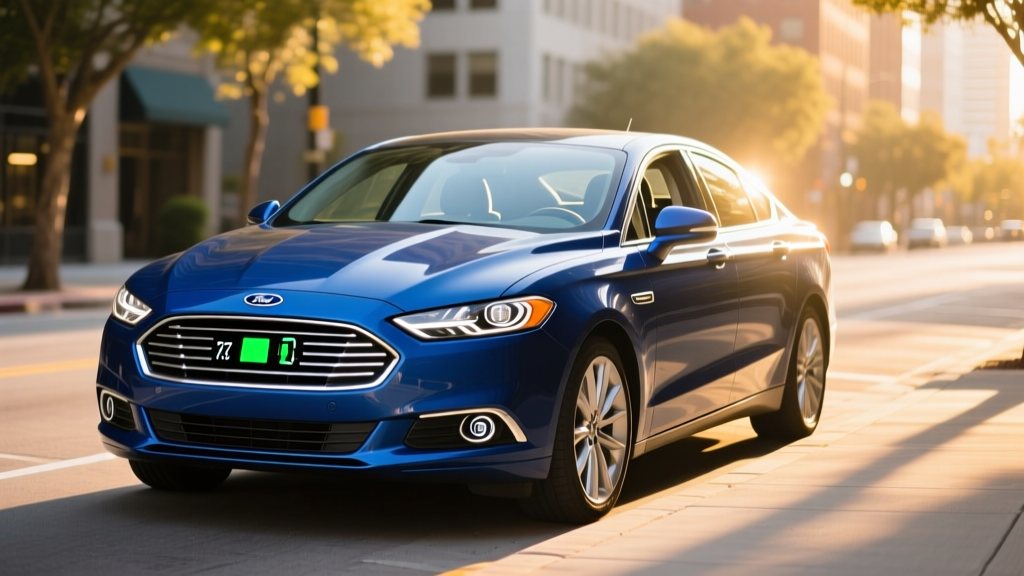
The 2017 Ford Fusion Hybrid remains one of the most fuel-efficient midsize sedans you can buy on the used market. With an EPA-rated 42 MPG combined, a proven 2.0-liter Atkinson-cycle powertrain, and a hybrid battery backed by an 8-year/100,000-mile warranty (much of which may still apply depending on the vehicle's in-service date), it's a pragmatic choice for buyers who want hybrid efficiency without plugging in. Ford discontinued the Fusion after the 2020 model year, so every example on the market today is used — but that also means pricing has settled into affordable territory.
This guide covers the conventional hybrid (HEV) version. Ford also sold a plug-in hybrid variant called the Fusion Energi, which we address in a dedicated section below. The two are fundamentally different vehicles with different use cases, and confusing them is one of the most common mistakes used-car shoppers make.
HEV vs PHEV: Which Fusion Are You Looking At?
Before diving into specs, it's critical to understand that Ford sold two electrified Fusion models in 2017. They share a body shell but have very different powertrains, batteries, and ownership profiles.
| Attribute | 2017 Fusion Hybrid (HEV) | 2017 Fusion Energi (PHEV) |
|---|---|---|
| Drivetrain Type | Conventional Hybrid — no plug | Plug-in Hybrid — charges from outlet |
| Battery Capacity | 1.4 kWh (nominal) | 7.6 kWh (usable) |
| EPA Electric-Only Range | N/A (motor assists engine) | 22 miles |
| EPA Combined MPG / MPGe | 42 MPG | 97 MPGe (electric) / 42 MPG (gas) |
| DC Fast Charging | No | No (Level 1/Level 2 AC only) |
| Trunk Space | 12.0 cu ft | 8.2 cu ft (battery intrusion) |
| Original MSRP (Base) | ~$25,995 | ~$31,995 |
The HEV generates all its electricity from regenerative braking and the gasoline engine. You never plug it in — you simply fuel it like a normal car and it manages the electric motor assist automatically. The Energi PHEV has a larger battery that you charge at home or at public Level 2 stations, giving you a short electric-only commute before the gas engine kicks in.
Fuel Economy: EPA Ratings and Real-World MPG
The headline number for the 2017 Fusion Hybrid is strong, and real-world results often match or even exceed the EPA sticker — a hallmark of conventional hybrids in city driving.
| Driving Cycle | EPA Rating | Real-World Expectation |
|---|---|---|
| City | 43 MPG | 44–48 MPG (regen-heavy stop-and-go) |
| Highway | 41 MPG | 37–40 MPG (sustained speed, less regen benefit) |
| Combined | 42 MPG | 40–44 MPG depending on driving mix |
Source: EPA Fuel Economy Guide — 2017 Ford Fusion Hybrid.
The Fusion Hybrid's city MPG advantage comes from its ability to shut off the gasoline engine at low speeds and in stop-and-go traffic, running on the electric motor alone for short distances. This is the opposite of most gas cars, which are least efficient in the city. On the highway, the gas engine does most of the work, and aerodynamic drag reduces the hybrid system's advantage.
How Does This Compare to a Gas-Only Midsize Sedan?
A 2017 Ford Fusion with the 2.5-liter four-cylinder and 6-speed automatic rates at 21 city / 32 highway / 25 combined MPG. That means the hybrid delivers roughly 68% better combined fuel economy. At 15,000 miles per year and $3.40/gallon, the hybrid saves approximately $930 annually in fuel costs versus the gas-only model — a meaningful offset to any used-car price premium.
Powertrain: Engine, Motor, and Combined Output
The 2017 Fusion Hybrid uses Ford's second-generation hybrid system, which pairs a 2.0-liter Atkinson-cycle inline-four engine with an AC synchronous electric motor through a planetary gearset (eCVT — continuously variable transmission with no traditional gears or belts).
| Specification | Value |
|---|---|
| Gasoline Engine | 2.0L Atkinson-cycle I-4 |
| Engine Horsepower | 141 hp @ 6,000 rpm |
| Engine Torque | 129 lb-ft @ 4,000 rpm |
| Electric Motor Output | 120 hp (88 kW) |
| Combined System Horsepower | 188 hp (net) |
| Transmission | eCVT (planetary gearset) |
| Drivetrain | Front-wheel drive |
| 0–60 mph (tested) | ~7.8 seconds |
| Hybrid Battery Type | Lithium-ion, 1.4 kWh nominal |
| Trunk Volume | 12.0 cu ft |
| Curb Weight | ~3,472 lbs |
The 188 combined horsepower is adequate for merging and passing but not sporty. The eCVT delivers smooth, gearless acceleration — there's no shift shock, but there is some engine drone under hard acceleration as the engine holds at a fixed RPM while the electric motor varies vehicle speed. This is normal hybrid behavior, not a defect.
Battery Health, Warranty, and Replacement Cost
Hybrid battery longevity is the single biggest concern for used hybrid buyers. Here's what you need to know about the 2017 Fusion Hybrid's pack.
Battery Warranty Details
Ford's hybrid battery warranty: 8 years / 100,000 miles (whichever comes first) in most states. In California and states that adopted California emissions standards (CARB states), the warranty extends to 10 years / 150,000 miles.
Since the 2017 model year is now nine years old in 2026, most examples will have exceeded the standard 8-year warranty window — unless the vehicle was first sold late in 2017 and has remained under 100,000 miles. In CARB states, some vehicles may still carry active battery coverage through 2027.
Always verify the in-service date on the original purchase paperwork and check for any remaining warranty with a Ford dealer using the VIN.
Real-World Battery Degradation
The Fusion Hybrid's 1.4 kWh lithium-ion pack is relatively small and is managed conservatively by Ford's battery management system. The system never uses the full capacity — it operates in a narrow state-of-charge window (roughly 40–60% SoC) to minimize stress. This is why hybrid batteries tend to last significantly longer than EV batteries that cycle through deeper charge ranges daily.
Based on owner reports and fleet data, most 2017 Fusion Hybrid batteries retain sufficient capacity that drivers notice minimal fuel economy degradation even at 100,000+ miles. Complete pack failure before 150,000 miles is uncommon.
Battery Replacement Cost
If the hybrid battery does fail out of warranty, here's what to budget:
- OEM replacement from Ford: $2,500–$3,500 for the battery pack, plus $500–$800 in labor
- Refurbished/remanufactured pack: $1,500–$2,200 installed
- Individual cell/module repair: Some independent hybrid specialists can replace individual failed modules for $800–$1,500, though this is less common on the Fusion than on the Toyota Prius
For context, a $3,000 battery replacement on a vehicle that saves $930/year in fuel still pencils out favorably versus buying a newer vehicle with higher monthly payments.
2017 Fusion Energi (PHEV): Electric-Only Range and Charging
If you're considering the plug-in variant, here are the specifics that differentiate it from the HEV.
| Specification | 2017 Fusion Energi |
|---|---|
| Usable Battery Capacity | 7.6 kWh (lithium-ion) |
| EPA Electric-Only Range | 22 miles |
| Total Combined Range (EV + Gas) | ~610 miles |
| MPGe (Electric Mode) | 97 MPGe |
| MPG (Gas-Only Hybrid Mode) | 42 MPG combined |
| Level 1 Charging (120V) | ~7 hours (0–100%) |
| Level 2 Charging (240V, 3.3 kW) | ~2.5 hours (0–100%) |
| DC Fast Charging | Not supported |
| Charge Port | SAE J1772 |
| Combined System Horsepower | 188 hp (net) |
The Energi's 22-mile electric range is enough for short commutes but falls well short of modern PHEVs like the Toyota RAV4 Prime (42 miles) or the current-generation Hyundai Tucson PHEV (33 miles). If your one-way commute is under 20 miles and you can charge at home, the Energi lets you drive most weekdays without using gasoline. On longer trips, it operates as a conventional hybrid at 42 MPG combined.
The lack of DC fast charging is a notable limitation. The Energi tops out at 3.3 kW on Level 2 AC — adequate for overnight home charging but impractical for quick top-ups on the road.
Pricing, Tax Credits, and Used Market Value
Current Used Pricing (2026 Market)
As of early 2026, here's what you can expect to pay for a used 2017 Fusion Hybrid or Energi:
- 2017 Fusion Hybrid (S/SE trim, 70K–100K miles): $9,000–$12,500
- 2017 Fusion Hybrid (Platinum trim, under 70K miles): $12,000–$15,000
- 2017 Fusion Energi (SE/Platinum, 60K–90K miles): $10,000–$14,000
Prices vary significantly by mileage, condition, region, and whether the vehicle has a clean title. Always run a VIN check through Carfax or AutoCheck before purchasing.
Tax Credit Eligibility
The 2017 Fusion Hybrid (HEV) does not qualify for the federal §30D new clean vehicle credit — it never did, even when new, because conventional hybrids are not plug-in vehicles. The federal credit has always been reserved for plug-in vehicles (BEVs and PHEVs) with sufficient battery capacity.
The 2017 Fusion Energi (PHEV) originally qualified for a $4,007 federal tax credit when purchased new. However, buying one used today changes the picture:
Used EV/PHEV Credit (§25E) — Key Rules for 2026
- Credit amount: 30% of the sale price, up to a maximum of $4,000
- Vehicle price cap: Sale price must be $25,000 or less (most used Fusion Energis qualify)
- Vehicle age: Must be at least 2 model years old (2017 qualifies)
- Buyer income cap: AGI must not exceed $75,000 (single), $112,500 (head of household), or $150,000 (joint)
- Dealer requirement: Must purchase from a licensed dealer (private-party sales don't qualify)
- Frequency limit: Buyer can claim this credit once every 3 years
- Battery capacity: Vehicle must have at least 7 kWh battery (Energi's 7.6 kWh qualifies)
At a $12,000 purchase price, the §25E credit would be 30% × $12,000 = $3,600, bringing your effective cost down to approximately $8,400. This makes the used Fusion Energi one of the most affordable ways to get a plug-in vehicle with a warranty-backed battery. Consult a tax professional to confirm your personal eligibility.
Reliability and What to Watch For
The 2017 Fusion Hybrid has a generally solid reliability record. The eCVT transmission — which is really a planetary gearset with no belts, clutches, or traditional friction components — is one of the most durable transmissions in the industry. There are no gears to grind and no torque converter to fail.
Common Issues Reported by Owners
- 12V auxiliary battery: Like all hybrids, the Fusion has a conventional 12V battery that powers electronics and starts the hybrid system. These typically need replacement every 4–5 years and cost $150–$250. A dead 12V battery will prevent the car from starting, even though the high-voltage hybrid battery is fine.
- Infotainment (SYNC 3):strong> The SYNC 3 system is generally reliable but can develop touchscreen responsiveness issues at higher mileages. Software updates through Ford's website or a dealer can resolve most glitches.
- Brake feel: Regenerative braking blends with friction braking, which can make the pedal feel slightly inconsistent. This is normal hybrid behavior, not a defect — but have the friction brake pads and rotors inspected as part of any pre-purchase check.
- Coolant system: The hybrid system has its own coolant loop separate from the engine. Ensure maintenance records show coolant service at the recommended intervals.
Pre-Purchase Checklist
Before buying any used 2017 Fusion Hybrid or Energi:
- Run a Carfax/AutoCheck for accident history, title status, and service records
- Have a mechanic (ideally Ford-certified or hybrid-experienced) perform a pre-purchase inspection
- Ask a Ford dealer to pull the hybrid battery state-of-health (SoH) report using the vehicle's VIN
- Verify the in-service date to determine any remaining powertrain or battery warranty
- Test-drive in both city (to feel regen blending) and highway (to check for engine drone or vibration) conditions
Who Should Choose the 2017 Fusion Hybrid vs a Full EV or Gas Car?
Choose the 2017 Fusion Hybrid (HEV) If:
- You don't have access to home or workplace charging and cannot plug in regularly
- You want 42 MPG combined without changing any habits — just fuel up and drive
- Your budget is under $15,000 and you want maximum fuel savings per dollar spent
- You drive 12,000–20,000 miles per year and want to minimize fuel costs on a moderate budget
- You want a proven, simple powertrain with no charging logistics to manage
Choose the 2017 Fusion Energi (PHEV) If:
- You have a garage or driveway where you can install a 120V or 240V outlet
- Your daily round-trip commute is under 40 miles and you want to minimize gas use
- You qualify for the §25E used clean vehicle credit (income under $75K single / $150K joint)
- You want to try electric driving without committing to a full BEV
Choose a Full EV Instead If:
- You have reliable home Level 2 charging and want zero tailpipe emissions
- Your daily driving is under 200 miles and you rarely take road trips over 300 miles
- You want to eliminate oil changes, spark plugs, and exhaust-system maintenance entirely
- Your budget allows $18,000+ for a used EV like a Chevrolet Bolt EV or Nissan Leaf Plus
Choose a Gas-Only Car Instead If:
- You drive very few miles per year (under 6,000) — the fuel savings won't offset a higher purchase price
- You're on an extremely tight budget (under $8,000) where even a used hybrid is out of reach
- You need AWD — the Fusion Hybrid was only offered in FWD (consider a used Toyota Prius AWD-e instead)
Pros
- 42 MPG combined EPA — excellent for a midsize sedan
- Smooth, quiet eCVT with no traditional transmission wear items
- Comfortable ride quality and spacious rear seat
- SYNC 3 with Apple CarPlay and Android Auto (on most trims)
- Strong safety ratings — IIHS Top Safety Pick when equipped with optional features
- Low used-market pricing in 2026
Cons
- Discontinued after 2020 — no new examples available, limited future parts support
- FWD only — no AWD option for snow-belt drivers
- Trunk space reduced to 12.0 cu ft by battery placement (vs 16.0 cu ft in gas Fusion)
- eCVT engine drone under hard acceleration
- Most factory warranties have expired or are nearing expiration
- Energi PHEV's 22-mile EV range is short by modern standards
Frequently Asked Questions
How many MPG does the 2017 Fusion Hybrid get?
The EPA rates the 2017 Ford Fusion Hybrid at 43 city / 41 highway / 42 combined MPG. In real-world driving, owners frequently report 40–44 MPG combined, with city driving sometimes exceeding the EPA rating thanks to regenerative braking. Highway driving at sustained speeds above 70 mph typically yields 37–40 MPG.
How far can the 2017 Fusion Energi go on electric only?
The EPA rates the 2017 Fusion Energi at 22 miles of electric-only range on a full charge. Real-world results vary: gentle city driving at moderate temperatures may yield 24–26 miles, while highway driving or cold weather can reduce this to 16–18 miles. Once the battery is depleted, the car operates as a conventional hybrid at 42 MPG combined.
Does the 2017 Fusion Hybrid need to be plugged in?
No. The Fusion Hybrid (HEV) is a conventional hybrid that generates its own electricity through regenerative braking and the gasoline engine. You never plug it in. Only the Fusion Energi (PHEV) requires plugging in to take advantage of its electric-only range — though it will still drive as a hybrid if you never charge it.
Is the 2017 Fusion Hybrid reliable?
Yes, with caveats. The hybrid powertrain — particularly the eCVT planetary gearset — is one of the most durable drivetrain configurations available. The lithium-ion hybrid battery is managed conservatively and rarely fails before 150,000 miles. The main concerns are the standard 12V auxiliary battery (replace every 4–5 years), brake wear (regen extends pad life but blending can feel odd), and infotainment glitches on early SYNC 3 units. A pre-purchase inspection by a hybrid-experienced mechanic is strongly recommended.
What does it cost to replace the hybrid battery?
An OEM replacement hybrid battery for the 2017 Fusion Hybrid costs approximately $2,500–$3,500 for the pack plus $500–$800 in labor, totaling roughly $3,000–$4,300. Refurbished or remanufactured packs are available for $1,500–$2,200 installed. Complete failure before 150,000 miles is uncommon, and Ford's original 8-year/100,000-mile warranty (10 years/150,000 miles in CARB states) may still cover some late-2017 examples.
Does the 2017 Fusion Hybrid qualify for a tax credit?
The conventional Fusion Hybrid (HEV) does not qualify for any federal tax credit — it's not a plug-in vehicle. The Fusion Energi (PHEV) may qualify for the federal used clean vehicle credit (§25E) of up to $4,000 when purchased from a dealer, provided the buyer meets income caps ($75,000 single / $150,000 joint) and the sale price is $25,000 or less. Always verify eligibility with a tax professional and consult the IRS §25E guidelines.
How does the Fusion Hybrid compare to a Toyota Camry Hybrid?
The 2017 Toyota Camry Hybrid rates at 40 MPG combined (42 city / 38 highway), slightly below the Fusion Hybrid's 42 combined. The Camry Hybrid has a larger trunk (13.2 cu ft), slightly higher resale value, and Toyota's reputation for long-term reliability. The Fusion Hybrid offers a more refined ride, slightly better highway MPG, and available features like adaptive cruise control. Both are strong choices on the used market — the decision often comes down to which specific vehicle you find in better condition with lower mileage in your area.
Sources: EPA Fuel Economy — 2017 Ford Fusion Hybrid, EPA Fuel Economy — 2017 Ford Fusion Energi, IRS Used Clean Vehicle Credit (§25E), IIHS — 2017 Ford Fusion Safety Ratings.