Quick Verdict: America's Only Plug-In Hybrid Minivan, Now on the Used Market
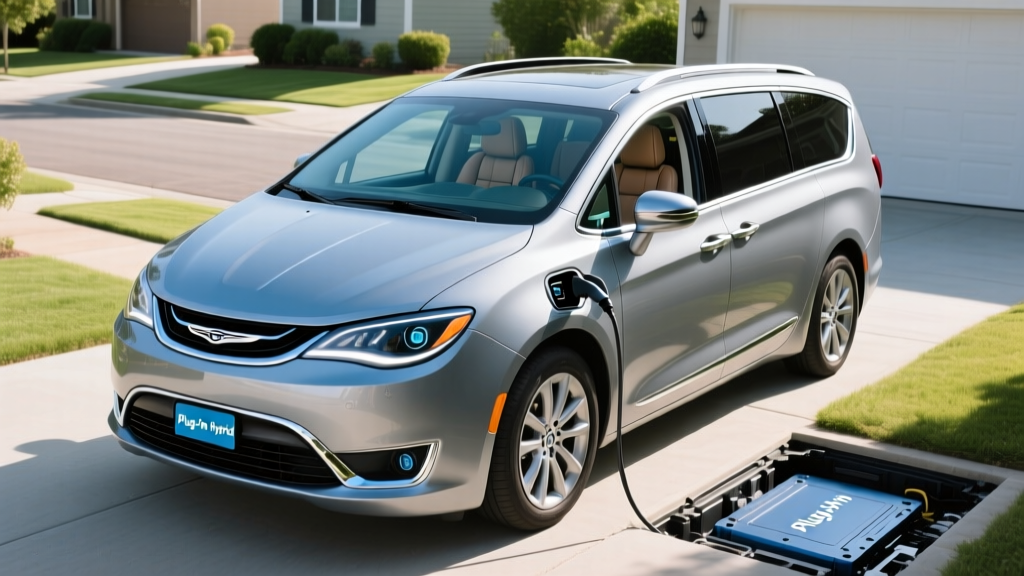
The 2017 Chrysler Pacifica Plug-In Hybrid holds a unique position in the automotive landscape: it remains the only plug-in hybrid minivan ever sold in the United States. For families who need three rows of seating, want meaningful electric-only commuting range, and aren't ready to commit to a full battery-electric vehicle, the used Pacifica PHEV represents a compelling — if imperfect — proposition in 2026.
Chrysler launched this PHEV variant alongside the conventional gas Pacifica for the 2017 model year, equipping it with a 16 kWh battery pack and an electrically-driven front axle that delivers an EPA-rated 33 miles of pure electric range. With a combined gasoline-electric range exceeding 560 miles, it eliminates range anxiety while still letting school-run parents drive on electrons alone most weekdays.
But buying a nearly decade-old PHEV requires careful scrutiny of battery health, recall history, and charging equipment condition. This guide covers every spec, real-world data point, and ownership consideration you need before signing on a used 2017 Pacifica Plug-In Hybrid.
HEV vs PHEV: Understanding the Two Pacifica Powertrains
Chrysler sold the 2017 Pacifica in two electrified-adjacent configurations. Understanding the distinction is critical before shopping, because the badging can confuse even dealership salespeople.
| Attribute | 2017 Pacifica (Gas/HEV) | 2017 Pacifica Plug-In Hybrid (PHEV) |
|---|---|---|
| Powertrain type | Conventional V6 gasoline | Plug-in hybrid (PHEV) |
| Can you plug it in? | No | Yes — J1772 Level 1 & Level 2 |
| Battery capacity | N/A (standard 12V) | 16 kWh (lithium-ion) |
| Electric-only range | None | 33 miles (EPA) |
| EPA combined | 22 MPG | 84 MPGe (elec+gas) / 32 MPG (gas only) |
| Total range | ~530 miles | ~566 miles (combined EV + gas) |
| Stow 'n Go 2nd row | Yes | No — battery occupies under-floor space |
| Original MSRP (base) | ~$28,595 | $41,995 (Premium trim) |
The conventional gas Pacifica is not a hybrid at all — it's a standard 3.6L V6 minivan. Chrysler never offered a traditional (non-plug-in) hybrid Pacifica. The PHEV variant is the only electrified option, and it requires plugging in to access its electric range. If you never charge it, the Pacifica PHEV still operates as a heavy hybrid, but fuel economy drops to 32 MPG combined — respectable for a minivan, but not the headline figure.
Electric-Only Range, MPGe, and Real-World Efficiency
The headline spec for any PHEV is its electric-only range — the distance you can cover on battery power before the gasoline engine fires up. For the 2017 Pacifica PHEV, the EPA rates this at 33 miles, drawing from the 16 kWh battery pack (of which approximately 13 kWh is usable to protect battery longevity).
| Efficiency Metric | EPA Rating | Real-World Expectation |
|---|---|---|
| Electric-only range | 33 miles | 25–30 mi (highway/cold); 33–36 mi (city/warm) |
| MPGe (electric + gas combined) | 84 MPGe | 70–90 MPGe depending on charge frequency |
| Gas-only MPG (combined) | 32 MPG | 28–34 MPG |
| Gas-only city MPG | 29 MPG | 28–33 MPG (regen helps in stop-and-go) |
| Gas-only highway MPG | 30 MPG | 28–32 MPG |
| Energy consumption (EV mode) | 40 kWh/100 mi | 38–45 kWh/100 mi |
In practice, owners who charge nightly and drive less than 30 miles round-trip report using almost no gasoline during the work week. The Pacifica PHEV rewards city driving in EV mode, where regenerative braking recaptures energy at every stoplight. Highway driving at 70+ mph depletes the battery faster — expect closer to 25 miles of electric range on a warm-weather freeway commute, and as little as 20 miles in sub-freezing temperatures where cabin heating demands energy from the pack.
Once the battery is depleted, the 3.6L Pentastar V6 and two-motor electric drive system operate in hybrid mode, delivering the EPA-rated 32 MPG combined. According to fueleconomy.gov, this is competitive with non-hybrid minivans that average 22 MPG combined, representing a roughly 45% improvement in fuel consumption when running on gasoline alone.
Powertrain, Battery, and Charging Specifications
The 2017 Pacifica PHEV uses a purpose-built electrified powertrain that differs substantially from the gas-only Pacifica. Here are the hard numbers:
| Specification | Value |
|---|---|
| Engine | 3.6L Atkinson-cycle V6 (262 hp alone) |
| Electric motors | Two-motor eDrive (front axle) |
| Combined system output | 262 hp / 332 lb-ft torque |
| Transmission | Electrically variable transmission (eCVT / Si-EVT) |
| Battery capacity (total / usable) | 16 kWh total / ~13 kWh usable |
| Battery chemistry | Lithium-ion (NMC) |
| Battery location | Under 2nd-row floor (eliminates Stow 'n Go) |
| Level 1 charging (120V / 12A) | ~1.4 kW — full charge in ~14 hours |
| Level 2 charging (240V / 30A) | ~6.6 kW — full charge in ~2 hours |
| DC fast charging | Not supported |
| Charge port / connector | J1772 (standard for AC charging) |
| 0–60 mph | ~7.1 seconds |
| Drivetrain | Front-wheel drive only (no AWD option) |
| Towing capacity | Not rated for towing (vs 3,600 lb for gas model) |
The absence of DC fast charging is a notable limitation. The Pacifica PHEV can only accept AC charging via its J1772 port, meaning public fast-charging stations are irrelevant for this vehicle. However, for a PHEV with a 16 kWh pack, DC fast charging would be of marginal value — the battery simply isn't large enough to justify the infrastructure cost, and a 2-hour Level 2 charge at home or work is sufficient for daily use patterns.
The Atkinson-cycle variant of Chrysler's ubiquitous 3.6L Pentastar V6 sacrifices some peak horsepower for improved thermal efficiency. Combined with the two electric motors integrated into the Si-EVT transmission (co-developed with Aisin), the system delivers smooth, seamless transitions between electric and hybrid modes. Most drivers won't notice when the engine engages.
Battery Health, Warranty Coverage, and Replacement Costs
For any used PHEV, the high-voltage battery is the single largest financial risk. The 2017 Pacifica PHEV's 16 kWh lithium-ion pack sits beneath the second-row floor, where it's reasonably protected but exposed to road-salt corrosion in northern climates.
Original Battery Warranty
Chrysler warranted the 2017 Pacifica PHEV's high-voltage battery for 8 years / 100,000 miles (10 years / 150,000 miles in CARB states including California, New York, Massachusetts, and others that follow California emissions standards). The warranty covers capacity loss below 70% of original capacity.
As of 2026, a 2017 model year vehicle is 9 years old, meaning the standard 8-year warranty has expired for most examples. However, vehicles registered in CARB states may still have coverage through the 10-year provision — verify with a Chrysler dealer using the VIN before purchase.
Real-world degradation data from owner forums and fleet reports suggests the Pacifica PHEV battery holds up reasonably well. Most owners report 5–10% capacity loss after 100,000 miles, meaning the 33-mile EV range might shrink to 28–31 miles over time. This is far less severe than early-generation PHEV batteries, thanks to the conservative usable buffer Chrysler programmed into the pack management system.
If the battery does need replacement outside of warranty, expect costs between $6,000 and $9,000 for a new OEM pack, plus $1,000–$1,500 in labor. Third-party rebuilt packs are emerging at $4,000–$5,500, but availability remains limited. Before purchasing any used 2017 Pacifica PHEV, request a battery State of Health (SoH) report from a Chrysler dealer — this diagnostic reads the actual remaining capacity as a percentage of original.
Used Pricing and Tax Credit Eligibility in 2026
The 2017 Chrysler Pacifica PHEV originally started at $41,995 for the Premium trim, $44,995 for Premium Plus, and $48,995 for the Platinum — before the original $7,500 federal tax credit and any state incentives that early buyers enjoyed.
In the 2026 used market, pricing varies significantly by mileage, condition, and battery health:
- High-mileage (100k+ mi), fair condition: $12,000–$16,000
- Average mileage (60k–90k mi), good condition: $16,000–$22,000
- Low-mileage (under 50k mi), excellent condition: $22,000–$28,000
Does a Used 2017 Pacifica PHEV Qualify for a Tax Credit?
Possibly — under the IRS §25E Used Clean Vehicle Credit, buyers of qualifying used PHEVs and EVs can claim up to $4,000 (or 30% of the sale price, whichever is less) if all conditions are met:
- Sale price must be $25,000 or less (from a licensed dealer, not private party)
- Buyer income caps: $75,000 single / $112,500 head of household / $150,000 joint
- Vehicle must be at least 2 model years old (2017 qualifies)
- Vehicle must have a battery capacity of at least 7 kWh (the 16 kWh pack qualifies)
- Credit can only be claimed once per VIN (verify the original owner didn't already transfer it — though §25E is a separate credit from the original §30D)
- The credit is available as a point-of-sale reduction at participating dealerships
Many 2017 Pacifica PHEVs in good condition list at or just under the $25,000 threshold, making the $4,000 used-EV credit a realistic possibility. Always confirm eligibility with a tax professional before relying on the credit.
Reliability, Recalls, and Common Issues
The 2017 Pacifica PHEV's first model year status means it carries some early-production teething issues that later model years largely resolved. Key concerns include:
- Recall: Battery separator film defect (NHTSA 20V-489): Certain 2017–2018 Pacifica PHEVs were recalled for a potential battery cell separator issue that could cause a short circuit and fire risk. Chrysler issued a software update to limit charge levels on affected vehicles and replaced battery modules as needed. Verify this recall was completed on any used example.
- Power inverter module failures: Some owners report the power inverter (which converts DC battery power to AC for the electric motors) failing between 60,000–90,000 miles. Replacement costs $2,500–$4,000 out of warranty.
- EVAP system and purge valve issues: Common to the 3.6L Pentastar, these emissions-system failures trigger check-engine lights but are relatively inexpensive to repair.
- Infotainment (Uconnect 4) glitches: The 2017 Uconnect system can be sluggish and may require software updates or a hard reset. Not a deal-breaker but a daily annoyance.
- No Stow 'n Go second row: The battery pack occupies the under-floor compartment, so second-row seats must be physically removed (not folded) for maximum cargo space. This is a significant trade-off vs. the gas Pacifica.
Overall reliability is middling for the 2017 model year. The 2019 and later Pacifica PHEVs received meaningful updates including improved battery management software, upgraded Uconnect 5 infotainment, and resolved inverter issues. If budget allows, a 2021+ Pacifica PHEV is a more reliable bet — but the 2017 remains the most affordable entry point into PHEV minivan ownership.
Who Should Choose the 2017 Pacifica PHEV vs. a Full EV or Gas Minivan?
Choose the 2017 Pacifica PHEV if:
- You need a three-row family hauler and want to reduce gasoline consumption significantly
- Your daily round-trip commute is under 30 miles and you can charge at home overnight
- You take occasional long road trips where charging infrastructure is sparse or unreliable
- You want a lower-risk introduction to electric driving without range anxiety
- You find a well-maintained example under $20,000 with a clean battery SoH report
Choose a full EV (e.g., Kia EV9, Tesla Model X) instead if:
- You have reliable home Level 2 charging and rarely drive more than 250 miles in a day
- You want near-zero maintenance (no oil changes, no transmission fluid, fewer moving parts)
- You're buying new and want current warranty coverage and modern ADAS features
- You can absorb higher upfront cost ($55,000–$75,000 for a new 3-row EV)
Choose the conventional gas Pacifica instead if:
- You cannot charge at home or work (apartment living, no garage, no workplace charger)
- You need Stow 'n Go second-row seating for frequent cargo/passenger switching
- You tow a trailer (the PHEV is not rated for towing; the gas Pacifica handles 3,600 lbs)
- You want the lowest purchase price and don't mind 22 MPG combined
Pros and Cons at a Glance
Pros
- 33 miles of electric-only range covers most school runs and commutes
- 566-mile total range eliminates road-trip range anxiety
- 32 MPG on gas alone beats every non-hybrid minivan by 40%+
- Smooth, quiet electric driving around town
- Sliding doors and minivan practicality no SUV can match
- Potentially $4,000 used-EV tax credit (if under $25k from dealer)
- Competitive used pricing — often under $20,000
Cons
- No Stow 'n Go second row — seats must be removed for max cargo
- No DC fast charging — Level 2 only
- No towing capacity
- 2017 model-year reliability concerns (inverter, battery recall)
- Original battery warranty likely expired (8yr/100k mi)
- Front-wheel drive only — no AWD option
- Uconnect 4 infotainment feels dated in 2026
- Battery replacement cost ($6k–$9k) if degradation accelerates
Frequently Asked Questions
How many MPG does the 2017 Chrysler Pacifica Plug-In Hybrid get?
The EPA rates the Pacifica PHEV at 84 MPGe when combining electric and gasoline driving. Once the battery is depleted, it operates as a hybrid achieving 32 MPG combined (29 city / 30 highway). Real-world gas-only MPG typically ranges from 28 to 34 depending on driving conditions and how aggressively the regenerative braking system recaptures energy.
How far can the 2017 Pacifica PHEV go on electric power alone?
The EPA rates it at 33 miles of electric-only range. In real-world driving, expect 25–30 miles on the highway or in cold weather, and up to 36 miles in warm-weather city driving where regenerative braking is most effective. As the battery ages, this range may decrease by 5–10%.
Is the 2017 Pacifica PHEV reliable? What does a battery replacement cost?
The 2017 model year has known issues including a battery cell recall (verify completion), power inverter failures at higher mileage, and typical first-year-production quality concerns. The high-voltage battery replacement costs $6,000–$9,000 OEM or $4,000–$5,500 for a rebuilt unit. Always get a dealer battery State of Health diagnostic before purchasing. The 2019+ model years are more reliable.
Does the 2017 Pacifica PHEV qualify for any tax credit in 2026?
The original $7,500 federal tax credit for new buyers is long gone. However, under the IRS §25E Used Clean Vehicle Credit, you may qualify for up to $4,000 if you buy from a licensed dealer for $25,000 or less, meet income limits ($75k single / $150k joint), and the VIN hasn't been used for this credit before. Consult a tax professional and verify on irs.gov.
Can I DC fast charge the Pacifica PHEV at public stations?
No. The 2017 Pacifica PHEV only supports AC charging via its J1772 port — Level 1 (120V, ~14 hours for a full charge) or Level 2 (240V, ~2 hours). DC fast charging (CCS, CHAdeMO, NACS) is not supported. For a PHEV with a 16 kWh battery, this is standard — most PHEVs don't offer DC fast charging because the battery is too small to benefit meaningfully from it.
Does the Pacifica PHEV have Stow 'n Go seating?
No. The 16 kWh battery pack occupies the under-floor compartment that the gas Pacifica uses for Stow 'n Go second-row seats. You can still remove the second-row captain's chairs manually for a flat load floor, but it requires physical effort and storage space for the seats. Third-row seats still fold flat into the floor as normal.
What's the difference between the Pacifica PHEV trims?
For 2017, Chrysler offered three PHEV trims: Premium ($41,995), Premium Plus ($44,995, adding leather, power liftgate, remote start), and Platinum ($48,995, adding ventilated front seats, premium audio, navigation, advanced safety group). All three share the identical powertrain, battery, and electric range. The differences are purely comfort and technology features.