Why the 2017 Camry Hybrid Still Matters in 2026
The used hybrid market has exploded as buyers seek fuel savings without the upfront cost of a new EV. The 2017 Toyota Camry Hybrid sits at the center of that demand. As the final model year of the XV50 generation, it represents Toyota's most refined version of a midsize hybrid sedan before the complete redesign for 2018. With an EPA-estimated 42 MPG combined and Toyota's legendary hybrid reliability, it remains one of the smartest used-car purchases for daily commuters in 2026 — even as newer PHEVs and full EVs enter the market.
This guide breaks down exactly what you get, what it costs to own, and how the 2017 Camry Hybrid stacks up against the electrified alternatives you might be cross-shopping.
HEV vs PHEV vs EV: Where the 2017 Camry Hybrid Fits
Before diving into specs, it's critical to understand what the 2017 Camry Hybrid is — and what it is not.
| Feature | 2017 Camry Hybrid (HEV) | Plug-In Hybrid (PHEV) | Full EV (BEV) |
|---|---|---|---|
| Plugs in to charge? | No — self-charging via engine + regen | Yes — Level 1 or Level 2 | Yes — Level 1, 2, or DC fast |
| Electric-only driving | ~1 mile at low speed (EV mode) | 20–50 miles typical | 200–400+ miles |
| Fuel required | Gasoline | Gasoline + electricity | Electricity only |
| Range anxiety | None — 550+ mile total range | Minimal | Varies by charging access |
| Federal tax credit (new) | None | Up to $7,500 (§30D) | Up to $7,500 (§30D) |
| Used EV credit (§25E) | Not eligible | Not eligible | Up to $4,000 |
The 2017 Camry Hybrid is a conventional hybrid electric vehicle (HEV). It cannot plug in. Its small nickel-metal hydride (NiMH) battery recharges through regenerative braking and the gasoline engine. You simply fill it with gas and drive — no charging infrastructure required. This is its biggest advantage for apartment dwellers and street parkers who lack home charging access, and its biggest limitation if you want electric-only commuting.
EPA Fuel Economy and Real-World MPG
The 2017 Camry Hybrid comes in two main trims — LE and XLE/SE — and the EPA ratings differ slightly due to weight and wheel size differences.
| Trim | City MPG | Highway MPG | Combined MPG | Fuel Tank | Total Range |
|---|---|---|---|---|---|
| LE | 42 | 38 | 40 | 13.2 gal | ~528 miles |
| XLE / SE | 40 | 37 | 38 | 13.2 gal | ~502 miles |
Source: EPA Fuel Economy
Real-World MPG: What Owners Actually Report
Toyota's Hybrid Synergy Drive excels in stop-and-go city traffic, where the electric motor handles low-speed driving and the engine kicks in only when needed. Most owners report meeting or slightly exceeding the EPA city figure — 42–45 MPG in urban commuting is common. Highway driving at sustained 70–80 MPH speeds tends to return 35–38 MPG, slightly below the EPA highway estimate. In mixed real-world driving, expect 38–43 MPG combined depending on climate and driving style. Cold weather (below 35°F) typically reduces fuel economy by 3–5 MPG due to increased engine warm-up cycles and cabin heating demands.
Powertrain, Performance, and Drivetrain Specs
| Specification | Detail |
|---|---|
| Engine | 2.5L 4-cylinder Atkinson cycle (2AR-FXE) |
| Engine output | 156 hp / 156 lb-ft torque |
| Electric motor | 105 kW (141 hp) permanent magnet AC synchronous |
| Net combined system power | 200 hp |
| Transmission | ECVT (electronically controlled continuously variable) |
| Drivetrain | Front-wheel drive |
| 0–60 MPH | ~7.6 seconds |
| Hybrid battery | 1.6 kWh NiMH (244.8V, sealed) |
| Curb weight | ~3,505–3,595 lbs |
| EPA emissions rating | SULEV (Super Ultra Low Emission Vehicle) |
The 200-hp combined output gives the 2017 Camry Hybrid adequate passing power and confident highway merging. It won't win stoplight races — a 7.6-second 0–60 time is respectable for a 3,500-lb sedan focused on efficiency, not performance. The ECVT operates without the rubber-band feel of older CVTs; Toyota's planetary gearset design provides smooth, linear acceleration.
The 1.6 kWh NiMH battery pack is small by modern standards, but it's all the system needs. Unlike a PHEV or BEV, an HEV battery doesn't store energy for long electric-only drives — it buffers energy captured from braking and engine excess to assist acceleration and enable brief low-speed EV mode.
Reliability, Battery Lifespan, and Replacement Cost
This is the number-one concern for used hybrid buyers, and it's where the 2017 Camry Hybrid shines brightest.
Battery Warranty and Expected Lifespan
Original warranty: Toyota covers the hybrid battery for 10 years / 150,000 miles in California Air Resources Board (CARB) states, and 8 years / 100,000 miles in all other states. For a 2017 model, the federal 8-year/100k warranty has expired in most states by 2025, but CARB-state coverage may extend through 2027.
Real-world longevity: Toyota's NiMH hybrid batteries in the Camry have demonstrated exceptional durability. Fleet data and owner reports routinely show these packs lasting 180,000–250,000+ miles before significant degradation. Failures before 150,000 miles are uncommon when the vehicle has been maintained per schedule.
Hybrid Battery Replacement Cost
If the battery does eventually need replacement, here's what to budget:
- New OEM Toyota battery: $2,500–$4,000 installed at a dealership
- Refurbished/remanufactured battery: $1,200–$2,200 installed at an independent hybrid specialist
- Individual module replacement: $400–$800 if only a few cells have failed (a common repair at hybrid-specialty shops)
Compared to EV battery replacements ($8,000–$20,000+), the Camry Hybrid's NiMH pack is remarkably affordable to service. The smaller capacity and mature NiMH chemistry keep costs low. Many independent hybrid shops now offer cell-level repairs that extend battery life at a fraction of full replacement cost.
Overall Vehicle Reliability
The 2017 Camry Hybrid benefits from the final year of the XV50 platform, which means most early-production bugs were resolved years prior. The 2AR-FXE engine is a derivative of Toyota's widely used 2AR-FE, an engine known to exceed 250,000 miles with basic maintenance. Common wear items include:
- Brake pads: Last 60,000–90,000 miles thanks to regenerative braking reducing mechanical brake use
- Hybrid inverter coolant pump: Some reports of failure around 120,000–150,000 miles (~$300–$500 repair)
- 12V auxiliary battery: Standard AGM replacement every 4–6 years ($180–$280)
Source: NHTSA Vehicle Safety — check for open recalls before purchasing.
What Does the 2017 Camry Hybrid Cost in 2026?
As a used vehicle, pricing varies significantly by mileage, condition, and region. Based on current market data in early 2026:
- 60,000–80,000 miles: $16,000–$19,500
- 80,000–120,000 miles: $13,000–$16,500
- 120,000–160,000 miles: $10,500–$13,500
The LE trim is the most fuel-efficient and most affordable. The XLE adds leather, a premium audio system, and a moonroof but drops 2 MPG combined due to additional weight and larger 17-inch wheels. The SE offers sport-tuned suspension and paddle shifters for a slightly firmer ride.
Tax Credit Eligibility
The 2017 Camry Hybrid does not qualify for any federal tax credit, whether purchased new or used:
- §30D New Clean Vehicle Credit: Only applies to new PHEVs and BEVs with sufficient battery capacity. Conventional HEVs are excluded.
- §25E Used Clean Vehicle Credit: Applies only to used BEVs and PHEVs (vehicles with at least 7 kWh of battery capacity). The Camry Hybrid's 1.6 kWh pack does not meet this threshold.
- State incentives: A handful of states may offer minor rebates for used hybrids, but these are rare and vary by jurisdiction. Check your state's energy or DMV website for current programs.
Source: IRS Used Clean Vehicle Credit
2017 Camry Hybrid vs Newer Alternatives: Which Should You Choose?
If you're cross-shopping the 2017 Camry Hybrid, you're likely also considering newer used PHEVs, current-generation Camry Hybrids, or entry-level EVs. Here's a decision framework:
Choose the 2017 Camry Hybrid If:
- You lack access to home or workplace charging (apartment, street parking)
- Your budget is $12,000–$18,000 and you want maximum reliability
- You drive 15,000+ miles/year and want predictable fuel costs (~$1,100–$1,300/year at 38 MPG)
- You want zero lifestyle change — just fill up and drive
- You value proven long-term reliability over the latest technology
Consider a PHEV or EV Instead If:
- You have home Level 2 charging and a short commute (a PHEV like the Prius Prime gives 25–40 miles electric-only)
- You want to eliminate gasoline entirely (a used Leaf, Bolt, or Model 3)
- You qualify for the §25E used EV credit (up to $4,000 on qualifying used BEVs/PHEVs under $25,000)
- You want the latest safety tech — the 2017 Camry Hybrid predates Toyota Safety Sense-P standard on all trims (it was optional on some 2017 configs)
- You want a more modern interior with Apple CarPlay/Android Auto (not available on the 2017 Camry)
Annual Fuel Cost Comparison
| Vehicle | Fuel Type | MPG / MPGe | Annual Fuel Cost (15k mi) |
|---|---|---|---|
| 2017 Camry Hybrid (HEV) | Gasoline | 40 combined | ~$1,220 |
| 2017 Camry (gas 4-cyl) | Gasoline | 27 combined | ~$1,810 |
| 2024 Prius Prime (PHEV) | Gas + Electric | 52 gas / 127 MPGe | ~$600–$900* |
| 2022 Tesla Model 3 RWD | Electricity | 132 MPGe | ~$540** |
*PHEV cost depends on % of miles driven on electricity vs gas. **EV cost assumes $0.14/kWh home charging average.
Ownership Costs: Insurance, Maintenance, and Total Cost
Beyond fuel, the 2017 Camry Hybrid keeps ownership costs low across the board:
- Insurance: Typically $1,100–$1,500/year for a clean-record driver, comparable to the gas Camry. Hybrids don't carry the insurance premiums that some EVs do.
- Maintenance: $400–$600/year for oil changes (0W-20 synthetic every 10,000 miles), tire rotations, and fluid checks. No spark plugs until 120,000 miles. Brake pads last significantly longer than gas cars due to regen.
- Depreciation: Already largely absorbed. A 2017 Camry Hybrid with ~100k miles has depreciated roughly 55–65% from its ~$28,000 original MSRP, meaning most of the value loss is behind you.
5-Year Estimated Total Cost of Ownership
| Category | Estimated 5-Year Cost |
|---|---|
| Purchase price (80k miles, LE) | $15,000 |
| Fuel (15,000 mi/yr) | $6,100 |
| Insurance | $6,500 |
| Maintenance & repairs | $2,800 |
| Estimated resale value (year 5) | –$7,500 |
| Net 5-year cost | ~$22,900 |
That works out to roughly $382/month all-in — competitive with leasing a new economy car when you factor in the lack of monthly payment after purchase.
Pre-Purchase Checklist for Used 2017 Camry Hybrid Buyers
If you're ready to shop, here's what to verify before signing:
- Hybrid battery health check: Ask a Toyota dealer or hybrid specialist to run a hybrid battery health diagnostic. This reads individual module voltages and internal resistance — a healthy pack shows balanced cells within 0.2V of each other.
- Hybrid system warranty status: Confirm remaining coverage by VIN through Toyota. In CARB states (CA, CT, ME, MD, MA, NJ, NY, OR, RI, VT, WA, and others adopting CARB standards), the 10-year/150k-mile warranty may still apply.
- Check for open recalls: Verify at NHTSA.gov using the VIN. Some 2017 Camrys had recalls for airbag inflators and fuel pump assemblies.
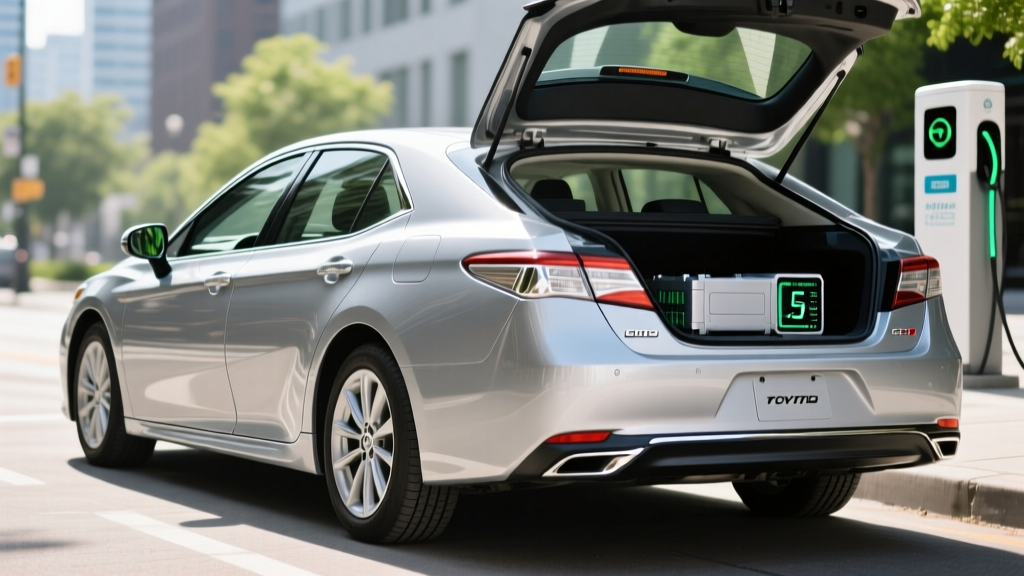
- 12V battery age: The small 12V battery in the trunk powers electronics and boots the hybrid system. If it's over 4 years old, budget $200 for a replacement AGM unit.
- Service records: Prioritize examples with documented oil changes every 10,000 miles and inverter coolant service at 100,000 miles.
- Test drive in EV mode: Press the EV button and drive at low speed (under 25 MPH) on electric power alone. The transition from electric to gas engine should be seamless — any shudder or hesitation warrants further inspection.
Frequently Asked Questions
How many MPG does the 2017 Camry Hybrid get?
The EPA rates the 2017 Camry Hybrid LE at 42 city / 38 highway / 40 combined MPG. The XLE and SE trims are rated at 40 city / 37 highway / 38 combined. Real-world owners typically report 38–43 MPG combined, with city driving often exceeding the EPA estimate thanks to Toyota's regenerative braking system.
Does the 2017 Camry Hybrid plug in?
No. The 2017 Camry Hybrid is a conventional HEV (hybrid electric vehicle). It charges its battery entirely through regenerative braking and the gasoline engine. You never plug it in — you simply refuel with gasoline at any gas station. Toyota did not offer a Camry plug-in hybrid in the US market for the 2017 model year.
How long does the hybrid battery last in a 2017 Camry Hybrid?
Toyota's NiMH hybrid batteries in the Camry platform have demonstrated lifespans of 180,000–250,000+ miles with normal maintenance. The original warranty was 8 years/100,000 miles (10 years/150,000 miles in CARB states). Many 2017 Camry Hybrids still have their original battery packs at 150,000+ miles.
How much does it cost to replace the hybrid battery?
A new OEM battery from Toyota costs $2,500–$4,000 installed. Refurbished/remanufactured units run $1,200–$2,200 installed at independent hybrid shops. Individual cell module repairs can cost as little as $400–$800 if only a few cells have degraded.
Does the 2017 Camry Hybrid qualify for any tax credit?
No. The 2017 Camry Hybrid is a conventional HEV and does not qualify for the federal §30D new vehicle credit or the §25E used clean vehicle credit. These credits are limited to plug-in vehicles (PHEVs and BEVs) with battery capacities of at least 7 kWh for §25E or 4 kWh for §30D. Some states may offer small incentives for used hybrids, but these are uncommon.
Is the 2017 Camry Hybrid good for highway driving?
It's competent but optimized for city efficiency. Highway fuel economy (35–38 MPG real-world at 70+ MPH) is lower than city MPG because the electric motor provides the most benefit at low speeds. For primarily highway commuters, the fuel savings over a gas Camry are smaller — roughly 12 MPG better combined rather than the 15+ MPG advantage you'll see in city driving. The ride is comfortable and quiet at highway speeds, and the 200-hp combined output provides adequate passing power.
Should I buy a 2017 Camry Hybrid or a newer Prius?
If you need a spacious midsize sedan with a large trunk (15.1 cu ft) and a comfortable rear seat, the Camry Hybrid is the better fit. If maximum fuel economy (52+ MPG combined) and a lower purchase price matter more, a used 2017–2019 Prius is a strong alternative. The Prius also offers a PHEV variant (Prius Prime) with ~25 miles of electric-only range if you have charging access.
The Bottom Line
The 2017 Camry Hybrid remains one of the most rational used-car purchases in 2026 for drivers who want excellent fuel economy without plugging in. Its 40 MPG combined EPA rating, proven 200-hp powertrain, low maintenance costs, and affordable battery replacement make it a low-risk ownership proposition. It won't deliver the zero-emission commuting of a BEV or the electric-only range of a PHEV — but for the millions of drivers who can't charge at home, it's the most practical path to cutting fuel costs by 40% compared to a conventional gas sedan.