Quick Verdict: A Used PHEV That Still Delivers the BMW Driving Experience
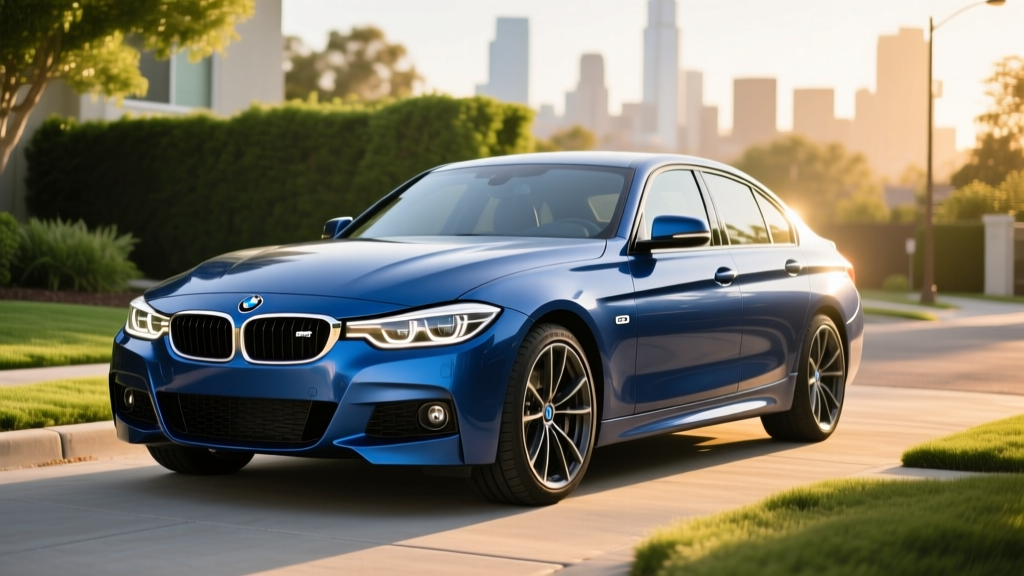
The 2017 BMW 330e iPerformance was BMW's first mainstream plug-in hybrid in the 3 Series lineup, pairing a turbocharged 2.0-liter four-cylinder with an electric motor for a combined 250 horsepower. In 2026, it remains one of the most engaging PHEVs on the used market — a sport sedan that can handle short commutes on electricity alone while eliminating range anxiety for longer trips.
But the 330e's 14-mile EPA electric-only range and 7.6 kWh battery feel dated compared to modern PHEVs like the Toyota RAV4 Prime (42 miles electric) or the current BMW 330e (22 miles). If your commute is short and you have reliable home charging, a well-maintained 2017 330e can still cut your fuel bill significantly. If you're hoping for EV-like daily driving without ever starting the engine, you'll want to look at newer plug-in hybrids or a full BEV.
| Spec | Value |
|---|---|
| Powertrain | 2.0L turbo I4 + electric motor (PHEV) |
| Combined Horsepower | 250 hp / 310 lb-ft torque |
| Battery (Gross / Usable) | 7.6 kWh / ~5.4 kWh usable |
| Battery Chemistry | NMC (Nickel Manganese Cobalt) |
| EPA Electric Range | 14 miles |
| EPA MPGe (Electric + Gas) | 71 MPGe |
| EPA MPG (Gas Only, Combined) | 30 MPG combined (31 city / 28 highway) |
| 0–60 mph | 5.9 seconds |
| Level 2 Charging (240V) | ~2.5 hours (0–100%) |
| DC Fast Charging | Not supported |
| Drivetrain | Rear-wheel drive (8-speed auto) |
| Original MSRP (2017) | ~$44,695 (base, before destination) |
| Typical Used Price (2026) | $16,000 – $24,000 depending on mileage/condition |
| Battery Warranty (Original) | 8 years / 80,000 miles |
HEV vs PHEV: Where the 330e Fits
Before diving deeper, it's essential to understand the distinction between a conventional hybrid (HEV) and a plug-in hybrid (PHEV), because it changes how you own and drive the car.
| Feature | HEV (e.g., Toyota Prius) | PHEV (e.g., 2017 BMW 330e) |
|---|---|---|
| Plugs in to charge? | No — charges via regen & engine | Yes — plug in for full electric range |
| Electric-only range | 0–1 mile at very low speed | 14 miles (EPA) at full highway speeds |
| Battery size | ~1.0–1.6 kWh | 7.6 kWh gross |
| Gas engine role | Always available, seamlessly blended | Kicks in after battery depletes or under hard acceleration |
| Fuel savings mechanism | Optimized engine operation + regen | Displace gasoline entirely on short trips; hybrid mode on longer ones |
| Home charging needed? | No | Strongly recommended (Level 1 included; Level 2 optional) |
The 2017 BMW 330e is a plug-in hybrid (PHEV). You can drive it without ever plugging in — it will function as a conventional hybrid with about 30 MPG combined. But you'll leave its best feature on the table. Plug in overnight on a standard 120V outlet (Level 1), and you'll wake up to roughly 14 miles of electric range — enough for many short commutes, school runs, or errands without burning a drop of fuel.
Fuel Economy: EPA Numbers and Real-World MPG
| Mode | City | Highway | Combined |
|---|---|---|---|
| Charge-Sustaining (Gas Only) | 31 MPG | 28 MPG | 30 MPG |
| Charge-Depleting (EV + Gas) | 71 MPGe combined | ||
| Electric-Only Range | 14 miles (EPA) | ||
| Total Range (EV + Gas Tank) | ~370 miles (14 mi EV + ~356 mi gas) | ||
According to fueleconomy.gov, the 2017 BMW 330e achieves 31 MPG city and 28 MPG highway when the battery is depleted and the car operates as a conventional hybrid. The combined figure is 30 MPG.
Real-world observations: Owners who plug in regularly and drive within the 14-mile electric window report using very little gasoline at all — some logging hundreds of miles between fill-ups. In charge-sustaining (hybrid) mode on longer highway trips, expect real-world fuel economy between 27–32 MPG depending on driving style, terrain, and temperature. City driving with regenerative braking can nudge the gas-only figure slightly above the EPA 31 MPG estimate, as the electric motor recaptures energy during stop-and-go traffic.
- EPA electric range: 14 miles
- Real-world (mild weather, mixed driving): 11–14 miles
- Cold weather (below 32°F): 8–10 miles (battery efficiency drops ~25–30%)
- Highway at 75+ mph: Electric range drops to ~9–11 miles due to higher energy demand
The 330e's battery buffer and thermal management are modest by 2026 standards. Preconditioning the cabin while plugged in helps preserve electric range in cold weather.
Powertrain and Performance: 250 HP of Electrified Sport Sedan
The 2017 BMW 330e pairs a 2.0-liter turbocharged inline-four (184 hp, 258 lb-ft on its own) with an electric motor integrated into the ZF 8-speed automatic transmission housing. The motor contributes up to 88 hp, and the combined system output is 250 horsepower and 310 lb-ft of torque.
BMW quotes a 0–60 mph time of 5.9 seconds — quick for a luxury sport sedan of this era, and the instant electric torque fill makes the car feel even more responsive in daily driving than the number suggests. The electric motor eliminates turbo lag at low speeds, and the transition between electric and gas power is impressively seamless for a 2017-era PHEV.
Driving modes include:
- MAX eDrive: Forces electric-only operation up to 75 mph (within battery limits)
- AUTO eDrive: The default — the car intelligently blends gas and electric
- SAVE Battery: Runs the engine to maintain current battery charge for later use (useful before entering a city zone or for reserving electric range)
The rear-wheel-drive layout and near 50/50 weight distribution preserve the 3 Series' reputation for driving engagement. The added battery weight (~350 lbs over a 330i) is noticeable in tight transitions but doesn't fundamentally compromise the chassis dynamics.
Charging: Level 1 and Level 2 — No DC Fast Charging
The 2017 BMW 330e uses a standard J1772 connector for AC charging. There is no DC fast charging capability — this is typical for PHEVs of this era, given the small battery size.
| Charging Level | Power | Time (0–100%) | Notes |
|---|---|---|---|
| Level 1 (120V household) | ~1.4 kW | ~5.5 hours | Included portable cord; sufficient for overnight |
| Level 2 (240V home/public) | ~3.5 kW | ~2.5 hours | Requires aftermarket EVSE or BMW wallbox |
| DC Fast Charge | N/A | N/A | Not supported — J1772 AC only |
Practical charging advice: Most 330e owners find Level 1 charging (a standard 120V outlet) perfectly adequate. Plug in when you get home, and the 7.6 kWh battery is full by morning. A Level 2 home charger (240V, 16–32 amp) is a nice-to-have but not essential given the small battery. Installation of a dedicated 240V circuit typically runs $500–$1,500 depending on panel proximity — consult a licensed electrician for your specific setup.
One note: the onboard charger is limited to approximately 3.5 kW, so even connecting to a 7.2 kW or 11.5 kW Level 2 station won't speed things up. The car can only accept what its onboard charger allows.
Battery Health, Warranty, and Replacement Cost
For 2026 used buyers: A 2017 model's original 8-year/80,000-mile federal warranty has expired (8 years from the 2017 in-service date = 2025). If you're buying in 2026, the battery is likely out of warranty unless you're in a CARB state and under 150,000 miles — check the vehicle's original in-service date and your state's rules.
Degradation reality: The 330e's NMC battery is relatively small and is managed conservatively by BMW's battery management system (BMS), which maintains a substantial top and bottom buffer. Real-world data from owner forums and fleet reports suggests most 2017 330e batteries retain 80–90% of original capacity after 60,000–80,000 miles. Some owners report electric range dropping from 14 miles to 11–12 miles after 6+ years — noticeable but not catastrophic.
Battery replacement cost: If the high-voltage battery fails outside warranty, expect a replacement cost between $6,000 and $9,000 (parts and labor at a BMW dealer). Independent EV shops may offer refurbished or aftermarket options for less, but availability varies. Before buying a used 330e, request a battery state-of-health (SoH) reading from the dealer or use an OBD2 scanner with BMW-specific software (e.g., BimmerCode or ISTA) to check remaining capacity.
The conventional 12V auxiliary battery is a separate item — it powers electronics and starts the systems but is not part of the high-voltage traction battery. Replace it as needed like any standard car battery (~$200–$350).
Pricing, Tax Credits, and Used Market Value
When new, the 2017 BMW 330e carried an MSRP starting around $44,695 (before destination and options). It qualified for a $4,001 federal tax credit under the pre-2023 IRS §30D rules based on its battery capacity. That credit was available to original purchasers only.
For used buyers in 2026: The 2017 330e is eligible for the Used Clean Vehicle Credit (IRS §25E), which provides up to $4,000 or 30% of the sale price (whichever is less) when purchased from a dealer. Key eligibility requirements per IRS guidelines:
- Sale price must be $25,000 or less — most 2017 330e listings fall within this cap
- Buyer income limits: AGI ≤ $75,000 (single), $112,500 (head of household), $150,000 (joint)
- Vehicle must be at least 2 model years old — a 2017 model qualifies
- Must purchase from a licensed dealer (private-party sales do not qualify)
- Must be purchased for personal use in the United States
- The same VIN can only claim the used credit once every 3 years — verify the car hasn't already been claimed
At typical 2026 used prices of $16,000–$24,000, a qualifying buyer could receive a credit of $4,000 (30% of $16,000 = $4,800, capped at $4,000) or up to $4,000 on a $20,000 example. This makes the effective purchase price as low as $12,000–$20,000 — exceptional value for a 250-hp BMW sport sedan with plug-in capability.
Always confirm current IRS rules with a tax professional before relying on credit eligibility. Rules and dealer reporting requirements can shift.
Who Should Buy the 2017 BMW 330e — And Who Shouldn't
✅ Pros
- Engaging BMW driving dynamics with instant electric torque
- 14-mile EV range covers many short commutes gas-free
- 30 MPG combined as a hybrid is solid for a 3,800-lb sport sedan
- Used prices + potential $4,000 used EV credit = strong value
- No range anxiety — gas engine for longer trips
- Level 1 (120V) charging is sufficient for daily use
❌ Cons
- 14-mile electric range is short by 2026 PHEV standards
- No DC fast charging — irrelevant for daily use, limiting on road trips
- Trunk space reduced by battery (13.0 cu ft vs 17.0 cu ft in a gas 3 Series)
- Original battery warranty likely expired for most examples
- Maintenance costs remain BMW-level (not Toyota-level)
- Rear-seat and cabin tech feel dated compared to 2024+ models
Decision Framework: Is the 2017 330e Right for You?
Choose the 2017 BMW 330e if:
- Your daily commute is under 15 miles round-trip and you can charge at home
- You want a luxury sport sedan but can't justify a new $60K+ PHEV or BEV
- You take occasional road trips and don't want to rely on public charging infrastructure
- You qualify for the $4,000 used clean vehicle credit, bringing the net cost well under $20K
Look elsewhere if:
- Your commute exceeds 20 miles one-way — you'll be in gas mode most of the time (consider a longer-range PHEV like the RAV4 Prime or a full BEV)
- You lack home or workplace charging — without plugging in, you're just driving a heavier, slightly less efficient 330i
- You want minimal maintenance costs — a used BMW will require more upkeep than a used Prius Prime or Clarity
- You need maximum cargo space — the battery eats into the trunk
Hybrid vs PHEV vs Full EV — Which Fits Your Life?
| Factor | HEV (e.g., Prius) | PHEV (e.g., 330e) | Full EV (e.g., Tesla Model 3) |
|---|---|---|---|
| Plug in required? | No | Recommended | Yes — essential |
| Electric-only driving | Minimal | 14 miles | 250–350+ miles |
| Road trip convenience | Excellent (gas) | Excellent (gas) | Requires DC fast-charging planning |
| Fuel cost (daily commute) | Low | Very low (if plugged in) | Lowest |
| Maintenance cost | Low | Moderate (engine + EV systems) | Low (no engine) |
| Best for | No charging access, long commutes | Short commute + road trips | Home charging + mostly under 250 mi/day |
Frequently Asked Questions
How many MPG does the 2017 BMW 330e get?
The EPA rates the 2017 BMW 330e at 31 MPG city, 28 MPG highway, and 30 MPG combined when operating in charge-sustaining (hybrid) mode after the battery is depleted. When factoring in electric driving, the combined rating is 71 MPGe. Real-world results vary: owners who plug in daily report using far less gasoline, while those who never plug in see 27–32 MPG depending on driving conditions.
How far can the 2017 BMW 330e go on electric only?
The EPA rates the 330e at 14 miles of electric-only range. In real-world mild-weather driving, expect 11–14 miles. In cold weather (below freezing), that drops to roughly 8–10 miles due to reduced battery efficiency and cabin heating demands. The car can operate in EV mode at speeds up to 75 mph in MAX eDrive mode.
Is the 2017 BMW 330e reliable, and what does a battery replacement cost?
The 330e's powertrain is generally reliable, with the ZF 8-speed transmission and B48 2.0L turbo engine being well-regarded. The high-voltage battery has shown modest degradation in most owner reports (~10–20% capacity loss over 6–8 years). A full battery replacement outside warranty costs approximately $6,000–$9,000 at a BMW dealer. Before purchasing, have the battery state of health checked via OBD2 diagnostics. Standard BMW maintenance costs (brakes, fluids, suspension components) apply and are higher than mainstream brands.
Does the 2017 BMW 330e qualify for any tax credit in 2026?
Original purchasers could claim a $4,001 federal tax credit when the car was new. In 2026, used buyers may qualify for the IRS §25E Used Clean Vehicle Credit — up to $4,000 or 30% of the sale price (whichever is less). The sale price must be $25,000 or less, the buyer must meet income caps ($75K single / $150K joint), and the purchase must be through a licensed dealer. Verify eligibility with a tax professional and check IRS §25E guidelines before purchasing.
Can I charge the 330e on a regular household outlet?
Yes. The 330e includes a Level 1 (120V) portable charging cord. A full charge from empty takes approximately 5.5 hours — easily accomplished overnight. A Level 2 (240V) home charger reduces this to about 2.5 hours but isn't strictly necessary given the small battery. The car cannot use DC fast chargers.
How does the 330e compare to a conventional BMW 330i?
The 330i (gas-only) is lighter, has a larger trunk (17.0 vs 13.0 cu ft), and gets about 27 MPG combined. The 330e is heavier but offers 250 hp (vs 248 hp for the 330i), the ability to drive short distances on electricity, and lower per-mile fuel costs if you plug in regularly. If you never plug in, the 330e's extra weight makes it slightly less efficient than the 330i. The 330e makes sense only if you'll charge it.
What should I check before buying a used 2017 330e?
Prioritize these items: (1) Battery state of health via OBD2 scan — aim for 80%+ capacity retention. (2) Full service history — BMWs require disciplined maintenance. (3) Check for any open recalls via NHTSA's recall lookup. (4) Verify the charging cord is included (replacements cost $300–$500). (5) Inspect for coolant leaks near the battery and power electronics. (6) Test all drive modes (MAX eDrive, AUTO eDrive, SAVE Battery) to confirm seamless transitions.