Quick Verdict: A Luxury Hybrid That Aged Gracefully
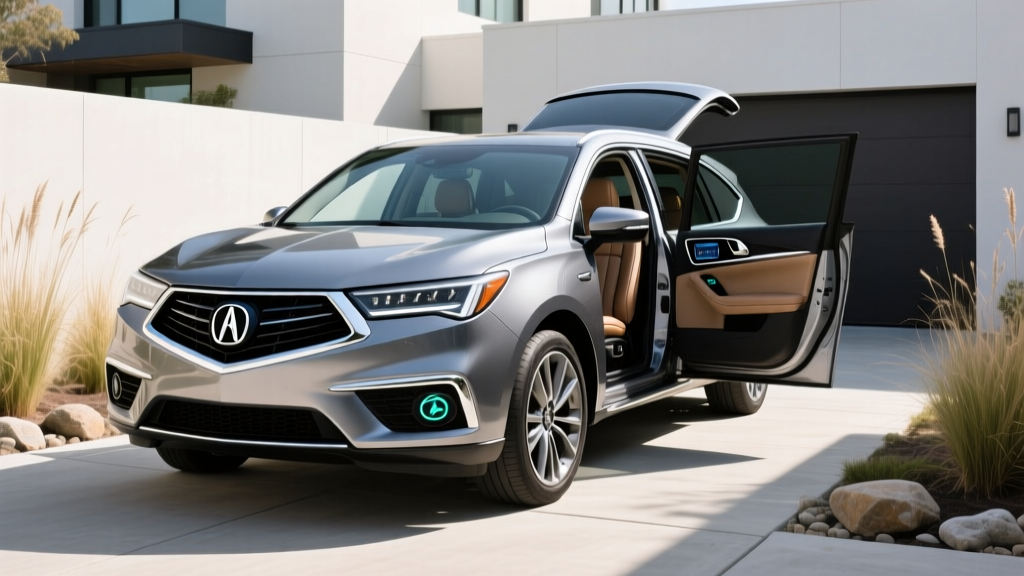
If you're researching the 2017 Acura MDX Hybrid (officially badged the MDX Sport Hybrid) on the used market in 2026, you're looking at one of the more practical luxury hybrid SUVs from its era. This is a conventional hybrid electric vehicle (HEV) — not a plug-in — meaning it charges its own battery through regenerative braking and the gasoline engine. There is no plug, no electric-only range to manage, and no home charger to install.
With 321 combined horsepower, standard all-wheel drive via Acura's Sport Hybrid SH-AWD system, and an EPA-estimated 27 MPG combined, the 2017 MDX Sport Hybrid delivers a meaningful fuel-economy bump over its gas-only sibling without requiring any change in driving habits. At nearly a decade old, the critical questions are about battery longevity, real-world efficiency, and whether it still makes sense versus newer electrified alternatives.
HEV vs. PHEV: What the 2017 MDX Hybrid Actually Is
A common source of confusion among used-car shoppers is whether this MDX needs to be plugged in. It does not. Here's the distinction:
| Feature | 2017 Acura MDX Sport Hybrid (HEV) | Plug-In Hybrid (PHEV) Example |
|---|---|---|
| Plug-in charging required? | No — self-charging via regen & engine | Yes — Level 1 or Level 2 |
| Electric-only range | None (EV assist only at low speeds) | Typically 20–45 miles |
| Battery size | 1.3 kWh (lithium-ion, small buffer) | 13–25 kWh usable |
| Federal tax credit (new) | Never eligible | Up to $7,500 if qualified (IRS §30D) |
| Driving experience | Drive exactly like a gas car | Short trips on electric; gas for longer drives |
The MDX Sport Hybrid's 1.3 kWh battery pack is small by design. It enables brief electric-only motoring at parking-lot speeds and supplements the V6 engine during acceleration, but the gasoline engine is always the primary power source. Think of it as a more sophisticated, more powerful version of the traditional hybrid formula.
Fuel Economy: EPA Ratings and Real-World MPG
The 2017 Acura MDX Sport Hybrid carries EPA ratings that remain competitive among midsize luxury SUVs even by 2026 standards. Here's how the numbers break down:
| Driving Cycle | 2017 MDX Sport Hybrid (HEV) | 2017 MDX Gas (AWD) |
|---|---|---|
| City | 26 MPG | 18 MPG |
| Highway | 27 MPG | 26 MPG |
| Combined | 27 MPG | 21 MPG |
Source: EPA Fuel Economy
Real-World MPG: What to Expect
The hybrid system's biggest advantage shows up in stop-and-go city driving, where regenerative braking recaptures energy and the electric motors handle low-speed movement. Owners frequently report 28–30 MPG in mixed suburban driving, slightly exceeding the EPA combined estimate. Highway-heavy commutes at 75+ MPH tend to yield 24–26 MPG, as the electric motors contribute less at sustained high speeds and the added weight of the hybrid system (roughly 200 lbs more than the gas model) works against efficiency.
In cold weather (below 30°F), expect a 5–10% reduction in fuel economy, primarily because the engine runs more frequently to provide cabin heat and because battery efficiency drops at low temperatures. This is normal for all hybrids and far less dramatic than the range loss experienced by full EVs in winter conditions.
Powertrain and Performance Specifications
The 2017 MDX Sport Hybrid pairs a 3.0-liter SOHC V6 engine with a three-motor hybrid system — one motor integrated into the 7-speed dual-clutch transmission and two motors driving the rear axle independently. This is Acura's Sport Hybrid SH-AWD system, and it provides genuine torque-vectoring capability at the rear wheels.
| Specification | 2017 Acura MDX Sport Hybrid |
|---|---|
| Engine | 3.0L SOHC V6 |
| Engine output | 257 HP / 218 lb-ft torque |
| Hybrid system output | 321 combined HP |
| Electric motors | 3 total (1 front, 2 rear) |
| Transmission | 7-speed dual-clutch automatic |
| Drivetrain | SH-AWD (standard, torque-vectoring rear) |
| Battery capacity | 1.3 kWh lithium-ion |
| 0–60 MPH | 6.0 seconds (est.) |
| Curb weight | ~4,667 lbs |
| Towing capacity | 3,500 lbs (with ATF cooler) |
| Cargo volume | 15.8 cu ft (behind 3rd row) / 68.7 cu ft max |
The 0–60 time of approximately 6.0 seconds makes it notably quicker than the gas-only MDX AWD (~7.0 seconds). The instant torque fill from the electric motors eliminates the hesitation that some drivers notice with the gas model's 9-speed automatic, and the 7-speed dual-clutch in the hybrid delivers crisper shifts under acceleration.
Battery Health, Warranty, and Replacement Cost
Hybrid Battery Warranty & Lifespan
- Original warranty: 8 years / 100,000 miles (federal emissions component warranty; 10 years / 150,000 miles in CARB states including CA, NY, MA, and others)
- Current status for 2017 models: The 8-year/100k federal warranty expired in 2025 for most vehicles. CARB-state 10-year/150k coverage may still apply through 2027 depending on mileage.
- Expected battery lifespan: Acura's lithium-ion hybrid packs in this generation typically last 150,000–200,000+ miles before significant degradation, based on owner reports and the experience of similar Honda/Acura hybrid systems.
- Replacement cost (2026 estimate): $2,500–$4,500 for a refurbished or new hybrid battery pack, including labor at an independent hybrid specialist. Dealer pricing may reach $5,000–$7,000.
The relatively small 1.3 kWh battery in the MDX Sport Hybrid is a reliability advantage. Unlike larger EV or PHEV packs that undergo deep charge-discharge cycles, this battery operates within a narrow state-of-charge window managed by the vehicle's computer. It rarely charges above ~80% or discharges below ~20%, which dramatically reduces cell stress and extends calendar life.
When shopping for a used 2017 MDX Sport Hybrid, request a hybrid battery health check from an Acura dealer or a qualified hybrid specialist. The OBD-II system can report battery module voltage balance and overall capacity retention. Avoid vehicles where the IMA (Integrated Motor Assist) or hybrid system warning light is illuminated, and be wary of examples where the battery has been replaced with a non-OEM unit of unknown provenance.
Other Reliability Considerations
The 7-speed dual-clutch transmission in the Sport Hybrid is more complex than the 9-speed automatic in the gas MDX. While generally reliable, some owners have reported shuddering during low-speed engagement at higher mileages (80,000+ miles). A transmission fluid change at 60,000-mile intervals is recommended. The rear twin-motor unit (TMU) has proven durable in Honda/Acura applications, with few widespread failure reports.
Pricing in 2026 and Tax Credit Eligibility
The 2017 Acura MDX Sport Hybrid originally carried an MSRP starting around $52,000 for the Technology Package trim and approximately $58,000 for the Advance Package. In the 2026 used market, expect to find well-maintained examples in the $18,000–$28,000 range, depending on mileage, condition, and trim level.
Federal Tax Credit: Not Applicable
Because this is a conventional hybrid (HEV) and not a plug-in vehicle, the 2017 MDX Sport Hybrid has never qualified for the federal §30D new EV tax credit (up to $7,500) or the §25E used clean vehicle credit (up to $4,000). Per IRS guidelines, only battery electric vehicles (BEVs) and plug-in hybrid electric vehicles (PHEVs) with sufficient battery capacity are eligible for these credits. The MDX Sport Hybrid's 1.3 kWh pack falls well below the 4 kWh minimum threshold, and the vehicle cannot be plugged in.
Some states offered hybrid purchase incentives in 2017, but most have since expired or shifted exclusively to plug-in vehicles. Check your state's current energy office or DMV for any lingering hybrid rebate programs, though availability is increasingly rare.
Who Should Buy the 2017 MDX Sport Hybrid — and Who Shouldn't
Pros
- 27 MPG combined — 6 MPG better than the gas MDX AWD
- 321 HP with instant electric torque fill; quicker than gas model
- SH-AWD torque vectoring provides confident handling in rain and snow
- No plug required — zero lifestyle change from a gas vehicle
- Strong reliability track record for Honda/Acura hybrid systems
- Spacious three-row cabin with premium materials (Advance trim especially)
Cons
- No electric-only driving range; always burning gasoline
- 2017 infotainment system (dual-screen) feels dated by 2026 standards
- 7-speed DCT can exhibit low-speed shudder at higher mileages
- Original federal warranty largely expired; battery replacement is an out-of-pocket risk
- No Apple CarPlay/Android Auto on early-build 2017 models (added later in production run)
- Third-row seat is tight for adults on longer trips
Decision Framework
Choose the 2017 MDX Sport Hybrid if: You want a used three-row luxury SUV with better fuel economy than gas rivals, you don't have access to home charging (so a PHEV or EV isn't practical), and you value Acura's reliability reputation and SH-AWD capability.
Consider a newer PHEV (e.g., 2024+ Toyota Grand Highlander Hybrid Max, Volvo XC90 Recharge) if: You have home charging and want 25–40 miles of electric-only range for daily commuting, plus the option of a federal tax credit on a new purchase.
Consider a full EV (e.g., Kia EV9, Tesla Model X) if: You have reliable home Level 2 charging, most of your trips are under 250 miles, and you want to eliminate gasoline costs entirely while benefiting from current §30D tax credit eligibility on qualifying new models.
Frequently Asked Questions
How many MPG does the 2017 Acura MDX Hybrid get?
The EPA rates the 2017 MDX Sport Hybrid at 26 MPG city, 27 MPG highway, and 27 MPG combined. Real-world driving typically yields 25–30 MPG depending on driving style, terrain, and climate. City-heavy commutes tend to produce the best results thanks to regenerative braking.
Can I plug in the 2017 MDX Hybrid to charge it?
No. The 2017 MDX Sport Hybrid is a conventional hybrid (HEV), not a plug-in hybrid (PHEV). It has no charging port. The battery is charged exclusively through regenerative braking and the gasoline engine. You fuel it with premium gasoline (recommended) and drive it like any other vehicle.
How far can the 2017 MDX Hybrid drive on electric power alone?
Effectively zero miles at meaningful speeds. The electric motors can propel the vehicle at very low speeds (under ~15 MPH) for brief distances — such as creeping through a parking lot — but the gasoline engine engages almost immediately under normal driving loads. There is no usable electric-only range.
Is the 2017 MDX Hybrid battery reliable, and what does replacement cost?
Acura's hybrid battery packs in this generation have proven durable, commonly lasting 150,000–200,000+ miles. The original 8-year/100,000-mile warranty has expired for most 2017 models (10-year/150,000-mile CARB-state warranty may still apply). If replacement is needed, expect to pay $2,500–$4,500 at an independent hybrid shop or $5,000–$7,000 at a dealership.
Does the 2017 Acura MDX Hybrid qualify for any tax credit?
No. As a conventional hybrid, it does not qualify for the federal §30D clean vehicle credit (up to $7,500 for new EVs/PHEVs) or the §25E used clean vehicle credit (up to $4,000). These credits require plug-in capability and a minimum battery capacity of 4 kWh. The MDX Sport Hybrid's 1.3 kWh pack and lack of a charging port make it ineligible under current IRS rules.
How does the 2017 MDX Sport Hybrid compare to the current-generation MDX?
The current-generation Acura MDX (introduced for 2022, refreshed for 2025) dropped the Sport Hybrid powertrain entirely. The current MDX uses a 3.5L V6 (290 HP) or a 3.0L turbo V6 in the Type S (355 HP). Neither is a hybrid. If fuel economy is your priority and you prefer the MDX platform, the 2017 Sport Hybrid remains the most efficient MDX Acura has produced, achieving 27 MPG combined versus the current model's ~21–22 MPG combined (non-Type S, AWD).
Is the 2017 MDX Sport Hybrid a good used buy in 2026?
For buyers seeking a three-row luxury SUV at a sub-$30,000 price point with better-than-average fuel economy and Acura's reliability pedigree, it's a strong candidate. The main risk is the hybrid battery — get a pre-purchase health check. If the battery checks out and the vehicle has documented maintenance records (especially DCT fluid changes), it represents solid value. If you need guaranteed warranty coverage, a certified pre-owned current-generation MDX or a newer hybrid SUV from Toyota/Lexus may provide more peace of mind at a higher price.