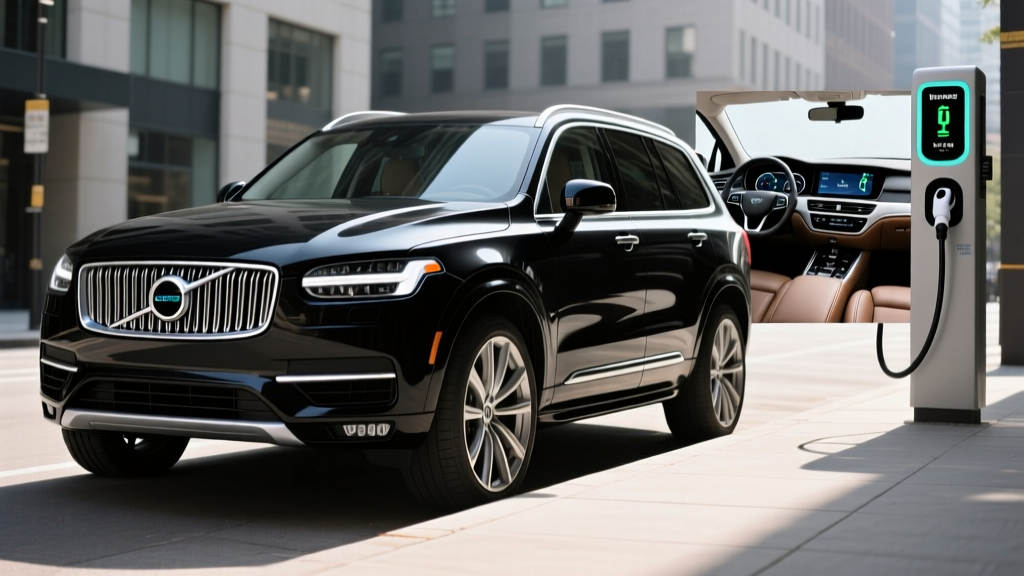
If you're shopping the used luxury SUV market and searching for a 2016 XC90 hybrid, you're looking at Volvo's first-generation T8 Twin Engine plug-in hybrid — a 400-horsepower, all-wheel-drive three-row SUV that promised near-silent electric commutes paired with Scandinavian design. A decade later, the question isn't whether it was impressive when new, but whether a 10-year-old PHEV still makes financial and mechanical sense in 2026.
This guide breaks down the real-world fuel economy, electric-only range, high-voltage battery longevity, maintenance costs, and ownership economics of the 2016 Volvo XC90 T8 so you can decide if it belongs in your driveway — or if a newer PHEV or full BEV is a smarter allocation of your budget.
What the 2016 XC90 T8 Actually Is: PHEV, Not a Conventional Hybrid
Critical distinction: The 2016 Volvo XC90 T8 is a plug-in hybrid electric vehicle (PHEV), not a conventional hybrid (HEV). It has a high-voltage battery you charge by plugging in, plus a gas engine. A conventional hybrid like the Toyota Highlander Hybrid recharges its small battery solely through regenerative braking and the engine — you never plug it in.
The T8 powertrain pairs a 2.0-liter turbocharged and supercharged four-cylinder engine driving the front wheels with an 87-horsepower electric motor integrated into the rear axle. Combined output is 400 horsepower and 472 lb-ft of torque. There is no mechanical driveshaft connecting front and rear — the AWD system is entirely "through-the-road," with the gas engine handling front duties and the electric motor handling rear.
The high-voltage battery is an 11.6 kWh lithium-ion pack (approximately 9.2 kWh usable) positioned in the center tunnel where a conventional driveshaft would sit. This placement preserves all three rows of seating and cargo space — a clever packaging solution, though it limits battery capacity compared to PHEVs with under-floor packs.
| Specification | Value |
|---|---|
| Powertrain | 2.0L turbo+super I4 (front) + 87 hp electric motor (rear) |
| Combined Horsepower | 400 hp |
| Combined Torque | 472 lb-ft |
| Transmission | 8-speed automatic (Aisin) |
| Battery Capacity | 11.6 kWh total / ~9.2 kWh usable |
| Battery Chemistry | Lithium-ion (NMC) |
| EPA Electric Range | 13 miles |
| EPA MPGe (combined) | 62 MPGe |
| EPA MPG (gas only, combined) | 25 MPG |
| 0–60 mph | 5.6 seconds |
| Curb Weight | ~5,100 lbs |
| Seating | 7 passengers (3 rows) |
| Original MSRP (2016) | $68,100 (T8 Inscription) / $73,100 (T8 Excellence) |
Fuel Economy: EPA Numbers vs. Real-World MPG
The EPA rated the 2016 XC90 T8 at 62 MPGe when operating in hybrid mode with a charged battery, and 25 MPG combined (24 city / 27 highway) once the battery is depleted and the vehicle runs on gasoline alone. According to fueleconomy.gov, these figures apply to the T8 AWD configuration.
| Mode | City | Highway | Combined |
|---|---|---|---|
| Charge-sustaining (gas only) | 24 MPG | 27 MPG | 25 MPG |
| Charge-depleting (hybrid+electric) | 62 MPGe combined | ||
| Electric-only consumption | 58 kWh/100 mi | ||
Real-world expectations: Owners who plug in nightly and drive less than 15 miles per day routinely report effective economy in the 45–55 MPGe range, since most trips stay within electric range. However, on highway road trips where the battery depletes within the first 13 miles, expect 23–26 MPG — respectable for a 5,100-pound luxury SUV, but not dramatically better than the conventional XC90 T6 (which EPA-rates at 22 MPG combined).
Cold weather reduces electric range by roughly 20–30%, dropping usable EV range to 9–11 miles in freezing temperatures. The XC90 T8 does include a cabin preheating function when plugged in, which helps preserve battery charge on winter mornings.
Electric-Only Range and Charging: What 11.6 kWh Gets You
The EPA-certified electric-only range is 13 miles. In practice, expect 11–14 miles in mild weather with gentle driving, and as few as 8–10 miles in cold weather or at sustained highway speeds. This is short by 2026 PHEV standards — the current Toyota RAV4 Prime delivers 42 miles, and the newer Volvo XC90 T8 (2023+ generation) offers 35 miles on a much larger 18.8 kWh battery.
Charging the 2016 XC90 T8:
- Level 1 (120V household outlet): Approximately 5–6 hours for a full charge using the included portable cord at ~1.4 kW.
- Level 2 (240V home charger): Approximately 2.5–3 hours at 3.3 kW (the vehicle's onboard charger maxes out at 3.3 kW).
- DC fast charging: Not supported. The 2016 XC90 T8 has no DC fast-charge capability — a significant limitation if you were hoping for quick top-ups on road trips.
With only 3.3 kW onboard charging, upgrading your home Level 2 charger beyond 16 amps won't speed up charging. The bottleneck is the car's onboard charger, not the wall unit. For a battery this small, however, overnight Level 1 charging from a standard 120V outlet is entirely practical and may eliminate the need for a Level 2 installation.
Battery Warranty & Degradation Outlook
Volvo originally covered the XC90 T8 high-voltage battery under its hybrid component warranty: 8 years / 100,000 miles (whichever comes first), with a capacity retention threshold of approximately 70%. For a 2016 model, this factory warranty expired in 2024 at the latest.
Based on owner reports and Volvo SPA-platform battery data, most 2016 XC90 T8 batteries retain roughly 80–88% of original capacity after 8–10 years and 80,000–120,000 miles. Degradation is gradual and linear — sudden cliff-drop failures are rare. However, any battery outside warranty that does fail will require an out-of-pocket replacement.
Reliability, Maintenance, and Battery Replacement Cost
The 2016 was the first model year for Volvo's all-new SPA (Scalable Product Architecture) platform and the T8 powertrain. First-year models historically carry more teething issues, and the XC90 was no exception. Common issues reported by owners and tracked by NHTSA include:
- Software glitches: Infotainment (Sensus) freezing, sensor warnings, and transmission shift-logic complaints were prevalent in early-build 2016 models. Many were addressed through dealer software updates.
- Supercharger/turbo complexity: The twin-charged 2.0L engine is highly stressed (producing 316 hp from just 2.0 liters). Long-term reliability depends heavily on consistent oil changes with the correct specification oil.
- Air suspension: Optional on higher trims, air suspension struts can develop leaks after 80,000–100,000 miles. Replacement runs $1,200–$1,800 per corner.
- High-voltage battery: As noted above, catastrophic battery failure is uncommon, but gradual capacity loss is expected. A full high-voltage battery replacement for the 2016 XC90 T8 costs between $8,000 and $12,000 at a Volvo dealer (parts + labor), though independent hybrid specialists may offer refurbished units for $5,000–$7,000.
The conventional 12V battery should be replaced every 4–5 years and is a standard maintenance item. Note: the 12V battery is separate from the high-voltage traction battery and does not affect electric range.
Overall, the 2016 XC90 T8 earns an average reliability reputation — not the segment leader (that distinction goes to the Lexus RX 450h), but not the worst offender either. A pre-purchase inspection by a Volvo-savvy independent mechanic is essential before buying.
Used Pricing and Tax Credit Reality in 2026
As of early 2026, used 2016 Volvo XC90 T8 models typically trade between $18,000 and $28,000, depending on mileage, condition, trim (Inscription vs. Excellence), and market. Low-mileage, well-maintained examples with full service records command the upper end of that range.
Federal tax credit status: The IRS §30D clean vehicle credit applies only to new qualifying vehicles, so the 2016 XC90 T8 does not qualify for the new-vehicle credit. However, the used clean vehicle credit (§25E) may apply if:
- The vehicle is purchased from a licensed dealer (not private party)
- The sale price is $25,000 or less
- The buyer's modified adjusted gross income does not exceed $75,000 (single), $112,500 (head of household), or $150,000 (joint)
- The vehicle is at least 2 model years old (2016 qualifies)
- The credit equals 30% of the sale price, capped at $4,000
- The vehicle must have a battery capacity of at least 7 kWh (the XC90 T8's 11.6 kWh pack qualifies)
On a $22,000 purchase, the maximum used-EV credit would be $4,000 (30% of $22,000 = $6,600, but capped at $4,000), bringing effective cost to $18,000. This credit is non-refundable and can only offset tax liability — consult a tax professional for your specific situation. The credit is claimed at point of sale through a registered dealer as of 2024 onward.
Who Should Buy the 2016 XC90 T8 — And Who Shouldn't
Pros
- 400 hp and 5.6-second 0–60 — genuinely quick for a 3-row SUV
- Quiet, refined electric-only driving for short commutes
- Excellent build quality, premium materials, and comfortable seats
- Top safety scores (IIHS Top Safety Pick+ when new)
- 7-passenger seating with no cargo compromise from battery placement
- Used pricing well below comparable new luxury PHEVs
Cons
- Only 13 miles of electric range — inadequate for most commutes without gas assist
- No DC fast charging — strictly Level 1 or Level 2
- Complex twin-charged engine with higher maintenance burden than a naturally aspirated V6
- Factory hybrid battery warranty has expired on all 2016 examples
- Outdated Sensus infotainment by 2026 standards
- First model year of SPA platform — more reported issues than 2018+ models
Decision Framework
Choose the 2016 XC90 T8 if: You need a 7-seat luxury SUV, your daily commute is under 12 miles round-trip, you can plug in at home every night, and you want strong acceleration without the $50,000+ price tag of a newer PHEV or BEV.
Choose a newer PHEV instead if: Your commute exceeds 15 miles and you want meaningful electric-only coverage. The 2023+ Volvo XC90 T8 (35-mile range), Toyota RAV4 Prime (42 miles), or Chrysler Pacifica PHEV (32 miles) all offer substantially more electric range.
Choose a full BEV if: You have reliable home charging, your daily driving is under 250 miles, and you want to eliminate oil changes, spark plugs, and the twin-charged engine's maintenance complexity entirely. The used Tesla Model X or Rivian R1S are in similar price territory.
Choose a conventional hybrid (HEV) if: You cannot charge at home. A Toyota Highlander Hybrid (35 MPG combined) or Lexus RX 450h (30 MPG combined) delivers consistent fuel savings without any plugging in, and both have longer track records of reliability.
2016 XC90 Hybrid FAQ
How many MPG does the 2016 XC90 hybrid get?
The EPA rates the 2016 Volvo XC90 T8 at 25 MPG combined (24 city / 27 highway) in gas-only mode and 62 MPGe when factoring in electric operation. Real-world highway driving on a depleted battery typically yields 23–26 MPG.
How far can the 2016 XC90 T8 go on electric only?
The EPA-certified electric-only range is 13 miles. Real-world range is typically 11–14 miles in mild weather and 8–10 miles in cold weather or at highway speeds. Total combined range (electric + gas) is approximately 350–380 miles on a full tank and full charge.
Is the 2016 XC90 hybrid reliable?
It has an average reliability record for a first-year platform. Software issues, air suspension failures, and the complexity of the twin-charged engine are the primary concerns. A pre-purchase inspection is strongly recommended. The high-voltage battery has generally held up well, but the factory warranty has expired on all 2016 examples.
What does a replacement high-voltage battery cost?
A dealer replacement runs $8,000–$12,000. Independent hybrid shops may offer refurbished units for $5,000–$7,000. Catastrophic battery failure is rare — gradual capacity loss (typically to 80–88% after 10 years) is the more common scenario.
Does the 2016 XC90 T8 qualify for any tax credit in 2026?
Not the new-vehicle §30D credit. However, if you purchase from a dealer for $25,000 or less and meet IRS income limits, you may qualify for the used clean vehicle credit (§25E) — up to $4,000 (30% of sale price, capped). Confirm eligibility with your tax professional and the IRS used vehicle credit page.
Can I DC fast charge the 2016 XC90 T8?
No. The 2016 XC90 T8 does not support DC fast charging. Maximum charge rate is 3.3 kW on Level 2 (240V), taking approximately 2.5–3 hours for a full charge. Level 1 (120V) charging takes 5–6 hours.
Hybrid vs PHEV vs EV — which is right for me?
If you can charge at home and drive under 13 miles daily, this PHEV covers your commute on electricity. If you can't charge at home, a conventional hybrid (HEV) is simpler. If you want zero engine maintenance and drive under 250 miles daily, a full BEV eliminates the gas engine entirely. The 13-mile electric range of the 2016 T8 is the limiting factor — it works for very short commutes but forces gas engine use for most drivers.