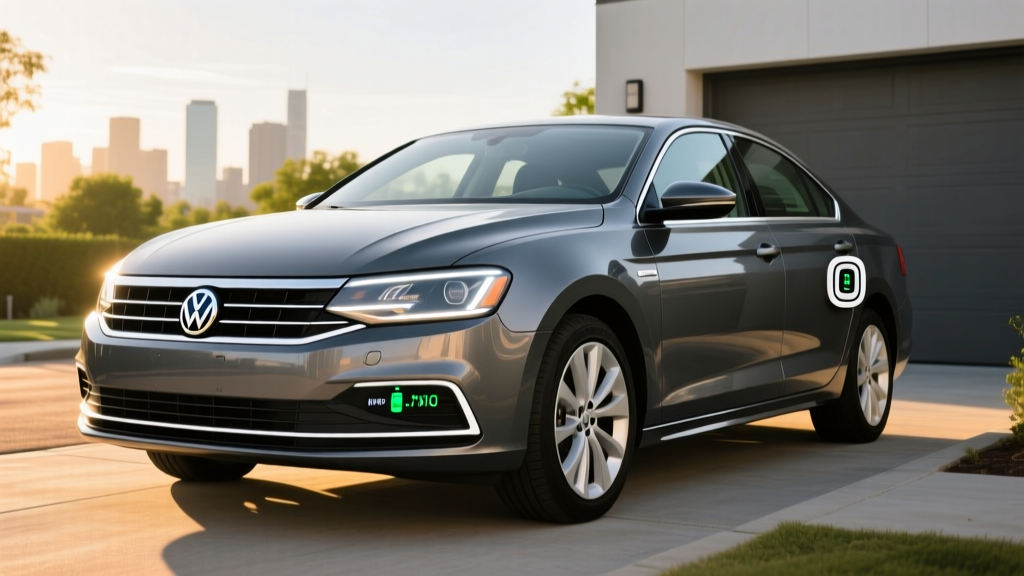
The 2016 Volkswagen Jetta Hybrid occupies a specific niche in the used-car market: a compact sedan that pairs a turbocharged gasoline engine with an electric motor to deliver exceptional city fuel economy without ever needing to be plugged in. If you're shopping the used hybrid market today and this model is on your radar, this guide covers everything from EPA ratings to battery longevity so you can make an informed purchase.
What Is the 2016 Volkswagen Jetta Hybrid?
The 2016 Jetta Hybrid is a conventional hybrid electric vehicle (HEV), not a plug-in hybrid (PHEV). That distinction matters enormously when you're evaluating ownership costs, charging requirements, and what kind of driving experience to expect.
Conventional Hybrid (HEV): The 2016 Jetta Hybrid charges its small battery through regenerative braking and the gasoline engine. You never plug it in. It uses electric assist to boost fuel economy, especially at low speeds and in stop-and-go traffic.
Plug-in Hybrid (PHEV): A PHEV has a larger battery (typically 8–25 kWh) that you charge from a wall outlet or public charger, giving 20–50 miles of pure electric driving before the gas engine takes over. The Jetta Hybrid is not this.
Volkswagen positioned the Jetta Hybrid as a fuel-sipping commuter that doesn't sacrifice the turbocharged acceleration VW drivers expect. It slots between the base gas Jetta and the TDI diesel in the 2016 lineup, targeting buyers who want maximum MPG without changing their refueling habits.
Fuel Economy: EPA Ratings vs. Real-World MPG
The headline number for any hybrid is fuel economy, and the 2016 Jetta Hybrid delivers competitive figures for its class. Here's the official EPA breakdown according to fueleconomy.gov:
| Metric | Value |
|---|---|
| City MPG | 48 MPG |
| Highway MPG | 48 MPG |
| Combined MPG | 48 MPG |
| Fuel Tank Capacity | 13.2 gallons |
| Total Range (estimated) | ~634 miles |
Real-World MPG: What Owners Actually See
The 48 MPG combined figure is strong, but real-world results vary based on driving style, climate, and route profile. Hybrid powertrains typically exceed their EPA city rating in stop-and-go traffic because regenerative braking recaptures energy that a gas car wastes as heat. Conversely, sustained highway driving at 75+ mph reduces the electric motor's contribution.
Based on owner reports aggregated on Fuelly and hybrid-owner forums, expect:
- City / suburban commuting: 46–52 MPG (regen braking maximizes electric assist)
- Highway cruising (65–70 mph): 42–47 MPG
- Highway cruising (75+ mph): 38–43 MPG
- Cold weather (below 30°F): 38–44 MPG combined (engine runs more to maintain cabin heat and battery temperature)
The Jetta Hybrid's equal city/highway EPA rating is somewhat unusual — many hybrids score higher in the city. VW achieved this by tuning the 7-speed dual-clutch automatic (DSG) for efficient highway cruising and leveraging the turbo engine's strong low-end torque to minimize high-RPM fuel consumption.
Powertrain: Turbo Engine Meets Electric Motor
The 2016 Jetta Hybrid uses a parallel hybrid architecture, meaning both the gasoline engine and electric motor can drive the front wheels — either independently or together.
| Component | Specification |
|---|---|
| Gasoline Engine | 1.4L turbocharged 4-cylinder (EA211) |
| Engine Power | 150 HP @ 5,000 rpm / 184 lb-ft @ 1,600 rpm |
| Electric Motor | 27 HP (20 kW) integrated into transmission |
| Combined System Output | 170 HP / 184 lb-ft torque |
| Transmission | 7-speed DSG dual-clutch automatic |
| Drivetrain | Front-wheel drive |
| 0–60 mph | ~8.2 seconds |
| Hybrid Battery | 1.1 kWh (nominal), lithium-ion |
The 1.4L turbo is VW's EA211 family — a widely used engine across the VW/Audi lineup known for strong low-end torque. The electric motor is sandwiched between the engine and the DSG transmission, providing torque fill at low RPMs (where turbos traditionally lag) and enabling short bursts of electric-only driving at very low speeds (typically under 25 mph for brief distances).
Because this is a conventional HEV with a 1.1 kWh battery, there is no meaningful electric-only range. The motor assists the engine; it doesn't replace it for sustained driving. You will never plug this car in — the battery recharges through regenerative braking and engine-driven generation.
Battery Longevity, Warranty, and Replacement Cost
Hybrid battery anxiety is the number-one concern for used hybrid buyers. Here's what you need to know about the 2016 Jetta Hybrid's battery pack.
Original warranty: Volkswagen covered the hybrid battery for 8 years / 100,000 miles (10 years / 150,000 miles in CARB states including CA, CT, ME, MD, MA, NJ, NY, OR, RI, VT, WA). For a 2016 model, the standard 8-year warranty has expired as of 2024; CARB-state 10-year coverage expired in 2026.
Expected lifespan: VW's hybrid lithium-ion packs in this generation are generally robust. Many owners report 150,000–200,000+ miles with minimal capacity loss. The small 1.1 kWh battery undergoes shallow charge/discharge cycles (the system keeps it between roughly 20–80% state of charge), which dramatically reduces degradation compared to a full EV battery.
Replacement cost (if needed): A replacement hybrid battery pack for this generation Jetta runs approximately $2,000–$3,500 for the part, plus $300–$600 in labor at an independent shop. Dealership pricing may reach $4,000–$5,000. Refurbished/remanufactured packs are available for $1,200–$2,000.
Signs of Hybrid Battery Trouble in a Used Jetta
When inspecting a used 2016 Jetta Hybrid, watch for:
- Dashboard warnings: A "hybrid system fault" or battery-related check engine light
- Reduced fuel economy: A noticeable drop from the 40+ MPG range suggests the battery isn't contributing effectively
- Engine running constantly: If the gas engine never shuts off at stops, the hybrid system may be defaulting to engine-only mode
- OBD-II scan: A pre-purchase scan can reveal hybrid battery cell imbalance codes before they trigger a dashboard warning
Hybrid vs. PHEV vs. Full EV: Which Is Right for You?
If you're considering the 2016 Jetta Hybrid on the used market, you're likely weighing it against used PHEVs (like a Chevrolet Volt or Toyota Prius Prime) and used full EVs (like a Nissan Leaf or early Chevy Bolt). Here's a practical decision framework:
| Factor | HEV (Jetta Hybrid) | PHEV (e.g., Prius Prime) | BEV (e.g., Chevy Bolt) |
|---|---|---|---|
| Plug-in required? | No | Yes (for EV range) | Yes (always) |
| Electric-only range | ~0 miles | 25–40 miles | 200–260 miles |
| Home charging needed? | No | Recommended | Essential |
| Best for | No home charging access | Short commute + road trips | Home charging + daily driving |
| Used price range (2026) | $8,000–$13,000 | $12,000–$20,000 | $10,000–$18,000 |
Choose the 2016 Jetta Hybrid if: You don't have access to home or workplace charging, you want maximum MPG without behavioral changes, and you prefer a proven turbocharged drivetrain with no plug-in complexity.
Choose a used PHEV if: You have Level 1 or Level 2 home charging, your daily commute is under 30 miles (so you can drive mostly electric), but you still want a gas engine for longer road trips without range anxiety.
Choose a used BEV if: You have reliable home charging, your daily driving is under 200 miles, and you want the lowest per-mile fuel cost and minimal maintenance (no oil changes, no spark plugs, no transmission fluid).
Pricing and Tax Credit Eligibility
As a used 2016 model, the Jetta Hybrid is no longer eligible for the federal §30D new clean vehicle tax credit. However, it may qualify for the Used Clean Vehicle Credit under IRS §25E, which provides up to $4,000 or 30% of the sale price (whichever is lower) for eligible used EVs and PHEVs purchased from a dealer.
Critical caveat: The §25E used vehicle credit applies to plug-in electric vehicles and fuel cell vehicles. Conventional hybrids (HEVs) like the 2016 Jetta Hybrid do not qualify for either the new or used federal EV tax credit. The IRS defines eligible vehicles as those with a battery capacity of at least 7 kWh that can be recharged from an external source. The Jetta Hybrid's 1.1 kWh non-plug-in battery does not meet this threshold.
Some states offer separate incentives for efficient vehicles, but most state-level EV rebates also require plug-in capability. Check your state's energy office or the AFDC incentive database for local programs.
Current Used Market Pricing (2026)
Based on recent listings and auction data, expect the following for a 2016 Jetta Hybrid:
- 80,000–100,000 miles, SEL trim: $9,000–$11,500
- 60,000–80,000 miles, SEL Premium: $10,500–$13,000
- Under 60,000 miles, excellent condition: $12,000–$14,500
For context, the original MSRP ranged from approximately $26,995 (SE) to $31,495 (SEL Premium) when new. Depreciation has been steep, which makes this an attractive value play for budget-conscious hybrid shoppers.
Pros and Cons of the 2016 Jetta Hybrid
- 48 MPG combined — excellent for a turbocharged sedan
- No plug-in required — fuel up at any gas station
- 170 HP combined output feels peppy for a hybrid
- DSG transmission provides quick, direct shifts
- Spacious trunk (11.3 cu ft) with minimal battery intrusion
- Strong low-end torque from turbo + electric motor combo
- Competitive used pricing under $13,000
- No electric-only driving range
- No federal tax credit eligibility (new or used)
- Original hybrid battery warranty has expired
- DSG transmission can feel jerky at very low speeds
- Premium fuel recommended for optimal performance
- Infotainment system dated by 2026 standards
- Smaller hybrid battery market means fewer independent shops experienced with VW hybrid systems
Frequently Asked Questions
How many MPG does the 2016 Volkswagen Jetta Hybrid get?
The EPA rates the 2016 Jetta Hybrid at 48 MPG city, 48 MPG highway, and 48 MPG combined. In real-world driving, most owners see 44–50 MPG in mixed city/highway use, with highway-only driving at higher speeds dropping to 38–43 MPG.
Does the 2016 Jetta Hybrid need to be plugged in?
No. This is a conventional hybrid (HEV), not a plug-in hybrid. The 1.1 kWh lithium-ion battery recharges entirely through regenerative braking and the gasoline engine. You fuel it exclusively at gas stations.
Is the 2016 Jetta Hybrid reliable?
The 1.4L EA211 turbo engine has a solid reliability track record in VW's global lineup. The hybrid system adds complexity but uses a relatively small, conservatively managed battery that tends to last well. The main risk areas for a 10-year-old example are the DSG transmission mechatronics unit and the hybrid battery if it has seen high mileage in extreme climates. A pre-purchase inspection by a VW-qualified technician is strongly recommended.
What does a replacement hybrid battery cost?
Expect to pay $2,000–$3,500 for a new OEM replacement battery, or $1,200–$2,000 for a refurbished unit, plus $300–$600 in labor. Given the car's current used value of $8,000–$14,000, a battery replacement represents a significant percentage of the vehicle's worth — factor this into your purchase decision.
Does the 2016 Jetta Hybrid qualify for any tax credit?
No. As a conventional hybrid without plug-in capability, it does not qualify for the federal §30D new vehicle credit or the §25E used clean vehicle credit. Some states may offer minor incentives for high-MPG vehicles, but most state EV programs also require plug-in capability. Consult the Alternative Fuels Data Center for state-specific programs.
How does the Jetta Hybrid compare to a Toyota Prius?
The 2016 Prius achieves 52–56 MPG combined — roughly 4–8 MPG better than the Jetta Hybrid. However, the Jetta offers more horsepower (170 vs. 121 combined), a more engaging driving experience with its turbo engine and DSG, and a more conventional sedan design. If pure fuel economy is your only metric, the Prius wins. If you want hybrid efficiency with stronger acceleration and a more European driving feel, the Jetta Hybrid is the pick.
Should I buy a 2016 Jetta Hybrid in 2026?
It depends on your situation. If you lack home charging access, want a fuel-efficient commuter under $13,000, and can find a well-maintained example with a clean hybrid system scan, it's a solid buy. If you have home charging, a used PHEV or BEV will deliver lower operating costs and may qualify for the $4,000 used EV tax credit. Budget for a potential hybrid battery replacement as the car ages past 150,000 miles.