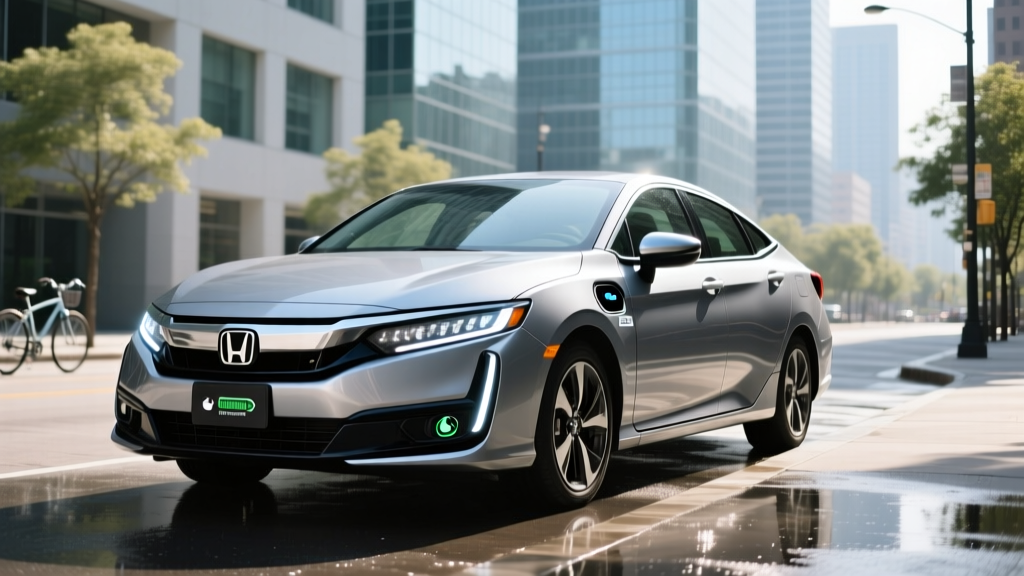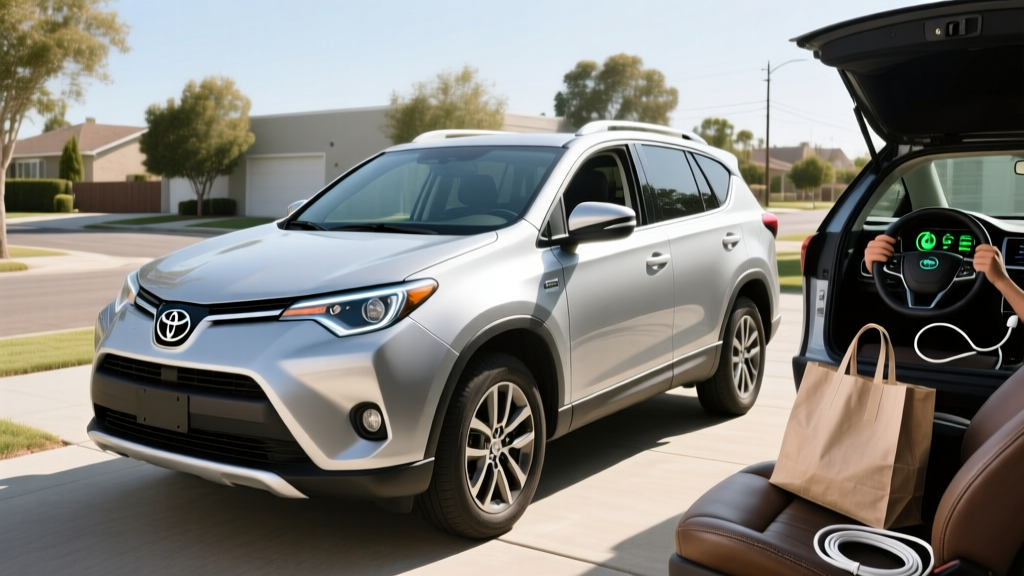
The 2016 Toyota RAV4 Hybrid XLE was the first hybrid variant of Toyota's best-selling compact SUV, and nearly a decade later, it remains one of the most searched used hybrids on the market. With a combined EPA rating of 32 MPG, standard all-wheel drive, and Toyota's proven hybrid synergy drive, this SUV occupies a specific niche: buyers who want hybrid efficiency without plug-in complexity or full-EV range concerns. Here's everything you need to know before buying one in 2026.
HEV vs. PHEV: What the 2016 RAV4 Hybrid Actually Is
Before examining specs, it's critical to understand that the 2016 RAV4 Hybrid XLE is a conventional hybrid electric vehicle (HEV), not a plug-in hybrid (PHEV). This distinction shapes every aspect of ownership.
| Feature | HEV (This RAV4) | PHEV (e.g., RAV4 Prime) | BEV (e.g., bZ4X) |
|---|---|---|---|
| Plug-in charging required? | No — self-charging | Yes — plug in for EV range | Yes — sole energy source |
| Electric-only range | ~1 mi at low speed | 42 mi (RAV4 Prime) | 222–252 mi (bZ4X) |
| Battery size | 1.6 kWh (NiMH) | 18.1 kWh (Li-ion) | 71.4 kWh (Li-ion) |
| Gas engine? | Yes | Yes | No |
| Federal tax credit (§30D)? | No | Up to $7,500* | Up to $7,500* |
*§30D credits require meeting MSRP caps, buyer income limits, and battery-sourcing rules per current IRS guidelines. The 2016 RAV4 Hybrid HEV does not qualify.
The conventional HEV system uses regenerative braking and the gasoline engine to keep a small battery charged. You never plug it in. You simply fuel it like a regular car and the hybrid system automatically optimizes when to use the electric motor, the gas engine, or both.
Fuel Economy: EPA Ratings vs. Real-World MPG
The headline number for the 2016 RAV4 Hybrid XLE is its EPA-estimated fuel economy. Here's the official breakdown according to fueleconomy.gov:
| Driving Cycle | EPA Estimate |
|---|---|
| City | 34 MPG |
| Highway | 31 MPG |
| Combined | 32 MPG |
Real-World MPG: What Owners Actually See
Toyota's hybrid system excels in stop-and-go city driving, where the electric motor handles low-speed propulsion and regenerative braking recaptures energy. Many owners report city MPG in the 35–38 range, exceeding the EPA estimate. Highway driving is a different story — at sustained 70–80 mph speeds, the gasoline engine does most of the work, and real-world highway figures often land between 28–30 MPG.
On a combined mix of suburban and highway driving, expect 30–33 MPG in temperate conditions. In cold weather (below 30°F), MPG can drop 5–10% due to longer engine warm-up cycles and increased cabin heating load. This is normal hybrid behavior, not a defect.
| Engine | 2.5L 4-cylinder Atkinson-cycle |
| Engine horsepower | 150 HP @ 5,700 RPM |
| Front electric motor | 105 kW (141 HP) |
| Rear electric motor | 50 kW (67 HP) |
| Net combined system HP | 194 HP |
| Transmission | eCVT (electronically controlled) |
| Drivetrain | AWD (electronic on-demand rear motor) |
| Hybrid battery | 1.6 kWh, Nickel-Metal Hydride (NiMH) |
| 0–60 mph | ~7.8 seconds |
| Fuel tank | 14.8 gallons |
| Total driving range | ~473 miles (combined) |
| Cargo volume (rear seats up) | 35.6 cu ft |
| Cargo volume (rear seats folded) | 70.7 cu ft |
Powertrain Deep Dive: How the Hybrid System Works
The 2016 RAV4 Hybrid pairs Toyota's 2.5-liter Atkinson-cycle four-cylinder engine with two electric motors — one driving the front axle and a second, independent motor powering the rear axle. This gives the SUV electronic all-wheel drive without a mechanical driveshaft connecting front and rear wheels.
The combined system output of 194 horsepower is respectable for the class and gives the RAV4 Hybrid a noticeable acceleration advantage over the non-hybrid 2016 RAV4 (176 HP). The eCVT transmission is a power-split device, not a traditional belt-and-cone CVT, so it avoids the "rubber-band" feel some drivers dislike in Nissan or Subaru CVTs.
The rear motor activates automatically when the system detects front-wheel slip, during hard acceleration, or in specific stability-control scenarios. There's no driver-selectable AWD mode — the system manages torque distribution autonomously. This is adequate for rain, light snow, and gravel, but not a substitute for a dedicated off-road SUV.
Battery Lifespan, Warranty, and Replacement Cost
Hybrid battery longevity is the single most common concern for used-hybrid buyers. Here's the data:
2016 RAV4 Hybrid Battery Warranty (Original)
- Hybrid battery coverage: 8 years / 100,000 miles (10 years / 150,000 miles in CARB states including CA, NY, MA, and others)
- Hybrid system components: 8 years / 100,000 miles
- Capacity retention threshold: Toyota warrants the battery against defects and abnormal loss of capacity — typically interpreted as failure below ~60% of original capacity
Real-World Battery Degradation
The 1.6 kWh NiMH battery in the 2016 RAV4 Hybrid is small and operates within a narrow state-of-charge window (roughly 40–80%). Toyota's hybrid system never fully charges or fully depletes the pack, which significantly extends cycle life. Based on fleet data and owner reports, these NiMH packs commonly last 150,000–200,000+ miles before noticeable capacity loss affects fuel economy.
Since the 2016 model is now 10 years old in 2026, most examples will have exited their original warranty window unless they're in CARB states and under 150,000 miles. When shopping, check whether the hybrid battery has been replaced or tested.
Battery Replacement Cost
If the hybrid battery does fail, here's what to budget:
- New OEM Toyota battery: $3,000–$4,500 installed at a dealership
- Refurbished/reconditioned battery: $1,500–$2,500 installed at an independent hybrid specialist
- Individual module replacement: $300–$800 (only failed modules replaced — viable option for partial degradation)
For context, the non-hybrid RAV4's conventional 12V starter battery costs $150–$250 to replace. The RAV4 Hybrid still has a standard 12V auxiliary battery in addition to the high-voltage hybrid pack.
Pricing in 2026: What You'll Pay on the Used Market
The 2016 RAV4 Hybrid XLE originally carried an MSRP of approximately $29,270 (including destination). In 2026, used-market pricing depends heavily on mileage, condition, and battery health:
- 80,000–100,000 miles, excellent condition: $15,000–$18,000
- 100,000–130,000 miles, good condition: $12,000–$15,000
- 130,000–160,000 miles, fair condition: $9,000–$12,000
Tax Credit Eligibility
The 2016 RAV4 Hybrid XLE, as a conventional HEV, does not qualify for the federal §30D clean vehicle tax credit. That credit applies only to plug-in electric vehicles (BEVs and PHEVs) meeting specific battery-sourcing, MSRP, and buyer-income requirements. No federal incentive exists for conventional hybrids at the time of purchase on the used market.
Some states offer minimal incentives for used hybrids, but these vary by jurisdiction and change frequently. Check your state's energy office or department of revenue for current programs.
Reliability and Safety Record
Toyota's hybrid powertrain is among the most proven in the industry, with over two decades of continuous refinement since the 1997 Prius. The 2016 RAV4 Hybrid specifically benefits from the fourth-generation Hybrid Synergy Drive, which eliminated several failure points present in earlier systems.
The 2016 RAV4 earned a Top Safety Pick+ rating from the IIHS (when equipped with the optional Toyota Safety Sense P package, which became standard on later builds). The NHTSA gave it an overall 5-star safety rating.
Common wear items to watch on a 10-year-old example:
- Inverter coolant pump: Known to fail around 120,000–150,000 miles; replacement ~$400–$700
- Brake actuator assembly: Some reports of premature wear; covered under some extended service campaigns — check VIN with a Toyota dealer
- eCVT transmission: Extremely reliable; failures are rare and usually tied to neglected coolant changes
- Standard suspension/steering: Typical wear items identical to the non-hybrid RAV4
2016 RAV4 Hybrid XLE: Pros and Cons in 2026
Pros
- 32 MPG combined — no plug-in needed, no range anxiety
- 194 HP with smooth electric torque fill off the line
- Standard AWD via independent rear motor
- Proven NiMH battery with 150k–200k+ mile typical lifespan
- Excellent IIHS/NHTSA safety ratings
- Strong resale value relative to non-hybrid competitors
- Low maintenance: no plug changes for 100k miles, no transmission fluid service interval
Cons
- No electric-only driving range (unlike RAV4 Prime PHEV)
- No DC fast charging capability (not applicable for HEV)
- 1.6 kWh NiMH battery is aging tech; replacement is $1,500–$4,500
- XLE trim lacks the premium features of Limited (no SofTex, no JBL audio)
- Entune infotainment is dated by 2026 standards — no wireless CarPlay
- Hybrid battery likely out of warranty on most examples
- No federal tax credit eligibility
Who Should Buy This Hybrid vs. a PHEV or Full EV?
Choose the 2016 RAV4 Hybrid XLE (HEV) if:
- You lack access to home or workplace charging (apartment, street parking)
- You want hybrid MPG without any behavior change — just fill up with gas
- Your budget is $10,000–$18,000 for a reliable used SUV
- You drive a mix of city and highway and value the city MPG advantage
- You want AWD for snow/rain without the complexity of a plug-in system
Choose a PHEV (like the RAV4 Prime) if:
- You can charge at home (Level 2, 240V) and want 42 miles of electric-only commuting
- Your daily commute is under 40 miles round-trip — you'd rarely burn gas
- You qualify for the §30D federal tax credit (up to $7,500 on eligible new models)
- You want the option of silent, zero-tailpipe-emission driving for short trips
Choose a full BEV (like the Toyota bZ4X or Hyundai Ioniq 5) if:
- You have reliable home Level 2 charging and access to DC fast-charging networks
- You want zero tailpipe emissions and the lowest per-mile fuel cost (~$0.04–$0.06/mi on home electricity vs. ~$0.12–$0.15/mi for this hybrid)
- You're ready to plan longer road trips around charging stops
- You want the latest ADAS features and infotainment tech
Frequently Asked Questions
How many MPG does the 2016 Toyota RAV4 Hybrid XLE get?
The EPA rates it at 34 city / 31 highway / 32 combined MPG. In real-world driving, expect 35–38 MPG in city conditions and 28–30 MPG on the highway. Combined mixed driving typically yields 30–33 MPG.
Does the 2016 RAV4 Hybrid need to be plugged in?
No. This is a conventional hybrid (HEV), not a plug-in hybrid. The battery charges through regenerative braking and the gasoline engine. You never plug it in — just fill the 14.8-gallon fuel tank with regular unleaded.
How far can it go on electric only?
Essentially zero practical electric-only range. The electric motor assists at low speeds (under ~25 mph in EV mode), but the 1.6 kWh battery can only sustain electric-only driving for about one mile on a flat surface at very low speed. This is normal for conventional hybrids — the electric motor's role is efficiency assist, not standalone propulsion.
Is the hybrid battery reliable and what does replacement cost?
Toyota's NiMH hybrid batteries commonly last 150,000–200,000+ miles. A new OEM replacement runs $3,000–$4,500 installed; refurbished packs cost $1,500–$2,500. Individual module replacement is possible for $300–$800 if only partial degradation has occurred.
Does the 2016 RAV4 Hybrid qualify for any tax credit?
No. As a conventional hybrid (HEV), it is not eligible for the federal §30D clean vehicle credit, which applies only to plug-in vehicles (BEVs and PHEVs). There are no federal tax incentives for purchasing a used conventional hybrid. Some states may offer minor incentives — check local programs.
How does the 2016 RAV4 Hybrid compare to the newer RAV4 Prime?
The RAV4 Prime (introduced for 2021) is a PHEV with an 18.1 kWh lithium-ion battery, 42 miles of electric-only range, 302 combined HP, and available DC fast charging (on 2023+ models). It also qualifies for federal tax credits when purchased new. The 2016 Hybrid is far more affordable on the used market ($10k–$18k vs. $35k+ for a used Prime) but offers no plug-in capability and lower performance.
What's the best way to check hybrid battery health before buying?
Ask a Toyota dealer to run a hybrid battery health check using Toyota's Techstream diagnostic tool. This reports individual module voltages and internal resistance — key indicators of remaining battery life. Independent hybrid shops can also perform this test. Avoid examples where the battery shows more than a 0.3V spread between modules.