Quick Verdict: A Proven Hybrid Family Hauler
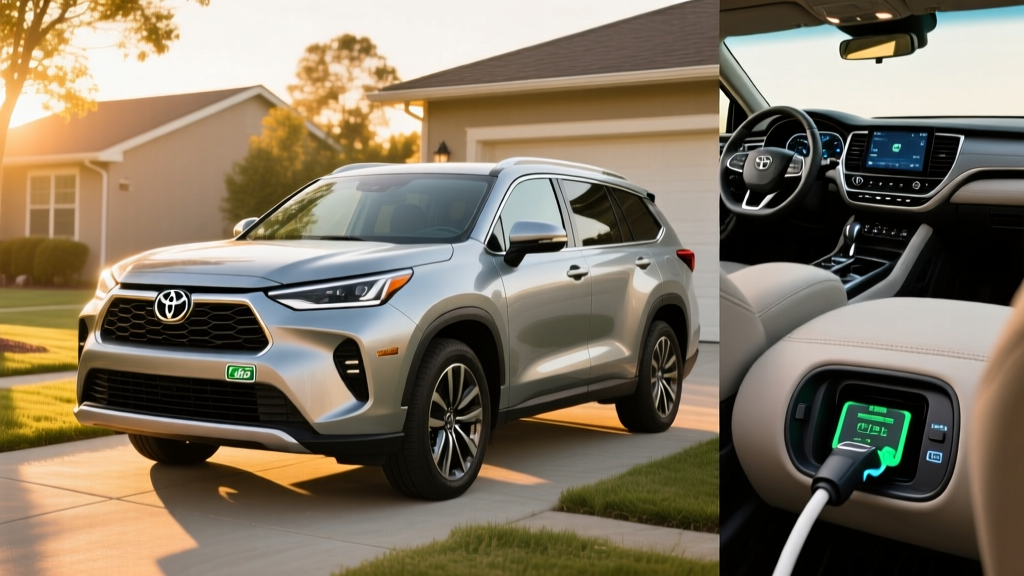
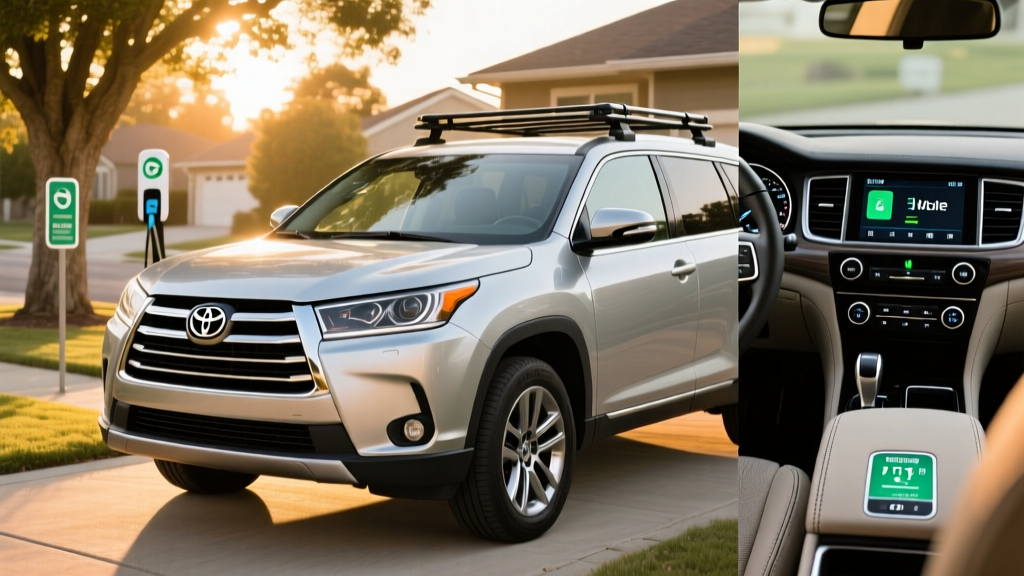
The 2016 Toyota Highlander Hybrid SUV occupies a specific niche in the used market: a three-row, all-wheel-drive hybrid that prioritizes reliability and fuel savings over performance or plug-in capability. With an EPA-rated 28 MPG combined, it sips roughly 30% less fuel than its V6 gas-only counterpart while offering the same cargo space and seating for up to eight. In 2026, a well-maintained example typically trades between $16,000 and $23,000 depending on mileage and trim — making it a compelling used buy for families who want hybrid efficiency without the complexity (or price) of a plug-in hybrid or full electric vehicle.
But the 2016 model year sits at a transition point in Toyota's hybrid strategy. It uses the older 3.5L V6 hybrid system rather than the more efficient 2.5L four-cylinder hybrid introduced for the 2020 redesign. That matters for fuel economy, and it matters for long-term battery health. Here's everything you need to know before buying one today.
HEV vs. PHEV: What the Highlander Hybrid Actually Is
A common source of confusion among used-car shoppers is the distinction between a conventional hybrid (HEV) and a plug-in hybrid (PHEV). The 2016 Toyota Highlander Hybrid is a conventional hybrid (HEV). It does not plug in. It has no electric-only driving range to speak of. You fuel it exclusively with gasoline, and the hybrid system recovers energy through regenerative braking to recharge its small battery pack.
HEV vs. PHEV — Key Differences
| Feature | HEV (This Highlander) | PHEV (e.g., RAV4 Prime) |
|---|---|---|
| Plugs in? | No | Yes |
| Electric-only range | ~0.5 mi at very low speed | 25–42 mi typical |
| Battery size | ~1.9 kWh (NiMH) | 13–18 kWh (lithium-ion) |
| Federal tax credit | None | Up to $7,500 (§30D, if eligible) |
| Fuel required | Gasoline only | Gasoline + electricity |
The 2016 Highlander Hybrid was never offered as a PHEV. Toyota did not introduce a plug-in Highlander variant in any model year for the U.S. market.
Fuel Economy: EPA Ratings and Real-World MPG
The 2016 Highlander Hybrid pairs a 3.5-liter V6 engine with front and rear electric motors for standard electronic on-demand AWD. The EPA rates it as follows:
| Cycle | EPA Rating | Real-World Expectation |
|---|---|---|
| City | 28 MPG | 29–32 MPG |
| Highway | 28 MPG | 25–27 MPG |
| Combined | 28 MPG | 26–29 MPG |
Why real-world results vary: Like most Toyota hybrids, the Highlander Hybrid tends to exceed its EPA city rating in stop-and-go driving, where regenerative braking and electric-motor assist do the heavy lifting. Highway driving is a different story — sustained 70+ MPH speeds reduce the hybrid system's advantage, and the boxy SUV aerodynamics work against efficiency. Expect a noticeable dip on long interstate trips, particularly in cold weather when the engine runs more frequently to provide cabin heat.
For comparison, the gas-only 2016 Highlander V6 AWD is EPA-rated at 20 MPG combined. That's an 8 MPG gap — roughly 40% better fuel economy from the hybrid in mixed driving. According to fueleconomy.gov, the hybrid saves an estimated $650 per year in fuel costs versus the gas V6 model (based on 15,000 miles driven at 2026 average fuel prices).
Powertrain Specs: V6 Hybrid Muscle
The 2016 Highlander Hybrid uses Toyota's Hybrid Synergy Drive system with a 3.5-liter V6 (2GR-FXE) and three electric motor-generators — one integrated into the transaxle for front-wheel drive, one for the rear axle (providing AWD), and one functioning as a starter/generator.
| Specification | 2016 Highlander Hybrid |
|---|---|
| Engine | 3.5L V6 (2GR-FXE) |
| Combined system horsepower | 280 hp |
| Transmission | eCVT (planetary gearset) |
| Drivetrain | Electronic on-demand AWD (AWD-i) |
| 0–60 MPH | ~7.8 seconds |
| Hybrid battery | ~1.9 kWh, Nickel-Metal Hydride (NiMH) |
| Towing capacity | 3,500 lbs |
| Curb weight | ~4,655 lbs |
| Fuel tank | 17.2 gallons (regular unleaded) |
| Total range (est.) | ~450–480 miles |
The 280 combined horsepower is genuinely adequate for a family SUV of this size. The eCVT provides smooth, linear acceleration without the gear-hunting of a conventional automatic. The rear electric motor provides AWD traction in slippery conditions without a mechanical driveshaft — reducing weight and drivetrain losses. This system is essentially identical to the one used in the Lexus RX 450h of the same era, which speaks to its engineering quality.
Hybrid Battery Lifespan, Warranty, and Replacement Cost
For any used hybrid buyer, battery health is the number-one concern. Here's the data on the 2016 Highlander Hybrid's NiMH pack:
Battery Warranty & Longevity
- Original factory warranty: 8 years / 100,000 miles (10 years / 150,000 miles in California and states adopting CARB emissions standards)
- Battery chemistry: Nickel-Metal Hydride (NiMH) — proven, thermally stable, no active cooling system required
- Typical lifespan: 150,000–200,000+ miles with normal use; many Toyota NiMH packs exceed 200,000 miles before significant degradation
- Replacement cost (2026): $2,500–$4,000 for a refurbished/remanufactured pack; $4,500–$6,000+ for a new OEM pack from Toyota
- State of Health (SoH) check: Any reputable Toyota dealer or hybrid specialist can read battery module voltages via OBD-II scanner — request this before purchasing
What degradation looks like in practice: Unlike a full EV battery where degradation directly reduces your driving range, a hybrid battery's degradation primarily affects fuel economy and acceleration assist. A 2016 Highlander Hybrid with a weakened pack might drop from 28 MPG to 24–25 MPG and feel slightly sluggish off the line — but it will still drive. The vehicle will throw a "Check Hybrid System" warning when a battery module fails outright, at which point replacement is necessary.
The NiMH chemistry in this model year is actually an advantage for used buyers. NiMH packs degrade more gradually and predictably than early lithium-ion packs, and they're less sensitive to heat. Toyota's hybrid battery track record from this era is among the best in the industry. The NHTSA complaint database shows relatively few hybrid-system-related complaints for this model year.
Pricing, Trims, and Tax Credit Eligibility
The 2016 Highlander Hybrid was offered in three trims: LE, XLE, and Limited. Original MSRP ranged from approximately $40,720 (LE) to $48,950 (Limited). In the 2026 used market, expect the following:
| Trim | Original MSRP | 2026 Used Range (80K–120K mi) |
|---|---|---|
| LE | $40,720 | $16,000–$19,000 |
| XLE | $44,420 | $18,000–$21,000 |
| Limited | $48,950 | $20,000–$23,000 |
Who Should Buy This Hybrid vs. a PHEV or Full EV?
The 2016 Highlander Hybrid makes sense for a specific buyer profile. Here's a practical decision framework:
Choose the 2016 Highlander Hybrid (HEV) if:
- You need three rows and AWD but can't charge at home (apartment, street parking, no garage outlet)
- You want lower fuel costs without changing your fueling habits — it runs on gasoline only
- You're buying used on a $16K–$23K budget and prioritize reliability over technology
- You drive a mix of city and highway and want ~28 MPG without thinking about it
- You tow occasionally (3,500-lb rating exceeds most EV crossovers in this price range)
Choose a PHEV (e.g., Toyota RAV4 Prime, Chrysler Pacifica Hybrid) if:
- You have home Level 2 charging and a commute under 30–40 miles (covers most daily driving on electricity)
- You want the option of electric-only driving for school runs and errands
- You're buying newer and can access the §30D tax credit on a qualifying PHEV
Choose a full EV (e.g., Tesla Model Y, Kia EV9) if:
- You have reliable home charging and want zero gasoline costs
- You drive mostly in urban/suburban areas with DC fast-charging access for road trips
- You want the lowest per-mile operating cost and are comfortable with a higher purchase price
- You don't need three rows, or you're willing to pay $50K+ for a three-row EV
Pros and Cons at a Glance
Pros
- Proven 28 MPG combined in a 3-row AWD SUV
- Exceptional Toyota reliability and parts availability
- NiMH battery with 150K–200K+ mile typical lifespan
- Smooth eCVT — no traditional transmission to fail
- 3,500-lb towing capacity
- Strong resale value retention
- Runs on regular unleaded — no premium required
Cons
- No plug-in option — cannot drive on electricity alone
- Dated infotainment (no Apple CarPlay/Android Auto in 2016)
- Highway MPG drops to ~25 at sustained 70+ MPH
- Third row is tight for adults on longer trips
- No federal tax credit eligibility
- Cargo space behind 3rd row is modest (13.8 cu ft)
- Older hybrid system is less efficient than 2020+ redesign
Frequently Asked Questions
How many MPG does the 2016 Toyota Highlander Hybrid get?
The EPA rates it at 28 MPG city, 28 MPG highway, and 28 MPG combined. In real-world ownership, city-heavy drivers often see 29–32 MPG thanks to regenerative braking, while highway-dominant driving drops to 25–27 MPG. Cold weather and heavy cargo loads will reduce these figures by 1–3 MPG.
Does the 2016 Highlander Hybrid need to be plugged in?
No. It is a conventional hybrid (HEV), not a plug-in hybrid (PHEV). The battery recharges through regenerative braking and the gasoline engine. You never plug it in — you simply fill it with regular unleaded gasoline.
How far can it go on electric only?
Effectively zero miles in practical terms. The hybrid system can propel the vehicle at very low speeds (under ~25 MPH) for roughly half a mile on battery power alone, such as creeping through a parking lot. This is not a usable electric-only range — it's an assist feature that reduces fuel consumption during low-speed maneuvers.
Is the hybrid battery reliable, and what does replacement cost?
Toyota's NiMH hybrid batteries from this era are among the most reliable in the industry. Most last 150,000–200,000+ miles before needing replacement. A refurbished pack costs $2,500–$4,000 installed; a new OEM pack runs $4,500–$6,000+. The original warranty was 8 years/100,000 miles (10/150,000 in CARB states), which has expired for most 2016 examples — so a pre-purchase battery health check is essential.
Does the 2016 Highlander Hybrid qualify for any tax credit?
No. Federal §30D clean vehicle credits apply only to plug-in vehicles (BEVs and PHEVs). Conventional hybrids are not eligible. Some states may offer minor perks (HOV lane access, registration discounts) — check local rules. The IRS clean vehicle credit page details current eligibility requirements for plug-in vehicles if you're considering a PHEV or EV instead.
How does the 2016 hybrid compare to the 2020+ redesigned Highlander Hybrid?
The 2020 redesign switched to a 2.5L four-cylinder hybrid system, boosting EPA ratings to 35–36 MPG combined — a significant 7–8 MPG improvement. It also gained Apple CarPlay, updated safety tech (Toyota Safety Sense 2.0), and a more refined interior. If your budget allows $30,000+, the newer model is objectively more efficient and modern. The 2016 remains the value play for buyers under $23K who want a proven, no-surprises hybrid SUV.
Should I be concerned about the eCVT transmission?
Toyota's eCVT is not a belt-and-pulley CVT like those found in some competitors. It uses a planetary gearset with no belts, chains, or friction clutches to wear out. It's one of the most durable transmissions in the automotive industry, and failures are exceedingly rare. There is no transmission fluid service interval in the owner's manual, though many hybrid specialists recommend a drain-and-fill at 100,000 miles as preventative maintenance.
Sources: EPA fuel economy data via fueleconomy.gov; IRS §30D credit rules via irs.gov; NHTSA complaint database via nhtsa.gov. Used pricing reflects market averages as of early 2026 and varies by region, condition, and mileage.