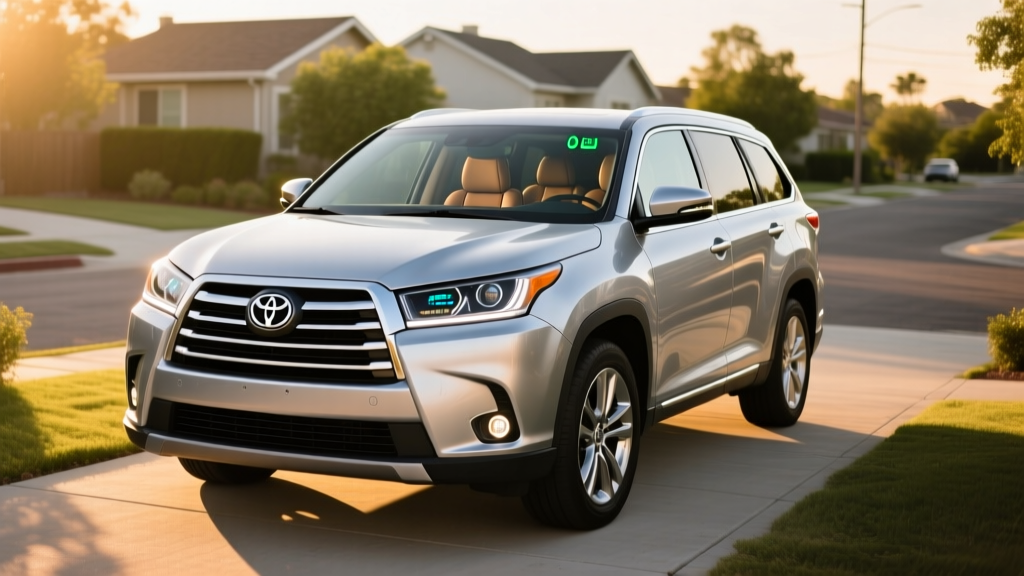
The 2016 Toyota Highlander Hybrid occupies a specific niche in the used three-row SUV market: a conventional hybrid (HEV) that delivers meaningful fuel savings over its gas-only sibling without requiring a plug, a charging routine, or any change in daily driving habits. If you're shopping for a midsize family hauler in 2026 and weighing this model against newer PHEVs or full EVs, this guide breaks down the exact numbers that matter — EPA fuel economy, real-world MPG behavior, battery warranty status, and total ownership cost.
Before we get into the specs, a critical distinction: the 2016 Highlander Hybrid is a conventional hybrid (HEV), not a plug-in hybrid (PHEV). It charges its own battery through regenerative braking and the gasoline engine. There is no plug, no electric-only driving range to manage, and no home charger to install. Toyota did not offer a Highlander plug-in hybrid in the US market for this model year (the RAV4 Prime and Prius Prime filled the PHEV role in Toyota's lineup).
2016 Toyota Highlander Hybrid Fuel Economy: EPA vs. Real-World MPG
The headline number for any hybrid buyer is fuel economy. The 2016 Highlander Hybrid carries EPA ratings that remain competitive even against newer hybrid SUVs a decade later.
| Metric | Value |
|---|---|
| City MPG | 27 |
| Highway MPG | 28 |
| Combined MPG | 28 |
| Annual Fuel Cost (EPA est.) | ~$2,150 (based on 15,000 mi/yr) |
| Fuel Type | Regular Unleaded (87 octane) |
Source: fueleconomy.gov — 2016 Toyota Highlander Hybrid AWD-i
Real-World MPG: Where Hybrids Beat Their Sticker
Conventional hybrids like the Highlander Hybrid consistently exceed their EPA city rating in stop-and-go traffic because regenerative braking recovers energy that a gas-only vehicle wastes as heat. Owners on fueleconomy.gov's MyMPG tracker report averages between 25–30 MPG combined, with city-heavy commuters often seeing 29–31 MPG.
Highway driving tells a different story. At sustained 70–80 mph speeds, the hybrid advantage narrows because the electric motor contributes less and the 3.5-liter V6 does most of the work pushing a 4,700-lb vehicle through aerodynamic drag. Expect 25–27 MPG on extended highway trips — close to the EPA highway figure but not meaningfully above it.
Cold weather impacts all hybrids, but less severely than full EVs. In sub-freezing conditions, expect a 5–10% MPG reduction as the engine runs more frequently to maintain cabin heat and battery temperature. This is modest compared to the 20–30% range loss a BEV might experience in the same conditions.
Powertrain Specs: V6 + Electric Motors
The 2016 Highlander Hybrid pairs Toyota's proven 3.5-liter V6 (2GR-FXE, Atkinson-cycle variant) with a hybrid transaxle containing two electric motor-generators and a third rear-mounted electric motor for all-wheel drive. This system — branded "Synergy Drive" — is the same architecture that underpins the Camry Hybrid and RX 450h, scaled up for the Highlander's size.
| Specification | Value |
|---|---|
| Combined System Horsepower | 306 hp |
| Gas Engine | 3.5L V6 Atkinson-cycle (2GR-FXE) |
| Gas Engine Output | 236 hp @ 5,800 rpm / 215 lb-ft @ 4,800 rpm |
| Front Electric Motor | 123 kW (165 hp) / 247 lb-ft |
| Rear Electric Motor (AWD-i) | 50 kW (67 hp) / 96 lb-ft |
| Transmission | eCVT (electronically controlled continuously variable) |
| Drivetrain | AWD-i (electronic AWD, no mechanical driveshaft) |
| Hybrid Battery | ~1.9 kWh usable, Nickel-Metal Hydride (NiMH) |
| 0–60 mph | ~7.8 seconds |
| Curb Weight | ~4,700 lbs |
| Towing Capacity | 3,500 lbs |
The AWD-i system deserves a note: there is no traditional driveshaft connecting the front and rear axles. The rear wheels are driven exclusively by the rear electric motor, which engages automatically when the system detects front-wheel slip or during hard acceleration from a stop. This means AWD response is nearly instantaneous but the rear motor disengages at higher cruising speeds to preserve efficiency. It's effective for rain, light snow, and gravel — not a substitute for a dedicated off-road SUV.
HEV vs. PHEV vs. EV: Which Powertrain Fits Your Needs?
If you're cross-shopping the used 2016 Highlander Hybrid, you're likely also considering newer PHEV SUVs (like the RAV4 Prime or the current-generation Highlander Hybrid) or full EVs (Kia EV9, Tesla Model X). Here's how the decision breaks down based on practical ownership factors:
| Factor | HEV (2016 Highlander Hybrid) | PHEV (e.g., RAV4 Prime) | BEV (e.g., Kia EV9) |
|---|---|---|---|
| Plug-in Required? | No — self-charging | Yes — Level 2 recommended | Yes — Level 2 essential |
| Electric-Only Range | None (EV assist only) | 25–42 mi (model-dependent) | 230–320 mi (full battery) |
| Home Charger Needed? | No | Recommended ($500–$2,000 install) | Required ($500–$2,000+ install) |
| Fuel Cost per Mile | ~$0.14/mi (at $3.50/gal) | ~$0.04/mi electric, $0.12/mi gas | ~$0.04–$0.06/mi (home charging) |
| Tailpipe Emissions | Lower than gas-only | Zero in EV mode, otherwise low | Zero at tailpipe |
| Maintenance Complexity | Low (proven Toyota hybrid) | Moderate (two full powertrains) | Low (fewer moving parts) |
| Used Price Range (2026) | $16,000–$24,000 | $30,000–$45,000 | $35,000–$60,000+ |
Choose the 2016 Highlander Hybrid (HEV) if: You want three rows, AWD, and 28 MPG combined without changing your fueling habits, installing a charger, or spending more than ~$24,000. You live in an apartment or lack reliable home charging access.
Choose a PHEV if: You have home charging, a commute under 40 miles, and want electric-only daily driving with gas-engine range for road trips — and you're willing to pay a premium.
Choose a BEV if: You have reliable Level 2 home charging, rarely need three rows (or can wait for newer three-row EVs), want the lowest per-mile operating cost, and are comfortable with DC fast charging on road trips.
Hybrid Battery Lifespan, Warranty & Replacement Cost
This is the single most common question from used hybrid buyers — and for good reason. A failed hybrid battery in a 2016 model could cost more than the vehicle's residual value if you're not prepared.
Original Warranty Coverage: Toyota's hybrid battery warranty for the 2016 Highlander Hybrid was 8 years / 100,000 miles in most states, and 10 years / 150,000 miles in California and states that adopted California Air Resources Board (CARB) emissions standards (including NY, MA, NJ, CT, RI, VT, ME, WA, OR, MD, CO, and others).
Current Status (2026): A 2016 model is now 10 years old. In CARB states, the battery warranty may still be active if the odometer reads under 150,000 miles. In non-CARB states, the original 8-year/100,000-mile warranty has expired for all 2016 models regardless of mileage.
Battery Degradation Reality
The 2016 Highlander Hybrid uses a Nickel-Metal Hydride (NiMH) battery pack — not the lithium-ion chemistry found in modern EVs and PHEVs. NiMH batteries degrade more gradually and predictably than early lithium-ion packs. The pack is relatively small (~1.9 kWh usable capacity), and Toyota's hybrid system is engineered to keep the battery's State of Charge (SoC) between roughly 40% and 80%, which minimizes stress.
In practice, most 2016 Highlander Hybrid batteries still function at 10 years, but with reduced capacity. You'll notice this as slightly lower MPG (perhaps 1–3 MPG below original figures) and more frequent engine engagement during low-speed driving. Catastrophic battery failure is uncommon — gradual capacity loss is the typical pattern.
Replacement Cost in 2026
If the hybrid battery does need replacement, here's what to budget:
- New OEM Toyota battery: $3,000–$4,500 (parts + dealer labor)
- Remanufactured battery (e.g., Green Bean Battery, Dorman): $1,500–$2,500 installed
- Individual module replacement (independent hybrid specialist): $800–$1,500 depending on how many modules have failed
The remanufactured route has matured significantly by 2026, with several reputable companies offering 3–5 year warranties on rebuilt packs. For a used 2016 Highlander Hybrid, a remanufactured battery is often the most cost-effective choice.
Used Market Pricing & Tax Credit Eligibility
As of early 2026, the 2016 Toyota Highlander Hybrid trades in the used market between approximately $16,000 and $24,000 depending on mileage, condition, trim level (Limited and Limited Platinum command the premium), and regional demand. Clean-title examples under 100,000 miles in CARB states — where battery warranty may still apply — sit at the top of that range.
Federal Tax Credit: Does It Qualify?
The short answer: No, the 2016 Highlander Hybrid does not qualify for any federal tax credit in 2026.
- The §30D Clean Vehicle Credit (up to $7,500) applies only to new plug-in electric vehicles (BEVs and PHEVs) with sufficient battery capacity. Conventional hybrids (HEVs) have never qualified.
- The §25E Used Clean Vehicle Credit (up to $4,000 or 30% of sale price) applies to used BEVs and PHEVs purchased from a dealer for $25,000 or less. Again, conventional hybrids are excluded.
- Toyota's plug-in hybrid credit (for models like the original Prius Plug-In) was subject to the manufacturer's 200,000-vehicle cap, which Toyota reached in 2017, phasing out all Toyota plug-in credits well before the Inflation Reduction Act restructured the program.
For current credit rules, always verify against the IRS Clean Vehicle Credits page, as income caps, MSRP limits, and battery-sourcing requirements apply to plug-in vehicles.
Reliability, Safety & What to Inspect Before Buying
The 2016 Highlander Hybrid benefits from Toyota's long track record with hybrid powertrains — the company has produced over 25 million hybrid vehicles globally since 1997. The 2GR-FXE V6 and the hybrid transaxle are among the most thoroughly proven components in Toyota's lineup.
On IIHS safety testing, the 2016 Highlander earned a Top Safety Pick designation with Good ratings in all crashworthiness tests. The NHTSA awarded it an overall 5-star rating.
Pre-Purchase Inspection Checklist
When evaluating a used 2016 Highlander Hybrid, add these hybrid-specific items to your standard inspection:
- Hybrid battery health check: Ask a Toyota dealer or hybrid specialist to run a battery diagnostic showing individual module voltages and internal resistance. Look for modules deviating more than 0.2V from the pack average.
- Hybrid system warning lights: Ensure no "Check Hybrid System" messages appear on startup or during a 15-minute test drive including stop-and-go traffic.
- Regenerative braking feel: The brake pedal should transition smoothly between regenerative and friction braking. A noticeable "clunk" or grabbiness at low speeds can indicate a failing brake actuator — a known issue on this generation that costs $1,200–$1,800 to repair.
- AWD-i rear motor engagement: On a wet or gravel surface, accelerate from a stop and confirm the rear wheels engage. If the vehicle behaves like front-wheel drive only, the rear motor or its inverter may need service.
- Coolant system: The Highlander Hybrid has a separate inverter coolant loop. Verify it has been serviced per the maintenance schedule (every 100,000 miles for Toyota Super Long Life Coolant).
- Transmission fluid: The eCVT uses Toyota WS ATF. While Toyota calls it "lifetime" fluid, many hybrid specialists recommend a drain-and-fill at 100,000 miles for longevity.
Ownership Costs: 5-Year Estimate
To contextualize the purchase, here's a 5-year ownership cost estimate for a 2016 Highlander Hybrid purchased in 2026 at $20,000, driven 15,000 miles per year:
| Category | Annual Cost | 5-Year Total |
|---|---|---|
| Fuel (28 MPG, $3.50/gal avg.) | $1,875 | $9,375 |
| Insurance (national avg.) | $1,400 | $7,000 |
| Maintenance (oil, brakes, tires) | $600 | $3,000 |
| Depreciation (est. $20K → $10K) | $2,000 | $10,000 |
| Hybrid battery reserve fund | $400 | $2,000 |
| Total (excl. purchase price) | $6,275 | $31,375 |
Compare this to a gas-only 2016 Highlander V6 AWD (EPA 20 MPG combined): fuel cost alone jumps to ~$2,625/year, adding $3,750 in extra fuel expense over five years. The hybrid's fuel savings meaningfully offset its slightly higher upfront used price.
Pros and Cons at a Glance
Pros
- 28 MPG combined in a three-row, AWD SUV — still competitive in 2026
- 306 hp provides confident highway merging and passing
- No plug, no charger install, no range anxiety — fuel like a gas car
- Proven Toyota hybrid reliability with abundant aftermarket support
- AWD-i system is effective for rain/snow without the fuel penalty of mechanical AWD
- Top Safety Pick from IIHS, 5-star NHTSA overall
- Remanufactured battery replacements available at reasonable cost
Cons
- No federal or state tax credit eligibility (conventional hybrid)
- Original 8-year battery warranty expired in non-CARB states
- NiMH battery less energy-dense than modern lithium-ion packs
- eCVT drone under hard acceleration (no simulated gear shifts)
- Third row is tight for adults — better suited for children
- Brake actuator failures are a known (and expensive) issue
- Infotainment system dated by 2026 standards (no Apple CarPlay/Android Auto)
Frequently Asked Questions
How many MPG does the 2016 Toyota Highlander Hybrid get?
The EPA rates it at 27 city / 28 highway / 28 combined. In real-world driving, city-heavy commuters often achieve 29–31 MPG thanks to regenerative braking, while sustained highway driving typically yields 25–27 MPG. Cold weather reduces these figures by roughly 5–10%.
Is the 2016 Highlander Hybrid a plug-in?
No. It is a conventional hybrid (HEV) that charges its own battery through regenerative braking and the gasoline engine. You never plug it in. Toyota did not offer a plug-in Highlander in the US for the 2016 model year.
How long does the hybrid battery last?
Most 2016 Highlander Hybrid NiMH batteries remain functional at 10+ years, though with reduced capacity. Gradual degradation (slightly lower MPG, more engine engagement) is the typical pattern rather than sudden failure. A remanufactured replacement costs $1,500–$2,500 installed.
What is the hybrid battery replacement cost?
New OEM: $3,000–$4,500. Remanufactured: $1,500–$2,500. Individual module repair at a hybrid specialist: $800–$1,500. Given the vehicle's age and value, a remanufactured battery is usually the most economical choice.
Does the 2016 Highlander Hybrid qualify for any tax credit?
No. Federal clean vehicle tax credits (§30D for new, §25E for used) apply only to plug-in vehicles — BEVs and PHEVs. Conventional hybrids have never been eligible. No state-level hybrid credits remain active for this model in 2026.
Is the 2016 Highlander Hybrid reliable?
Yes. The 2GR-FXE V6 and Toyota's hybrid transaxle are among the most proven powertrain components in the industry. The main reliability concern is the brake actuator, which can fail at higher mileages and costs $1,200–$1,800 to replace. Overall, it is one of the lowest-risk used hybrid SUVs available.
How does the 2016 Highlander Hybrid compare to the gas-only model?
The gas-only 2016 Highlander V6 AWD is rated at 20 MPG combined — 8 MPG less than the hybrid. Over 15,000 miles per year, that's roughly 134 extra gallons of fuel, or ~$470/year at $3.50/gal. The hybrid also delivers 306 hp vs. 270 hp for the gas model, along with standard AWD-i. The trade-off is a higher initial purchase price and the eventual battery replacement consideration.
Can the 2016 Highlander Hybrid tow?
Yes. It is rated to tow 3,500 lbs — adequate for a small boat trailer, utility trailer, or a pair of personal watercraft. The hybrid system's instant electric torque actually makes it feel capable off the line with a trailer, though you should expect fuel economy to drop to the low 20s MPG while towing.