Quick Verdict: A Proven Hybrid Family Hauler
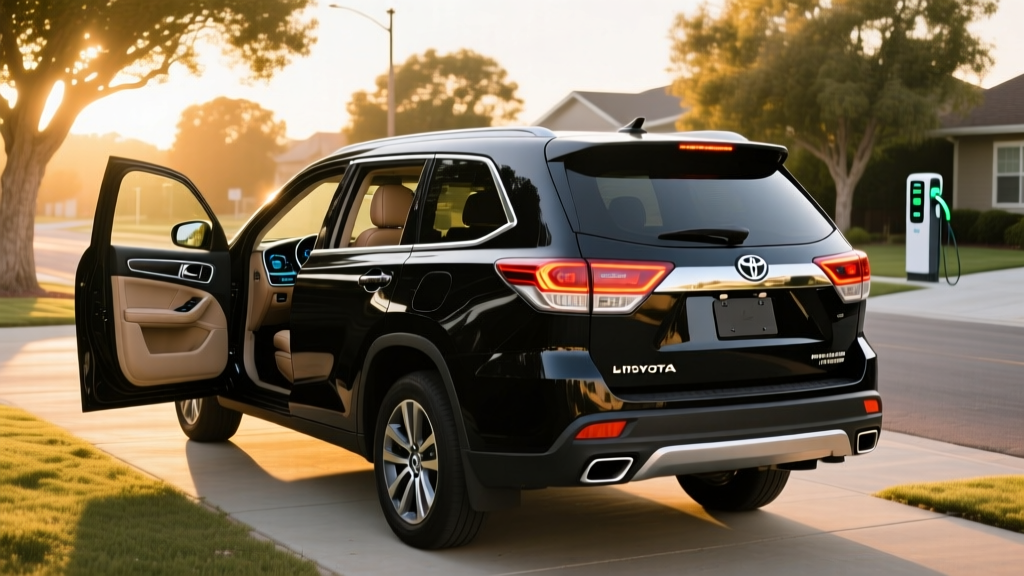
The 2016 Toyota Highlander Hybrid Limited remains one of the most dependable three-row hybrid SUVs on the used market. With an EPA-estimated 28 MPG combined, standard all-wheel drive, and Toyota's legendary hybrid powertrain durability, it's a compelling choice for families who want lower fuel bills without plugging in. This is a conventional hybrid (HEV), not a plug-in — you fuel it like any gas car and let the regenerative braking system handle the rest.
As of 2026, well-maintained examples are fetching between $16,000 and $23,000 on the used market depending on mileage and condition. For buyers weighing this against a newer PHEV or full EV, the Highlander Hybrid Limited trades electric-only range for simplicity, proven reliability, and zero charging infrastructure requirements.
| Specification | 2016 Highlander Hybrid Limited |
|---|---|
| Powertrain | 3.5L V6 + 2 electric motors (AWD-i) |
| Combined Horsepower | 280 hp net system output |
| EPA MPG (City / Hwy / Combined) | 27 / 28 / 28 |
| Hybrid Battery | ~1.9 kWh NiMH (self-charging, no plug) |
| Drivetrain | Electronic on-demand AWD (AWD-i) |
| 0–60 mph | ~7.8 seconds |
| Seating | 7 passengers (Limited trim) |
| Cargo (behind 3rd / 2nd row) | 13.8 / 42.3 cu ft |
| Original MSRP (Limited) | $47,995 (2016) |
| Typical Used Price (2026) | $16,000–$23,000 |
HEV vs PHEV: What the Highlander Hybrid Actually Is
Before diving deeper, it's essential to understand where this vehicle sits in the electrification spectrum. The 2016 Highlander Hybrid is a conventional hybrid electric vehicle (HEV). It cannot plug into any charger. Its small nickel-metal hydride (NiMH) battery charges exclusively through regenerative braking and the gasoline engine.
| Feature | HEV (This Highlander) | PHEV (e.g., RAV4 Prime) | BEV (e.g., Tesla Model X) |
|---|---|---|---|
| Plug-in Charging | No | Yes (Level 1/2) | Yes (Level 1/2/DC) |
| Electric-Only Range | ~1 mile at low speed | 35–42 miles typical | 250–350+ miles |
| Battery Size | ~1.9 kWh NiMH | ~18 kWh Li-ion | 75–100 kWh Li-ion |
| Fuel Required | Yes (regular unleaded) | Yes (when battery depleted) | No |
| Tax Credit (Federal) | Not eligible | Up to $7,500 (§30D, if eligible) | Up to $7,500 (§30D, if eligible) |
| Charging Infrastructure Needed | None | Recommended (home Level 2) | Required |
The Highlander Hybrid's electric motors assist the V6 during acceleration and enable brief low-speed electric-only creeping (roughly 1 mile at under 25 mph under ideal conditions), but this is not meaningful electric-only driving. If you need genuine EV-mode commuting, you'd look at a PHEV like the Toyota RAV4 Prime or a full BEV.
Fuel Economy: EPA Numbers vs Real-World MPG
The EPA rates the 2016 Highlander Hybrid at 27 city / 28 highway / 28 combined MPG. That's a substantial improvement over the gas-only 2016 Highlander V6 AWD, which manages just 18/24/20 MPG — a roughly 40% fuel savings in combined driving.
| Driving Scenario | EPA Estimate | Real-World Expectation |
|---|---|---|
| City (stop-and-go) | 27 MPG | 27–30 MPG (hybrids excel here) |
| Highway (70 mph cruise) | 28 MPG | 25–27 MPG (aero drag, less regen benefit) |
| Combined | 28 MPG | 26–29 MPG |
| Cold Weather (below 30°F) | — | 23–26 MPG (engine runs more for heat) |
| Mountainous Terrain | — | 22–25 MPG (heavy vehicle, steep grades) |
Why city MPG can exceed EPA: Conventional hybrids recapture kinetic energy during braking and use it for acceleration. Stop-and-go traffic maximizes regenerative braking opportunities, so many owners report 29–31 MPG in heavy urban commuting. Highway driving, where the gas engine runs continuously and aerodynamic drag dominates, typically drops 1–3 MPG below the EPA figure.
Cold-weather penalty: In winter, the V6 engine runs more frequently to provide cabin heat (there's no electric heater in this generation), and the NiMH battery is less efficient at low temperatures. Expect a 10–15% fuel-economy drop in sustained sub-freezing conditions.
Powertrain Deep Dive: V6 + Dual Electric Motors
The 2016 Highlander Hybrid pairs a 3.5-liter V6 (2GR-FXE, Atkinson-cycle variant) with Toyota's Hybrid Synergy Drive system. The front axle is driven by a 123 kW (165 hp) electric motor integrated into the transaxle, while a separate 50 kW (67 hp) motor powers the rear axle for electronic all-wheel drive (AWD-i).
Combined net system output is 280 horsepower — significantly more than the 270 hp gas-only Highlander V6. The electric motors deliver instant torque at low RPM, making the hybrid feel more responsive off the line despite the added weight (~4,700 lbs curb weight for the Limited trim).
The continuously variable transmission (eCVT) is a planetary gearset, not a belt-driven CVT. This design is mechanically simple, has no clutch packs or belts to wear, and is a major reason Toyota hybrids achieve such strong longevity records. There are no traditional transmission fluid changes required on the same schedule as a geared automatic.
Battery Longevity, Warranty, and Replacement Cost
The hybrid battery in the 2016 Highlander is a nickel-metal hydride (NiMH) pack rated at approximately 1.9 kWh. Unlike the lithium-ion packs in modern PHEVs and BEVs, NiMH chemistry is less energy-dense but extremely well-proven for longevity in Toyota's hybrid systems.
Hybrid Battery Warranty
Original coverage: 8 years / 100,000 miles (10 years / 150,000 miles in California and states adopting CARB emissions standards).
For a 2016 model in 2026: The factory warranty has expired for most original owners unless the vehicle has unusually low mileage and is registered in a CARB state. However, Toyota's hybrid battery track record is excellent — many Highlander Hybrid and Prius batteries last 150,000–200,000+ miles before significant degradation.
Replacement cost (2026): A new OEM hybrid battery from Toyota runs approximately $3,500–$4,500 including labor at a dealership. Independent hybrid specialists often offer refurbished or reconditioned NiMH packs for $1,500–$2,500 installed. Individual module replacement (only the weak cells) can cost as little as $500–$800 at a specialist shop.
Signs of hybrid battery degradation: Noticeable drop in fuel economy (2–4 MPG below normal), the engine running more frequently, dashboard warnings ("Check Hybrid System"), or the state-of-charge gauge fluctuating rapidly. A hybrid battery health scan at any Toyota dealer or specialist can confirm capacity loss before it becomes a failure.
Pro tip for used buyers: Before purchasing a 2016 Highlander Hybrid, request a hybrid battery health report. Many Toyota dealers will run this diagnostic for free or a minimal fee. A battery showing 70%+ state of health is generally in good condition for a 10-year-old pack.
Limited Trim: What You Get at the Top of the Line
The Limited was the highest trim level for the 2016 Highlander Hybrid. Standard equipment includes:
- Perforated leather-trimmed seats with heated and ventilated front seats
- Driver memory settings (seat, mirror)
- Navigation system with 8-inch touchscreen
- JBL premium audio with 12 speakers
- Power tilt/slide moonroof
- Blind Spot Monitor with Rear Cross-Traffic Alert
- Pre-Collision System with pedestrian detection (Toyota's early ADAS suite)
- Power-folding third-row seats (a key convenience feature)
- 19-inch alloy wheels
- Chrome exterior accents and roof rails
Note that the 2016 model year predates Toyota Safety Sense P (TSS-P), which became standard on the Highlander for the 2017 refresh. The 2016 Limited does include a Pre-Collision System, but it lacks the full adaptive cruise control and lane-departure alert that TSS-P provides. If advanced driver-assistance features are a priority, the 2017+ refresh is worth the premium.
Tax Credits and Ownership Economics
The 2016 Toyota Highlander Hybrid does not qualify for the federal §30D new clean vehicle tax credit. Conventional hybrids (HEVs) have never been eligible for this credit — it applies only to plug-in vehicles (PHEVs and BEVs) with sufficient battery capacity.
As a used purchase in 2026, the Used Clean Vehicle Credit (§25E) also does not apply, because that credit is limited to used PHEVs and BEVs, not conventional hybrids.
Total cost of ownership advantage: The savings come at the fuel pump. At 28 MPG combined versus 20 MPG for the gas V6 AWD Highlander, and assuming $3.50/gallon and 15,000 miles/year:
| Annual Fuel Cost | Highlander Hybrid (28 MPG) | Highlander Gas V6 AWD (20 MPG) |
|---|---|---|
| Gallons consumed | 536 gal | 750 gal |
| Annual cost @ $3.50/gal | $1,876 | $2,625 |
| Annual savings | ~$749/year | |
| 5-year savings | ~$3,745 | |
Insurance costs for the Highlander Hybrid are typically comparable to or slightly below the gas V6 Limited, as hybrid owners statistically file fewer claims. Expect $1,400–$1,900/year depending on your profile and state.
Who Should Buy This Hybrid (And Who Shouldn't)
Pros
- Proven 280-hp hybrid powertrain with 200k+ mile longevity track record
- 28 MPG combined — 40% better than gas V6 Highlander
- No charging infrastructure needed — fuel and go
- Standard electronic AWD for snow and rain
- Limited trim loaded with luxury features
- Low maintenance costs (no timing belt, eCVT is bulletproof)
- Strong resale value retention
Cons
- No meaningful electric-only driving range
- No federal or state tax credit eligibility
- Predates Toyota Safety Sense P (no adaptive cruise, no lane-keeping)
- NiMH battery will eventually need replacement ($1,500–$4,500)
- Third row is tight for adults; cargo space trails some competitors
- Infotainment feels dated by 2026 standards (no Apple CarPlay/Android Auto)
- Heavy at ~4,700 lbs — tire and brake wear costs are above average
Choose the 2016 Highlander Hybrid Limited if:
- You need three rows and AWD but want to avoid the fuel cost of a gas V6 SUV
- You don't have access to home or workplace charging (apartment, street parking)
- You plan to keep the vehicle 5+ years and value long-term reliability
- Your annual mileage is high enough (12k+) that the fuel savings justify the hybrid premium
Look at a PHEV or BEV instead if:
- You have home Level 2 charging and a short commute (a PHEV like the RAV4 Prime covers 42 miles on electricity)
- You want the latest driver-assistance features (2020+ models with TSS 2.0+)
- You want to qualify for federal or state EV/PHEV incentives
- You're ready to eliminate gasoline entirely (consider the Tesla Model X or Kia EV9 for three-row BEV options)
Frequently Asked Questions
How many MPG does the 2016 Toyota Highlander Hybrid Limited get?
The EPA rates it at 27 city / 28 highway / 28 combined MPG. In real-world driving, expect 26–29 MPG combined, with city driving often reaching 29–31 MPG thanks to regenerative braking. Cold weather and mountain driving can drop this to 22–25 MPG.
Is the 2016 Highlander Hybrid a plug-in?
No. It is a conventional hybrid (HEV). You never plug it in. The battery charges through regenerative braking and the gasoline engine. If you want a plug-in Toyota SUV, look at the RAV4 Prime (PHEV) or the bZ4X (BEV).
How far can it drive on electric power alone?
Under ideal conditions (flat ground, low speed, warm battery), the Highlander Hybrid can creep roughly 1 mile at speeds under 25 mph on electric power. This is not usable as an EV commute — it's designed to assist the gas engine, not replace it.
Is the 2016 Highlander Hybrid reliable, and what does battery replacement cost?
Extremely reliable. Toyota's hybrid system is one of the most proven powertrains in automotive history. The eCVT has no belts or clutch packs to fail. The NiMH hybrid battery typically lasts 150,000–200,000+ miles. If replacement is needed, expect $1,500–$2,500 for a refurbished pack or $3,500–$4,500 for a new OEM battery at a dealership. The EPA fuel economy data and long-term owner reports consistently confirm this durability.
Does the 2016 Highlander Hybrid qualify for any tax credit?
No. The federal §30D credit and the used-vehicle §25E credit apply only to plug-in vehicles (PHEVs and BEVs). Conventional hybrids have never qualified for federal purchase incentives. Some states historically offered small hybrid rebates, but most have shifted incentives to plug-in vehicles. Check your state's current programs at IRS.gov for the latest rules.
What should I check before buying a used 2016 Highlander Hybrid?
Request a hybrid battery health scan (any Toyota dealer can perform this). Check for consistent maintenance records — especially engine oil changes and inverter coolant service. Inspect the AWD-i rear motor for any unusual noise. Verify the brake actuator has not been recalled (check NHTSA VIN lookup). Budget $300–$500 for a pre-purchase inspection at a hybrid specialist.
How does it compare to the 2026 Highlander Hybrid?
The current-generation Highlander Hybrid uses a 2.5L four-cylinder hybrid system (243 hp combined) rated at 35–36 MPG combined — a significant efficiency jump. It also includes Toyota Safety Sense 2.5+ with adaptive cruise and lane centering, Apple CarPlay/Android Auto, and modern infotainment. However, used prices for the 2026 model start around $42,000+. The 2016 model at $16,000–$23,000 delivers roughly 70% of the efficiency benefit at less than half the cost, making it a strong value play for budget-conscious families.