Quick Verdict: A Mild Hybrid That Prioritizes Traction Over Electrification
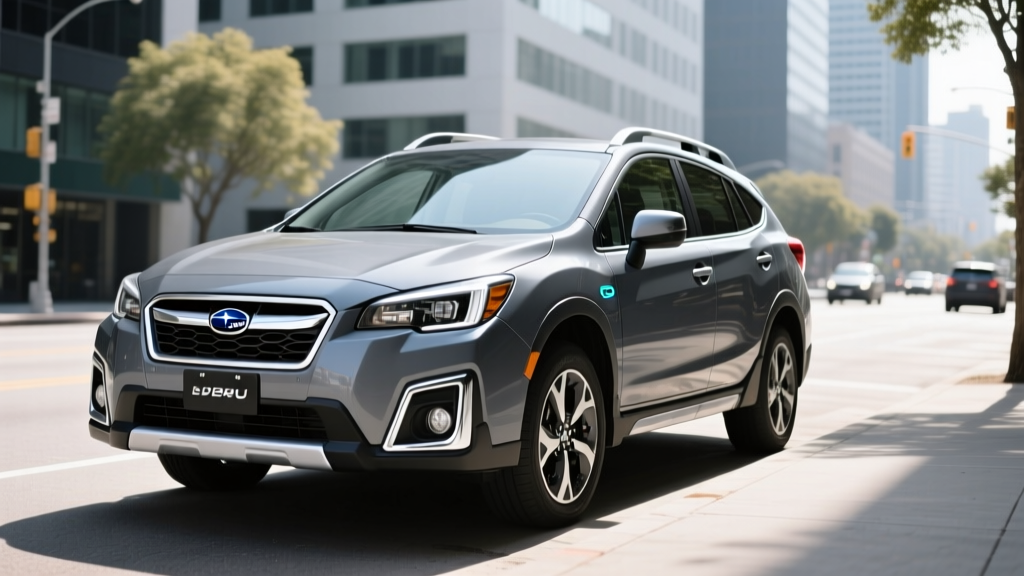
The 2016 Subaru XV Crosstrek Hybrid occupies a specific niche in the used-hybrid market: it's a conventional hybrid (HEV) that pairs Subaru's symmetrical all-wheel drive with a modest electric assist system. It does not plug in, it does not drive on electric power alone for meaningful distances, and it was not designed to compete with the Toyota Prius on fuel economy. What it does offer is 8.7 inches of ground clearance, standard AWD, and a slight MPG bump over the gas-only Crosstrek — making it a pragmatic choice for buyers in snow-belt states who want hybrid efficiency without sacrificing off-pavement capability.
As of 2026, this model is available exclusively on the used market, where examples typically trade between $11,000 and $17,000 depending on mileage and condition. If you're cross-shopping this against modern PHEVs or full EVs, the calculus changes significantly — and we break down exactly when the Crosstrek Hybrid still makes sense and when you should look elsewhere.
Fuel Economy: EPA Ratings and Real-World MPG
| Metric | Hybrid (HEV) | Gas-Only Crosstrek (CVT) |
|---|---|---|
| City MPG | 29 | 26 |
| Highway MPG | 30 | 34 |
| Combined MPG | 29 | 29 |
Source: fueleconomy.gov
The headline number — 29 MPG combined — is unremarkable by 2026 hybrid standards (the current Toyota Prius AWD achieves 54 MPG combined). But context matters. The Crosstrek Hybrid's advantage over the gas model is concentrated in city driving, where the electric motor's low-speed torque assist and regenerative braking recover energy that a conventional powertrain wastes as brake heat. On the highway, the gas-only Crosstrek actually edges ahead at 34 MPG versus the hybrid's 30 MPG, because the hybrid system adds roughly 275 pounds of battery and motor mass that the engine must haul at sustained speed.
Real-World MPG Expectations
Owner-reported data on Fuelly and similar tracking platforms clusters around 27–31 MPG combined in mixed driving, closely tracking the EPA estimate. City-heavy commuters in stop-and-go traffic often report 30–32 MPG, where the hybrid system does its best work. Highway-dominant drivers at 75+ MPH should expect 26–28 MPG — the aerodynamic profile of a lifted crossover works against efficiency at speed, and the added hybrid mass provides no regenerative benefit on flat, steady-state cruising.
In cold weather (below 30°F), expect a 10–15% fuel-economy penalty, bringing combined figures to roughly 24–26 MPG. The engine runs richer during warm-up, cabin heating demands keep the engine cycling on, and battery chemistry reduces regenerative braking efficiency.
Powertrain Specs: Engine, Motor, and Combined Output
| Component | Specification |
|---|---|
| Engine | 2.0L flat-4 (FB20) |
| Engine Horsepower | 148 hp @ 6,000 rpm |
| Engine Torque | 145 lb-ft @ 4,200 rpm |
| Electric Motor | Integrated in CVT, ~13.4 hp (10 kW) |
| Combined System Output | ~160 hp |
| Transmission | Lineartronic CVT with hybrid motor integration |
| Drivetrain | Symmetrical All-Wheel Drive (standard) |
| 0–60 mph | ~9.5 seconds (est.) |
| Hybrid Battery | ~0.5 kWh nickel-metal hydride (NiMH) |
| Ground Clearance | 8.7 inches |
This is what engineers call a mild-parallel hybrid. The 10 kW electric motor cannot propel the car on its own at any meaningful speed or distance. Instead, it serves three functions: (1) smoothing engine start-stop transitions, (2) providing torque fill during acceleration from a stop, and (3) enabling brief engine-off coasting at low speeds. Subaru's implementation prioritizes drivability and AWD capability over maximum electrification.
The NiMH battery pack is small — roughly 0.5 kWh — and sits beneath the cargo floor. This is a fraction of the capacity found in even modest PHEVs (typically 10–18 kWh), but it's sufficient for the mild-assist role it plays. NiMH chemistry, while older than the lithium-ion packs in modern hybrids, is well-understood and has proven durable in Toyota and Subaru applications over 10+ year lifespans.
Hybrid vs. PHEV vs. Full EV: Which Fits Your Driving Pattern?
Conventional Hybrid (HEV)
Example: 2016 Crosstrek Hybrid
Plug in? No
Electric-only range: None (motor assist only)
Best for: Drivers without home charging access who want modest MPG gains with zero behavior change
Plug-in Hybrid (PHEV)
Example: Toyota RAV4 Prime
Plug in? Yes (Level 1 or Level 2)
Electric-only range: 42 miles EPA
Best for: Drivers with home charging who commute under 40 miles but want gas-engine flexibility for road trips
Full EV (BEV)
Example: Hyundai Ioniq 5
Plug in? Yes (Level 2 + DC fast charge)
Electric range: 260–340 miles EPA
Best for: Drivers with reliable home/work charging who want maximum operating savings and zero tailpipe emissions
The 2016 Crosstrek Hybrid makes sense if you cannot charge at home, need AWD for snow or gravel roads, and want slightly lower fuel costs without altering your driving routine. If you have access to a Level 2 charger and a commute under 30 miles, a modern PHEV will save dramatically more fuel — the RAV4 Prime's 42-mile electric range covers most daily driving without burning a drop of gasoline. And if your mileage is high and charging access is reliable, a full EV eliminates fuel costs almost entirely.
Used Pricing, Tax Credits, and Total Cost Considerations
The 2016 Crosstrek Hybrid originally carried an MSRP of approximately $32,995 (before destination). As a used vehicle in 2026, market values range from roughly $11,000 to $17,000 depending on mileage, condition, and region, based on Kelley Blue Book and Edmunds transaction data.
Federal Tax Credit Eligibility
Under current IRS §30D rules, the used clean vehicle credit (sometimes called the §25E credit for pre-owned vehicles) allows qualified buyers to claim up to $4,000 or 30% of the sale price (whichever is less) on a used EV or plug-in hybrid purchased from a dealer. However, the 2016 Crosstrek Hybrid is a conventional HEV — not a plug-in vehicle — and therefore does not qualify for any federal EV or PHEV tax credit. It also does not qualify for the new-vehicle §30D credit retroactively.
Some states have offered hybrid-specific incentives in the past, but most have shifted exclusively to plug-in vehicles. Check your state's energy office or AFDC state incentive database for current local programs, though none are likely to cover a 2016 conventional hybrid at this point.
Battery Longevity, Warranty, and Replacement Cost
How Long Does the Battery Last?
NiMH batteries in Toyota and Subaru hybrid systems have demonstrated strong longevity. Many first-generation Prius packs exceeded 150,000 miles before significant degradation. The Crosstrek Hybrid's pack operates in a narrow state-of-charge window (roughly 40–80%), which minimizes stress and extends cycle life. Based on owner reports and Subaru technician forums, most 2016 Crosstrek Hybrid batteries remain functional at 120,000–160,000 miles, though capacity loss of 15–25% is typical by year 8–10. This manifests as slightly reduced fuel economy and less aggressive engine-off coasting — not a sudden failure.
Battery Replacement Cost
If the hybrid battery does fail outside warranty, replacement costs break down as follows:
| Option | Estimated Cost | Notes |
|---|---|---|
| New OEM battery (Subaru dealer) | $2,500 – $3,500 | Includes parts + labor; availability may be limited for discontinued model |
| Refurbished/remanufactured pack | $1,200 – $2,000 | Third-party suppliers; warranty varies (1–3 years typical) |
| Individual cell/module replacement | $400 – $900 | Independent hybrid specialists can replace failed modules rather than full pack |
The module-replacement route is increasingly viable as hybrid specialist shops have proliferated. A single failed module (there are typically 6–8 in this pack) can be swapped without replacing the entire assembly, keeping costs manageable for a vehicle in this price range.
Reliability and Known Issues
The 2016 Crosstrek Hybrid shares its core architecture with the gas-only Crosstrek, which earned strong reliability marks from Consumer Reports and J.D. Power. The FB20 2.0L flat-four is a well-proven engine, and Subaru's CVT — while occasionally criticized for its rubber-band feel — has improved significantly since early-generation units. The hybrid system adds complexity but not a pattern of widespread failures.
Known issues to watch for on a used example:
- CVT shudder: Some owners report low-speed vibration; often resolved with a CVT fluid exchange ($150–$250)
- EyeSight camera alignment: If equipped, the stereo camera system can lose calibration after windshield replacement; recalibration costs $150–$300
- 12V battery drain: Parasitic draw from the EyeSight system and infotainment can kill the auxiliary 12V battery if the car sits for 2+ weeks
- Hybrid system warning light: Can indicate inverter cooling pump failure (~$400–$600 repair) or battery degradation; always pull OBD-II codes before purchase
The NHTSA lists a small number of recalls for this model year — verify all recall work has been completed on any used example via the VIN lookup tool.
Pros, Cons, and the Used-Buyer Decision
Pros
- Standard AWD with 8.7" ground clearance — genuine all-weather capability
- No plug-in required; zero behavior change from a gas car
- City MPG improvement over gas Crosstrek (29 vs 26)
- Proven NiMH hybrid durability
- Used pricing has depreciated significantly from $33K MSRP
- EyeSight safety suite available (pre-collision braking, lane departure)
Cons
- 29 MPG combined is uncompetitive vs. modern hybrids (Prius AWD: 54 MPG)
- No electric-only driving mode — this is a mild assist, not a true hybrid experience
- Highway MPG actually lower than gas-only Crosstrek
- No federal or state tax credit eligibility
- Hybrid battery likely out of warranty on any 2016 example
- Modest cargo space (22.3 cu ft behind rear seats) with battery pack consuming under-floor storage
- Slow acceleration (~9.5 sec 0–60) with CVT drone under load
Frequently Asked Questions
How many MPG does the 2016 Subaru XV Crosstrek Hybrid get?
The EPA rates it at 29 city / 30 highway / 29 combined MPG. Real-world reports cluster around 27–31 MPG combined, with city-heavy driving yielding the best results. Highway-only driving at 75+ MPH typically drops to 26–28 MPG. Cold weather reduces efficiency by 10–15%.
Can the 2016 Crosstrek Hybrid drive on electric power alone?
Only trivially — at very low speeds (under ~15 MPH) for short distances (a few hundred feet) when the battery is sufficiently charged. The 10 kW motor and 0.5 kWh battery are not designed for electric-only propulsion. This is a motor-assist hybrid, not a plug-in hybrid or EV.
Does the 2016 Subaru XV Crosstrek Hybrid qualify for any tax credit?
No. As a conventional hybrid (HEV) with no plug-in capability, it does not qualify for the federal §30D new-vehicle credit or the §25E used clean-vehicle credit. Both programs require the vehicle to be a plug-in EV or PHEV with a minimum battery capacity. State-level hybrid incentives have largely expired or shifted to plug-in vehicles.
Is this hybrid reliable and what is battery replacement cost?
The hybrid system has proven reliable, with NiMH batteries commonly lasting 120,000–160,000+ miles. The core FB20 engine and CVT are well-understood. If battery replacement is needed, expect $2,500–$3,500 for a new OEM pack, $1,200–$2,000 for a refurbished unit, or $400–$900 for individual module replacement at a hybrid specialist.
Should I buy the 2016 Crosstrek Hybrid or a newer PHEV?
If your budget is under $17,000 and you need AWD without plug-in charging, the 2016 Crosstrek Hybrid is a reasonable used option. If you can stretch to $25,000–$35,000, a used Toyota RAV4 Prime (42 miles electric-only, 94 MPGe, AWD) or a used Subaru Crosstrek PHEV (17 miles electric-only) will deliver dramatically lower operating costs — provided you can install a Level 2 charger at home. Without home charging access, a PHEV's advantages diminish substantially, and the conventional hybrid's simplicity becomes an asset.
What should I check before buying a used 2016 Crosstrek Hybrid?
Pull a pre-purchase OBD-II scan specifically looking for hybrid system codes (P0A80-series battery codes, P0A0F inverter codes). Verify all NHTSA recalls have been completed. Check CVT fluid condition and service history. Confirm EyeSight camera functionality if equipped. And budget $500–$1,000 for a hybrid system inspection at a Subaru dealer or hybrid specialist if the vehicle has over 100,000 miles.