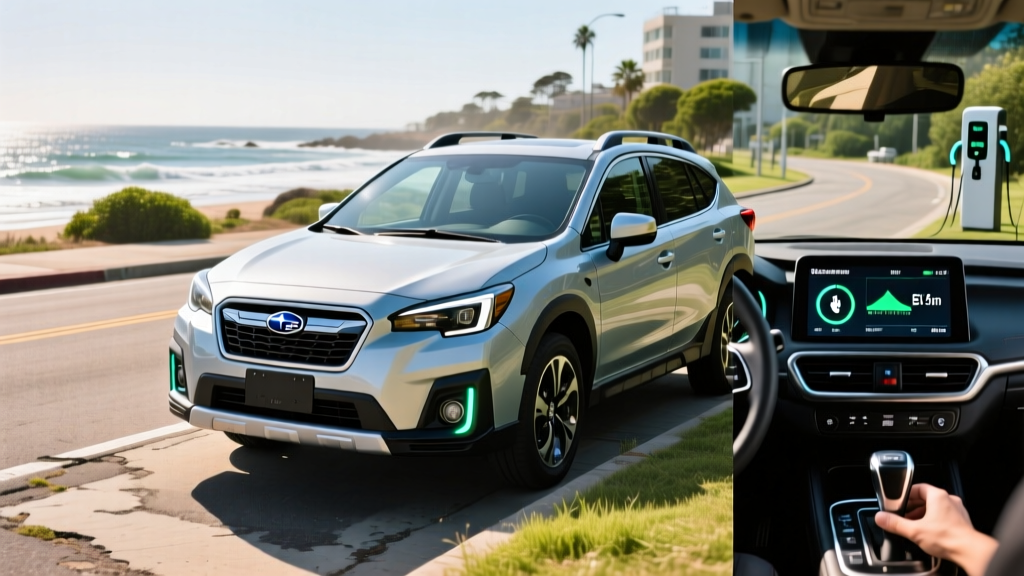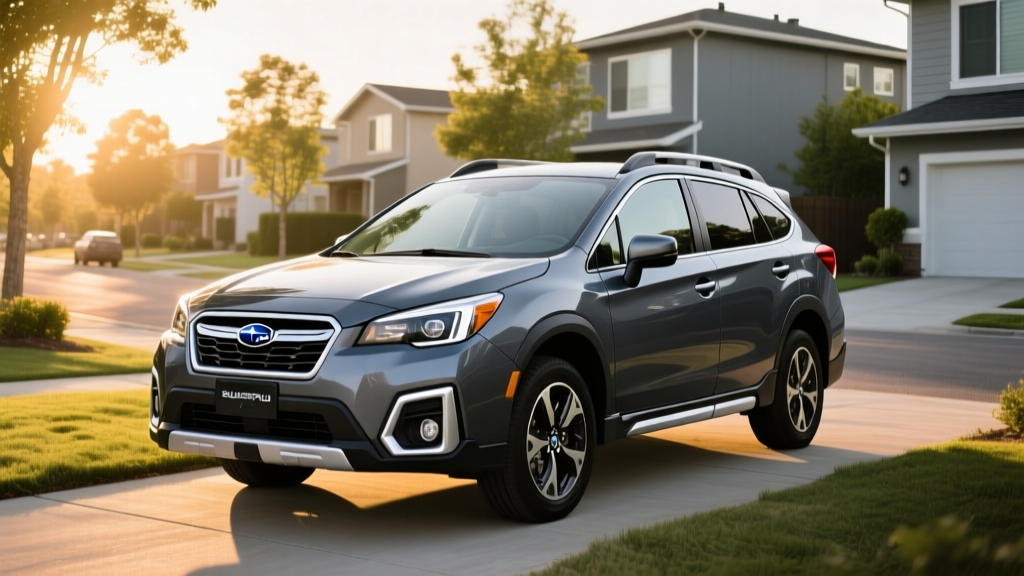
The 2016 Subaru Crosstrek Hybrid occupies a curious space in the used-car market. It was Subaru's first attempt at a hybrid — a conventional hybrid electric vehicle (HEV) that paired a 2.0-liter boxer engine with a small electric motor and a compact nickel-metal hydride (NiMH) battery. Unlike today's plug-in hybrids, it never needed to be plugged in. And unlike Toyota's dominant hybrid system of the same era, Subaru's hybrid setup prioritized all-wheel-drive capability over maximum efficiency.
If you're shopping for a 2016 Crosstrek Hybrid on the used market in 2026, you need clear data on what it actually delivers in fuel economy, whether the hybrid battery is a ticking time bomb, and how it compares to the conventional gas Crosstrek, modern PHEVs, and full EVs. This guide covers every number that matters.
HEV vs PHEV: What the 2016 Crosstrek Hybrid Actually Is
Conventional Hybrid (HEV): The 2016 Crosstrek Hybrid is an HEV. It captures energy through regenerative braking and the gasoline engine to charge a small battery (roughly 0.5 kWh usable). You never plug it in. The electric motor assists the gas engine during acceleration and enables brief electric-only driving at very low speeds. Think of it as a more efficient gas car, not an electric car.
Plug-in Hybrid (PHEV): Subaru's later Crosstrek Hybrid (2019–2023) was a PHEV with a larger 8.8 kWh battery, ~17 miles of electric-only range, and a charge port. The 2016 model is not this vehicle. If you want plug-in capability from a Crosstrek, you need the 2019+ generation.
This distinction matters enormously for buyers. The 2016 model will not give you electric-only commuting. It will not qualify for any federal EV or PHEV tax credit. It is, fundamentally, a fuel-efficient AWD compact crossover with hybrid assistance.
Fuel Economy: EPA MPG and Real-World Numbers
The headline reason to choose the 2016 Crosstrek Hybrid over the standard gas model is fuel economy. Here's the official breakdown from EPA / fueleconomy.gov:
| Metric | Hybrid (HEV) | Gas 2.0L CVT (2016) |
|---|---|---|
| City MPG | 30 | 26 |
| Highway MPG | 34 | 34 |
| Combined MPG | 33 | 29 |
| Annual Fuel Cost (est.) | ~$1,650 | ~$1,900 |
How Many MPG Does This Hybrid Get in the Real World?
The 33 MPG combined EPA figure is honest but context-dependent. In real-world driving, owners typically report:
- City / stop-and-go: 31–35 MPG. Hybrids shine here — regenerative braking recovers energy the gas model wastes as heat.
- Highway cruising (70+ mph): 30–33 MPG. The hybrid advantage shrinks at sustained speed because the electric motor contributes less.
- Cold weather (below 30°F): 27–30 MPG. The engine runs longer to heat the cabin and the NiMH battery is less efficient when cold.
- Mountain / hilly terrain: 28–32 MPG. Regenerative braking recovers some downhill energy, but the 2.0L boxer works hard on climbs.
Expect roughly 30–33 MPG combined in mixed real-world driving — a genuine 3–4 MPG improvement over the gas CVT model. Over 15,000 miles per year at $3.30/gallon, that saves approximately $200–$250 annually in fuel costs.
Powertrain and Performance Specs
| Specification | Value |
|---|---|
| Engine | 2.0L flat-4 (boxer), 148 hp gas engine |
| Electric Motor | Integrated in CVT, ~13 hp assist |
| Combined System Output | ~160 hp (peak, not additive) |
| Transmission | Lineartronic CVT |
| Drivetrain | Symmetrical All-Wheel Drive |
| Hybrid Battery | ~0.5 kWh, Nickel-Metal Hydride (NiMH) |
| 0–60 mph | ~10.0 seconds |
| Cargo Volume | 22.3 cu ft (rear seats up) |
| Ground Clearance | 8.7 inches |
| Curb Weight | ~3,400 lbs (heavier than gas model) |
The hybrid system adds roughly 250 lbs compared to the gas Crosstrek. That extra mass slightly dulls the handling and doesn't fully offset the modest 160 hp output. Acceleration is adequate but unhurried — expect 0–60 mph in around 10 seconds. The electric motor's primary contribution is low-speed torque fill, making the car feel slightly more responsive from a stoplight than the gas model.
Subaru's Symmetrical AWD remains a standout. The hybrid system doesn't compromise it — power still reaches all four wheels through the same mechanical system. If you live in snow-belt states, this is where the Crosstrek Hybrid earns its keep versus front-wheel-drive hybrid competitors from the same era.
Battery Reliability, Warranty, and Replacement Cost
Original Hybrid Battery Warranty: 8 years / 100,000 miles (10 years / 150,000 miles in CARB states including CA, NY, MA, and others).
2026 Status: For a 2016 model, the federal 8-year warranty has expired in most states. CARB-state vehicles may still have coverage through 2026 if under 150,000 miles.
Is the 2016 Crosstrek Hybrid Battery Reliable?
The NiMH battery in the 2016 Crosstrek Hybrid has proven reasonably durable, but it's not without issues. Key reliability facts:
- Common failure point: 100,000–150,000 miles. NiMH cells degrade with heat and age, and Subaru's hybrid battery is smaller and works harder than Toyota's larger NiMH packs.
- Failure symptoms: Reduced fuel economy, dashboard hybrid system warning, reduced regenerative braking, and eventually the vehicle defaulting to gas-engine-only operation.
- Known issues: Some owners reported premature hybrid battery failures between 80,000–120,000 miles, leading to extended warranty goodwill repairs in some cases. Subaru issued technical service bulletins but no major recalls specifically for the hybrid battery.
Hybrid Battery Replacement Cost
If you're buying a 2016 Crosstrek Hybrid today, budget for potential battery replacement:
- New OEM battery from Subaru: $3,000–$4,500 (parts + labor at a dealer)
- Refurbished / aftermarket battery: $1,800–$2,800
- Individual cell replacement: $800–$1,500 at a hybrid specialist shop (replaces only failed cells rather than the full pack)
Before purchasing, request a hybrid battery health check. A Subaru dealer or hybrid specialist can pull the State of Health (SoH) data from the battery management system. Look for SoH above 75% — anything lower suggests near-term replacement.
What the 2016 Crosstrek Hybrid Does Better (and Worse)
Pros
- Standard AWD — rare among 2016-era hybrids
- 3–4 MPG improvement over gas Crosstrek
- 8.7 inches of ground clearance for light off-road / snow
- Roof rails and practical hatchback cargo area
- No plug-in requirement — works like a normal gas car
- Strong safety ratings (IIHS Top Safety Pick when built after March 2016)
Cons
- Modest hybrid efficiency gain vs. Toyota/Prius-class HEVs
- No electric-only driving beyond parking-lot speeds
- Added weight (~250 lbs) dulls handling
- Hybrid battery replacement cost ($3K–$4.5K) as vehicles age
- CVT drone under hard acceleration
- Infotainment is dated by 2026 standards (no wireless CarPlay, small screen)
- No DC fast charging (not applicable — this is an HEV)
Tax Credits and Used Purchase Pricing in 2026
Does the 2016 Crosstrek Hybrid Qualify for Any Tax Credit?
No. The 2016 Crosstrek Hybrid is a conventional HEV. Under current IRS §30D rules, only battery electric vehicles (BEVs) and plug-in hybrids (PHEVs) with sufficient battery capacity and qualifying sourcing requirements are eligible for federal clean vehicle credits. Conventional hybrids like this one do not qualify for the $7,500 new-vehicle credit or the up-to-$4,000 used-EV credit (§25E).
Some states historically offered rebates for HEVs, but most state-level hybrid incentives have expired or shifted to PHEVs and BEVs. Check your state's current energy office website for any remaining programs.
Used Market Pricing (2026 Estimates)
As of early 2026, the 2016 Crosstrek Hybrid trades on the used market at approximately:
- High mileage (100K+ miles), fair condition: $10,000–$13,000
- Average mileage (60K–100K), good condition: $13,000–$16,500
- Low mileage (under 60K), excellent condition: $16,500–$19,000
Factor in a potential $2,000–$4,000 battery reserve if the vehicle is over 100,000 miles and the battery hasn't been replaced. A pre-purchase inspection at a hybrid-capable shop is strongly recommended.
Who Should Buy the 2016 Crosstrek Hybrid vs. Alternatives
Choose the 2016 Crosstrek Hybrid if:
- You need AWD for snow, rain, or light off-road driving
- You want better fuel economy than the gas Crosstrek without plugging in
- Your budget is $12,000–$17,000 and you want a practical, safe, compact AWD crossover
- You drive a mix of city and highway miles where 30–33 MPG saves real money
Choose a PHEV (like a 2019+ Crosstrek PHEV, Toyota RAV4 Prime, or Kia Niro PHEV) if:
- You want 15–40 miles of electric-only commuting
- You have access to Level 2 home charging
- You want to significantly reduce gasoline consumption on short trips
Choose a full EV (like a used Chevy Bolt, Hyundai Kona Electric, or Tesla Model 3) if:
- You want zero tailpipe emissions and minimal maintenance
- You have reliable home or workplace charging
- Your daily driving is under 200 miles round-trip
- You want to qualify for the used-EV tax credit (up to $4,000 under §25E, subject to income and price caps)
Stick with the gas 2016 Crosstrek if:
- You find one significantly cheaper than the hybrid (often $2,000–$4,000 less)
- You drive mostly highway miles where the hybrid advantage is minimal
- You want to avoid hybrid battery replacement risk entirely
Frequently Asked Questions
How many MPG does the 2016 Subaru Crosstrek Hybrid get?
The EPA rates it at 30 city / 34 highway / 33 combined MPG. Real-world owners typically see 30–33 MPG combined, with city driving sometimes reaching 35 MPG and cold-weather highway driving dropping to 27–30 MPG.
Can I plug in the 2016 Crosstrek Hybrid to charge it?
No. The 2016 model is a conventional hybrid (HEV), not a plug-in hybrid (PHEV). It charges its small battery entirely through regenerative braking and the gasoline engine. There is no charge port.
How far can it go on electric only?
Effectively zero miles at meaningful speeds. The electric motor can propel the car at very low speeds (under ~20 mph) for short distances — such as creeping through a parking lot — but it cannot sustain electric-only driving at road speeds. This is normal for conventional hybrids of this era.
Is the 2016 Crosstrek Hybrid reliable?
The mechanical components (engine, CVT, AWD system) are generally reliable and shared with the well-regarded gas Crosstrek. The hybrid battery is the main risk factor — failures have been reported between 80,000–150,000 miles, with replacement costing $3,000–$4,500 at a dealer. Get a hybrid battery health check before purchasing.
What is the hybrid battery replacement cost?
A new OEM battery from Subaru costs $3,000–$4,500 installed. Refurbished batteries run $1,800–$2,800, and individual cell replacement at a hybrid specialist costs $800–$1,500. Budget for this if buying a high-mileage example.
Does it qualify for any federal tax credit?
No. As a conventional hybrid, the 2016 Crosstrek Hybrid does not qualify for the IRS §30D new clean vehicle credit or the §25E used clean vehicle credit. These credits apply only to BEVs and qualifying PHEVs. See IRS.gov for current rules.
How does it compare to a Toyota Prius or RAV4 Hybrid from the same era?
The Prius achieves 50+ MPG combined but is front-wheel-drive and lower to the ground. The RAV4 Hybrid (2016+) delivers ~32 MPG combined with AWD and more cargo space but was slightly more expensive. The Crosstrek Hybrid's niche is AWD + ground clearance + hatchback practicality in a compact footprint, with a modest MPG bump over its gas sibling.
Should I buy a 2016 Crosstrek Hybrid or a newer PHEV?
If your budget allows $25,000+, a newer PHEV like the 2019–2023 Crosstrek PHEV (17 miles electric range) or a Toyota RAV4 Prime (42 miles electric range) will dramatically reduce your gasoline use on daily commutes. If your budget is under $18,000, the 2016 HEV is a reasonable way to get AWD hybrid efficiency — just plan for potential battery costs.